wayground logo

Free Printable Worksheets

Font size

S
M
L
XL
Worksheets

1st semester review

Total questions: 86

Worksheet time: 1hrs 9mins

Name
Class
Date
1.

All living organisms are made of one or more _____?

a)

atom

b)

cell

c)

matter

d)

all other answers are correct

2.
The summary at the end of an experiment that explains the results. 
a)
conclusion
b)
procedures
c)
materials
d)
responding variable
3.
Which is NOT a step in the scientific method?
a)
Make observation
b)
Form a theory
c)
Collect data
d)
Form a hypothesis
4.
Who looked at cork and named the cell?
a)
Robert Hooke
b)
Van Leeuwenhoek
c)
Robert Brown
d)
Francesco Redi
5.
The Cell Theory states...
a)
atoms create all matter
b)
living things evolve
c)
the cell is the backbone of all matter
d)
cells are the basic unit of structure and organization of organisms
6.

Which scientist did NOT contribute to the cell theory?

a)

Anton Van Leeuwenhoek

b)

Robert Hooke

c)

Albert Einstein

d)

Matthias Schleiden

7.
What step does every scientific experiment begin with?
a)
hypothesis
b)
question/problem
c)
procedures
d)
conclusion
8.

Which is not part of the Cell Theory?

a)

All cells come from pre-existing cells

b)

All living things are made of cells

c)

All cells are identical in structure and function

d)

Cells are the basic units of structure and function

9.
One thing that all living things can do that nonliving things can't do is ______
a)
fly
b)
hunt
c)
reproduce
d)
see
10.
A plant and an animal are both living things. According to the Cell Theory, what can you conclude about these two very different organisms?
a)
Plants have cells but animals do not.
b)
They are both made of one or more cells. 
c)
They both come from the same kind of cell.
d)
They both come from a non-living organism.
11.
The smallest unit that can perform the basic activities of life is
a)
a cell 
b)
a tissue
c)
an organ
d)
an organism
12.

What is a hypothesis?

a)

a prediction stating what you believe will be the result of your experiment

b)

a random guess

c)

a statement of the outcome of your experiment

d)

step by step directions for your experiment

13.

Organisms made of only one cell are considered?

a)

unicellular organisms

b)

multicellular organisms

c)

human body systems

d)

trait

14.
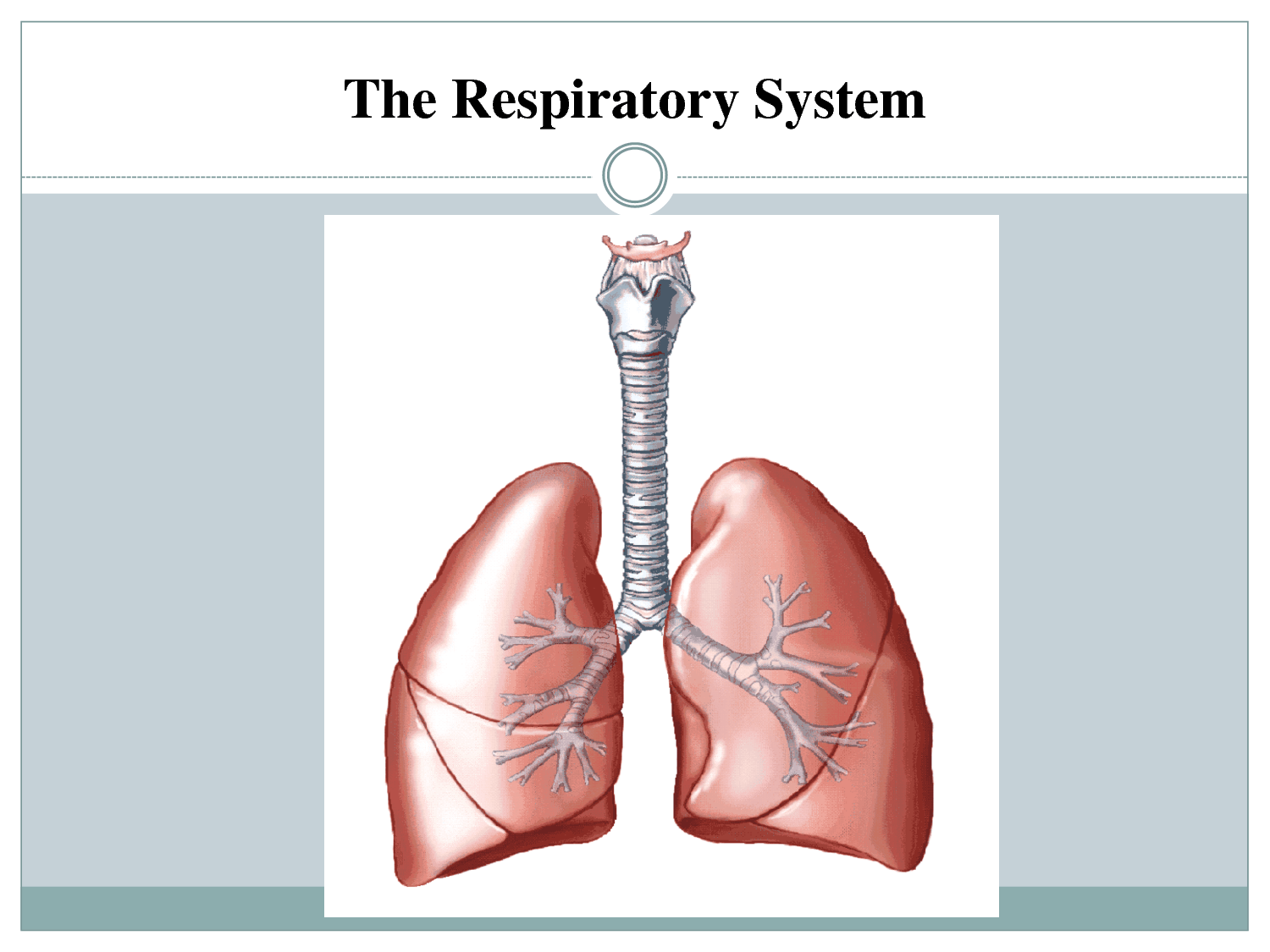
What is the main function of the respiratory system?
a)
to provide oxygen and remove carbon dioxide from the body
b)
to bring oxygen to the body
c)
to break down food and absorb nutrients
d)
to remove oxygen from the body and deliver carbon dioxide
15.
The air sacs that are covered with capillaries where gas exchange takes place
a)
bronchi
b)
lungs
c)
oxygen
d)
alveoli
16.

What is the waste product of respiration?

a)

Oxygen

b)

Carbon fibers

c)

carbon dioxide

d)

Carbohydrates

17.

Which organ carries blood away from heart; mostly oxygen-rich

a)

Arteries

b)

Veins

c)

Capillaries

18.
Which is NOT a function of the circulatory system?
a)
deliver O2 and nutrients to cells
b)
remove CO2 and wastes from cells
c)
break down carbohydrates into glucose
d)
transport other materials through body
19.
What do Red-Blood cells do?
a)
Carry oxygen from the lungs to the body cells and  transport carbon dioxide from the cells back to the lungs
b)
keeps blood flowing in one direction to the heart and prevent blood from flowing backwards
c)
Collects  blood from the capillaries and drain it into the veins
d)
Bring nutriients to the cells and carries away waste materials.
20.

What is the white blood cells main function?

a)

remove carbon dioxide

b)

clot the blood to keep from bleeding

c)

provides hemoglobin to carry oxygen

d)

fight off diseases

21.

The circulatory system is composed of blood vessels that travel from the heart to the rest of the body and back to the heart. Why does blood make a complete loop throughout the body?

a)

so blood can fill all internal organ

b)

so blood can distribute fat to all of the arteries

c)

to carry nutrients throughout the body and remove wastes

d)

so carbon dioxide and wastes can be circulated throughout the entire body

22.

What is the level of organization of all living things?

a)

organs-systems-tissues-muscles-cells

b)

cells-tissues-organs-organ systems-organisms

c)

organisms-systems-tissues-cells-organs

d)

cells-organs-tissues-organ systems-organism

23.

What is the first line of defense in the human body against infection and disease?

a)

the skin

b)

vitamins

c)

red blood cells

d)

cilia

24.

Which system absorbs and carries food from the digestive system to the rest of the body?

a)

nervous

b)

muscular

c)

circulatory

d)

respiratory

25.

What is the main function of the cell wall in a plant cell?

a)

to protect against disease

b)

to give structural support

c)

to contain the parts of the cell

d)

to help with cell division

26.

What part of the digestive system first causes chemical changes to food?

a)

teeth in the mouth

b)

saliva in the mouth

c)

enzymes in the stomach

d)

enzymes in the small intestine

27.

When Javier exercises, his muscle cells need more oxygen. Which would help Javier’s muscle cells receive more oxygen?

a)

decreasing his respiration rate

b)

increasing his perspiration rate

c)

increasing the rate his heart beats

d)

decreasing the rate his blood flow

28.
Fission, budding, and regeneration are all examples of what kind of reproduction? 
a)
Asexual Reproduction 
b)
Sexual Reproduction 
29.
How does this protist move? 
a)
Flagellum
b)
Cilia 
c)
Pseudopods
30.
How does this protist move? 
a)
Cilia
b)
Pseudopods
c)
Flagellum 
31.
A protist that can not make its own food is called what? 
a)
Autotroph
b)
Heterotroph 
32.
A protist that can make its own food is called what? 
a)
Heterotroph
b)
Autotroph
33.
Which protist has an oral groove and a gullet? 
a)
Paramecium 
b)
Volvox
c)
Amoeba 
d)
Euglena 
34.
Fine hairs that allow protist to move is called what? 
a)
Pseudopods 
b)
Euglena 
c)
Flagella 
d)
Cilia 
35.
What are the finger like projections called? 
a)
Flagella 
b)
Cilia 
c)
Pseudopods
d)
Veela 
36.
How are protist classified? 
a)
How the eat
b)
How they reproduce 
c)
Where they live
d)
How they move
37.
What is the function of the contractile vacuole?
a)
Mouth
b)
Pumps out water
c)
Exchange of genetic material
d)
All other genetic funtions
38.
Which type of protist is shown in the picture?
a)
euglena
b)
paramecium
c)
amoeba
d)
eukaryotic
39.
What is the name for an organism that can produce its own food?
a)
heterotroph
b)
autotroph
c)
amoeba
d)
eukaryotic
40.
How are protists different than bacteria?
a)
Protists are eukaryotic and bacteria are prokaryotic
b)
Protists are prokaryotic and bacteria are eukaryotic
c)
There is no difference; protists and bacteria are the same thing
d)
Protists are always unicellular and bacteria are always multicellular
41.
This structure allows the euglena to do photosynthesis.
a)
Nucleus
b)
Flagella
c)
Chloroplast
d)
Mitochondria
42.
Flagella, cilia, and psuedopods are all used for what?
a)
Movement
b)
Food capture
c)
Reproduction
d)
Energy creation
43.
Which of the following is the smallest unit of life that can carry out all life functions?
a)
the mitochondria
b)
the vacuoles
c)
the nucleus
d)
the cell
44.
Which cell structure is found in plant and animals cells and controls what can come into or leave a cell?
a)
cell membrane
b)
cytoplasm
c)
nucleus
d)
vacuole
45.
What is the function of the cell nucleus found in both plant and animal cells?
a)
to produce energy
b)
to control cell activity
c)
to remove waste products
d)
to allow molecules to enter the cell
46.
What is one basic function of the vacuoles?
a)
circulating oxygen
b)
producing food
c)
controlling cell processes
d)
storing water
47.
Chloroplasts in plant cells allow the plant to perform a function that animal cells cannot do.  What is the main function of the chloroplasts found in plant cells?
a)
to absorb light energy and manufacture food
b)
to remove waste materials by active transport
c)
to manufacture chemical energy from food
d)
to control the shape of the cell
48.
All cells need energy to function.  Which cell organelle is responsible for producing energy in the cell?
a)
chloroplasts
b)
mitochondria
c)
nucleus
d)
vacuoles
49.
Cells with a nucleus and membrane-bound organelles are called ____________________.
a)
prokaryotes
b)
eukaryotes
c)
bacteria
d)
protists
50.
Who was the first  person to see cells under the microscope and give them their name?
a)
Mattias Schleiden
b)
Robert Hooke
c)
Theordor Schwann
d)
Anton van Leeuwenhoek
51.
The basic unit of structure and function in a living things.
a)
chloroplast
b)
nucleus
c)
cell
d)
cell membrane
52.
What organelles are only found in PLANT cells
a)
lysosomes & centrioles
b)
cell wall & chloroplasts
c)
nucleus & nucleolus
d)
mitochondria & ribosomes
53.
What organelles is NOT found in a PROkaryote
a)
nucleus
b)
cell membrane
c)
Chromosomes (DNA)
DNA
d)
ribosomes
54.
Genotype refers to the ...
a)
physical expression of the genes
b)
the genetic makeup of an organism 
c)
whether an allele is dominant or recessive
d)
how an organism will appear
55.
the chances of something happening
a)
dominant
b)
genotype
c)
phenotype
d)
probability
56.
the passing of genetic traits from parent to offspring.
a)
heredity
b)
trait
c)
gene
d)
allele
57.
A purebred has two of the same genes for a trait, this is also called?
a)
homozygous
b)
heterozygous
c)
protein
d)
chromosome
58.
A purebred has two of the same genes for a trait, this is also called?
a)
homozygous
b)
heterozygous
c)
protein
d)
chromosome
59.
A purebred has two of the same genes for a trait, this is also called?
a)
homozygous
b)
heterozygous
c)
protein
d)
chromosome
60.
A hybrid has two different alleles Bb for a trait, this is also called?
a)
protein
b)
homozygous
c)
heterozygous
d)
genotype
61.
Bridget is a tall, 11 year old dancer. She has a scar on her right cheek. She is good at swimming. Which of her traits did Bridget most likely inherit?
a)
height
b)
the scar
c)
ability to swim
d)
ability to play drums
62.
Bridget is a tall, 11 year old dancer. She has a scar on her right cheek. She is good at swimming. Which of her traits did Bridget most likely inherit?
a)
height
b)
the scar
c)
ability to swim
d)
ability to play drums
63.
Two brown eyed heterozygous (Bb) parents have a baby. What is the chance the baby is blue eyed?
a)
0 %
b)
25%
c)
50%
d)
75%
64.
An allele whose trait only shows up when no dominant allele is present.
a)
hidden allele
b)
dominant allele
c)
recessive allele
d)
present allele
65.
G = green, g = yellow
The genotype for a yellow plant is...
a)
GG
b)
Gg
c)
gg
d)
all of the choices result in yellow
66.
Two heterozygous (Tt) tall pea plants are crossed. Which describes their offspring?
a)
50% tall and 50% short
b)
75%tall and 25% short
c)
100%short
67.
Used to predict what offspring will look like based on their genetic make up
a)
grid
b)
chart
c)
Punnett square
d)
organism
68.
A homozygous dominant dog with brown fur is crossed with a heterozygous dog with brown fur. What are the percentages of the possible genotypes?
a)
100% BB
b)
75% BB and 25%Bb
c)
50 % BB and 50% Bb
d)
50% Bb and 50% bb
69.
A phenotype is the...
a)
letter combination
b)
dominant gene
c)
recessive gene
d)
physical appearance
70.
Purple is dominant to white. A heterozygous purple flower is crossed with a white flower. What are the genotypes and phenotypes of the offspring?
a)
100% Pp (purple)
b)
50% Pp (purple); 50% pp (white)
c)
75% Pp (purple); 25% pp (white)
d)
25% PP, 50% Pp, 25% pp
75% purple, 25% white
71.
If a pea plant were homozygous recessive for height, how would its alleles be represented?
a)
TT
b)
Tt
c)
tt
d)
tT
72.
One reason for Mendel's success with genetic studies of peas was that he
a)
used only hybrid pea plants
b)
used peas with large chromosomes
c)
studied large numbers of offspring
d)
discovered the sources of variation in peas
73.
In screech owls, red feathers are dominant over gray feathers. If two heterozygous red-feathered owls are mated, what percentage of their offspring would be expected to have red feathers?
a)
25%
b)
50%
c)
75%
d)
100%
74.
Brown (B) is dominant over white (b). Which genotype is a purebred for brown fur?
a)
BB
b)
Bb
c)
bb
d)
All of the above
75.
Genetic variation increases an offsprings chance of survival in ________ reproduction.
a)
asexual
b)
sexual
c)
spontaneous 
d)
artificial 
76.
He is known as the father of genetics.
a)
Charles Darwin
b)
Bruce Wayne
c)
Robert Hooke 
d)
Gregor Mendel
77.

Genotype refers to the ...

a)

physical expression of the genes

b)

the possible genetic combination of alleles that you can not see

c)

whether an allele is dominant or recessive

d)

how an organism will appear

78.
Which of the following is a phenotype?
a)
BB
b)
Bb
c)
bb
d)
Blue eyes
79.

What is a phenotype

a)

The genetic make up (code)

b)

The physical appearance or visible trait

c)

an organism with 2 like genes

d)

a feature you inherit from your parents

80.
the passing of genetic traits from parent to offspring.
a)
heredity
b)
trait
c)
gene
d)
allele
81.
having two of the same genes for the trait (sometimes called purebred).
a)
homozygous
b)
hetrozygous
c)
protein
d)
chromosome
82.
having two different genes for a trait (sometimes called hybrid).
a)
protein
b)
homozygous
c)
heterozygous
d)
genotype
83.
G = green, g = yellow
The genotype for a yellow plant is...
a)
GG
b)
Gg
c)
gg
d)
all of the choices result in yellow
84.

An allele whose trait only shows up when no dominant allele is present.

a)

hidden allele

b)

dominant allele

c)

recessive allele

d)

present allele

85.

Homozygous dominant is represented by which genotype?

a)

RR

b)

Rr

c)

rr

d)

RD

86.

Hybrid also means

a)

homozygous dominant

b)

homozygous recessive

c)

having a dominant and recessive allele

d)

having 2 of the same alleles