Wayground logo

Free Printable Worksheets

Font size

S
M
L
XL
Worksheets

Midterm Review

Total questions: 88

Worksheet time: 1hrs 11mins
Name
Class
Date
1.
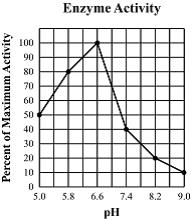
Which of the following conclusions can be drawn from this graph?
a)
The optimum pH of the enzyme is 6.6.
b)
The optimum pH of the enzyme is 5.8
c)
The enzyme’s activity increases as pH increases 5.0 to 9.0
d)
The enzyme’s activity is greater around pH of 8.0 .
2.
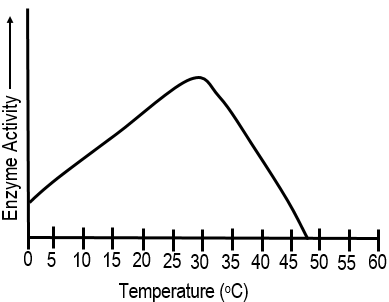
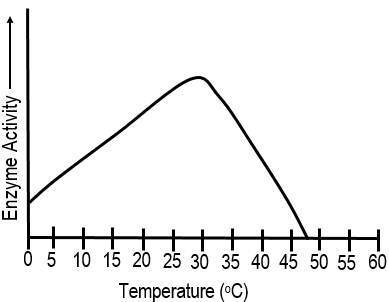
Based on the graph, what is the optimal temperature for this enzyme? 
a)
15oC
b)
40oC
c)
30oC
d)
35oC
3.
Enzymes are...
a)
nucleic acids
b)
proteins
c)
lipids
d)
carbohydrates
4.
What is the function of an enzyme?
a)
enzymes break themselves into small pieces
b)
enzymes slow down chemical reactions
c)
enzymes speed up chemical reactions
d)
enzymes combine products to form reactants 
5.
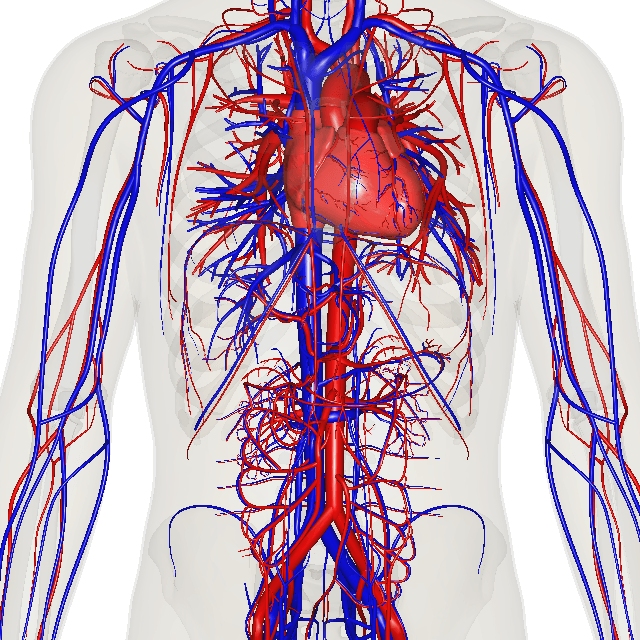
What happens when enzymes are heated to a high temperature?
a)
The enzymes die.
b)
The shapes of the enzyme are altered denature
c)
The enzymes' amino acid sequence changes.
d)
The enzymes remain the same
6.
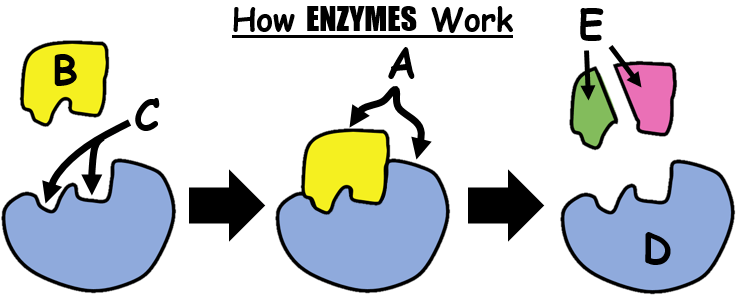
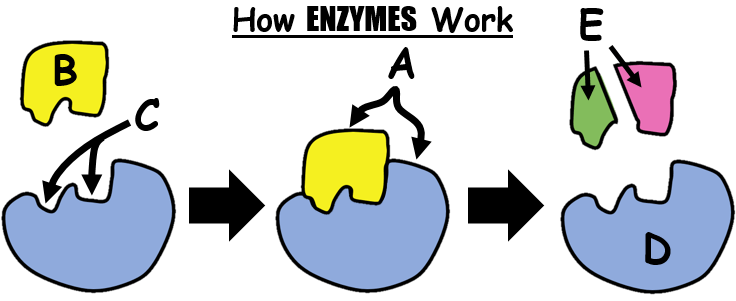
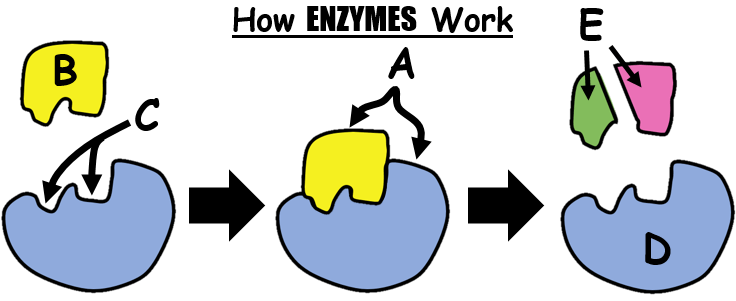
Letter D...
a)
active site
b)
enzyme
c)
substrate
d)
products
7.
Letter B...
a)
active site
b)
enzyme
c)
substrate
d)
products
8.
Letter E...
a)
active site
b)
enzyme
c)
substrate
d)
products
9.
In which eukaryotic organelles does photosynthesis occur?
a)
mitochondria
b)
stomata
c)
xylem
d)
chloroplast
10.
The reactants of photosynthesis are
a)
sugar and water.
b)
sugar and oxygen.
c)
carbon dioxide and water.
d)
carbon dioxide and oxygen.
11.
Which statement about photosynthesis is correct?
a)
Plants get the energy they need for photosynthesis from water.
b)
Plants get the energy they need for photosynthesis from soil.
c)
Plants get the energy they need for photosynthesis from sunlight.
d)
Plants do not require energy to perform photosynthesis.
12.
What are the products of photosynthesis?
a)
Carbon dioxide and water
b)
Carbon dioxide and oxygen
c)
Glucose and oxygen
d)
Glucose and water
13.
Which gas is removed from the atmosphere during photosynthesis?
a)
hydrogen
b)
oxygen
c)
nitrogen
d)
carbon dioxide
14.
What gas is released by plants during photosynthesis?
a)
sulfur
b)
carbon dioxide
c)
oxygen
d)
hydrogen
15.
What are the reactants (what's needed) for photosynthesis?
a)
glucose and oxygen
b)
light, water, and carbon dioxide
16.
What is the purpose of photosynthesis?
a)
make glucose
b)
make ATP
c)
make light
d)
release carbon dioxide
17.
What is one of the reactants of cellular respiration?
a)
energy
b)
glucose
c)
carbon dioxide
d)
water
18.
Which of the following structure is where cellular respiration occurs in the cell?
a)
nucleus
b)
cytoplasm
c)
mitochondria
d)
vacuoles
19.
What are the reactants in the equation for cellular respiration?
a)
oxygen and lactic acid
b)
carbon dioxide and water
c)
glucose and oxygen
d)
water and glucose
20.
Cellular Respiration's goal is to
a)
make water
b)
make ATP
c)
make glucose
d)
make  oxygen
21.
What is cellular respiration?
a)
the breakdown of glucose  to release ATP
b)
the breakdown of glucose to release NADH
c)
the breakdown of glucose to release FADH
d)
the breakdown of glucose to release carbon
22.
The element _______is found in all of the organic compounds.
a)
Iron
b)
Nitrogen
c)
Carbon
d)
Oxygen
23.
Which macromolecule is made of simple and complex sugars?
a)
lipids
b)
proteins
c)
carbohydrates
d)
nucleic acids
24.
a)
organic
b)
inorganic
25.
a)
organic
b)
inorganic
26.
a)
organic
b)
inorganic
27.
a)
organic
b)
inorganic
28.
Which are the four organic compounds found in living things?
a)
Carbohydrates, Lipids, Proteins, Nucleic Acids
b)
Fats, Proteins, Atoms, Osmosis
c)
Eating, Sleeping, Breathing, Talking
d)
Anything without Carbon in it
29.
What makes something inorganic
a)
It does not contain Hydrogen
b)
It contains Carbon
c)
It does not contain Carbon and Hydrogen
d)
It has more than one element
30.
A compound that contains no carbon
a)
Inorganic
b)
Organic
c)
Atom
d)
Element
31.
What form of energy is stored in the bonds between molecules of matter?
a)
chemical energy
b)
heat energy
c)
kinetic energy
d)
mechanical energy
32.
What is diffusion?
a)
when molecules move 
b)
when molecules move from a high concentration to a low.
c)
no movement 
d)
molecules move everywhere
33.
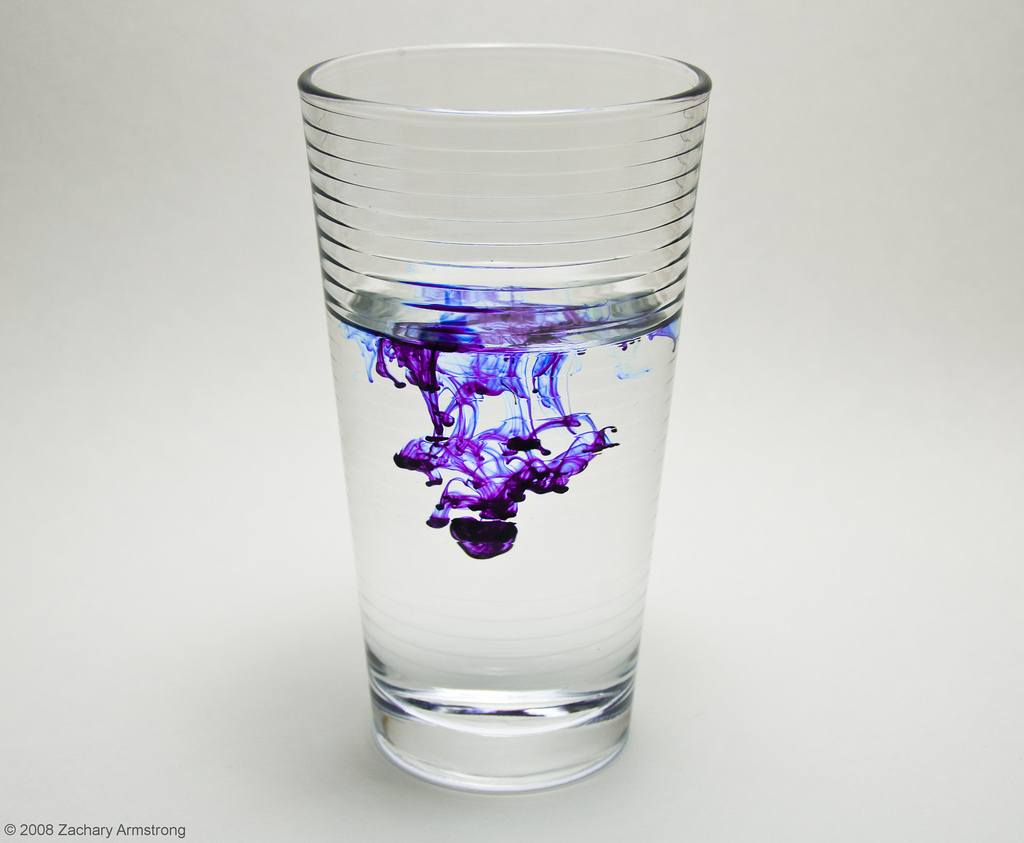
Where is there a low concentration of dye?
a)
at the bottom of cup
b)
in the color
c)
at the top of cup 
d)
no concenteraion gradient
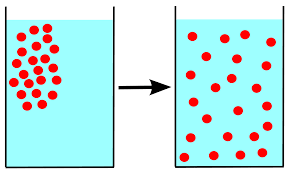
34.
The picture below is an example of _________________.
a)
osmosis
b)
isotonic
c)
diffusion
d)
active transport
35.
What a cell needs to transport particles by active transport?
a)
Sun
b)
Wind
c)
Energy
d)
Channels
36.
A person would never have pure water put into their veins in a hospital because their cells would...
a)
Shrink/Dehydrate
b)
Expand
37.
A person should never drink salty water because their cells would
a)
shrink
b)
expand
38.
The picture is an example of...
a)
active tranport
b)
passive transport
c)
diffusion
d)
osmosis
39.

The ameba represented in the diagram below is a single-celled organism.


Which two processes are most closely associated with structure A?

a)

insertion and deletion

b)

nervous regulation and circulation

c)

active transport and diffusion

d)

replication and photosynthesis

40.

The diagram below represents the results of the net movement of a specific kind of molecule across a living cell membrane.


The movement of molecules from side A to side B is an example of the process of

a)

active transport

b)

chromatography

c)

cellular respiration

d)

diffusion

41.

The diagram below represents a cell and some molecules in its environment.Which molecule would require the use of energy in order to be brought into the cell?

a)

1

b)

2

c)

3

d)

4

42.

Base your answer on The diagram below represents the change that occurred after a fluid was added to a wet mount of some elodea leaf cells.


Which fluid was most likely added to the wet mount?

a)

salt solution

b)

tap water

c)

distilled water

d)

iodine solution

43.
A multi-cellular organism, such as plants and animals are organized from.... (Small to Larger)
a)
Cells-->Tissue-->Organs-->Systems-->Organism
b)
Cells-->Organs-->Tissues-->Systems--Organism
c)
Organism--> Systems-->Organs-->Tissues-->Cells
d)
None of these is correct!
44.
A tissue is a collection of _____ working together to perform a function.
a)
Cells
b)
Organs
c)
Organ Systems
d)
Organelles
45.
Anything that can perform life processes by itself is a/an
a)
cell
b)
organ
c)
organism
d)
organ system
46.
When a group of organs work together to perform a particular function they create a/an
a)
organ system
b)
organism
c)
tissue
d)
organ
47.
The ___________ is the basic unit of life
a)
organ
b)
cell
c)
atom
d)
tissue
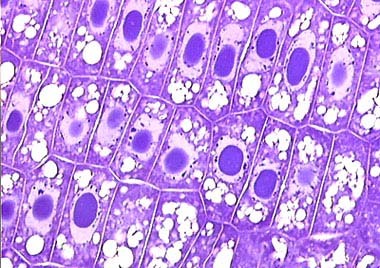
48.
This is a example of ........
a)
cell
b)
organ system
c)
organ
d)
tissue
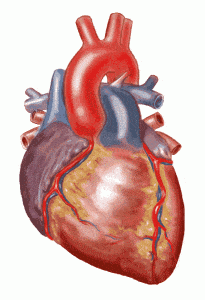
49.
This is a example of ........
a)
cell
b)
tissue
c)
organ 
d)
organ system
50.
This is a example of ........
a)
organ
b)
organ system
c)
tissue
d)
cell
51.
What are the tiny structures that carry out jobs inside cells called?
a)
membranes
b)
nucleus
c)
organelles
d)
animalicules
52.

This structure can be found at the bottom of a leaf. What is the name of the cells surrounding the opening?

a)

Stomate

b)

Guard Cells

c)

Autotroph

d)

Heterotroph

53.

What process is occurring at this structure?

a)

Gas Exchange

b)

Photosynthesis

c)

Respiration

d)

Hydrolysis

54.

WHY must nutrients be digested?

a)

To activate the appropriate enzymes

b)

To make them small enough to be absorbed into the bloodstream

c)

To energize the hydrogen bonds

d)

To speed up the rate of a reaction

55.

This system carries food, gases and wastes throughout the body

a)

circulatory system

b)

respiratory system

c)

nervous system

56.
This system includes the heart, blood vessels, veins, arteries
a)
respiratory system
b)
circulatory system
c)
nervous system
57.
This system picks up oxygen from the respiratory system (lungs) and nutrients from the digestive system.
a)
Circulatory System
b)
Digestive System
c)
Muscular System
58.
This system allows the body to take in oxygen and excrete, or get rid of waste gases.
a)
Nervous System
b)
Muscular System
c)
Respiratory System
59.
This system includes the trachea, lungs, air sacs, diapram
a)
Respiratory System
b)
Skeletal System
c)
Nervous System
60.
This system is responsible for getting food into the body, getting solid waste out of the body, and breaking food down into usable parts.
a)
Nervous System
b)
Digestive System
c)
Muscular System
61.
This system includes the mouth, stomach, liver, tongue, esophagus, stomach, small intestines and large intestines.
a)
Nervous System
b)
Digestive System
c)
Muscular System
62.
This system helps the body respond to signals and information from both inside and outside the body.
a)
Nervous System
b)
Muscular System
c)
Skeletal System
63.
This system includes the spinal cord, brain and nerves
a)
Nervous System
b)
Digestive System
c)
Circulatory System
64.
What moves cells throughout the body
a)
Nervous System
b)
Circulatory System
c)
Muscular System
65.
Which system uses hormones to regulate body activities?
a)
Integumentary
b)
Urinary
c)
Endocrine
d)
Immune
66.
What is the main function of the respiratory system?
a)
to provide oxygen and remove carbon dioxide from the body
b)
to bring oxygen to the body
c)
to break down food and absorb nutrients
d)
to remove oxygen from the body and deliver carbon dioxide
67.
Which system produces sperm and egg cells?  In females, it also nourishes the fetus.
a)
reproductive
b)
endocrine
c)
nervous
d)
lymphatic
68.
What is the purpose  of an enzyme?
a)
give permission for the reaction
b)
raise activation energy
c)
speed up reactions
d)
control how many reactions occur
69.
Which of these is NOT true.
a)
Enzymes can denature (change shape) when the temperature gets too high.
b)
Enzymes can only be used once in a chemical reaction. 
c)
Enzymes can denature when the pH changes. 
d)
Enzymes speed up chemical reactions. 
70.
Based on the graph, what temperature does this enzyme work best? 
a)
15 C
b)
40 C
c)
30 C
71.
What is the function of an enzyme?
a)
enzymes break themselves into small pieces
b)
they slow down chemical reactions
c)
they speed up chemical reactions
d)
enzymes combine products to form reactants 
72.
What do all of these organisms have in common?
a)
They all have uniform offspring
b)
They are all made of cells
c)
They possess the same features
d)
They have the same internal and external structures
73.
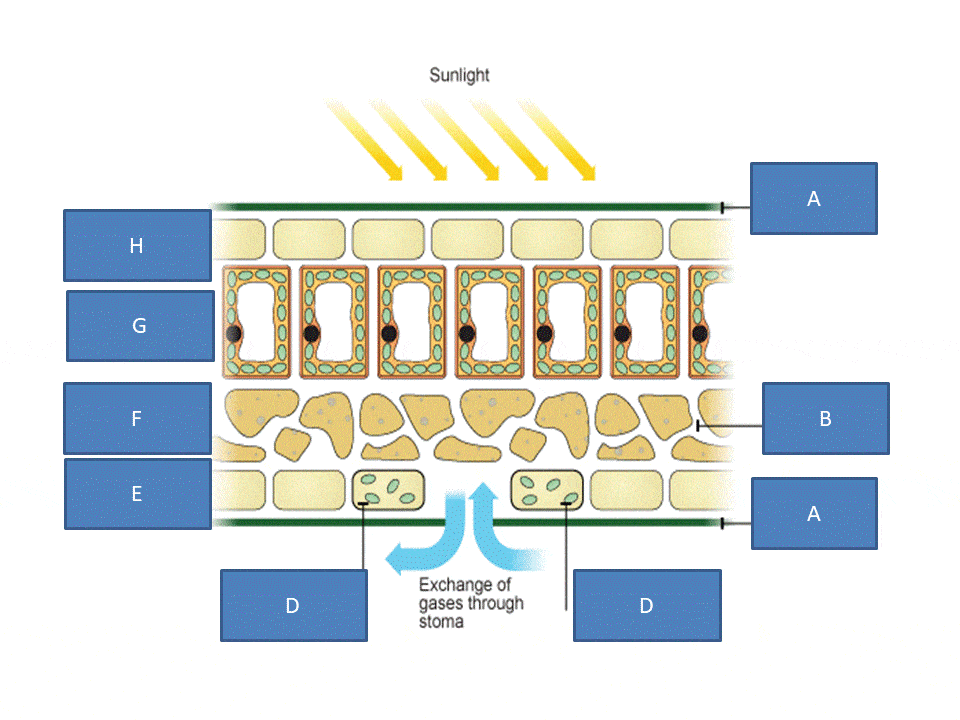
What is the name of part D?
a)
Palisade mesophyll
b)
Guard cell
c)
Spongy Mesophyll
d)
Lower epidermis
74.
What gas diffuses out of a leaf?
a)
oxygen and water vapour
b)
carbon dioxide and water vapour
75.
What is the purpose of photosynthesis?
a)
make glucose
b)
make ATP
c)
make light
d)
release carbon dioxide
76.
Which of the following is not needed for photosynthesis to occur?
a)
sunlight
b)
carbon dioxide
c)
water
d)
oxygen
77.

What is the function of stomata?

a)

to transport material from leaves to the soil

b)

to absorb sunlight

c)

to allow gas exchange between the environment and the plant

78.
What is the ultimate ORIGINAL source of energy for living things
a)
Sugar
b)
Sun
c)
Moon
d)
Carbon Dioxide
79.
What is photosynthesis?
a)
The process in which humans eat their food
b)
When a photographer takes a photo.
c)
To get your pictures from the photo lab.
d)
The process in which plants make their food.
80.
Which organelle from the plant cell is primarily responsible for converting sunlight to energy?
a)
Mitochonria
b)
Nucleus
c)
Vacuole
d)
Chloroplast
81.
Plants need ________ for photosynthesis
a)
oxygen
b)
soil
c)
carbon dioxide
d)
sugar
82.
What is the purpose of cellular respiration?
a)
to break down food
b)
to create energy in the body
c)
to release energy from food
d)
there is none; it's a waste of time
83.
This process releases chemical energy from sugars and other carbon-based molecules to make ATP when oxygen is present.
a)
photosynthesis
b)
light-independent reaction
c)
cellular respiration
d)
light-dependent reaction
84.
Cellular respiration takes place in the
a)
nucleus
b)
cytoplasm
c)
ribosomes
d)
mitochondria
85.
What Enzymes do?
a)
soften food during digestion
b)
produce sugar during digestion
c)
speed up digestion
d)
produce starch during digestion
86.
Iodine solution is a yellow-brown colour and is used to test for starch. If starch is present it turns .......
a)
blue-black
b)
milky
c)
orange-red
d)
purple
87.
What does “high concentration area” mean?
a)
Spread out
b)
Tightly packed together
c)
Uncrowded
d)
Spacious
88.
The picture  is an example of _________________.
a)
isotonic
b)
diffusion
c)
osmosis
d)
active transport