wayground logo

Free Printable Worksheets

Font size

S
M
L
XL
Worksheets

Benchmark 1 review

Total questions: 126

Worksheet time: 2hrs 28mins

Name
Class
Date
1.

Which of the following subatomic particles has NO charge?

a)

Neutrons

b)

Electrons

c)

Protons

d)

Nucleus

2.

Which of the following subatomic particles has a POSITIVE charge?

a)

Neutrons

b)

Electrons

c)

Protons

d)

Valence Electrons

3.

A model of a carbon atom is shown above. What type of particles are found in the cloud surrounding the atom's nucleus?

a)

POSITIVELY charged particles and NEGATIVELY charged particles

b)

NEGATIVELY charged particles only

c)

NEUTRAL particles and POSITIVELY charged particles

d)

POSITIVELY charged particles only

4.

The chemical formula for ethanol is C2H5OH. How many Carbon atoms are found in the formula?

a)

2

b)

3

c)

5

d)

7

5.

The equation below represents a chemical reaction that occurs in living cells -


C6H12O6 + 6O2 → 6CO2 + 6H2O + Energy


How many atoms are represented in the reactants of this equation?

a)

6

b)

12

c)

24

d)

36

6.

A limited number of the many known elements comprise the largest portion of solid Earth. Which are those elements?

a)

Silicon, Hydrogen, Aluminum, Iron

b)

Oxygen, Selenium, Iron, Potassium

c)

Oxygen, Silicon, Aluminum, Iron

d)

Hydrogen, Oxygen, Nitrogen, Carbon

7.

Nitrogen dioxide is a gas that can be generated by emission from vehicles and factories, and also from natural resources, fires, lightning, and microbial activity in soil. The equation for producing Nitrogen dioxide is shown above.


Which of these provides evidence a chemical reaction occurred?

a)

a gas is present

b)

the total number of atoms remains unchanged

c)

the state of matter remains the same

d)

a brown gas is produced

8.

A student is using colored beads to make a model of Aluminum sulfate: Al2(SO4)3.


Aluminum atoms are represented by blue beads, Sulfur by yellow beads, and Oxygen by green beads.


What combination of beads should be used for the model?

a)

6 blue, 3 yellow, 7 green

b)

2 blue, 1 yellow, 4 green

c)

2 blue, 3 yellow, 12 green

d)

6 blue, 12 yellow, 12 green

9.

Which of the following states are characteristics of elements.


I. Elements are made from a mixture

II. An element is a pure substance

III. Elements are represented by a symbol

IV. Elements make up matter on Earth

a)

I., II.

b)

I., IV.

c)

II., IV.

d)

II., III., IV.

10.

The picture above show a blue liquid being added to a clear liquid. Which is the best answer that shows a chemical reaction that may have occurred?

a)

The solution turned light blue

b)

The temperature remained the same

c)

Solid particles formed

d)

The volume increased

11.

Which is a compound?

a)

Co

b)

NH3

c)

P

d)

Si

12.

For an investigation, a student poured a blue solution of CuSO4 into a beaker. The student placed a shiny, silver-colored strip of zinc metal in the solution and observed the changes.


The student inferred that a chemical reaction occurred. What evidence supports this inference?

a)

A dark solid formed on the zinc metal

b)

The zinc metal remained silver-colored and shiny

c)

The CuSO4 solution turned blue when the zinc metal was added

d)

None of these

13.

During an investigation, a student combined the two clear, colorless solutions shown above.


The student observed that the temperature changed from 25°C to 23°C when the solutions were combined and that a white substance rapidly formed and settled at the bottom of the container. What most likely happened to produce these results?

a)

One of the original compounds came out of the solution

b)

The solutions reacted chemically

c)

Some of the water froze into ice crystals

d)

Rapid evaporation of water occurred, leaving a solid

14.

Which of the following represents this information?

a)

86% Sodium, 11% Chlorine, 1.9% Hydrogen, 1.9% Oxygen

b)

96% Oxygen, 4% Hydrogen

c)

86% Oxygen, 11% Hydrogen, 1.9% Chlorine, 1.9% Sodium

d)

25% Oxygen, 25% Hydrogen, 25% Chlorine, 25% Sodium

15.

Which column in the table includes only chemical changes?

a)

A

b)

B

c)

C

d)

D

16.
Element or Compound?
H2O
a)
Element
b)
Compound
17.
Element or Compound?
Ru
a)
Element
b)
Compound
18.
What is the tiniest particle in the entire universe?
a)
cells
b)
gases
c)
atoms
d)
liquids
19.
What part of an atom is NEGATIVELY charged?
a)
protons
b)
neutrons
c)
electrons
d)
atoms
20.
What is the picture displayed?
a)
Atom
b)
Element
c)
Molecule
d)
Compound
21.
What is the picture displayed?
a)
atom
b)
element
c)
molecule
d)
compound
22.
The protons in an atom’s nucleus have what kind of charge?
a)
positive
b)
negative
c)
neutral
d)
no charge
23.
What kind of charge do neutrons have?
a)
positive 
b)
negative
c)
neutral
d)
-3
24.
the central region of an atom where its neutrons and protons are is its 
a)
nucleus 
b)
electron cloud
c)
core 
d)
center 
25.
an atom with atomic number 6 would have how many protons 
a)
6
b)
12
c)
3
d)
cannot be determined 
26.
Particles in an atom that are neutral and have no charge are 
a)
negatrons 
b)
electrons 
c)
neutrons 
d)
protons 
27.
How many different elements are represented in the compound?
C13H9N
a)
2
b)
3
c)
1
d)
4
28.
How many different elements are represented in the compound?
H2O2
a)
2
b)
3
c)
1
d)
4
29.
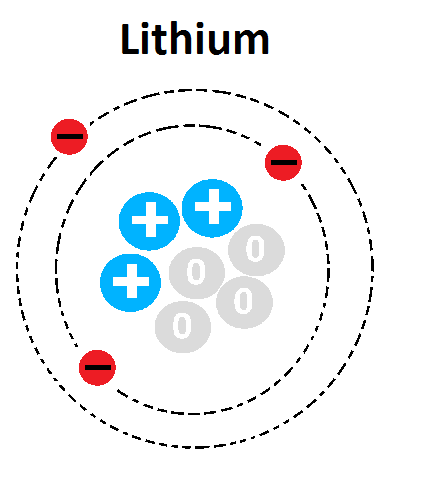
What is the atomic number of this atom?
a)
1
b)
3
c)
4
d)
7
30.
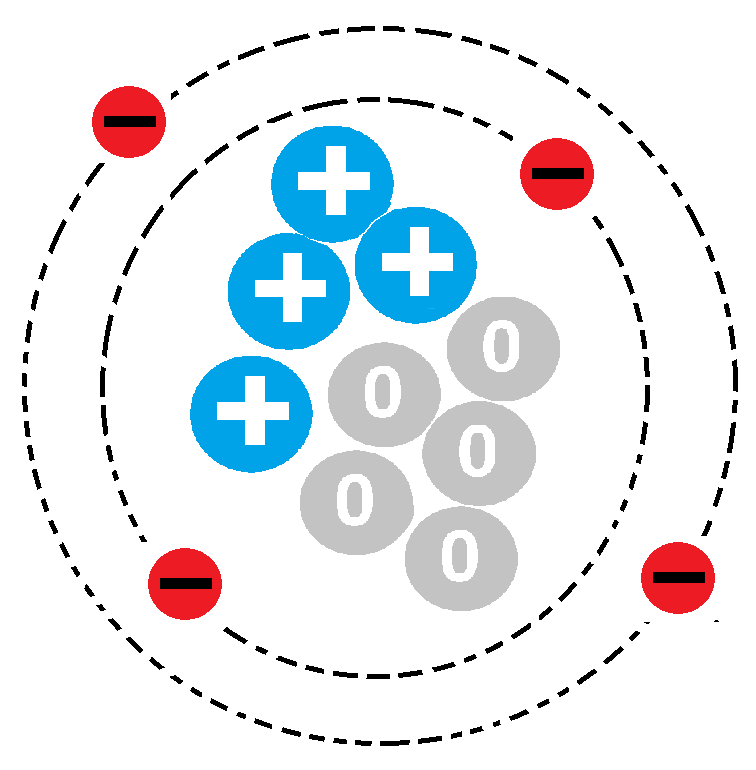
What is the atomic number of this atom?
a)
4
b)
5
c)
9
d)
none of the above
31.
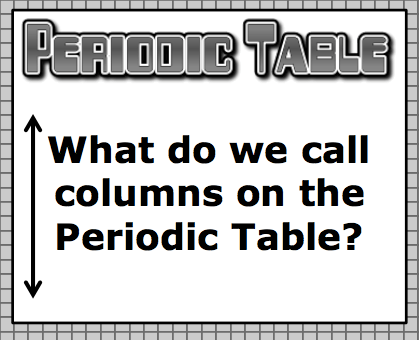
a)
Periods
b)
Groups
32.
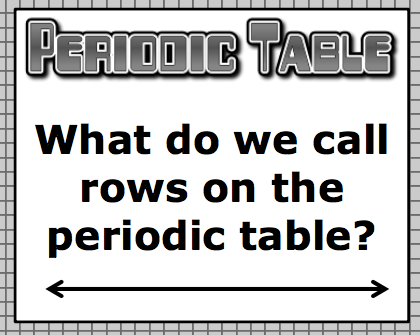
a)
Periods
b)
Groups
33.
a)
energy levels
b)
valence electrons
c)
protons
d)
neutrons
34.
a)
energy levels
b)
valence electrons
c)
protons
d)
neutrons
35.
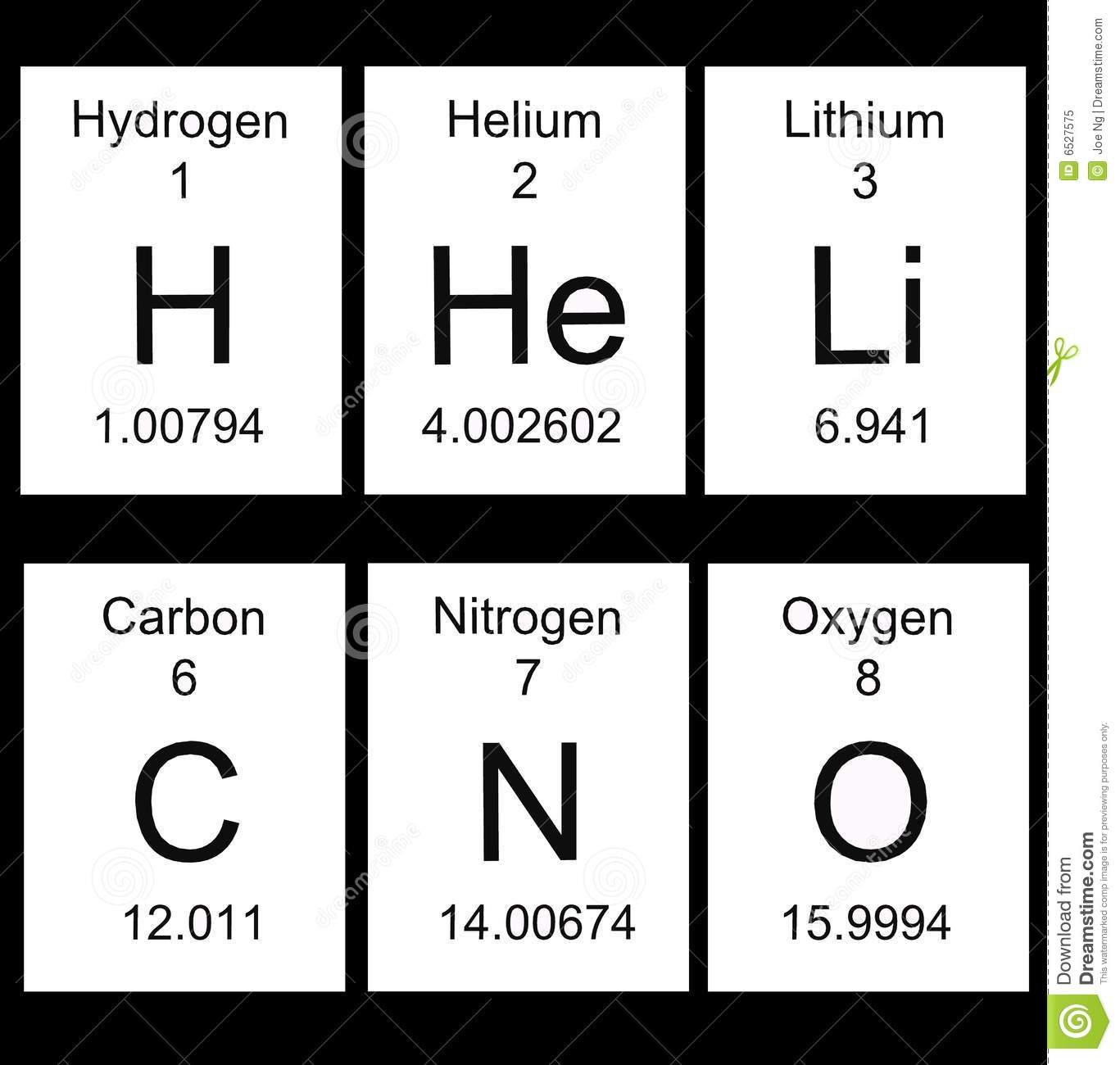
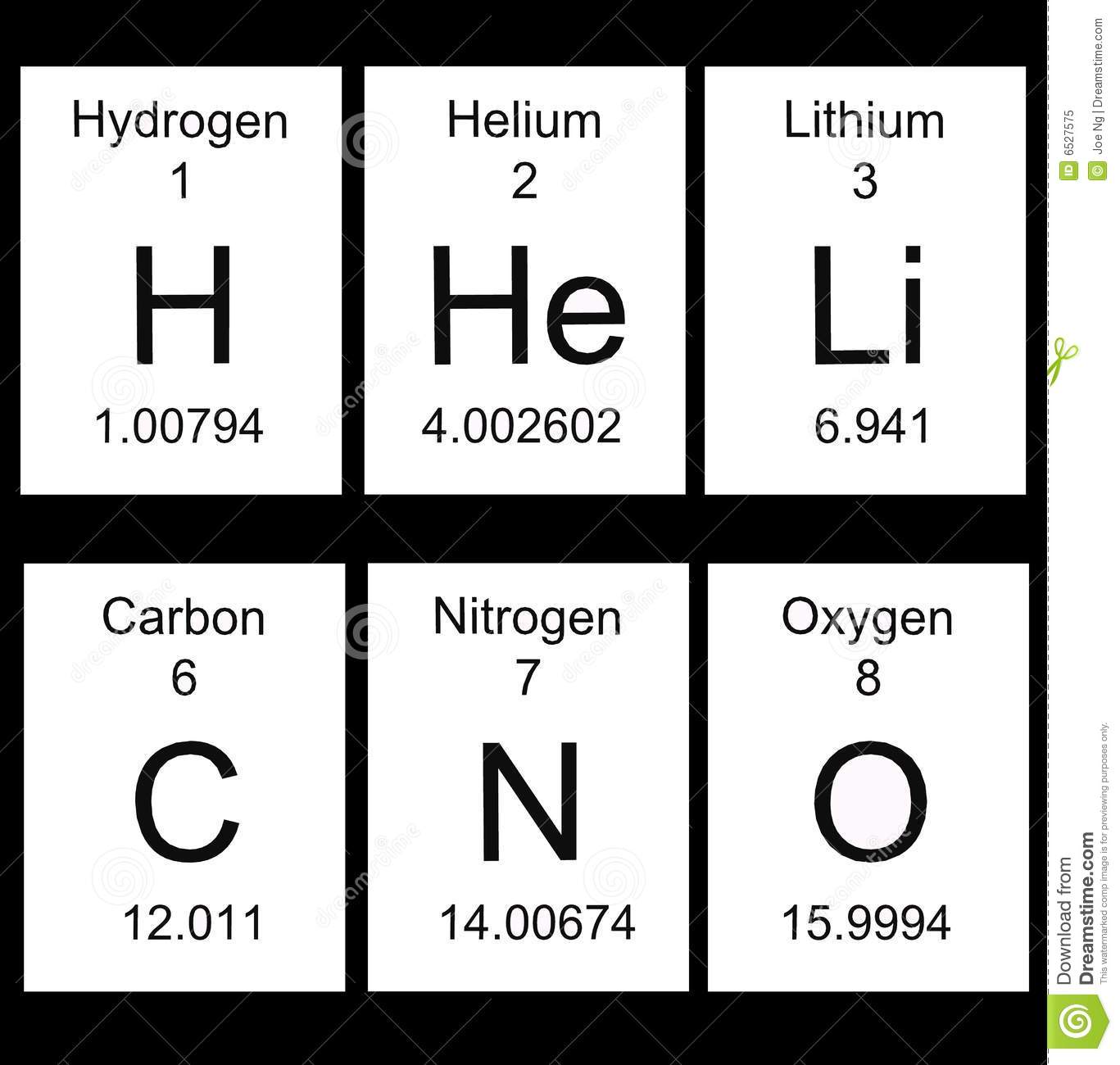
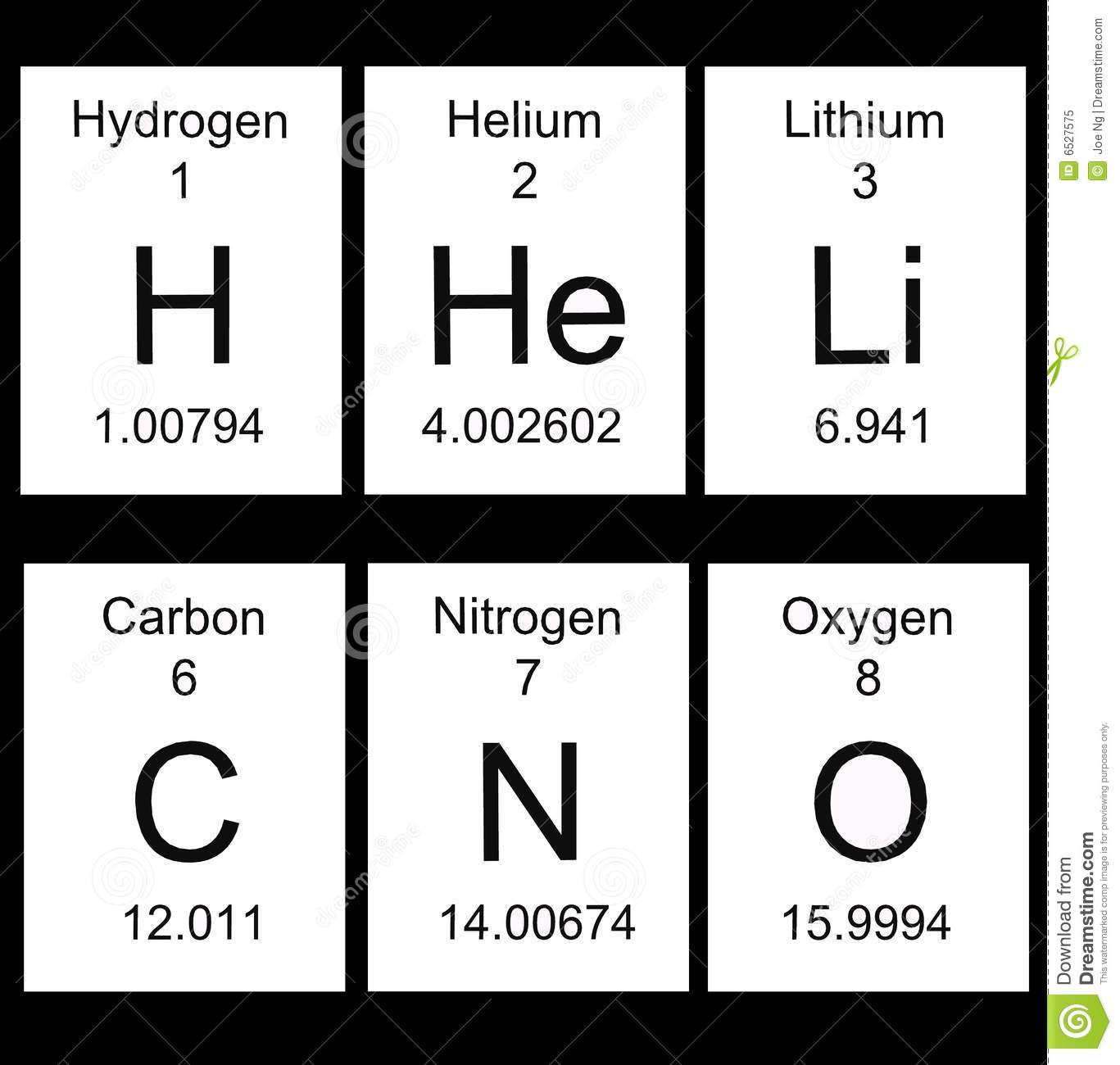
The number at the top of each square on the periodic table is the ...
a)
atomic number
b)
atomic mass
c)
Chemical Symbol
d)
Element Name
36.
The number at the bottom of each square on the periodic table is the ...
a)
atomic number
b)
atomic mass
c)
chemical symbol
d)
element name
37.
What is the chemical symbol for Lithium?
a)
H
b)
He
c)
Li
d)
N
38.
The atomic number tells you what?
a)
number of electrons
b)
number of protons
c)
number of neutrons
d)
both electrons and protons in an atom.
39.

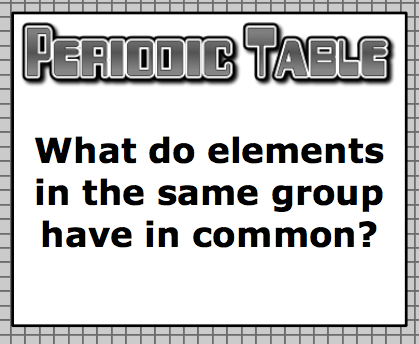
Which elements have properties in common?

a)

elements in a group

b)

elements in a period

40.

The group number tells you the number of

a)

protons

b)

valence electrons

c)

energy levels

41.

The period number tells you the number of

a)

protons

b)

energy levels

c)

valence electrons

42.

These elements are in a:

a)

group

b)

period

43.

Do these elements have properties in common?

a)

yes

b)

no

44.

These elements are in a:

a)

group

b)

period

45.

Do these elements have properties in common?

a)

yes

b)

no

46.

What element is this, AND how many valence electrons does it have?

a)

Helium, 2

b)

Hydrogen, 1

c)

Argon, 8

d)

Argon, 18

47.
What's a valence electron?
a)
electrons in the second energy level
b)
electrons in the outermost energy level
c)
the atomic number
d)
electrons in the first level
48.
Which of these is a property of metals?
a)
It's malleable
b)
It can't conduct electricity
c)
They are used in food
d)
It's very brittle
49.
Which of the following is NOT a characteristic of most metals?
a)
Brittle
b)
Good conductor
c)
Ductile
d)
Malleable
50.
Which of these grouping of elements could have the characteristic of luster (shiny)?
a)
Metal
b)
Nonmetal
c)
metalloids
d)
Both metals and metalloids
51.
Describe what luster means
a)
How an object reflects light
b)
How soft an object is
c)
If an object floats
d)
If an object can be dug out of the earth.
52.
I have an object that is dull, brittle, and an insulator, what is it?
a)
metalloid
b)
non-metal
c)
metal
d)
matter
53.
If you have a material that can conduct electricity well it is probably a...
a)
Metalloid
b)
Matter
c)
Non-metal
d)
Metal
54.
What physical properties are used to classify elements as metals, non-metals, or metalloids?
a)
Color, smell, physical state
b)
Reactivity, streak, hardness
c)
Ability to burn, mass, density
d)
Luster, conductivity, malleability
55.
Unlike non-metals, most metals tend to —
a)
conduct electricity and heat well.
b)
be gases at room temperature.
c)
break easily when hammered.
d)
have less luster and shine.
56.
Which of the following is a good conductor of heat?
a)
Metal
b)
Nonmetal
c)
Metalloid
57.
Brittle
a)
Metal
b)
Nonmetal
58.
Metals are ductile, meaning they can be drawn into wire
a)
True
b)
False
c)
Never
59.
John was observing the physical properties of elements in order to classify them as either a metal, nonmetal, or metalloid. The first element was dull, brittle, and did not conduct heat. What would its classification be? 
a)
metal 
b)
nonmetal 
c)
metalloid
60.
Is oxygen metal or nonmetal?
a)
metal
b)
nonmetal
61.

If a mineral is scratched by talc, what must its hardness rating be?

a)

1

b)

3

c)

6

d)

10

62.

Diamond is the hardest mineral.

a)

True

b)

False

63.

Which mineral is HARDER than quartz?

a)

Topaz, Corundum, and Diamond

b)

Feldspar. Apatite, and Talc

c)

Talc, Gypsum, Topaz

d)

Diamond, Calcite, Fluorite

64.

Quartz can be scratched by Topaz.

a)

True

b)

False

65.
Using this scale, which mineral can scratch fluorite?
a)
Talc 
b)
Gypsum 
c)
Apatite 
d)
Calcite 
66.

the ability of a mineral to be scratched

a)

luster

b)

flammability

c)

crystal structure

d)

hardness

67.
What does the Mohs Scale measure?
a)
Streak
b)
Luster
c)
Hardness
d)
Cleavage
68.
The ________ measures how hard a mineral is.
a)
Miller Scale
b)
Dishong Scale
c)
Curly Scale
d)
Mohs Scale
69.
Minerals are identified by observing their ___________.
a)
physical properties
b)
name
c)
location
70.
What is the correct value?
a)
5 ml
b)
15 ml
c)
20 ml
d)
25 ml
71.
What is the formula for density?
a)
density = mass x volume
b)
density = mass / volume
c)
density = mass + volume
d)
density = mass - volume
72.
Frank has an eraser. It has a mass of 4g, and a volume of 2cm3. What is its density?
a)
8 g/cm3
b)
2 g/cm3
c)
1/2 g/cm3
d)
24 g/cm3
73.
Frank has a paper clip. It has a mass of 9g and a volume of 3cm3. What is its density?
a)
3 g/cm3
b)
1/3 g/cm3
c)
27 g/cm3
d)
39 g/cm3
74.
Which box has a higher density?  
a)
Box A
b)
Box B
c)
cannot be determined
d)
they are the same
75.
What is the formula for density?
a)
density = mass x volume
b)
density = mass / volume
c)
density = mass + volume
d)
density = mass - volume
76.
Frank has a paper clip. It has a mass of 9g and a volume of 3cm3. What is its density?
a)
3 g/cm3
b)
1/3 g/cm3
c)
27 g/cm3
d)
39 g/cm3
77.
Which property of matter is determined by dividing its mass by its volume?
a)
elasticity
b)
buoyancy
c)
density
d)
viscosity
78.
Which lab tool might you use to measure the volume of a liquid?
a)
electric scale
b)
bunsen burner
c)
test tube
d)
graduated cylinder
79.
What two types of measurements make up DENSITY
a)
Mass and Volume
b)
Temperature and Mass
c)
Grams and Centimeters
d)
Volume and Weight
80.
What units are used to measure Density?
a)
cm3/g
b)
g
c)
g/cm3
d)
cm3
81.
Volume is ...
a)
Mass/Volume
b)
The amount of matter in an object.
c)
The amount of space an object occupies.
d)
Anything that has mass and occupies space.
82.
Density is...
a)
the amount of mass in an object
b)
the amount of space an object takes up
c)
the amount of mass in a given space
d)
the weight of an object
83.
A crayon has a mass of 10g and volume of 5 mL. What is the density?
a)
30 g/mL
b)
15 g/mL
c)
1 g/mL
d)
2 g/mL
84.
Which of the following is a fossil fuel?
a)
Wind
b)
Coal
c)
Solar
d)
Biomass
85.
What characteristic do all renewable resources share?
a)
Produced by waste products
b)
Form underground from dead organisms.
c)
Replaced in a short period of time
d)
Allow energy to pass through them easily
86.
Petroleum and natural gas form from...
a)
strong winds
b)
cooled magma
c)
radioactive materials
d)
remains of plants and animals 
87.
Hydroelectric power produces electricity using.....
a)
Wind
b)
Sunlight
c)
Moving water
d)
Dung
88.
 Energy from the sun is known as......... 
a)
hydroelectric energy
b)
geothermal energy
c)
solar energy
d)
wind energy
89.
Fossil fuels are classified as nonrenewable because they.......
a)
require expensive equipment
b)
take millions of years to replace
c)
can be found all over 
d)
provide all the energy we use
90.
__________ is an energy resource that WILL NOT run out in the next several hundred years.
a)
Renewable Energy Resource
b)
Natural Gas
c)
Forever Fuels
d)
Coal
91.
__________ is an energy resource that WILL run out in the next several hundred years.
a)
Biomass
b)
Nonrenewable Energy Resource
c)
Wind Energy
d)
Forever Fuels
92.
A main disadvantage to solar energy is it
a)
Produces too much energy.
b)
Causes wind.
c)
Is expensive.
d)
Causes heat.
93.
Based on the data collected, which source of alternative energy is most efficient?
a)
Coal
b)
Wind
c)
Natural gas
d)
Solar
94.
Which alternative energy source does this information describe?
a)
Hydroelectricity
b)
Solar energy
c)
Biofuels
d)
Wind
95.
Which of the following are renewable resources?
a)
coal, oil, biofuel
b)
trees, animals, water
c)
coal, oil, petroleum
d)
oxygen, soil, fossil fuels
96.
How do fossil fuels affect the environment?
a)
They are expensive
b)
They leave fossils at earth's surface
c)
They cause air pollution when burned
d)
They bond sediment.
97.
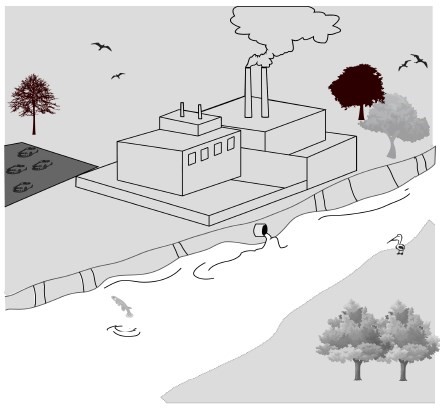
If the factory in this diagram was NOT practicing good environmental conservation, what effect would be produced?
a)
air and water pollution
b)
good fishing for recreation
c)
plentiful animals in the river
d)
purified drinking water
98.
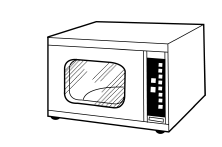
The picture shows a microwave oven. As a microwave oven is operated, electrical energy is transformed into all of the following types of energy EXCEPT —
a)
solar
b)
light
c)
thermal
d)
mechanical
99.
A television works by transforming electrical energy into what other kinds of energy?
a)
Light, thermal, and sound
b)
Thermal, chemical, and solar
c)
Sound, mechanical, and electrical
d)
Light, chemical, and mechanical
100.
what type of energy is stored in a battery?
a)
electrical
b)
chemical
c)
thermal
d)
mechanical
101.
Electrical Energy is transferred to _____ Energy.
a)
Thermal
b)
Solar
c)
Electrical
d)
None
102.
A battery converts what type of energy to another?
a)
sound to kinetic
b)
light to heat
c)
mechanical to electrical
d)
chemical to electrical
103.
Energy transformations occur when...
a)
energy is created through conduction
b)
energy changes from one form to another
c)
two forces slide together that are touching
d)
a chemical reaction takes place
104.
The roller coaster cart has the most gravitational potential energy at position-
a)
W
b)
X
c)
Y
d)
Z
105.
Which of the following converts chemical energy to thermal energy?
a)
Battery
b)
Person riding a bike
c)
Automobile
d)
Camp Fire
106.
Where is the potential energy the greatest?
a)
A
b)
B
c)
C
d)
D
107.
What type of energy is in this picture?
a)
Kinetic
b)
Potential
c)
Chemical
d)
Sound
108.
Energy of motion is which type of energy?
a)
Potential
b)
Kinetic
c)
Sound
d)
Gravitational
109.
What kind of energy is represented in the picture?
a)
Thermal
b)
Chemical
c)
Sound
d)
Nuclear
110.
Wind turbines and windmills convert what energy to another?
a)
Kinetic to electric
b)
Gravitational potential to electric
c)
Mechanical to potential
d)
Thermal to sound
111.
On a roller coaster, where is maximum potential energy?
a)
At the bottom of a big hill
b)
When going around a corner
c)
When going upside down
d)
At the top of a big hill
112.
On a roller coaster, where is maximum kinetic energy?
a)
At the bottom of a big hill
b)
When going around a corner
c)
When going upside down
d)
At the top of a big hill
113.
The purpose of the panels is to change solar energy into ____________.
a)
light energy
b)
electrical energy
c)
chemical energy
d)
mechanical energy
114.
Gravitational potential energy depends on the ________ and ________ of the object. 
a)
Height and mass
b)
Friction and movement
c)
Mass and Movement
d)
Height and Friction 
115.

The picture showing the energy conversion

Chemical → heat

is:

a)
b)
c)
d)
116.

The picture showing the energy conversion

Chemical → light & heat

is:

a)
b)
c)
d)
117.

A student is studying the ways different elements are similar to one another. Diagrams of atoms from four different elements are shown below. Which 2 atoms are of elements in the same group in the periodic table?

a)

Atom 1 and Atom 2

b)

Atom 1 and Atom 4

c)

Atom 2 and Atom 3

d)

Atom 3 and Atom 4

118.

Look at the Period Table of Elements. Which of the following statements is accurate?

a)

Metals are in Green, Non-Metals are in Pink, and Metalloids are in Blue.

b)

Metals are in Blue, Non-Metals are in Green, and Metalloids are in Pink.

c)

Metals are in Pink, Non-Metals are in Blue, and Metalloids are in Green.

119.

(Ask Ms. Guardado about this one!!!)


A student performs an investigation on a 5g sample of an element. The student recorded the observations below:


Element Observations:

1 - The sample DOES NOT have Luster

2 - The sample is Malleable

3 - The sample does not conduct electricity


Based on the Physical Properties observed, the student should classify this sample as:

a)

Compound

b)

Non-Metal

c)

Metalloid

d)

Metal

120.

How many valence electrons are in the atom of each element in Group 18 in the Periodic Table?

a)

15

b)

8

c)

7

d)

6

121.

How would you classify Sample C from the image?

a)

Metal

b)

Non-Metal

c)

Metalloid

d)

Compound

122.

How would you classify Sample B from the image?

a)

Metal

b)

Non-Metal

c)

Metalloid

d)

Compound

123.

How would you classify Sample A from the image?

a)

Metal

b)

Non-Metal

c)

Metalloid

d)

Compound

124.

Which two physical properties of minerals can be observed without touching?

a)

Color and Streak

b)

Luster and Color

c)

Streak and Hardness

d)

Hardness and Luster

125.

A limited number of the many known elements comprise the largest portion of solid Earth. Which are those elements?

a)

Silicon, Hydrogen, Aluminum, Iron

b)

Oxygen, Selenium, Iron, Potassium

c)

Oxygen, Silicon, Aluminum, Iron

d)

Hydrogen, Oxygen, Nitrogen, Carbon

126.
Describe what luster means
a)
How an object reflects light
b)
How soft an object is
c)
If an object floats
d)
If an object can be dug out of the earth.