wayground logo

Free Printable Worksheets

Font size

S
M
L
XL
Worksheets

Water Cycle

Total questions: 126

Worksheet time: 2hrs 16mins

Name
Class
Date
1.

Water vapor leaves a plant in the biosphere and goes into the atmosphere through

a)

transpiration

b)

respiration

c)

precipitation

d)

evaporation

2.

biosphere

a)

all the water on Earth

b)

regions that contain all the living things on Earth

c)

the envelope of gases that surrounds Earth

d)

living things on land

3.

_____ moves underground to the ocean

a)

sea water

b)

groundwater

c)

lake water

d)

rain drops

4.

What happens when water vapor loses thermal energy?

a)

it expands into millions of droplets that form clouds

b)

it condenses into millions of droplets that form clouds

c)

it condenses into millions of droplets that form lakes and rivers

d)

it expands on the surface of plants and goes into the air

5.

atmosphere

a)

all the water on Earth

b)

regions that contain all the living things on Earth

c)

the envelope of gases that surrounds Earth

d)

living things on land

6.

When is energy absorbed during the water cycle?

a)

during evaporation

b)

during transpiration

c)

during condensation

d)

during precipitation

7.

hydrosphere

a)

all the water on Earth

b)

regions that contain all the living things on Earth

c)

the envelope of gases that surrounds Earth

d)

living things on land

8.

____ happens when liquid turns into a gas on Earth's surface

a)

evaporation

b)

condensation

c)

respiration

d)

transpiration

9.

How does energy from the Sun drive evaporation?

a)

it slows down the water molecules and breaks their bonds

b)

it makes the water molecules too big

c)

it speeds up the water molecules and breaks their bonds

d)

it speeds up the water molecules and creates new bonds

10.

reservoirs

a)

water storage areas during the water cycle

b)

places reserved for water usage by humans and animals

c)

made from water and ice that are too big to remain suspended in air

d)

made up of water droplets or ice crystals that are so small they remain suspended in the air

11.

Which statement does NOT apply to the water cycle?

a)

it has no beginning

b)

it has no end

c)

it is continuous

d)

it very rarely changes

12.

clouds

a)

water storage areas during the water cycle

b)

places reserved for water usage by humans and animals

c)

made from water and ice that are too big to remain suspended in the air

d)

made up of water droplets or ice crystals that are so small they remain suspended in the air

13.

Where does water from mountains or land NOT end up?

a)

lakes

b)

rivers

c)

the ocean

d)

space (unless sent there by a volcanic eruption!)

14.

Which of the following drive the movement of water in the water cycle? (choose all that apply)

a)

sunlight

b)

transpiration

c)

gravity

d)

evaporation

15.

Where is groundwater stored?

a)

in lakes and rivers

b)

in underground lakes

c)

in cracks and pores beneath Earth's surface

d)

in mid-ocean ridges

16.

Evaporation adds water to the

a)

biosphere

b)

atmosphere

c)

lithosphere

d)

geosphere

17.

What effect does the sun have on surface water?

a)

It causes it to boil

b)

It causes it to rain

c)

It causes it to sink

d)

It causes it to evaporate

18.

When water vapor is cooled and forms droplets of liquid water

a)

Condensation

b)

Evaporation

c)

Transpiration

d)

Runoff

19.
Precipitation occurs because 
a)
the droplets evaporate in the air
b)
the droplets are too light for the air to hold
c)
the droplets are too heavy for the air to hold
20.
When water turns into a gas
a)
condensation 
b)
evaporation
c)
precipitation
21.
What is water that flows in rivers and streams into the oceans and lakes?
a)
evaporating
b)
condensing
c)
precipitating
d)
runoff
22.

What is precipitation?

a)

Sweat from our bodies on hot days

b)

Warm rain but not cold snow or sleet

c)

Gas that we use in furnaces or ovens

d)

Any form of water that falls from the sky

23.

The process when plants release water vapor from their leaves is called _____________.

a)

precipitation

b)

evaporation

c)

transpiration

d)

condensation

24.

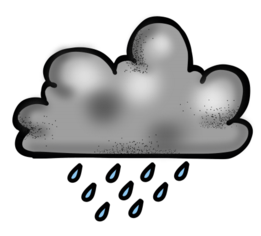
What step of the water cycle does this picture show?

a)

Condensation

b)

Runoff

c)

Precipitation

d)

Evaporation

25.
The water cycle has
a)
a beginning and an end. 
b)
no beginning an no end. 
c)
only a beginning. 
d)
only an end. 
26.
What source of energy evaporates the most water from Earth’s surface?
a)
volcanoes
b)
the sun
c)
lightning
d)
wind
27.

What are formed when water vapor condenses and come together?

a)

Clouds

b)

Mountains

c)

Transpiration

d)

Valleys

28.
Which of these is an example of precipitation?
a)
snow
b)
air
c)
clouds
d)
vapor
29.

Is precipitation any form of water that falls back to earth?

a)

Yes

b)

No

30.
The most common form of precipitation in the summer is...
a)
Rain
b)
Snow
c)
Sleet
d)
Hail
31.

When clouds fill with water and can't hold anymore, the water falls from the clouds as -

a)

precipitation

b)

clouds

32.
How much salt water covers the earth?
a)
55%
b)
65%
c)
75%
d)
85%
33.
The changes to water when it cycles the earth is called
a)
the moon cycle
b)
the sun cycle
c)
the water cycle
d)
the wind cycle
34.
When water is heated in the ocean by the sun and turns into water vapor
a)
condensation
b)
evaporation
c)
transpiration
d)
runoff
35.
Water in lakes and rivers that does not contain salt-
a)
recycled water
b)
new water
c)
salt water
d)
fresh water
36.
When water vapor s cooled and forms droplets-
a)
Condensation
b)
Evaportation
c)
Transpiration
d)
Run-off
37.
After condensation, the droplets of water in the clouds fall to the earth in different forms
a)
precipitation 
b)
condensation
c)
evaporation 
d)
ground water
38.
Forms of precipitation are-
a)
only sleet and snow
b)
rain, sleet, hail, and snow
c)
only dew and rain 
d)
only snow and rain
39.
Precipitation occurs because 
a)
the droplets evaporate in the air
b)
the droplets are too light for the air to hold
c)
the droplets are too heavy for the air to hold
40.
The sun's energy 
a)
changes daily
b)
heats the ocean before evaporation
c)
directly causes evaportation
41.
The land on earth covers approximately 
a)
25%
b)
50%
c)
75%
42.
More evaporation occurs 
a)
at night 
b)
during the day 
43.
The ________ is the driving force of the earth's surface.
a)
sun
b)
moon 
c)
stars
44.
The water cycle has no start or end
a)
true
b)
false
45.
When tiny droplets of water form in the air its called-
a)
precipitation 
b)
evaporation
c)
condensation
46.
When water turns into a gas
a)
condensation 
b)
evaporation
c)
precipitation
47.
How much of Earth's freshwater is available for use?
a)
97%
b)
3%
c)
2%
d)
1%
48.
What is the energy source for the water cycle?
a)
the sun
b)
the earth
c)
water
d)
the moon
49.
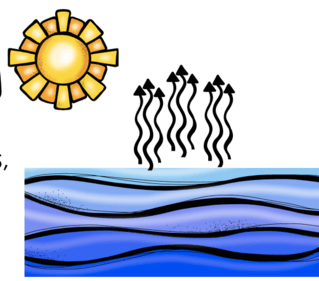
What part of the water cycle does this picture show?
a)
condensation
b)
precipitation
c)
evaporation
50.
What part of the water cycle does this picture show?
a)
condensation
b)
precipitation
c)
evaporation
51.
What is evaporation?
a)
The part of the water cycle when the sun heats up water, turning it from a liquid into water vapor or steam. It rises from the ground into the air.
b)
The part of the water cycle when the water vapor in the air gets cold. The water turns back into a liquid and forms clouds.
c)
The part of the water cycle when clouds get heavy and can no longer hold the liquid water. This causes the water to fall from the sky to the earth as rain, snow, sleet, or hail.
52.
What is condensation?
a)
The part of the water cycle when the sun heats up water, turning it from a liquid into water vapor or steam. It rises from the ground into the air.
b)
The part of the water cycle when the water vapor in the air gets cold. The water turns back into a liquid and forms clouds.
c)
The part of the water cycle when clouds get heavy and can no longer hold the liquid water. This causes the water to fall from the sky to the earth as rain, snow, sleet, or hail.
53.
What is precipitation?
a)
The part of the water cycle when the sun heats up water, turning it from a liquid into water vapor or steam. It rises from the ground into the air.
b)
The part of the water cycle when the water vapor in the air gets cold. The water turns back into a liquid and forms clouds.
c)
The part of the water cycle when clouds get heavy and can no longer hold the liquid water. This causes the water to fall from the sky to the earth as rain, snow, sleet, or hail.
54.
When water condenses, the water vapor in the air gets ___________ and changes back into liquid.
a)
cold
b)
hot
c)
warm
d)
solid
55.
Which is the opposite of condensation?
a)
runoff
b)
evaporation
c)
precipitation
d)
transpiration
56.
Which best explains why runoff is important?
a)
It returns water to other locations on Earth
b)
It increases the chance of flooding
c)
It makes evaporation occur faster
d)
It increases condensation
57.
What is it called when plants give off water vapor as a waste product?
a)
condensation
b)
evaporation
c)
sublimation
d)
transpiration
58.
When water _________, dew forms.
a)
Melts
b)
Evaporates
c)
Condenses
d)
Precipitates
59.
What is a layer of rock or sediment that holds water?
a)
glacier
b)
well
c)
aquifer
d)
natural spring
60.
How much of our planet is estimated to be covered with water?
a)
68%
b)
50%
c)
97%
d)
75%
61.
How much of our planet's water is saltwater?
a)
75%
b)
1%
c)
99%
d)
97%
62.
Which of these is an example of precipitation?
a)
snow
b)
air
c)
clouds
d)
vapor
63.
Which is the opposite of condensation?
a)
runoff
b)
evaporation
c)
precipitation
d)
transpiration
64.
What is it called when plants give off water vapor as a waste product?
a)
condensation
b)
evaporation
c)
sublimation
d)
transpiration
65.

Water in its gas form is called ____________________,

a)

water vapor

b)

precipitation

c)

ice

d)

air

66.
During which stage do clouds form?
a)
condensation
b)
evaporation
c)
precipitation
67.
Which stages does liquid water from the ocean turn into water vapor?
a)
condensation
b)
evaporation
c)
precipitation
d)
run off
68.
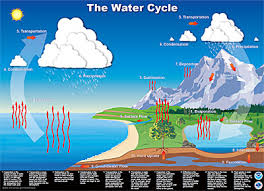
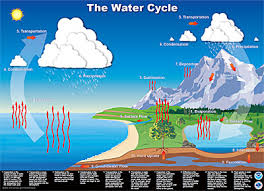
What is A?
a)
Evaporation
b)
Condensation
c)
Precipitation
d)
Runoff
69.
What is B?
a)
Evaporation
b)
Condensation
c)
Precipitation
d)
Runoff
70.
What is C?
a)
Evaporation
b)
Condensation
c)
Precipitation
d)
Runoff
71.

Gravity causes ___________________ to occur.

a)

condensation

b)

precipitation

c)

evaporation

d)

none of the above

72.

This provides the power to keep the water cycle running.

a)

The Sun

b)

The Earth

c)

The wind

d)

living things

73.

Which example is a form of precipitation?

a)

Dew

b)

Fog

c)

Frost

d)

Hail

74.

Rain and snow are two different forms of precipitation that fall on Earth's surface. Which factor is responsible for there being different forms of precipitation?

a)

Evaporation

b)

Run-off

c)

Temperature

d)

Transpiration

75.

Groundwater moves from a lower elevation to a higher elevation.

a)

true

b)

false

76.
Condensation is when...
a)
A liquid turns to gas.
b)
A gas turns to liquid.
c)
A liquid turns to ice.
d)
All of the answers.
77.
Evaporation is...
a)
When water changes from a solid to a liquid.
b)
When water changes from a gas to a liquid.
c)
When water changes from a liquid to a gas.
d)
None of the answers.
78.
What changes water from one state to another.
a)
An airplane.
b)
Gravity
c)
A change in temperature.
d)
None of the answers.
79.
What do we call it when water evaporates, condenses, then precipitates to the earth and then repeats?
a)
A Bicycle.
b)
The Life Cycle of a butterfly.
c)
The Water Cycle.
d)
All of the answers.
80.

Aquifers are __________.

a)

not a part of the water cycle

b)

underground water

c)

caused by evaporation

d)

none of the above

81.

What causes condensation?

a)

is not part of the water cycle

b)

water vapor does not change and becomes a liquid

c)

water vapor heats up and becomes a liquid

d)

water vapor cools and becomes a liquid

82.

What effect does the sun have on surface water?

a)

It causes it to boil

b)

It causes it to rain

c)

It causes it to sink

d)

It causes it to evaporate

83.

When water vapor is cooled and forms droplets of liquid water

a)

Condensation

b)

Evaporation

c)

Transpiration

d)

Runoff

84.
Precipitation occurs because 
a)
the droplets evaporate in the air
b)
the droplets are too light for the air to hold
c)
the droplets are too heavy for the air to hold
85.
When water turns into a gas
a)
condensation 
b)
evaporation
c)
precipitation
86.

What is precipitation?

a)

Sweat from our bodies on hot days

b)

Warm rain but not cold snow or sleet

c)

Gas that we use in furnaces or ovens

d)

Any form of water that falls from the sky

87.

The process when plants release water vapor from their leaves is called _____________.

a)

precipitation

b)

evaporation

c)

transpiration

d)

condensation

88.

What step of the water cycle does this picture show?

a)

Condensation

b)

Runoff

c)

Precipitation

d)

Evaporation

89.
The water cycle has
a)
a beginning and an end. 
b)
no beginning an no end. 
c)
only a beginning. 
d)
only an end. 
90.

When water deos not get absorbed into soil or evaporate into the atmosphere it becomes __________.

a)

precipitation

b)

sublimation

c)

runoff

d)

transpiration

91.
What is the water cycle?
a)
the 3 forms of water
b)
the movement of water on, above, or below the surface of the Earth
c)
when water melts
d)
when clouds form
92.
What is the water cycle?
a)
the 3 forms of water
b)
the movement of water on, above, or below the surface of the Earth
c)
when water melts
d)
when clouds form
93.
Which is the opposite of condensation?
a)
runoff
b)
evaporation
c)
precipitation
d)
transpiration
94.
Snow, sleet, hail, and rain are all examples of  ________________. 
a)
evaporation
b)
condensation
c)
accumulation
d)
precipitation
95.
What is it called when plants give off water vapor as a waste product?
a)
condensation
b)
evaporation
c)
sublimation
d)
transpiration
96.
What is the energy source for the water cycle?
a)
the sun
b)
the earth
c)
water
d)
the moon
97.
What is the process during which water changes from a liquid to a gas as it heats up?
a)
Condensation
b)
Runoff
c)
Precipitation
d)
Evaporation
98.
What step of the water cycle occurs when clouds become too heavy
a)
Condensation
b)
Runoff
c)
Precipitation
d)
Evaporation
99.
What is the process during which water cools and turns from a gas to a liquid?
a)
Condensation
b)
Runoff
c)
Precipitation
d)
Evaporation
100.

What is it called when water droplets form on the outside of a cool glass?

a)

Condensation

b)

Transpiration

c)

Precipitation

d)

Evaporation

101.

The water cycle is a good example of the cyclic nature of some materials in a natural ecosystem. Cyclic is best defined as

a)

never ending

b)

occurring in cycles

c)

succession

102.

As water evaporates it enters the air as

a)

clouds

b)

rain

c)

water vapor

103.

The water that moves along the surface of the earth is called

a)

ground water

b)

surface water

c)

runoff water

104.

Precipitation that enters the soil is called

a)

ground water

b)

surface water

c)

runoff water

105.

What pulls the groundwater down until it cannot go any deeper?

a)

substrate

b)

succession

c)

gravity

106.

As groundwater collects in the earth, it forms a reservoir called the

a)

water storage

b)

water table

c)

water locker

107.

The process by which water changes from a liquid to a gas.

a)

evaporation

b)

condensation

c)

sublimation

d)

precipitation

108.

Plants return groundwater to the atmosphere through which process?

a)

evaporation

b)

sublimation

c)

transpiration

d)

condensation

109.

The process in which water vapor in the air is changed into liquid water is called:

a)

evaporation

b)

transpiration

c)

sublimation

d)

condensation

110.

When water deos not get absorbed into soil or evaporate into the atmosphere it becomes __________.

a)

precipitation

b)

sublimation

c)

runoff

d)

transpiration

111.

What effect does the sun have on surface water?

a)

It causes it to boil

b)

It causes it to rain

c)

It causes it to sink

d)

It causes it to evaporate

112.

what goes first in the water cycle

a)

evaporation

b)

condensation

c)

surface runoff

d)

precipitation

113.

What is the energy source for the water cycle?

a)

sun

b)

wind

c)

rain

d)

oceans

114.

Water in its gas form is called ____________________,

a)

water vapor

b)

precipitation

c)

ice

d)

air

115.

Which of the following is an example of precipitation?

a)

sleet

b)

hail

c)

snow

d)

all of the above

116.
What part of the water cycle does this picture show?
a)
condensation
b)
precipitation
c)
evaporation
117.

Precipitation means...

a)

water vapor cooling to form clouds

b)

water running downhill

c)

water falling from the sky

d)

water heating up and rising as gas

118.

Runoff means...

a)

water vapor cooling to form clouds

b)

water running downhill

c)

water falling from the sky

d)

water heating up and rising as gas

119.

Condensation means...

a)

water vapor cooling to form clouds

b)

water running downhill

c)

water falling from the sky

d)

water heating up and rising as gas

120.

In your own: Words what is the water cycle?

4 lines
121.

(a)   is one of the steps in the water cycle.

122.

Where does the energy needed for the water cycle to occur, come from?

a)

The Moon

b)

The Sun

c)

Producers

d)

Omnivores

123.
Forms of precipitation are-
a)
only sleet and snow
b)
rain, sleet, hail, and snow
c)
only dew and rain 
d)
only snow and rain
124.

What percentage of Earth's fresh water that is not frozen

a)

97%

b)

1%

c)

100%

d)

3%

125.

What is another name or synonym for the water cycle?

a)

Geologic cycle

b)

Hydrologic cycle

c)

Geosphere

d)

Carbon cycle

126.
What is it called when plants give off water vapor as a waste product?
a)
condensation
b)
evaporation
c)
sublimation
d)
transpiration