wayground logo

Free Printable Worksheets

Font size

S
M
L
XL
Worksheets

Bio Test Review III

Total questions: 57

Worksheet time: 55mins

Name
Class
Date
1.

How are baby teeth and permanent teeth different?

a)

Permanent teeth are bigger than baby teeth.

b)

There are less permanent teeth than baby teeth.

c)

You do not have to brush permanent teeth.

d)

Permanent teeth fall out after baby teeth.

2.

How many teeth are in a complete adult set?

a)

20

b)

24

c)

32

d)

34

3.

About how long should you brush your teeth for?

a)

about five minutes

b)

about three minutes

c)

about one minutes

d)

about thirty seconds

4.

Teeth used to grind food are

a)

Canine

b)

Incisor

c)

Molar

d)

Missing

5.

Teeth used to cut food are called

a)

Canine

b)

Incisor

c)

Molar

d)

Missing

6.

Herbivores have large molars for

a)

Eating meat

b)

Catching prey

c)

Grinding plants

d)

Smiling

7.

The protective layer of a tooth is called

a)

Gum

b)

Enamel

c)

Dentine

d)

Bone

8.

The bulk of the tooth is made of

a)

Gum

b)

Enamel

c)

Dentine

d)

Bone

9.

Digestion starts with chewing. Chewing is called

a)

Mechanical digestion

b)

Chemical digestion

c)

Indigestion

d)

Egestion

10.

about 6,000 people have braces

a)

TRUE

b)

FALSE

c)

Dvorsky, what the heck kind of question is this?

11.

Which food would be sweet

a)

Ice Cream

b)

pizza

c)

Hot dog

d)

Beef Stick


12.
The five basic tastes the tongue can detect
a)
Sweet, Spicy, Sour, Salty, Umami
b)
Sweet, Bitter, Sour, Salty, Spicy
c)
Sweet, Bitter, Sour, Salty, Umami
d)
Sweet, Bitter, Spicy, Salty, Umami
13.
True/ False
Some plants are poisonous.
a)
True
b)
False
14.
The chewing and grinding of food into smaller pieces is an example of...
a)
Mechanical Digestion
b)
Chemical Digestion
15.
What is one secondary (helper) organ of the digestive system?
a)
Small Intestine
b)
Esophagus
c)
Gallbladder
d)
Stomach
16.
Bile is made by which digestive organ?
a)
Gallbladder
b)
Stomach
c)
Rectum
d)
Liver
17.
Nutrients from digested food are absorbed in which digestive organ?
a)
Small Intestine
b)
Stomach
c)
Large Intestine
d)
Gallbladder
18.
Which organ pushes food down to the stomach?
a)
Mouth
b)
Esophagus
c)
Rectum
d)
Large intestine
19.
As waste moves through the digestive system, the ______ absorbs water before storing waste in the rectum.
a)
Small intestine
b)
Stomach
c)
Esophagus
d)
Large intestine
20.
What is the substance found in the stomach that allows for chemical digestion to take place?
a)
Gastric Juices
b)
Saliva
c)
Bile
21.
Which is NOT a function of the Digestive System?
a)
To rid the body of solid waste
b)
Absorb nutrients for energy & growth
c)
Break down nutrients from food
d)
Pump blood around the body
22.
Enzymes (chemicals) in your saliva help break down food while chewing.  This is...
a)
Mechanical digestion
b)
Chemical digestion
23.

Why we need Erythrocytes?

a)

they destroy bacteria and viruses

b)

they provide blood clotting

c)

they carry oxygen

d)

they digest the food

24.

Doctors can say that a patient has an infection, if there are a lot of _________ in his blood.

a)

erythrocytes

b)

leukocytes

c)

thrombocytes

d)

plasma

e)

oxygen

25.
How long do erythrocytes live?
a)
forever
b)
100-120 days
c)
2 weeks only
d)
a year
26.
What is the oxygen carrying pigment in blood?
a)
hematocrit
b)
hemopoesis
c)
hemoglobin
d)
hemostasis
27.

The formed elements which make up the liquid part of the blood is called?

a)

RBC

b)

WBC

c)

plasma

d)

platelets

28.

Blood is what type of tissue?

a)

muscle

b)

nervous

c)

epithelial

d)

connective

29.

Red blood cells are primarily produced where?

a)

liver

b)

spleen

c)

heart

d)

bone marrow

30.

Human blood vessels are

a)

artries, capillaries, and atria

b)

ventricles, atria and pulmonary veins

c)

capillaries, artries, and veins

d)

veins, artries, and aorta

31.

The blood vessel that has valves at intervals...

a)

capillary

b)

artery

c)

vein

d)

none of the above

32.

Valves in veins

a)

support them

b)

protect them

c)

prevent the backward movement inside them

d)

provide them elesticity

33.

which of the blood vessels do you think have greatest blood pressure

a)

veins

b)

capillaries

c)

atria

d)

arteries

34.
Carry blood away from heart; mostly oxygen-rich
a)
Arteries
b)
Veins
c)
Capillaries
35.
Carry blood toward heart; mostly oxygen-poor
a)
Arteries
b)
Veins
c)
Capillaries
36.

These are one cell thick

a)

arteries

b)

capillaries

c)

veins

37.

What is the yellowish liquid that carries nutrients and proteins through the body?

a)

Red

b)

White

c)

Plasma

d)

Platelets

38.

Which blood cells fight infection?

a)

Red

b)

White

c)

Plasma

d)

Platelets

39.

Which blood cells that help you stop bleeding if you get a cut?

a)

Red

b)

White

c)

Plasma

d)

Platelets

40.

The fancy name for what gives blood its red colour.

a)

Plasma

b)

Erythrocytes

c)

Hemoglobin

d)

Leukocytes

41.
Where does blood go after the right atrium?
a)
left atrium
b)
left ventricle
c)
right ventricle
d)
aorta
42.

Which chamber in the heart is the strongest?

a)

Left Atrium

b)

Left Ventricle

c)

Right Atrium

d)

Left Descending Coronary Artery

43.
What does Deoxygenated mean?
a)
Oxygen-rich
b)
Blood flow
c)
Oxygen-poor
d)
Water Flow
44.

The Central Nervous System is made up of the

a)

Brain and Cranial Nerves

b)

Neurons and Axons

c)

Spinal Cord and Dendrites

d)

Brain and Spinal Cord

45.

PNS stands for

a)

Productive Nervous System

b)

Peripheral Nervous System

c)

Political Nervous System

d)

Primary Nervous System

46.

The cell body of neuron does not contain a nucleus.

a)

True

b)

False

47.

A neuron can only contain one axon.

a)

True

b)

False

48.

Acts as an insulator for neurons and allows for faster conduction of nerve impulses.

a)

Myelin

b)

Mitosis

c)

Meiosis

d)

Multipolar

49.
When you breathe, your lungs take in ___ and remove ___. 
a)
air/oxygen
b)
oxygen/carbon dioxide 
c)
carbon dioxide/waste 
d)
waste/air 
50.
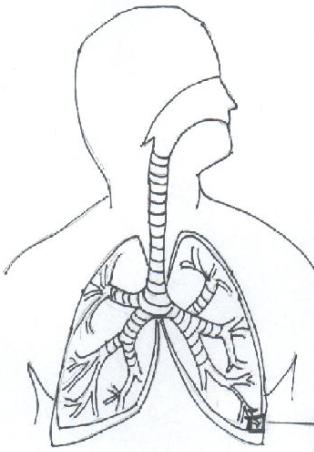
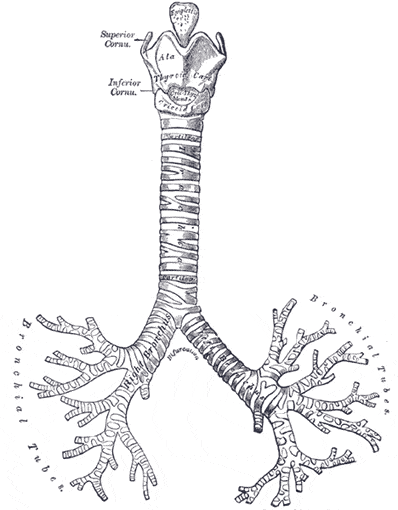
What is the function of the bronchi?
a)
Transport air from nose to lungs
b)
Transport air from trachea to lungs
c)
Transport air from lungs to alveoli
d)
Transport air from alveoli to blood
51.
The two main branches from the trachea (one to each lung)
a)
bronchi
b)
alveoli
c)
capillaries
d)
bronchioles
52.
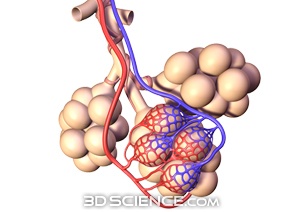
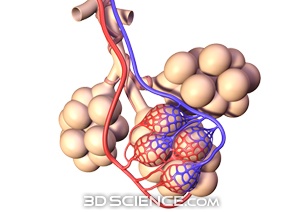
The air sacs that are covered with capillaries where gas exchange takes place
a)
bronchi
b)
lungs
c)
oxygen
d)
alveoli
53.
Flap of skin that covers the opening to the windpipe during swallowing
a)
Stomach
b)
Trachea
c)
Pancreas
d)
Epiglottis
54.
Which of the following are features of the alveoli that adapt them to gas exchange?
I. High surface area
II. Thin walls
III. Dry surfaces
a)
I and II only
b)
I only
c)
II and III
d)
I, II and III
55.
Which is the correct order of structures that air passes through?
a)
Trachea --> bronchi --> bronchioles --> alveoli
b)
Bronchi ---> trachea--> bronchioles --> alveoli
c)
Bronchioles --> bronchi --> trachea --> alveoli
d)
Trachea --> bronchioles --? bronchi --> alveoli
56.
Which of the following happens during expiration?
a)
Internal intercostal muscles contract
b)
External intercostal muscles contract
c)
Diaphragm contracts
d)
Abdominal muscles relax
57.

The blood vessels that surround the alveoli sacs are called

a)

Capillaries

b)

Arteries

c)

Veins

d)

vessels