Wayground logo

Free Printable Worksheets

Font size

S
M
L
XL
Worksheets

Weather Part 2019

Total questions: 124

Worksheet time: 2hrs 39mins

Name
Class
Date
1.
Where weather occurs.
a)
stratosphere
b)
thermosphere
c)
troposphere
d)
mesosphere
2.
What does the earth's atmosphere do?
a)
help to regulate the temperature on Earth
b)
Help UV rays to reach the Earth's surface
c)
Creates meteors in the sky
d)
Keep ocean waters cold
3.
What is the function of the ozone layer?
a)
to allow UV rays to get to Earth
b)
to block UV rays from getting to Earth
c)
To keep oxygen in
d)
to allow meteors to get to Earth
4.
Where I find clouds.
a)
thermosphere
b)
stratosphere
c)
troposphere
d)
ionosphere
5.
The higher you go, the air becomes _____ _____.
a)
More dense
b)
Less dense 
6.
What happens to the density (thickness)/air pressure of the air as you increase in altitude?
a)
density increases
b)
density decreases
c)
density stays the same
d)
density disappears
7.
The air in the troposphere has a greater density than the air in any other layer of the atmosphere,
a)
True
b)
False
8.
In which layer of the atmosphere does weather occur?
a)
Mesosphere
b)
Thermosphere
c)
Stratosphere
d)
Troposphere
9.
Where is the temperature the highest?
a)
1
b)
2
c)
3
d)
4
10.
Where is the air pressure the greatest?
a)
1
b)
2
c)
3
d)
4
11.
Where is the altitude the greatest?
a)
1
b)
2
c)
3
d)
4
12.
When you heat a gas, the particles' energy ________ . This causes the particles to _______________.
a)
increases, have fewer collisions
b)
increases, have more collisions
c)
decreases, have more collisions
d)
remain the same, have more collisions
13.
The layer of the atmosphere where we live
a)
thermosphere
b)
troposphere
c)
stratosphere
d)
mesosphere
14.
Where the ozone layer is
a)
thermosphere
b)
mesosphere
c)
stratosophere
d)
troposphere
15.
Makes the winds curve
a)
conduction 
b)
convection
c)
Coriolis Effect
d)
greenhouse effect
16.
The direct tranfer of heat when objects are touching.
a)
convection
b)
radiation
c)
boiling point
d)
conduction
17.
The atmospheric gases that most greatly affect our weather are:
a)
water vapor and nitrogen
b)
water vapor and carbon dioxide
c)
water vapor and argon
d)
water vapor and oxygen
18.
The layer of the atmosphere where weather occurs is the ________________.
a)
Troposphere
b)
Stratosphere
c)
Mesosphere
d)
Thermosphere
19.
Which of the following explains one reason why Earth's atmosphere is important?
a)
It is beautiful.
b)
It prevents pollution from happening.
c)
Life on Mars could not exist without it.
d)
Life on Earth could not exist without it. 
20.

What is an atmosphere?

a)

a layer of gasses surrounding a planet

b)

a cloud of gas that allows us to breaths

21.

What is the most common gas in the atmosphere?

a)

Oxygen

b)

Carbon Dioxide

c)

Nitrogen

d)

Methane

22.

What is the atmospheric layer closest to the ground?

a)

Mesophere

b)

Troposphere

c)

Thermosphere

d)

Stratosphere

23.

What atmospheric layer has most of the clouds?

a)

Thermosphere

b)

Stratosphere

c)

Troposphere

d)

Mesosphere

24.
What do we call the air and gasses that surround the earth?
a)
Atmosphere
b)
Troposphere
c)
Mesospherre
d)
Thermosphere
25.
What part of our atmosphere is where the ozone layer is?
a)
Stratosphere
b)
Troposphere
c)
Mesosphere
d)
Thermosphere
26.
The envelope of gasses that surround the earth: 
a)
Nitrogen
b)
Atmosphere
c)
Smog
27.
The farther you go into space, the earth's gasses become:
a)
Thicker
b)
Less Dense
c)
Dirtier
28.
What happens to air pressure as you move upward into the atmosphere?
a)
increases
b)
decreases
c)
stays the same
29.
Air pressure is greater _______.
a)
at the top of the mountain
b)
at the bottom of the mountain
c)
at the center of the mountain
30.
Density of air is greater ________.
a)
at the top of the mountain
b)
at the bottom of the mountain
c)
at the center of the mountain
31.
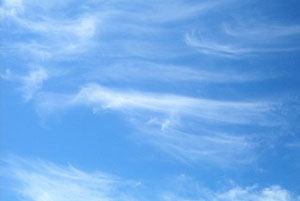
These clouds are wispy or curly, white, thin & feather-like
a)
cumulus
b)
cumulonimbus
c)
cirrus
d)
stratus
32.
These clouds are very high in the sky.
a)
cumulus
b)
cumulonimbus
c)
cirrus
d)
stratus
33.
These clouds are made of ice crystals.
a)
cumulus
b)
cumulonimbus
c)
cirrus
d)
stratus
34.
These clouds appear with fair, sunny weather, but indicate the weather could change in the next 24-48 hours.
a)
cumulus
b)
cumulonimbus
c)
cirrus
d)
stratus
35.
These clouds are puffy and white and sometimes appear to have a flat bottom.
a)
cumulus
b)
cumulonimbus
c)
cirrus
d)
stratus
36.
These clouds are all made of water drops.
a)
cumulus, cirrus, stratus
b)
cumulus, cumulonimbus, stratus
c)
cirrus, cumulonimbus, cumulus
d)
cumulus, cumulonimbus, cirrus, stratus
37.
These clouds indicate fair weather.
a)
cumulus
b)
cumulonimbus
c)
cirrus
d)
stratus
38.
These are the clouds that we commonly see shapes in.
a)
cumulus
b)
cumulonimbus
c)
cirrus
d)
stratus
39.
These clouds appear in blanket-like layers.
a)
cumulus
b)
cumulonimbus
c)
cirrus
d)
stratus
40.
These clouds bring rainy or overcast weather.
a)
cumulus
b)
cumulonimbus
c)
cirrus
d)
stratus
41.
Fog is this type of cloud when it is close to the ground
a)
cumulus
b)
cumulonimbus
c)
cirrus
d)
stratus
42.
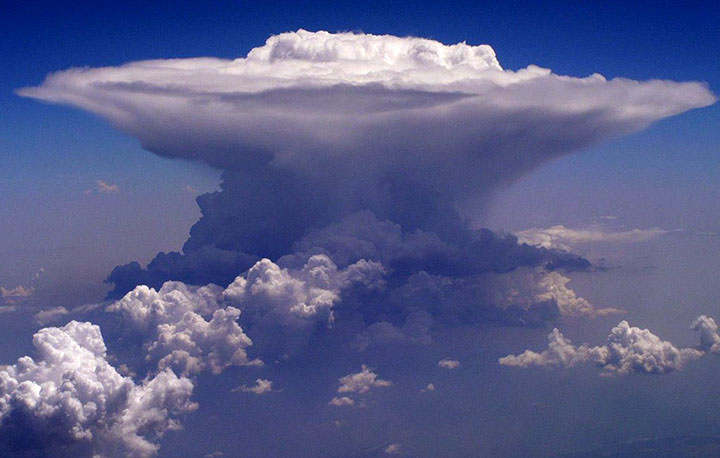
These clouds are large, dark, billowing clouds with an anvil shaped top.
a)
cumulus
b)
cumulonimbus
c)
cirrus
d)
stratus
43.
These clouds can bring thunderstorms, heavy rain, lightening, and sometimes hail.
a)
cumulus
b)
cumulonimbus
c)
cirrus
d)
stratus
44.
Which cloud is this?
a)
cumulus
b)
cumulonimbus
c)
cirrus
d)
stratus
45.
Which cloud is this?
a)
cumulus
b)
cumulonimbus
c)
cirrus
d)
stratus
46.
Which cloud is this?
a)
cumulus
b)
cumulonimbus
c)
cirrus
d)
stratus
47.
Which cloud is this?
a)
cumulus
b)
cumulonimbus
c)
cirrus
d)
stratus
48.
Which cloud is this?
a)
cumulus
b)
cumulonimbus
c)
cirrus
d)
stratus
49.
Which cloud is this?
a)
cumulus
b)
cumulonimbus
c)
cirrus
d)
stratus
50.
Which cloud is this?
a)
cumulus
b)
cumulonimbus
c)
cirrus
d)
stratus
51.
Which cloud is this?
a)
cumulus
b)
cumulonimbus
c)
cirrus
d)
stratus
52.
what type of cloud is shown?
a)
cumulus
b)
cirrus
c)
stratus
53.
These clouds are the closest to the ground. Their name means layer- or sheet like. They bring rain or snow and cover most of the sky. 
a)
Cirrus
b)
Stratus
c)
Cumulonimbus
d)
Cumulus
54.
This type of cloud is thin, wispy, and made of ice crystals
a)
cumulus cloud
b)
stratus cloud
c)
cirrus cloud
d)
cumulonimbus cloud
55.
Hot coffee is stirred with a spoon; the spoon gets hot due to
a)
conduction
b)
convection
c)
radiation
56.
Hot coffee is stirred with a spoon; the spoon gets hot due to
a)
conduction
b)
convection
c)
radiation
57.
"Lava lamps" contain colored liquids. These liquids form globs that rise to the top due to
a)
conduction
b)
convection
c)
radiation
58.
Near the ceiling of a room the air is warmer; the warm air rises because of
a)
conduction
b)
convection
c)
radiation
59.
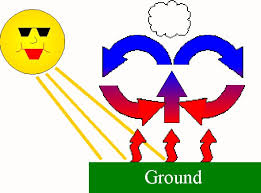
Some cook pans have cooper on the bottom to heat evenly.
Copper transfers heat to the pan by
a)
conduction
b)
convection
c)
radiation
60.
The metal skewer gets so hot that you drop your marshmallow into the campfire because of
a)
conduction
b)
convection
c)
radiation
61.
In heat transfer, heat always flows from the _______________ substance to the _______________ substance.
a)
Hotter to colder
b)
Colder to hotter
c)
Hotter to hotter
d)
Colder to colder
62.
The type of heat transfer that happens through direct contact of molecules or particles with each other is ___________________.
a)
Convection
b)
Conduction
c)
Radiation
d)
insulation.
63.
Warm air rises and the cool air sinks demonstrates this type of heat transfer. 
a)
conduction
b)
convection
c)
radiation
d)
Insolation 
64.
Which of the following is an example of convection?
a)
A hair dryer is drying up your hair.
b)
When the AC or heater changes the temperature.
c)
When a car engine turns hot after being turned on.
d)
When you are making soup and the water is rising and lowering.
65.
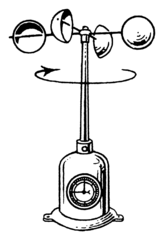
This weather instrument is an...
a)
wind vane
b)
anemometer
c)
barometer
d)
thermometer
66.
This weather instrument is a...
a)
anemometer
b)
barometer
c)
wind vane
d)
thermometer
67.
This weather instrument is a...
a)
rain gauge
b)
U.F.O.
c)
satellite
d)
anemometer
68.
This weather instrument is a...
a)
thermometer
b)
anemometer
c)
rain gauge
d)
barometer
69.
This weather instrument is a...
a)
anemometer
b)
Christmas ornament
c)
wind vane
d)
barometer
70.
What type of scientist studies weather? 
a)
Geologist 
b)
Meteorologist 
c)
Biologist 
d)
Chemist 
71.

What is a Meteorologist?

a)

A scientist who studies dinosaurs.

b)

A scientist who studies weather.

c)

A scientist who studies rocks.

d)

A scientist who studies plants.

72.

Which of the following is something that a meteorologist might do?

a)

change the weather from sun to snow.

b)

call mother nature.

c)

collect data and predict the weather.

d)

go to school for only 1 year

73.
Which general direction do air masses move over the continental United States?
a)
south to north
b)
north to south
c)
east to west
d)
west to east
74.

If a wind vane points south, what is the best conclusion?

a)

The wind is blowing toward the south.

b)

A storm is coming from the north.

c)

The wind is blowing from the south.

d)

The wind is increasing in speed.

75.

A student recorded the weather data shown in the table. During which day was the weather cool and wet?

a)

Thursday

b)

Friday

c)

Saturday

d)

Sunday

76.

Which are low, gray clouds that seem to blanket the sky?

a)

cirrus

b)

stratus

c)

cumulus

d)

atmosphere

77.

Which tool is used to measure wind speed?

a)

thermometer

b)

wind vane

c)

barometer

d)

anemometer

78.

On a sunny day, a student observes that the air pressure is falling. What can the student predict is most likely on the way?

a)

stormy weather

b)

rising temperatures

c)

fair weather

d)

more sunshine

79.

Which weather does a barometer measure?

a)

precipitation

b)

wind direction

c)

air pressure

d)

temperature

80.

Which has the greatest effect on the

formation of rain or snow?

a)

cloud cover

b)

humidity

c)

air pressure

d)

temperature

81.

How do clouds release water.

a)

as precipitation

b)

as evaporation

c)

as transpiration

d)

as respiration

82.

When you want to know the weather, you can check the ___________ online or on the television.

a)

forecast

b)

snow

c)

high

d)

sunny

83.

When something is extremely cold, it is_____________.

a)

hot

b)

warm

c)

freezing

d)

cool

84.

Before the rain, the sun disappears and the sky is ________________.

a)

fog

b)

rain

c)

snow

d)

cloudy

85.

In the winter, sometimes we have ____________ and can build a snowman.

a)

snow

b)

hail

c)

rain

d)

sleet

86.

During the day time, when there are no clouds the sky is ___________.

a)

cloudy

b)

fog

c)

sunny

d)

wind

87.

Sometimes clouds are very close to the ground and this is called ____________.

a)

wind

b)

temperature

c)

fog

d)

warm

88.

During a thunderstorm, sometimes balls of ice fall from the sky. These are called ____________.

a)

hail

b)

rain

c)

snow

d)

clouds

89.

When water falls from the sky, this is called ___________.

a)

clouds

b)

windy

c)

light

d)

rain

90.

Which is not a form of precipitation?

a)

sleet

b)

rain

c)

fog

d)

snow

91.

Which form of precipitation is frozen again and again as it is pushed back into the clouds, then falls to earth as large, frozen balls?

a)

sleet

b)

snow

c)

hail

d)

freezing rain

92.

Name the cloud type.

a)

cirrus

b)

cumulus

c)

stratus

d)

cumulonimbus

93.

What causes the precipitation stage of the water cycle?

a)

water is heated causing it to change into water vapor

b)

water vapor is cooled forming larger, more visible droplets

c)

small water droplets join together making them too heavy for the air to hold

d)

water seeps into the ground or runs off into larger bodies of water

94.

Water vapor cools and forms visible droplets of water in this stage of the water cycle.

a)

condensation

b)

evaporation

c)

precipitation

d)

run-off

95.

The study of the Earth’s weather is called_____________.

a)

geology

b)

astronomy

c)

meteorology

d)

biology

96.

You observe a cumulonimbus cloud in the sky. What weather condition is likely to occur?

a)

sunny and mild

b)

slow, steady rain

c)

thunderstorms

97.

Which part of the water cycle shows condensation?

a)

A

b)

B

c)

C

d)

D

98.

Name the cloud type.

a)

cirrus

b)

cumulus

c)

stratus

d)

fog

99.

This type of dark cloud often brings rain.

a)

cirrus

b)

stratus

c)

fog

d)

cumulus

100.

What is a front?

a)

a place where two air masses meet

b)

the front part of a hurricane

c)

an area of very high wind

d)

an area that has nice weather

101.

Which of the following is NOT TRUE about evaporation in the water cycle?

a)

Liquid water from oceans is moved into the air as a gas called water vapor.

b)

Evaporation is a result of the Sun’s energy warming water.

c)

Water vapor in the air can be seen by the eye.

d)

Water disappearing from a puddle is an example of evaporation.

102.

What happens when a cloud forms? Choose the best answer.

a)

Ice crystals melt, forming water vapor.

b)

Thousands of water droplets evaporate.

c)

Water droplets freeze, forming ice crystals.

d)

Water vapor condenses, forming water droplets or ice crystals.

103.
The __________ protects the Earth from harmful radiation.
a)
mesosphere
b)
ozone layer
c)
thermosphere
d)
troposphere
104.
Identify the following types of clouds:
a)
cirrus
b)
cumulus
c)
nimbostratus
d)
stratus
105.
_______ clouds are fluffy, cotton-like clouds that generally mean good weather.
a)
cirrus
b)
cumulus
c)
nimbostratus
d)
stratus
106.
Weather occurs in which layer of the atmosphere?
a)
mesosphere
b)
stratosphere
c)
thermosphere
d)
troposphere
107.
When meteors enter the Earth;s atmosphere, they will generally burn up in the _________.
a)
mesosphere
b)
stratosphere
c)
thermosphere
d)
troposphere
108.
In what layer of the atmosphere can we find the ozone layer?
a)
mesosphere
b)
stratosphere
c)
thermosphere
d)
troposphere
109.
______ is stratus clouds that have formed very near the ground.
a)
ozone layer
b)
precipitation
c)
fog
d)
runoff
110.
In the water cycle, this is the process of the evaporation of water from a plant's leaves.
a)
condensation
b)
infiltration
c)
precipitation
d)
transpiration
111.
Identify the type of clouds that generally produce light to heavy continuous rain.
a)
cirrus
b)
cumulus
c)
nimbostratus
d)
stratus
112.
Identify the stage of the water cycle that causes clouds to form.
a)
condensation
b)
evaporation
c)
precipitation
d)
transpiration
113.
These large, fluffy, dark clouds will often produce thunderstorms.
a)
cirrus
b)
cumulonimbus
c)
nimbostratus
d)
stratus
114.
An instrument used to measure a weather variable is shown below.  Which weather variable is measured by this instrument?
a)
wind direction
b)
air pressure
c)
wind speed
d)
amount of rainfall
115.
A barefoot student steps onto a hot concrete surface.  Most of the heat transferred to the student's skin by this contact is by the process of. . . 
a)
convection
b)
conduction
c)
vaporization
d)
radiation
116.
The acompanying diagram shows the heating of water.  The main method of heat transfer within the water is called... 
a)
conduction
b)
convection
c)
radiation
d)
insolation
117.
Which processThis transfers energy primarily by electromagnetic waves?
a)
radiation
b)
evaporation
c)
conduction
d)
convection
118.
Most water vapor enters the atmosphere by the processes of . . . 
a)
conduction & convection
b)
radiation & condensation
c)
absorption & infiltration
d)
evaporation & transpiration
119.
Which set of instruments is correctly paired with the variables they measure?
a)
wind speed-->barometer
wind direction-->wind vane
b)
wind speed-->wind vane
wind direction-->barometer
c)
wind speed-->anemometer
wind direction-->wind vane
d)
wind speed-->anemometer
wind direction--barometer
120.
Which weather instrument is used to measure wind speed?
a)
thermometer
b)
psychrometer
c)
anemometer
d)
wind vane
121.
During which process does heat transfer occur because of density differences?
a)
conduction
b)
convection
c)
radiation
d)
reflection
122.
The photo shows a weather instrument found at most weather stations.  The main function of this instrument is to measure which weather variable?
a)
wind speed
b)
wind direction
c)
air pressure
d)
relative humidity
123.
Which weather variable is measured by a barometer?
a)
dewpoint
b)
wind speed
c)
air pressure
d)
visibility
124.
Which process requires water to gain heat energy from the environment?
a)
evaporation
b)
condensation
c)
infiltration
d)
precipitation