Wayground logo

Free Printable Worksheets

Font size

S
M
L
XL
Worksheets

Matter, Atoms and the Periodic Table

Total questions: 105

Worksheet time: 1hrs 15mins

Name
Class
Date
1.
I am anything that has mass and takes up space!
a)
energy
b)
matter
c)
molecules
d)
atoms
2.
I am the smallest whole particle of matter. 
a)
atom
b)
compound
c)
molecule
d)
mixture
3.
I am two or more atoms chemically bonded.
a)
atom
b)
compound
c)
molecule
d)
mixture
4.
I am 2 or more elements chemically bonded.
a)
atom
b)
molecule
c)
compound
d)
mixture
5.
Texture, color, states of matter, flexibility, freezing & melting points
a)
Chemical Properties
b)
Physical Properties
c)
States of Mass
d)
Scientific matterology
6.
Which of the following is an example of a chemical property?
a)
melting
b)
bending a paper clip
c)
rusting
d)
boiling water
7.
C6H12O11
a)
Chemical Mixture
b)
Chemical Formula
c)
Chemical Equation
d)
Single Atom
8.
H2O
a)
ratio is 1 to 1 or 1:1
b)
ratio is 2 to 1 or 2:1
c)
there is no ratio
d)
ratio is 4 to 1 or 4:1
9.
Which 2 kinds of particles make up the nucleus of an atom?
a)
electrons and neutrons
b)
electrons and nuclei
c)
protons and neutrons
d)
protons and kryptons
10.
Which particle is equal to the Atomic Number
a)
# of electrons
b)
# of neutrons
c)
# of protons
11.
Which particle carries a negative charge?
a)
protons
b)
neutrons
c)
electrons
12.
A pure substance that cannot be broken down into any other substance by chemical or physical means. There are about 100 of us shown in the Periodic Table
a)
compound
b)
mixture
c)
molecule
d)
element
13.
Which statement best describes an element?
a)
made from mixture 
b)
thousands in the world
c)
pure, made of only one atom
d)
can be separated 
14.
Which one can be found on the periodic table?
a)
Compound 
b)
Element
15.
Which one has more than one type of atom in it?
a)
Element
b)
Compound 
16.
Water is an example of:
a)
Element
b)
Compound
c)
Solution
17.
The smallest particle of any particular type of matter is known by which of the following terms?
a)
Element
b)
Chemical
c)
Atom
d)
Substance
18.
What is gold?
a)
element
b)
compound
c)
mixture
19.
What is krypton?
a)
element
b)
compound
c)
mixture
20.
Contains two or more atoms combined
a)
Elements
b)
Compounds
c)
Mixtures
21.
Is in simplest form and cannot be broken down
a)
Element
b)
Compound
c)
Mixture
22.
Which statement about matter is TRUE?
a)
Atoms are not matter but they are contained in matter.
b)
Matter exists only when you can see it.
c)
Living things are not matter
d)
Matter is made up of atoms
23.
Which of the following represents an element?
a)
H2O
b)
H2
c)
NaCl
d)
CaCO3
24.
Which of the following is not a compound?
a)
HCl
b)
Cl
c)
NaCl
d)
CO2
25.
Salt has a chemical formula of NaCl.  Salt is a...
a)
Compound
b)
Element
c)
Mixture
d)
None of the Above
26.
What cannot be broken down into other substances?
a)
Compound
b)
Mixture
c)
Solids
d)
Element
27.
How many elements are represented in the compound?
Na2CO3
a)
1
b)
2
c)
3
d)
4
28.
Mixtures are separated through ___________changes.
a)
mixture
b)
compound
c)
physical
29.
An element is made up of only one kind of _____.
a)
isotope
b)
plastic
c)
atom
d)
metal
30.
Vertical columns in the periodic table are called _________ of elements and have similar properties. 
a)
groups
b)
periods
31.
The horizontal rows on the periodic table are known as
a)
periods.
b)
atoms.
c)
groups or families.
d)
valence electrons.
32.
What is H2SO4 
 made up of?
a)
2 hydrogen, 1 sulfur, 4 oxygen
b)
1 hydrogen, 2 sulfur, 4 oxygen
c)
2 hydrogen & 4 sodium
d)
1 hydrogen & 6 sodium
33.
How many atoms are there TOTAL in:
H2SO4
a)
6
b)
5
c)
7
d)
3
34.
The blue numbers in the image below are called ___________.
a)
compounds
b)
coefficients
c)
subscripts
d)
chemical formulas
35.
The positive particles of an atom are ________.
a)
electrons 
b)
nucleus
c)
neutrons 
d)
protons 
36.
The central region of an atom where its neutrons and protons are is its ________.
a)
nucleus 
b)
electron cloud
c)
core 
d)
proton
37.
An atom with atomic number 6 would have how many protons?
a)
6
b)
12
c)
3
d)
cannot be determined 
38.
Particles in an atom that are neutral and have no charge are _______.
a)
negatrons 
b)
electrons 
c)
neutrons 
d)
protons 
39.
The part of the atom that carries a negative charge is ________.
a)
the proton
b)
the neutron 
c)
the electron
d)
the nucelus
40.
What is the chemical formula for water?
a)
H3O
b)
H2O2
c)
H2O3
d)
H2O
41.
Substance with a DEFINITE volume, but NO definite shape...
a)
solid
b)
liquid
c)
gas
42.
Substance with a DEFINITE shape and DEFINITE volume...
a)
solid
b)
liquid
c)
gas
43.
Amount of matter in a solid, liquid, or gas...
a)
mass
b)
volume
44.
Which particles are found in an atom's nucleus?
a)
Protons
b)
Neutrons
c)
Electrons
d)
Both protons and neutrons
45.
A measure of how much mass is contained in a given unit of volume.
a)
mass
b)
density
c)
volume
d)
matter
46.
Shape is a ____ that helps identify an object.
a)
physical property
b)
chemical property
c)
mass
d)
matter
47.
Iron + oxygen = rust is an example of a ___________.
a)
physical property/change
b)
chemical property/change
c)
mass
d)
volume
48.
A watermelon has more matter than a grape, so it has more
a)
mass
b)
eat
c)
solid
d)
greater
49.
You can measure ______ with grams.
a)
mass
b)
volume
c)
conductivity
d)
melting point
50.
The ability of a metal to allow heat or electricity to pass through it.
a)
conductivity
b)
insulator
c)
mass
d)
density
51.
Shape is a ____ that helps identify an object.
a)
physical property
b)
chemical property
c)
mass
d)
matter
52.
Iron + oxygen = rust is an example of a ___________.
a)
physical property/change
b)
chemical property/change
c)
mass
d)
volume
53.
In the modern periodic table elements are arranged by:
a)
atomic mass
b)
atomic number
c)
valence electrons
d)
number of isotopes
54.
Beryllium has how many protons?
a)
4
b)
9.0122
c)
2
d)
13.0122
55.
Elements can be written with either one capital letter or a capital and a lower case BUT NOT 2 capital letters....
a)
True
b)
False
56.
What's a valence electron?
a)
electrons in the second energy level
b)
electrons in the outermost energy level
c)
the atomic number
d)
electrons in the first level
57.
The noble gases have how many valence electrons?
a)
1
b)
8
58.
What are the 3 subatomic particles that make-up the atom?
a)
protons, neutrons, and isotopes
b)
neutrons, isotopes, and electrons
c)
positives, negatives, and electrons
d)
protons, neutrons, and electrons
59.
Which of the following is a part of the water cycle?
a)
evaporation
b)
condensation
c)
precipitation
d)
all of the above
60.
If you saw a glass of water and later the water was gone what happened to the water? Remember that your in the science lab.
a)
Ms. Klenk was very thirsty and drank the water.
b)
evaporation
c)
precipitation
d)
solubility
61.
Example for Physical Property
a)
Taste
b)
explodes
62.
A physical property can be observed with your
a)
Eyes
b)
Ears
c)
Tastes
d)
All of the above
63.
What causes a change in the state of matter?
a)
physical properties
b)
chemical energy
c)
temperature
64.
Changing the way matter looks without changing it into NEW matter is a:
a)
Chemical change
b)
Physical change
c)
Energy change
d)
BOTH a chemical and a physical change
65.
Which of the following could be a characteristic that changes in matter during a PHYSICAL CHANGE?
a)
Size
b)
State
c)
Texture
d)
All of the above
66.
A physical change does not need energy to occur.
a)
True
b)
False
67.
A subatomic particle that has almost no mass and a negative charge.
a)
Electricity
b)
Proton
c)
Electron
d)
Neutron
68.
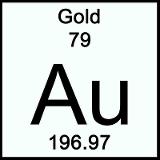
Which number is the atomic mass?
a)
79
b)
196.97
69.

2 or more elements chemically bonded. For example, carbon dioxide (CO2 )

a)

atom

b)

molecule

c)

compound

d)

mixture

70.

Texture, color, states of matter, flexibility, freezing & melting points

a)

chemical properties

b)

physical properties

c)

states of matter

71.

C6H12O11 is best described as a ...

a)

Chemical mixture

b)

Chemical formula

c)

Chemical Equation

72.

How many protons are in one atom of Al?

a)

13

b)

Al

c)

29.98

d)

16.98

73.

What is the atomic number for Al?

a)

13

b)

Al

c)

29.98

d)

16.98

74.

What is the chemical symbol for Al?

a)

13

b)

Al

c)

29.98

d)

16.98

75.

What is the atomic mass of Aluminum?

a)

13

b)

Al

c)

26.98

d)

16.98

76.

All of these are true about solutes except which one? (hint: look for the lie)

a)

gets dissolved

b)

is usually a solid or powder

c)

is present in a smaller amount than the solvent

d)

does the dissolving

77.

What does the dissolving (the liquid) in a solution?

a)

solvent

b)

solute

c)

mixture

78.

breaking and forming bonds that changes reactants into products (making something new and different)

a)

chemical reaction

b)

physical reaction

c)

emotional reaction

79.
What form of matter has a definite shape?
a)
Solid
b)
Liquid
c)
Gas
d)
Square
80.
Orange juice is an example of a ....
a)
solid
b)
liquid
c)
gas
81.
Which state of matter has particles that are tightly packed?
a)
liquid
b)
gas
c)
solid
82.
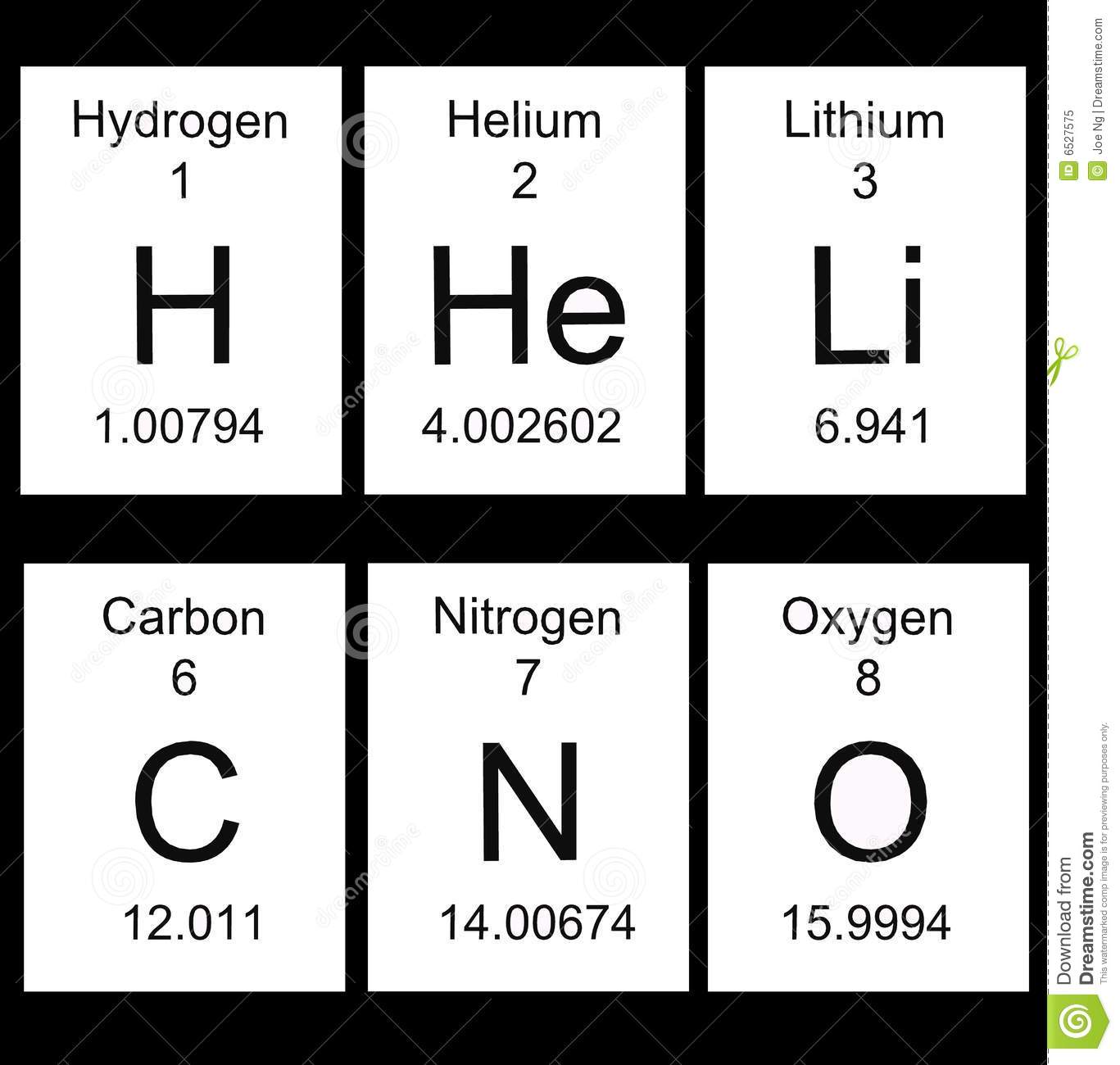
The number at the bottom of each square on the periodic table is the ...
a)
atomic number
b)
atomic mass
c)
chemical symbol
d)
element name
83.
The number at the top of each square on the periodic table is the ...
a)
atomic number
b)
atomic mass
c)
Chemical Symbol
d)
Element Name
84.
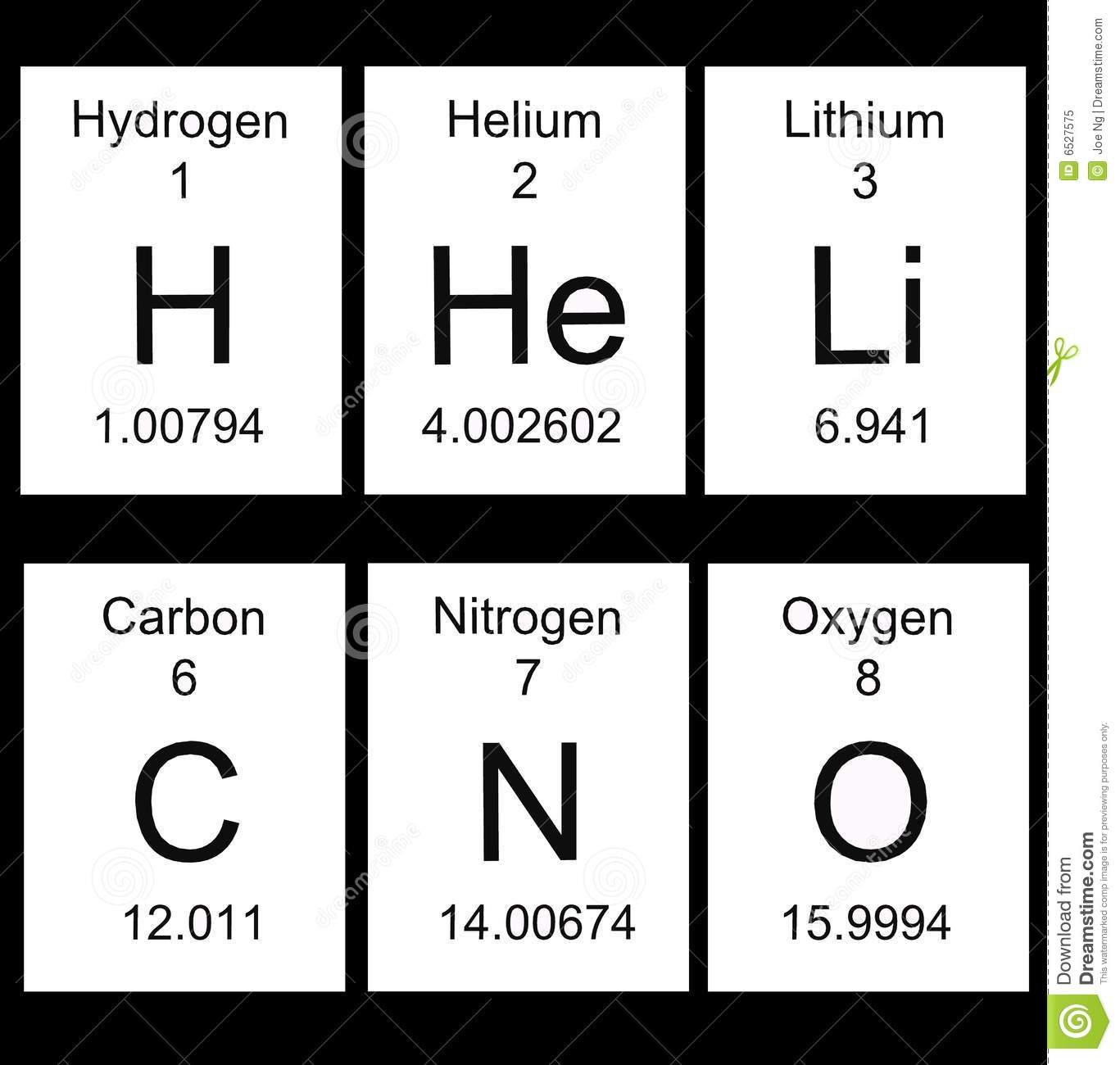
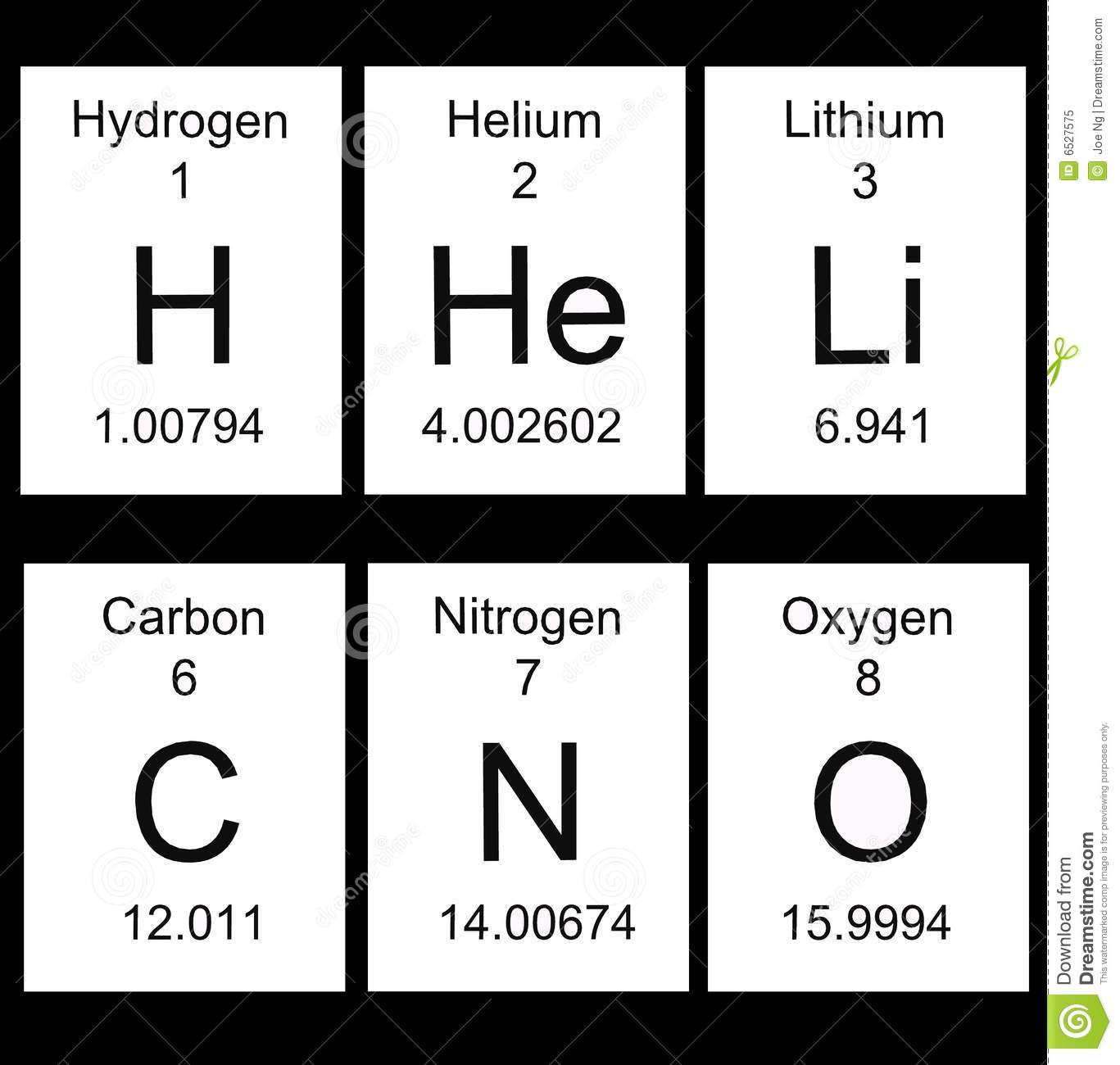
What is the chemical symbol for Lithium?
a)
H
b)
He
c)
Li
d)
N
85.
Elements which are shiny, conduct electricity and heat are called
a)
metal
b)
nonmetal
c)
metalloid
d)
nonexistent
86.
HELIUM
a)
H
b)
He
c)
Hl
d)
Hm
87.
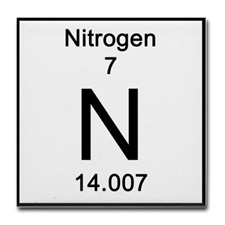
What is the number of protons that the element in this image contain?
a)
14
b)
7
c)
15
d)
18
88.
What is the atomic mass of "F"
a)
9
b)
18
c)
17
d)
19
89.
What is the atomic number for an element with three protons?
a)
2
b)
1
c)
3
d)
6
90.
What is the number of protons that the element in this image contain?
a)
14
b)
7
c)
15
d)
18
91.
What are the 3 particles that make-up the atom?
a)
protons, neutrons, and isotopes
b)
neutrons, isotopes, and electrons
c)
positives, negatives, and electrons
d)
protons, neutrons, and electrons
92.
What is the tiniest particle in the entire universe?
a)
cells
b)
gases
c)
atoms
d)
liquids
93.
Which part of an atom is POSITIVELY charged?
a)
protons
b)
neutrons
c)
electrons
d)
atoms
94.
What part of an atom is NEGATIVELY charged?
a)
protons
b)
neutrons
c)
electrons
d)
atoms
95.
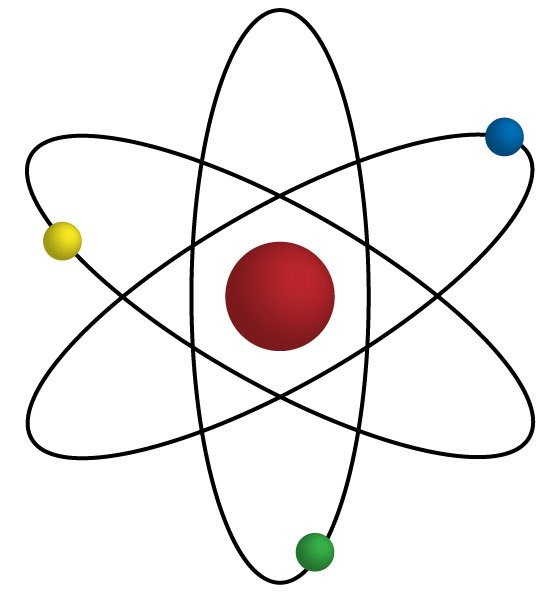
What is the picture displayed?
a)
Atom
b)
Element
c)
Molecule
d)
Compound
96.
What is the picture displayed?
a)
atom
b)
element
c)
molecule
d)
compound
97.
What does the 1.00794 stand for?
a)
Hydrogen
b)
atomic number
c)
atomic mass
d)
atomic explosion
98.
Matter always has mass.
a)
true
b)
false
99.
The tool used to measure the mass of a substance or object is a ______________.
a)
balance
b)
graduated cylinder
c)
ruler
d)
thermometer
100.
What is the formula for density?
a)
density = mass x volume
b)
density = mass / volume
c)
density = mass + volume
d)
density = mass - volume
101.
What is the volume of Object X?
a)
10.0 cm3
b)
15.0 cm3
c)
20.0 cm3
d)
25.0 cm3
102.
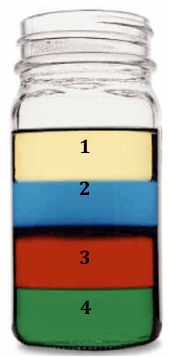
Put the liquids in order from most dense to least dense?
a)
4, 3, 2, 1
b)
1, 2, 3, 4
c)
3, 4, 2, 1, 
d)
4, 3, 1, 2
103.
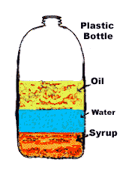
Which liquid is the least dense?
a)
oil
b)
water
c)
syrup 
d)
plastic bottle
104.
What is the number of protons that the element in this image contain?
a)
14
b)
7
c)
15
d)
18
105.
Atoms can be seen with the naked eye.
a)
True
b)
False