wayground logo

Free Printable Worksheets

Font size

S
M
L
XL
Worksheets

Matter, Atoms and the Periodic Table

Total questions: 100

Worksheet time: 1hrs 18mins

Name
Class
Date
1.
All matter is made of what 
a)
energy 
b)
atoms 
c)
electrons 
d)
compounds 
2.
The positive particles of an atom are 
a)
electrons 
b)
positrons 
c)
neutrons 
d)
protons 
3.
The central region of an atom where its neutrons and protons are is
a)
nucleus 
b)
electron cloud
c)
core 
d)
center 
4.
An atom with atomic number 6 would have how many protons? 
a)
6
b)
12
c)
3
d)
cannot be determined 
5.
A particle that moves around the nucleus is a(n)...
a)
Proton
b)
Neutron
c)
Electron
d)
Quark
6.
What does the 1.00794 stand for?
a)
Hydrogen
b)
atomic number
c)
atomic mass
d)
atomic explosion
7.
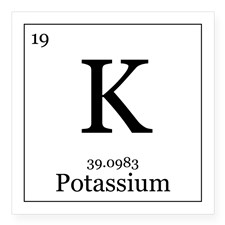
How many neutrons are in the atom "K"? Atomic number: 19. Mass: 39 
a)
7
b)
19
c)
39
d)
20
8.
What are the 3 sub-particles that make-up the atom?
a)
protons, neutrons, and isotopes
b)
neutrons, isotopes, and electrons
c)
positives, negatives, and electrons
d)
protons, neutrons, and electrons
9.
What particle uniquely identifies an element?
a)
Number of Valence Electrons
b)
Number of Protons
c)
Number of Electrons
d)
Atomic Mass
10.
Compounds are made of two or more elements.
a)
True
b)
False
11.
If an atom has 12 positively charged subatomic particles, which of the following must it also have to be considered a neutral atom?
a)
12 neutrons
b)
12 electrons
c)
12 protons
d)
24 protons and neutrons
12.
What has a definite volume and an indefinite shape?
a)
liquid
b)
solid 
c)
gas 
d)
plasma 
13.
Gases are spaced closely together. T/F
a)
True
b)
False
14.
Plasma can be found at low temperatures. T/F
a)
True
b)
False
15.
A example of a chemical change is 
a)
a change in color
b)
a change in size
c)
density 
d)
it can be flattened 
16.
An alloy is an example of a mixture.  T/F
a)
True
b)
False
17.
Examples of substances are
a)
H2O, C
b)
H2O, Soil
c)
Salad, Kool-Aid
d)
Brass, Copper
18.
Mixtures have a fixed composition. T/F
a)
True
b)
False
19.
Air is a solution in which nitrogen is the solvent. T/F
a)
True
b)
False
20.
You can separate a substance by chemical means. T/F
a)
True
b)
False
21.
Neutral atoms have equal numbers of protons and neutrons. T/F
a)
True
b)
False
22.
When there is a transfer of electrons, the type of compound formed
a)
ionic
b)
covalent 
c)
metallic
23.
In the modern periodic table elements are arranged by:
a)
atomic mass
b)
atomic number
c)
valence electrons
d)
number of isotopes
24.
I am anything that has mass and takes up space!
a)
energy
b)
matter
c)
molecules
d)
atoms
25.

The position of the parts of an atom; each element has a different number of protons, neutrons, and electronics

a)

pure substance

b)

atomic arrangement

c)

element

d)

proton

26.

A pure substance that cannot be separated or broken down into simpler substances (made up of one type of atom)

a)

atom

b)

element

c)

compound

d)

mass

27.

The system used to organize the elements based on how many protons their atoms have is called the Periodic Table

a)

True

b)

False

28.
What is the atomic number?
a)
the number of protons
b)
the number of protons and neutrons
c)
the number of neutrons
d)
the number of protons and electrons
29.
Ions are: 
a)
atoms with a positive or negative charge
b)
atoms with no charge
c)
atoms with ONLY a positive charge
d)
atoms with ONLY a negative charge
30.
If an atom has 10 protons, 10 neutrons, and 10 electrons, what is the mass of the atom?
a)
10
b)
20
c)
30
31.
Which statement best explains how periods on the periodic table are organized? 
a)
increasing atomic number from left to right
b)
increasing number of neutrons from left to right
c)
decreasing number of electrons from left to right
d)
decreasing atomic mass number from left to right
32.
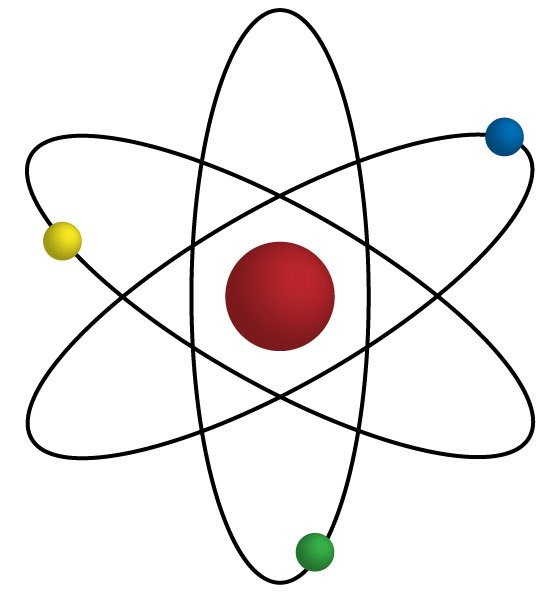
This picture represents which of the following?
a)
element
b)
compound
c)
mixture
33.
Which statement best describes an element?
a)
made from mixture 
b)
thousands in the world
c)
pure, made of only one atom
d)
can be separated 
34.
Which one can be found on the periodic table?
a)
Compound 
b)
Element
35.
Which one has more than one type of atom in it?
a)
Element
b)
Compound 
36.
Carbon is considered an element while carbon dioxide is considered a compound. This is because carbon dioxide is –
a)
a gas at room temperature.
b)
made of two different elements.
c)
given off by green plants.
37.
The smallest particle of any particular type of matter is known by which of the following terms?
a)
Element
b)
Chemical
c)
Atom
d)
Substance
38.
What is gold?
a)
element
b)
compound
c)
mixture
39.
What is krypton?
a)
element
b)
compound
c)
mixture
40.
Contains two or more atoms combined
a)
Elements
b)
Compounds
c)
Mixtures
41.
Which of the following does not describe the nucleus of the atom?  
a)
It is very dense
b)
It is composed of neutrons and protons
c)
It contains nearly all the atom’s mass
d)
It contains nearly all the atom’s volume
42.
Which statement about matter is TRUE?
a)
Atoms are not matter but they are contained in matter.
b)
Matter exists only when you can see it.
c)
Living things are not matter
d)
Matter is made up of atoms
43.
Is air matter?  Why or why not?
a)
Yes, because air is not alive.
b)
Yes, because air is made up of atoms
c)
No, because air cannot be seen
d)
No, because air does not take up space.
44.
Which of the following represents an element?
a)
H2O
b)
H2
c)
NaCl
d)
CaCO3
45.
Which of the following is not a compound?
a)
HCl
b)
Cl
c)
NaCl
d)
CO2
46.
Salt has a chemical formula of NaCl.  Salt is a...
a)
Compound
b)
Element
c)
Mixture
d)
None of the Above
47.
How many elements are represented in the compound?
Na2CO3
a)
1
b)
2
c)
3
d)
4
48.
Mixtures are separated through ___________changes.
a)
mixture
b)
compound
c)
physical
49.
In general, metals are _____. 
a)
poor conductors of heat
b)
brittle
c)
poor conductors of electricity 
d)
good conductors of heat
50.
Vertical columns in the periodic table are called _________ of elements and have similar properties. 
a)
groups
b)
periods
51.
The horizontal rows on the periodic table are known as
a)
periods.
b)
atoms.
c)
groups or families.
d)
valence electrons.
52.
What is H2SO4 
 made up of?
a)
2 hydrogen, 1 sulfur, 4 oxygen
b)
1 hydrogen, 2 sulfur, 4 oxygen
c)
2 hydrogen & 4 sodium
d)
1 hydrogen & 6 sodium
53.
The blue numbers in the image below are called ___________.
a)
compounds
b)
coefficients
c)
subscripts
d)
chemical formulas
54.
The blue numbers in the image below are called ___________.
a)
compounds
b)
coefficients
c)
subscripts
d)
chemical formulas
55.
What is the chemical formula for water?
a)
H3O
b)
H2O2
c)
H2O3
d)
H2O
56.
There are 92 naturally occurring atoms, the rest are made in labs. 
a)
True
b)
False
57.
Substance with a DEFINITE volume, but NO definite shape...
a)
solid
b)
liquid
c)
gas
58.
Substance with a DEFINITE shape and DEFINITE volume...
a)
solid
b)
liquid
c)
gas
59.
Amount of matter in a solid, liquid, or gas...
a)
mass
b)
volume
60.
Which particles are found in an atom's nucleus?
a)
Protons
b)
Neutrons
c)
Electrons
d)
Both protons and neutrons
61.
A description of objects that can be measured and observed.
a)
gas
b)
mustangs
c)
physical properties
d)
melting point
62.
If you saw a glass of water and later the water was gone what happened to the water? Remember that your in the science lab.
a)
Ms. Klenk was very thirsty and drank the water.
b)
evaporation
c)
precipitation
d)
solubility
63.
Example for Physical Property
a)
Taste
b)
explodes
64.
A physical property can be observed with your
a)
Eyes
b)
Ears
c)
Tastes
d)
All of the above
65.
Cutting an orange is a physical change.
a)
True
b)
False
66.
What causes a change in the state of matter?
a)
physical properties
b)
chemical energy
c)
temperature
67.
Which change can occur when  you add heat energy to water?
a)
The water can change from a liquid to a solid
b)
The water can change from a gas to a liquid
c)
The water can change from a liquid to a gas
d)
The water can change from a solid to a liquid
68.
Changing the way matter looks without changing it into NEW matter is a:
a)
Chemical change
b)
Physical change
c)
Energy change
d)
BOTH a chemical and a physical change
69.
Which term means "the ability to cause change?"
a)
Matter
b)
Heat
c)
Energy
d)
physical change
70.
Which of the following could be a characteristic that changes in matter during a PHYSICAL CHANGE?
a)
Size
b)
State
c)
Texture
d)
All of the above
71.
Chopping wood is an example of a:
a)
Physical change
b)
Chemical change
72.
Water freezing to ice is an example of a:
a)
Physical change
b)
Chemical change
73.
Burning wood to ash is an example of a:
a)
Physical change
b)
Chemical change
74.
Smashing a piece of candy into smaller pieces is an example of a:
a)
Physical change
b)
Chemical change
75.
A physical change does not need energy to occur.
a)
True
b)
False
76.
Adding HEAT to matter causes its particles to:
a)
move faster and farther apart
b)
Move slower and farther apart
c)
Move faster and closer together
d)
Move slower and closer together
77.
Group 18 elements are known as the _____ _____ and have full valence shells.
a)
royal gases.
b)
supreme solids.
c)
noble gases.
d)
legit liquids.
78.
The yellow atoms are called 
a)
metals
b)
nonmetals
c)
metalloids
d)
noble gases
79.
As you move down the periodic table atoms get bigger.  This is because ____________.
a)
The atoms have more mass.
b)
The atoms have more protons.
c)
The atoms have more energy levels
d)
The atoms have more nuetrons
80.
What is the number of protons that the element in this image contain?
a)
14
b)
7
c)
15
d)
18
81.
The three categories of elements found on the periodic table are metals, nonmetals and?
a)
gases
b)
Metalloids
82.
Beryllium has how many protons?
a)
4
b)
9.0122
c)
2
d)
13.0122
83.
Silicon has how many neutrons?
a)
14
b)
15
c)
28.09
d)
1
84.
The symbol for Carbon is
a)
6
b)
12.011
c)
C
d)
Ca
85.

The periodic table consists of ___ columns, called Groups going down.

a)

12

b)

11

c)

7

d)

14

e)

18

86.

The elements in the Periodic Table are arranged according to their atomic number, which is the number of _________ in their nucleus.

a)

electrons

b)

protons

c)

mass

d)

protons and electrons

e)

protons, neutrons, and electrons

87.

_______________ elements have a full outer shell of electrons and so are very unreactive.

a)

Group 7

b)

Group 18

c)

Group 1

88.

The element ___________is what makes life go on and on.

a)

nitrogen

b)

carbon

c)

oxygen

d)

hydrogen

89.
The tendency of an element to react with other elements to produce compounds. 
a)
Chemical change
b)
Neutrality
c)
Reactivity
d)
Valence 
90.
A subatomic particle that has almost no mass and a negative charge.
a)
Electricity
b)
Proton
c)
Electron
d)
Neutron
91.
The number of negatively charged particles in the most outer shell.
a)
Valence Electrons 
b)
Valence Neutron
c)
Valence Proton
d)
Valance Particles
92.
Which elements have the most similar chemical properties?
a)
K and Na
b)
K and Ca
c)
K and Cl
d)
K and S
93.
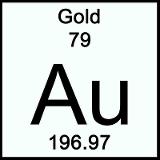
Which number is the atomic mass?
a)
79
b)
196.97
94.
The mass of the products in a chemical reaction is the same as the mass of the reactants in the reaction.  Which law best describes this statement?
a)
The Law of Conservation of Angular Momentum
b)
The Law of Superposition
c)
The Law of Conservation of Matter
d)
The Law of Entropy
95.
Greek philosopher who proposed that matter was composed on invisible particles he called atoms (400 BC)
a)
Democritus
b)
John Dalton
c)
J.J. Thomson
d)
Ernest Rutherford
96.
discovered the electron and proposed a new model of the atom: the plum pudding model.
a)
J.J. Thomson
b)
John Dalton
c)
James Chadwick
d)
Ernest Rutherford
97.
developed a new model of the atom by proposing that electrons travel in orbits around the nucleus.
a)
Niels Bohr
b)
J.J. Thomson
c)
John Dalton
d)
James Chadwick
98.
the average of the mass of protons and neutrons for all of the isotopes of an element
a)
atomic mass
b)
atomic number
c)
amu
99.
atoms of the same element that have the same number of protons but different numbers of neutrons
a)
isotopes
b)
electrons
c)
proton
d)
neutron
100.
a vertical column of elements on the periodic table
a)
family/group
b)
period
c)
transition
d)
metalloid