wayground logo

Free Printable Worksheets

Font size

S
M
L
XL
Worksheets

Review for semester test 2018 Part 1

Total questions: 100

Worksheet time: 2hrs 1mins

Name
Class
Date
1.

How does blood flow from a person's leg back to the person's heart?

a)

Contracting leg muscles push the blood upward

b)

Gravity pushes the blood upward

c)

Lungs pull the blood upward

d)

Contracting heart muscles pull the blood upward

2.

When people run long distances, their muscles require a lot of oxygen. Which system is responsible for carrying this oxygen to the muscles?

a)

Respiratory system

b)

Circulatory system

c)

Digestive System

d)

Muscular System

3.

Many changes occur in the digestive system. Which process is classifies as a chemical change?

a)

Taking a bit of an apple.

b)

Digestive enzymes breaking down proteins into smaller fragments

c)

Esophagus moving food to the stomach

d)

Teeth grinding an almond into smaller pieces in the mouth

4.

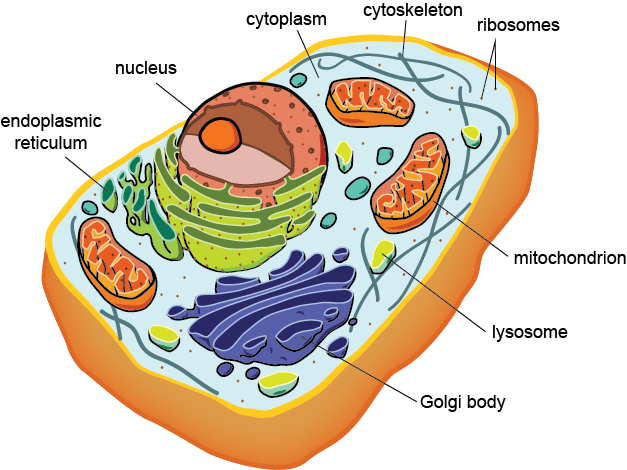
The diagram shows parts of the cell. Which organelle stores the information that determines an individual's blood type

a)

Organelle 1

b)

Organelle 2

c)

Organelle 3

d)

Organelle 4

5.

Plants have cell walls, while animal cells only have cell membranes surrounding them. How do these two organelles differ?

a)

A. Cell walls tend to be smaller than cell membranes

b)

B. Cell walls tend to be more rigid than cell membranes

c)

Cell walls tend to contain less cellulose than cell membranes

d)

Cell walls tend to contain more lipids than cell membranes

6.

Which of the following is a physical change in matter that takes place in the digestive system?

a)

A. The gall bladder uses bile to break down fats

b)

B. The stomach uses enzymes to break down proteins

c)

C. The mouth uses the tongue to form small balls of food.

d)

The pancreas uses pancreatic juices to transform starches

7.
Which of the following is a behavioral adaptation?
a)
Gills on a fish
b)
Xylem in plants
c)
Bears hibernating
d)
Lions hunting in prides 
8.
Which of the following is a structural (physical) adaptation? 
a)
Gills on a fish 
b)
Birds migrating south
c)
Bears hibernating
d)
Lions hunting in a pack
9.
Why do penguins have solid, dense bones?
a)
So they can fly for long periods of time
b)
To help them float in the ocean 
c)
To dive deep under water to hunt for fish
d)
To stay warm under water
10.
Why do most birds have hollow bones? 
a)
To fly for long periods of time and long distances
b)
To stay warm in the winter
c)
To help them find and store food
d)
To help them lay more eggs to reproduce 
11.
What adaptation do birds have that helps supply them with enough oxygen for long flights? 
a)
Various claw/foot shapes
b)
Dense, solid bones
c)
Hearts that beat very rapidly
d)
Three lungs 
12.
What structural adaptation do fish have that provide them with needed oxygen underwater? 
a)
Xylem
b)
Gills
c)
Lungs 
d)
Extra blood vessels on the skin 
13.
In a population of desert plants, the timing of their blooming varies greatly. Some bloom early in the morning, others at mid-day, and others after dark. What environmental pressure might be an advantage for those plants that bloom after dark?
a)
There is an increase in the population of nocturnal pollinators
b)
There is a decrease in the strength of solar radiation.
c)
There is an increase in herbivores that forage at night.
d)
There is a decrease in water for root absorption.
14.
Anything that helps an animal survive in its environment.
a)
counter-shading
b)
mimicry
c)
adaptation
d)
camouflage
15.
Selective breeding is when
a)
animals change because of their environment
b)
humans choose the desired traits and breed animals
c)
when animals fight each other to survive
d)
when humans go to the pet store
16.
How do adaptations help animals?
a)
To hide from predators
b)
to hunt for food
c)
to survive in their habitats
d)
All of these are correct
17.
What does it mean to hibernate?
a)
To change your physical characteristics
b)
To sleep for an extended period of time during the winter
c)
To travel to a warmer location
d)
To blend in with the environment
18.
Most adaptations that help an organism survive are passed on from parent to child as ___traits?
a)
adaptable
b)
physical
c)
more
d)
inherited
19.
What does the term variation mean?
a)
The same traits in a population.
b)
The different ways that traits are expressed in a population.
c)
The same ways traits are expressed in a population.
d)
The place where an animal lives.
20.
Which of the following describes what is meant by Natural Selection?
a)
An organism will survive no matter what its adaptations may be
b)
An organism with adaptations that do not allow it to reproduce as effectively as others will survive.
c)
An organism with adaptations that allow it to obtain resources and reproduce more effectively than others will survive.
d)
No organisms will survive.
21.
A trait that helps an organism survive and reproduce.
a)
adaptation
b)
competition
c)
environmental factor
d)
mutation
22.
the ability of bacteria to withstand the effects of an antibiotic
a)
antibiotic resistance
b)
artificial selection
c)
behavioral adaptation
d)
designer babies
23.
The breeding of plants and animals by humans to produce desirable traits.
a)
artificial selection
b)
natural selection
c)
extinction
d)
mutation
24.
the "directions" inside the nucleus of every cell that makes you, you
a)
DNA
b)
mutation
c)
extinction
d)
natural selection
25.
when all individuals of a species die off
a)
extinction
b)
population
c)
overproduction
d)
competition
26.
Which of the following statements is not part of the cell theory?
a)
Cells are the basic unit of structure and function in all living things.
b)
All cells are produced from other cells.
c)
Only animal cells are composed of cells.
d)
All living things are composed of cells.
27.
What structures distinguish a plant cell from an animal cell?
a)
Plant cells have cell walls and ribosomes.
b)
Plant cells have cell walls and chloroplasts.
c)
Plant cells have chloroplasts and ribosomes.
d)
Plant cells have chloroplasts and mitochondria.
28.
When cells are damaged, new cells are created by cell division. How does the cell theory support this fact?
a)
It states that all cells have a nucleus which divides.
b)
It states that all living things are made up of one or more cells.
c)
It states that cells come from previously existing cells.
d)
 It states that the basic units of structure and function are cells.
29.
Jelly-like substance found inside cell that acts as a medium for chemical reactions within the cell
a)
Nuclear Membrane
b)
Golgi Body
c)
Cytoplasm
d)
Ribosome
30.
Controls what passes in and out of the nucleus
a)
Nuclear Membrane
b)
Vacuole
c)
Ribosome
d)
Lysosome
31.
"Storage tanks" Can hold food, water or waste for the cell
a)
Ribosomes
b)
Vacuole
c)
Chloroplast
d)
Nucleolus
32.
"powerhouse of the cell" breaks down sugar molecules to release energy, site of cellular respiration, double membrane, self-replicating, contains own DNA, cristae
a)
Mitochondria
b)
Chloroplast
c)
Cell Wall
d)
Vesicle
33.
What cell part is NOT found in all cells?
a)
Cell Wall
b)
Cell Membrane
c)
Cytoplasm
d)
Genetic Material
34.
"Gatekeeper" Separates the cell from the rest of the environment and helps control what passes in and out of the cell.  Semi-permeable: allows some materials to pass through but not all
a)
Cell Wall
b)
Cytoplasm
c)
Mitochondria
d)
Cell Membrane
35.
As the gatekeeper, I allow some things in and out of the cell.
a)
cell wall
b)
lysosome
c)
cell membrane
d)
cytoplasm
36.
The basic unit of structure and function in an organism.
a)
cell
b)
nucleus
c)
cytoplasm
d)
chromosomes
37.
In plant cells, I turn light energy into food and I give these cells their color.
a)
animal cells
b)
vacuole
c)
chloroplast
d)
cell wall
38.
How many parents in sexual reproduction?
a)
1
b)
4
c)
2
d)
3
39.
What does a plant cell have that an animal cell doesn't have?
a)
A. chloroplasts
b)
B. cell wall 
c)
C. cytoplasm
d)
D. A & B
40.
Chromosomes are found in the ____________ of the cell
a)
Chloroplast
b)
Nucleus
c)
Cytoplasm
d)
Mitochondria
41.
The passing of DNA from parents to offspring
a)
Generation
b)
Heredity
c)
Inheritance
d)
Traits
42.
What is a gene?
a)
An entire chromosome that  codes for a trait
b)
a piece of clothing
c)
a piece of a DNA on chromosome that codes for a trait
d)
Chemical messengers in your brain that code for a trait
43.
What is a segment of DNA called?
a)
Chromosome
b)
gene
c)
dominant trait
d)
nucleus
44.
In asexual reproduction there is____ parent(s).
a)
two
b)
one
45.
What do these two organisms have in common?
a)
They reproduce sexually
b)
They reproduce asexually
c)
They reproducing using eggs and sperm
d)
They reproduce with two parents
46.
Which statement describes asexual and sexual reproduction?
a)
Asexual is one part of sexual reproduction.
b)
Sexual reproduction happens before asexual reproduction.
c)
Asexual needs one parent, and sexual needs two parents.
d)
Sexual only happens in animals, and asexual happens only in plants.
47.
Which organism is the product of asexual reproduction?
a)
W
b)
X
c)
Y
d)
Z
48.
This shows which form of reproduction?
a)
sexual
b)
asexual
49.
Which statement best describes the process of asexual reproduction?
a)
new organisms are usually genetically identical to the parent
b)
the reproductive cycle involves the production of games
c)
nuclei of sex cells fuse to form a zygote
d)
it involves the production of genetic copies 
50.
a)
budding
b)
sporulation
c)
vegetative propagation
d)
binary fission
51.
a)
budding
b)
binary fission
c)
sporulation
d)
regeneration
52.
What are some of the facts about asexual reproduction?
a)
Takes only one mate to reproduce and takes a longer time to reproduce
b)
Takes a shorter amount of time to reproduce and it takes two mates to reproduce
c)
Reproduces diverse offspring and takes a longer time to reproduce
d)
Takes only one mate to reproduce and takes a shorter time to reproduce
53.
How many parent(s)are needed for asexual?
a)
4
b)
1
c)
9
d)
100
54.
Where is all the genetic material inside a cell?
a)
nucleus
b)
vacuole
c)
cell membrane
d)
ribosome
55.
The passing of physical characteristics from parent to offspring 
a)
Heredity
b)
Chromosome
c)
Genes
d)
Chemistry
56.

What type of asexual reproduction does the figure represent?

a)

Binary Fission

b)

Budding

c)

Vegetative Propagation

d)

Fragmentation

57.
one parent needed.
a)
sexual
b)
asexual
58.
What are some of the facts about sexual reproduction?
a)
Takes two mates to reproduce and takes a longer time to reproduce
b)
Takes one mate to reproduce and takes a shorter amount of time to reproduce
c)
Takes two mates to reproduce and takes a shorter amount of time to reproduce
d)
Takes one mate to reproduce and takes a shorter amount of time to reproduce
59.
What are some of the facts about asexual reproduction?
a)
Takes only one mate to reproduce and takes a longer time to reproduce
b)
Takes a shorter amount of time to reproduce and it takes two mates to reproduce
c)
Reproduces diverse offspring and takes a longer time to reproduce
d)
Takes only one mate to reproduce and takes a shorter time to reproduce
60.

This is where aerobic respiration occurs, to release energy for the cell

a)

Ribosomes

b)

Cytoplasm

c)

Mitochondria

d)

Endoplasmic reticulum

61.
What are cells?
a)
They regulate what materials enter and leave the organism
b)
They keep the animal plump
c)
The control center
d)
Basic units of all living things
62.
What body system makes your body move? 
a)
Circulatory
b)
Respiratory
c)
Skeletal
d)
Muscular
63.
What body system removes the waste from your body? 
a)
Circulatory
b)
Excretory
c)
Digestive
d)
Respiratory
64.
What body system consists of the kidneys?
a)
Circulatory
b)
Excretory
c)
Digestive
d)
Muscular
65.
What body system consists of the heart?
a)
Excretory
b)
Digestive
c)
Circulatory
d)
Respiratory
66.
Muscles help your body _______?
a)
Read
b)
Sit
c)
Sleep
d)
Move
67.
My heart is a _________, that pumps blood through the body. 
a)
Cell
b)
Tissue
c)
Muscle
d)
Bone
68.
Arteries carry blood ______ from the heart.
a)
Away
b)
To
c)
Across
d)
Around
69.
The air I breathe in goes down my trachea to my ______?
a)
Heart
b)
Lungs
c)
Brain
d)
Stomach
70.
My body needs ______ from the air to live. 
a)
Oxygen
b)
Cardon Dioxide
c)
Carbon Monoxide
d)
Hydrogen Peroxide
71.
The food I eat goes down my esophagus to my __________.
a)
Bladder
b)
Kidney
c)
Stomach
d)
Big Toe
72.
My _______ are special organs that filter waste out of my blood. 
a)
Pancrease
b)
Esophogus
c)
Bladder
d)
Kidneys
73.
What body system consists of the lungs
a)
Respiratory
b)
Circulatory
c)
Muscular
d)
Skeletal
74.
Which of the following shows the correct diagram
a)
Cell-Tissue-Organ-Organ System
b)
Cell-Organ-Tissue-Organ System
c)
Organ System-Organ-Tissue-Cell
d)
Tissue-Organ System-Organ-Cell
75.
The main purpose of the ____________ system is to break food particles into pieces that can be used.
a)
circulatory
b)
respiratory
c)
digestive
d)
skeletal
76.
What is responsible for delivering oxygen and removing carbon dioxide from the body?
a)
cell nucleus
b)
excretory system
c)
nervous tissue
d)
respiratory system
77.
The __________ system directs the body to inner and outer changes.
a)
digestive
b)
circulatory
c)
nervous
d)
skeletal
78.
The __________ is the main organ of the nervous system.
a)
heart
b)
lungs
c)
brain
d)
skin
79.
___________ are the building blocks of life.
a)
cells
b)
legos
c)
blocks
d)
blood
80.
The circulatory system uses _________ to deliver oxygen to the rest of the body.
a)
blood cells
b)
lungs and nose
c)
blood vessels
d)
brain and spinal cord
81.
When tissues come together, they form ___________.
a)
cells
b)
atoms
c)
organs
d)
systems
82.
Which of the following shows the levels of organization of an organism from LEAST to MOST complex.
a)
cells-tissues-systems-organs
b)
organs-cells-systems-tissues
c)
systems-organs-tissues-cells
d)
cells-tissues-organs-systems
83.
Which of the following scientists contributed to the cell theory?
a)
Rudolf Virchow, Robert Hooke, Anton van Leuwenhoek
b)
Matthais Schleiden, Theodor Schwann, Rudolf Virchow
c)
Robert Hooke, Theodor Schwann, Anton von Leuwenhoek
d)
Theodor Schwann, Matthais Schleiden, Robert HookeOption 4 (optional)
84.
Which of the following statements is not part of the cell theory?
a)
Cells are the basic unit of structure and function in all living things.
b)
All cells are produced from other cells.
c)
Only animal cells are composed of cells.
d)
All living things are composed of cells.
85.
What is one way in which all living things on Earth are alike?
a)
All living things have hair.
b)
All living things are made of cells and come from other cells.
c)
The cells of all living things have chloroplast.
d)
All living things can move. 
86.
Which statement reflects one of the major components of the cell theory?
a)
All living things are multi-cellular.
b)
Organs are the basic unit of structure and function for all living things.
c)
All cells come from previously existing cells.
d)
Every organism has a reproductive system to ensure survival of the species.
87.
When cells are damaged, new cells are created by cell division. How does the cell theory support this fact?
a)
It states that all cells have a nucleus which divides.
b)
It states that all living things are made up of one or more cells.
c)
It states that cells come from previously existing cells.
d)
 It states that the basic units of structure and function are cells.
88.
Which of these is the basic unit of life in all living things?
a)
tissue
b)
organ
c)
cell
d)
atom
89.
A group of tissues that perform a similar function is called_____. (Examples include the heart, lungs or stomach)
a)
cells
b)
tissues
c)
organs
d)
organ system
90.
What is an organism?
a)
a group of similar cells that perform a common function
b)
a group of organs working together to do a job in the body
c)
a collection of tissues that work together
d)
a living thing 
91.
It is called the "powerhouse" of a cell.

a)
nucleus
b)
mitochondrion
c)
lysososme
d)
ribosome
92.
It contains digestive enzymes that can break things down, also called a "suicide sac" because the rupturing of the lysosome will cause the cell to destroy itself.
a)
Endoplasmic reticulum
b)
golgi body
c)
vacuoles
d)
lysosome
93.
it uses sunlight to create food, photosynthesis (only found in plant cells),
a)
smooth ER
b)
golgi body
c)
cell wall
d)
chloroplasts
94.
It is the processing, packages and secretes proteins; proteins are transported in vesicles  .
a)
Ribosomes
b)
Lysosomes
c)
Golgi apparatus
d)
Mitochondria
95.
It is located outside the cell membrane of plants and some bacteria which serves as support.
a)
cell wall 
b)
choloroplast
c)
smooth ER 
d)
rough ER
96.
Directs all cell activities "Brain or Control Center of cell"
a)
Lysosomes
b)
Nucleus
c)
ribosomes
d)
Mitochondria
97.
Jelly-like substance found inside cell that acts as a medium for chemical reactions within the cell
a)
Nuclear Membrane
b)
Golgi Body
c)
Cytoplasm
d)
Ribosome
98.
Controls what passes in and out of the nucleus
a)
Nuclear Membrane
b)
Vacuole
c)
Ribosome
d)
Lysosome
99.
Makes proteins for the cell, can be found attached to the endoplasmic reticulum or free in the cytoplasm
a)
Cell Wall
b)
Golgi Body
c)
Ribosome
d)
Cytoplasm
100.
Plant cells and animal cells...
a)
have nothing in common.
b)
are exactly the same.
c)
are a little bit alike and a little bit different.
d)
are both big.