wayground logo

Free Printable Worksheets

NEW

Font size

S
M
L
XL
Worksheets

Review for Assessment 3

Total questions: 77

Worksheet time: 58mins

Name
Class
Date
1.
Which organelle belongs in plant cells only?
a)
Cell Membrane
b)
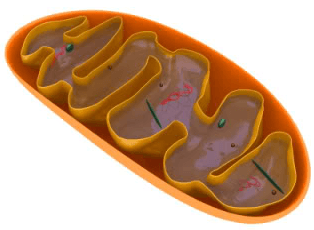
Mitochondrion
c)
Chloroplast
d)
Nucleus
2.
Which organelle belongs in plant cells only?
a)
Cytoplasm
b)
Mitochondrion
c)
Cell Wall
d)
Nucleus
3.
Which organelle belongs in plant cells only?
a)
Cytoplasm
b)
Mitochondrion
c)
Large Central Vacuole
d)
Cell Membrane
4.
Which organelle belongs in both plant and animal cells?
a)
Cytoplasm
b)
Chloroplast
c)
Large Central Vacuole
d)
Cell Wall
5.
Which organelle belongs in both plant and animal cells?
a)
Chloroplast
b)
Mitochondrion
c)
Large Central Vacuole
d)
Cell Wall
6.
Which organelle belongs in both plant and animal cells?
a)
Chloroplast
b)
Cell Wall
c)
Large Central Vacuole
d)
Cell Membrane
7.
Which organelle belongs in both plant and animal cells?
a)
Chloroplast
b)
Cell Wall
c)
Large Central Vacuole
d)

Nucleus

8.

Which organelle belongs in animal cells only?

a)

Chloroplast

b)

Cell Wall

c)

Many Small Vacuole

d)

Nucleus

9.
What organelle is called the "powerhouse" of a cell?

a)
Endoplasmic Reticulum
b)
Nucleus
c)
Mitochondria
d)
Nucleolus
10.
What are tiny organelles that convert glucose into ATP?
a)
Ribosomes
b)
Vesicles
c)
Cytoskeleton
d)
Mitochondria
11.
A rigid layer that lies outside the cell's  membrane is...
a)
Cytoskeleton
b)
Cilia
c)
Cell Wall
d)
Flagella
12.
What type of cell has a defined nucleus and membrane bound organelles.
a)
Bacteria
b)
Prokaryote
c)
Eukaryote
d)
Archaeabacteria
13.
what is the job of chloroplasts in the cell
a)
produce protien
b)
catch sunlight and turn it into energy
c)
nothing
d)
clean up
14.
This type of cell needs a cell wall and chloroplasts
a)
Plant cell
b)
Animal Cell
c)
Bacteria
15.
This structure controls what can enter and leave a cell.
a)
Nucleus
b)
Cytoplasm
c)
Cell Membrane
d)
Golgi Body
16.
What shape are most plant cells?
a)
round / irregular
b)
rectangular
17.
What shape are most animal cells?
a)
round / irregular
b)
rectangular
18.
What part of the water cycle does this picture show?
a)
condensation
b)
precipitation
c)
evaporation
19.
Which is the opposite of condensation?
a)
runoff
b)
evaporation
c)
precipitation
d)
transpiration
20.
Snow, sleet, hail, and rain are all examples of  ________________. 
a)
evaporation
b)
condensation
c)
accumulation
d)
precipitation
21.
What is it called when WATER is FORMED from an LIQUID to a WATER VAPOR Oor an [GAS]?
a)
EVAPORATION
b)
PRECIPITATION
c)
TRANSPIRATION
22.
What is it called when plants give off water vapor as a waste product?
a)
condensation
b)
evaporation
c)
sublimation
d)
transpiration
23.
When water _________, dew forms.
a)
Melts
b)
Evaporates
c)
Condenses
d)
Precipitates
24.

The rock, dust, soil, and minerals of the Earth's solid crust and outer mantle make up the ____

a)

Biosphere

b)

Geosphere

c)

Hydrosphere

d)

Atmosphere

25.
This picture best describes which connection?
a)
Atmosphere-Biosphere
b)
Hydrosphere-Atmosphere
c)
Hydrosphere-Geosphere
d)
Geosphere-Biosphere
26.
This picture shows
a)
Atmosphere
b)
Biosphere
c)
Hydrosphere
d)
Geosphere
27.

wind

a)

Atmosphere

b)

Hydrosphere

c)

Biosphere

d)

Geosphere

28.

lake

a)

Atmosphere

b)

Hydrosphere

c)

Biosphere

d)

Geosphere

29.

animals

a)

Atmosphere

b)

Hydrosphere

c)

Biosphere

d)

Geosphere

30.

rocks

a)

Atmosphere

b)

Hydrosphere

c)

Biosphere

d)

Geosphere

31.

oceans

a)

Atmosphere

b)

Hydrosphere

c)

Biosphere

d)

Geosphere

32.

land

a)

Atmosphere

b)

Hydrosphere

c)

Biosphere

d)

Geosphere

33.

oxygen

a)

Atmosphere

b)

Hydrosphere

c)

Biosphere

d)

Geosphere

34.

water vapor

a)

Atmosphere

b)

Hydrosphere

c)

Biosphere

d)

Geosphere

35.

trees

a)

Atmosphere

b)

Hydrosphere

c)

Biosphere

d)

Geosphere

36.

glaciers

a)

Atmosphere

b)

Hydrosphere

c)

Biosphere

d)

Geosphere

37.

snow

a)

Atmosphere

b)

Hydrosphere

c)

Biosphere

d)

Geosphere

38.

minerals

a)

Atmosphere

b)

Hydrosphere

c)

Biosphere

d)

Geosphere

39.

insects

a)

Atmosphere

b)

Hydrosphere

c)

Biosphere

d)

Geosphere

40.
A living or once-living organisms in an ecosystem is a
a)
population
b)
biotic factor
c)
abiotic factor
d)
community
41.
A nonliving element in an ecosystem is an 
a)
animal
b)
abiotic factor
c)
biotic factor
d)
organism
42.
Which of the following is not an abiotic factor?
a)
sun
b)
temperature
c)
soil
d)
grass
43.
Which of the following is not a biotic factor?
a)
mushroom
b)
air
c)
elephant
d)
coyote
44.
Is a deer an abiotic or biotic factor? 
a)
abiotic
b)
biotic
45.
Is a fern an abiotic or biotic factor? 
a)
abiotic
b)
biotic
46.
Is a weather an abiotic or biotic factor? 
a)
abiotic
b)
biotic
47.
Is sunlight an abiotic or biotic factor? 
a)
abiotic
b)
biotic
48.

Which organelle performs PHOTOSYNTHESIS?

a)

Chloroplast

b)

Mitochondria

c)

Cell Wall

d)

Nucleus

49.
What is the pigment in chloroplasts that performs photosynthesis?
a)
Chlorosynthesis
b)
Chlorophyll
c)
ADP
d)
Electron Transport
50.
What are the products of photosynthesis?
a)
water and carbon dioxide
b)
oxygen and glucose
c)
oxygen and carbon dioxide
d)
oxygen and water
51.
Plants need ________ for photosynthesis
a)
oxygen
b)
soil
c)
carbon dioxide
d)
sugar
52.
What gas is released by plants during photosynthesis?
a)
sulfur
b)
carbon dioxide
c)
oxygen
d)
hydrogen
53.
What is the purpose of photosynthesis?
a)
make glucose
b)
make ATP
c)
make light
d)
release carbon dioxide
54.
What is the gas we breath out that plants use for photosynthesis?
a)
sulfur
b)
carbon dioxide
c)
oxygen
d)
hydrogen
55.
How can photosynthesis be related to cellular respiration?
a)
What's produced (made) by one is needed (the reactants) for the other
b)
They both produce the same products
c)
They both have the same reactants (need the same things)
d)
These 2 processes have nothing in common
56.
Which of the following structure is where cellular respiration occurs in the cell?
a)
nucleus
b)
cytoplasm
c)
mitochondria
d)
vacuoles
57.

Cellular Respiration's goal is to

a)

make water

b)

make usable energy or ATP

c)

make glucose

d)

make oxygen

58.

Which sentence describes one important energy conversion that occurs as a result of photosynthesis?

a)

Light is converted to chemical energy.

b)

Chlorophyll is converted to light energy.

c)

Oxygen is converted to chemical energy

d)

Carbon dioxide is converted to light energy.

59.

Which of the following is produced during the process of cellular respiration?

a)

Carbon dioxide

b)

Sodium Chloride

c)

Oxygen

d)

Sugar

60.

Which statement is best represented by the diagram?

a)

All carbon is in the form of carbon dioxide.

b)

Carbon can exist in many forms, but the total amount of carbon stays the same.

c)

The amount of carbon in the cycle can increase or decrease based on the number of factories present.

d)

Only living things release carbon dioxide into the atmosphere.

61.

The diagram shows how carbon is cycled through an ecosystem. What is one way this diagram could be adjusted to model how energy is conserved in living systems?

a)

Include the Sun giving energy to plants.

b)

Replace the title “The Carbon Cycle” with a new title “The Energy Cycle”.

c)

Only include the processes of photosynthesis and cellular respiration.

d)

Remove the non-living parts of the diagram

62.

Which would be an example of how carbon is converted from a living form to a nonliving form?

a)

Carbon dioxide in the atmosphere is absorbed by an ocean.

b)

Sugar in animals is converted into carbon dioxide during cellular respiration.

c)

Calcium carbonate in rocks is converted into sediment through weathering.

d)

Carbon dioxide from the air is converted into sugars during photosynthesis.

63.

The picture shows a plant in a test tube being placed in a beaker. Both the test tube and beaker are filled with water. After a few minutes, small bubbles appear on the leaves of the plant. Which change to the setup is LEAST likely to cause an increase production of bubbles?

a)

Adding a bright light source.

b)

Adding a source of carbon dioxide to the water.

c)

Adding a different fluid to the water.

d)

Adding a second plant to the test tube

64.

Which of theses is a source that plants get their energy from?

a)

Fertilizer

b)

Soil

c)

Water

d)

Sunlight

65.

Which of the following most likely to happen in order to get a cat’s rate of carbon dioxide output to increase?

a)

The cat went to sleep.

b)

The cat ate some food.

c)

The cat started running.

d)

The cat detected an odor.

66.

Which flasks contain organisms undergoing cellular respiration?

a)

Flask 1, 2, and 3

b)

Flask 1 and 3

c)

Flask 2 and 3

d)

None

67.

Which flasks contain organisms undergoing photosynthesis?

a)

Flask 1, 2, and 3

b)

Flask 1 and 3

c)

Flask 2 and 3

d)

None

68.
Marcos wants to know: Does the type of gasoline put in a car effect how fast the car can drive? What is the independent variable?
a)
Type of gasoline
b)
which car the gas is put into
c)
how fast the car can drive
d)
how much gas is put into the car
69.
An experiment is performed on plants to see how different liquids affect plant growth. Each plant in the experiment is given a different liquid; water, apple juice, or milk. Each plant has the same amount of soil, sunlight, and listens to the same music. In this investigation, the independent variable is ...
a)
The type of plant
b)
The amount of sunlight
c)
The type of music
d)
The type of liquid
70.
When humans burn fossil fuels, most of the carbon quickly enters the                       as carbon dioxide.
a)
Water
b)
Atmosphere
c)
Sun
d)
Air
71.
What does not produce carbon dioxide?
a)
Photosynthesis
b)
Burning Fossil Fuels
c)
Animal respiration
d)
Plants decaying
72.
How do living organisms return carbon to the atmosphere in the carbon cycle?
a)
respiration and photosynthesis
b)
 decomposition and respiration
73.
All of the carbon in existence is continually recycled in the carbon cycle
a)
True
b)
False
74.
Organisms that do not decompose can be buried and become what?
a)
water
b)
nutrients
c)
air
d)
fossil fuels
75.
Why is the ocean important to the carbon cycle?
a)
It keeps sediment containing carbon underwater for millions of years
b)
The ocean gives out more carbon then it takes in (increases global warming)
c)
The ocean isn't important to the carbon cycle.
76.

In an experiment testing the impact of exercise on heart rate, what is the dependent variable?

a)

heart rate

b)

duration of exercise

c)

body temperature

d)

blood pressure

77.

What is the role of control variables in an experiment?

a)

Control variables help minimize the impact of confounding factors and ensure that any observed effects are due to the independent variable being tested.

b)

Control variables have no impact on the experiment.

c)

Control variables are used to manipulate the dependent variable.

d)

Control variables are only used in observational studies.