
 Worksheets
Physical Science Benchmark I
Total questions: 73
Worksheet time: 40mins
This state of matter expands to fill its container.
Solid
Liquid
Gas
Plasma
This state of matter has a firm, unchanging physical structure.
Solid
Liquid
Gas
Plasma
when water changes its state from liquid to gas when in sunlight this is called
condensation
vapourisation
evaporation
boiling
This state of matter has a constant volume, but fits the space of the container holding it.
Solid
Liquid
Gas
Plasma
On heating, a solid is converted to liquid. This change is called
Melting
Fusion
Diffusion
Freezing
The process of a liquid turning into a solid is called ________.
boiling
condensation
melting
freezing
_____________ is when a gas turns into a liquid.
freezing
condensation
melting
evaporation
Dry ice on the kitchen counter has disappeared without a trace. Dry ice skips the liquid phase. It never "melts" instead turns directly into a gas. This is an example of what change of physical state?
Sublimation
Melting
Condensation
Deposition
Which of the following is not a measurement of volume?
cm
cm3
ml
l
What is the formula for volume?
V=LxWxH
V=L+W+H
V=L-W-H
V=AxBxC
Any characteristic of a material, such as state, color, and volume, that can be observed or measured without changing or attempting to change the material
Physical Property
Luster
Uniformity
Volume
What is the best evidence that a chemical change has occurred?
change in phase
change in heterogeneous mixture
creation of a new substance
change in size
Protons are...
Positive
Negative
Neutral
Pointy
Electrons are...
Neutral
Positive
Negative
Electric
Neutrons
Negative
Neutral
Positive
Nickelodeon
How are elements organized on the periodic table?
by atomic number
by density
by atomic mass
by weight
In order to find the number of neutrons, you need to:
V=LXWXH
D=M/V
Subtract the atomic mass from the atomic number
PEMDAS
Matter is anything that has...
Matter & Height
Mass & Volume
Density & Length
Weight & Volume
__________ are when elements or compounds mix together in a substance but DO NOT chemically combine.
Pure Substances
Compounds
Mixtures
It refers to the space that matter occupies.
volume
mass
weight
density
Which of the following determines an object’s ability to float in water?
volume
mass
weight
density
How many atoms are in NH3?
2
3
4
5
How many atoms of Oxygen are in O2?
1
2
3
4
Matter cannot be created nor destroyed.
Law of Conservation of Energy
Law of Conservation of Matter
Law of Conservation of Environment
Law of Conservation of Volume
a number after an element symbol in a chemical formula that indicates how many atoms of that element are in that molecule or compound
denominator
coefficient
numerator
subscript
a number in front of a chemical formula that indicates how many molecules or compounds of each reactant and product are involved in a reaction
denominator
coefficient
numerator
subscript
a substance that takes part in and undergoes change during a reaction.
coefficient
subscript
reactant
product
True or False: Products are on the right side of the yield sign?
True
False
True or False: Reactants are on the left side of the yield sign?
True
False
This law states that chemical equations must be balanced because the number of atoms of an element must be the same before and after a reaction.
Law of Hammurabi
Law of Conservation of Mass
Law of Conservation of Energy
Law of Physical Science

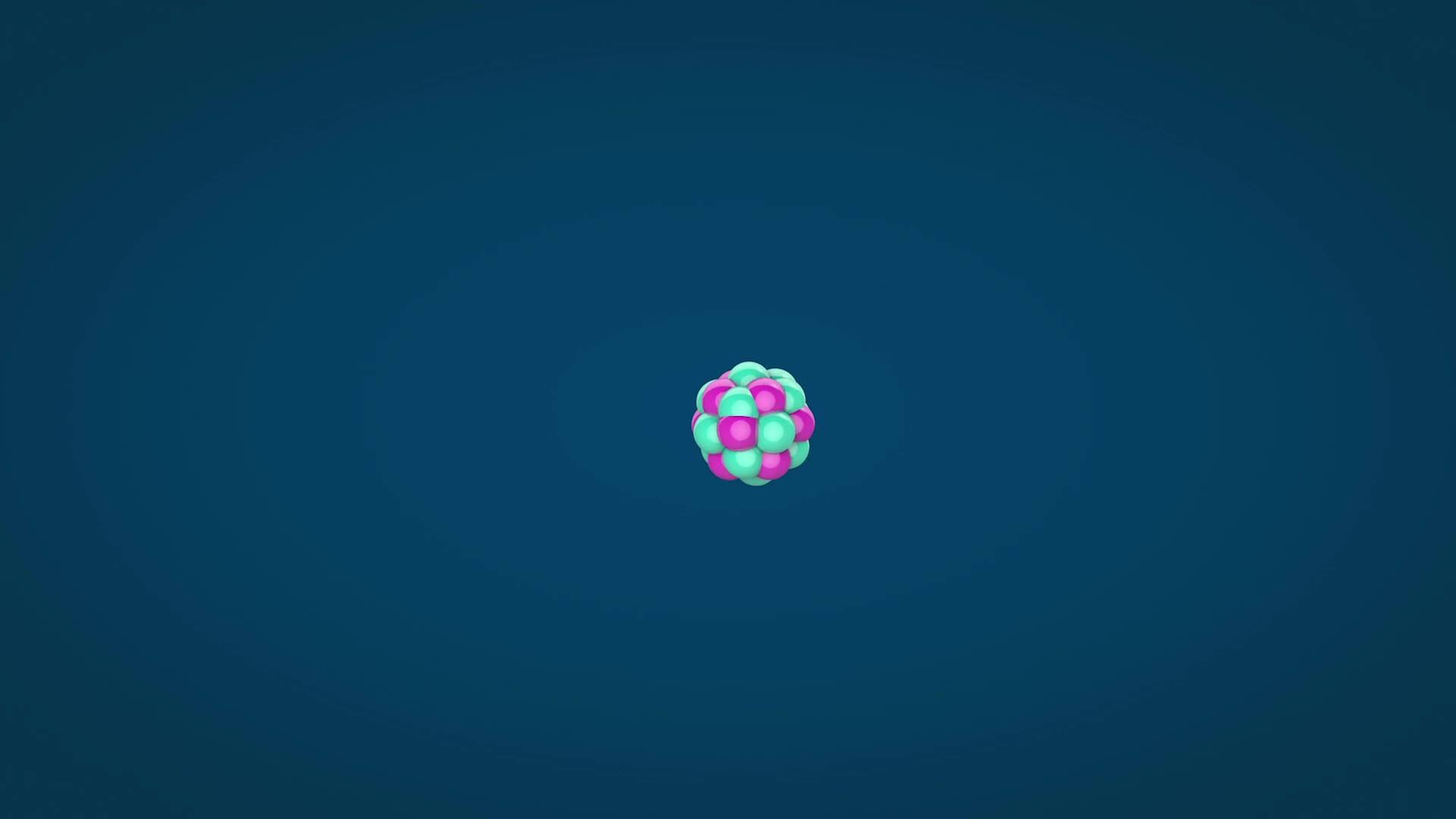
What is the picture displayed?
atom
element
compound
Which of these items is made up of more than one type of atoms?

How many valence electrons are in the element Carbon?
2 electrons
6 electrons
4 electrons
None of the above
Who created the periodic table?
John Dalton
Marie Curie
Dmitri Mendeleev
The periodic table is arranged in order of...
increasing atomic number
increasing atomic mass
decreasing atomic mass
decreasing atomic number
The atomic number tells you the number of (a) in the nucleus?
The atomic mass of an element is equal to the number of...
protons and neutrons
protons and electrons
protons neutrons and electrons
Groups on the periodic table are arranged...
vertically
horizontally
diagonally
Periods on the periodic table are arranged...
vertically
horizontally
diagonally
Which of the following are located along a dividing line that looks like a staircase?
metals
metalloids
non-metals
alkali metals
Group 2: Slightly less reactive because they have 2 valence electrons. They are silver colored and more dense that Group 1 metals.
Transition Metals
Alkali Metals
Alkaline-earth Metals
Actinides
Groups 3-12: These metals have a moderate range of reactivity and a wide range of properties. They are shiny and good conductors of heat and electricity. They have higher densities and melting points than Groups 1 and 2. These have 1 or 2 valence electrons.
Transition Metals
Alkali Metals
Alkaline-earth Metals
Lanthanides
Group 18: Unreactive nonmetals. All are colorless, odorless gases at room temperature. These elements have a full outer energy level, usually 8 valence electrons, except for Helium which only has 2 valence electrons.
Nitrogen Group
Oxygen Group
Noble Gases
Halogens
The elements on the right side of the Periodic Table are classified as ________________.
Metals
Nonmetals

What is 1.008 in this element tile?
The atomic number
The atomic mass
The number of electrons
The chemical symbol

What is the ATOMIC NUMBER in this element tile?
28
Ni
Nickel
58.693

What is the CHEMICAL SYMBOL in this element tile?
10
Ne
Neon
20.18

In the periodic table shown, what is the blue section (most of the table) made up of?
Metals
Nonmetals
Metalloids
Plastics

In the periodic table shown, what is the GREEN section (staircase)?
Metals
Nonmetals
Metalloids
Gasses
What are the basic building blocks of matter?
Atoms
Molecules
Compounds
Mixtures
The amount of matter in an object is...
volume
mass
density
weight
The amount of space taken up by an object is ...
volume
mass
density
weight
What subatomic particle(s) are located INSIDE the nucleus?
Protons only
Electrons only
Neutrons only
Protons and neutrons
It is a combination of two or more substances.
Substances
Mixtures
Elements
Compound
It is a mixture with a non-uniform composition.
Homogeneous mixture
Solvation process
Heterogeneous mixture
Solubility
In a solution this is the dissolving substance.
Powder
Solute
Liquid
Gas
It is a combination of two or more substances in
which the composition is uniform throughout the
mixture.
Heterogeneous mixture
Homogeneous mixture
Solvation
Solution
What is a solution?
A type of mixture where one substance dissolves in another
An ingredient.
A liquid.
A gas.
Is glass breaking a chemical or physical change?
Which is an example of physical property?
color
flammability
reactivity
toxicity

