wayground logo

Free Printable Worksheets

Font size

S
M
L
XL
Worksheets

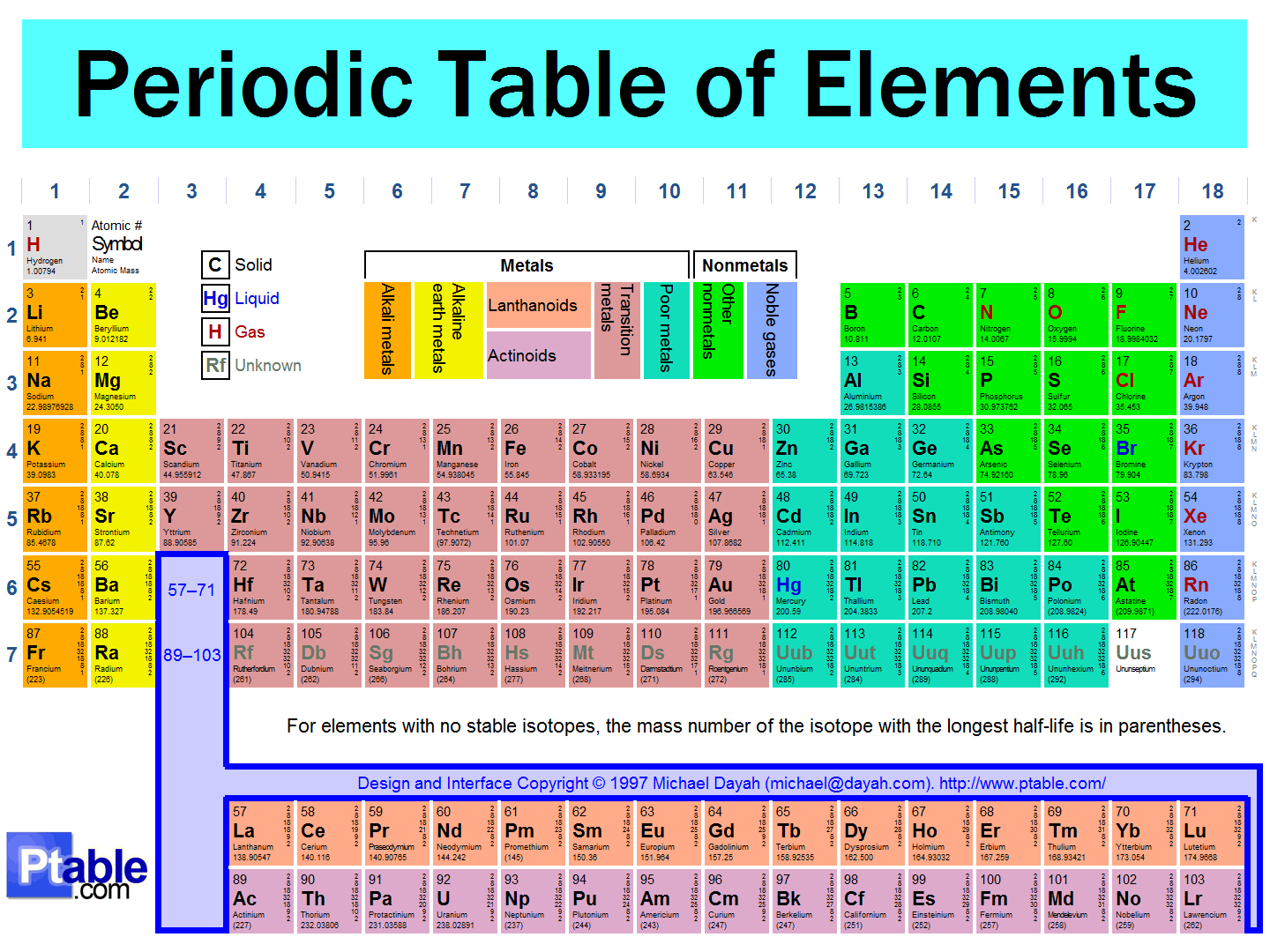
Chem I unit 5: periodic table

Total questions: 94

Worksheet time: 1hrs 19mins
Name
Class
Date
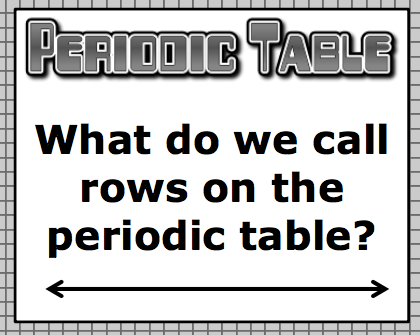
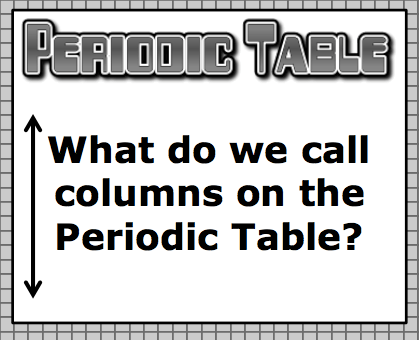
1.
a)
Periods
b)
Groups
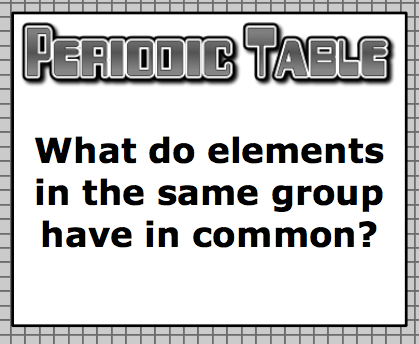
2.
a)
Periods
b)
Groups
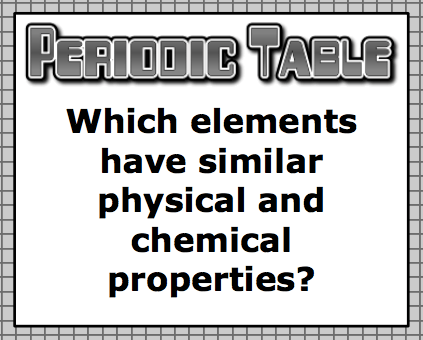
3.
a)
energy levels
b)
valence electrons
c)
protons
d)
neutrons
4.
a)
energy levels
b)
valence electrons
c)
protons
d)
neutrons
5.
a)
Same group
b)
Same period
6.
a)
Group 1
b)
Group 17
c)
Group 18
d)
Group 2
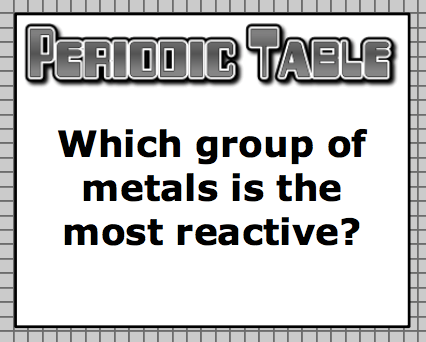
7.
a)
Group 1
b)
Group 17
c)
Group 18
d)
Group 2
8.
a)
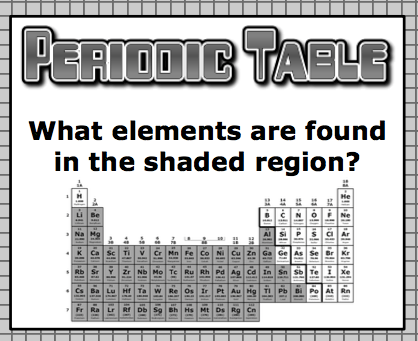
Metals
b)
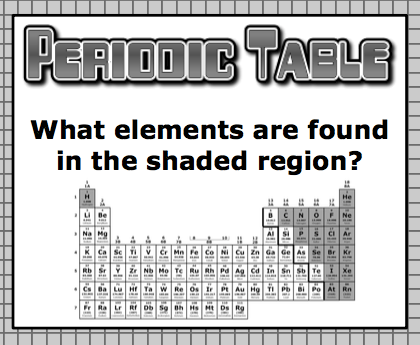
Nonmetals
c)
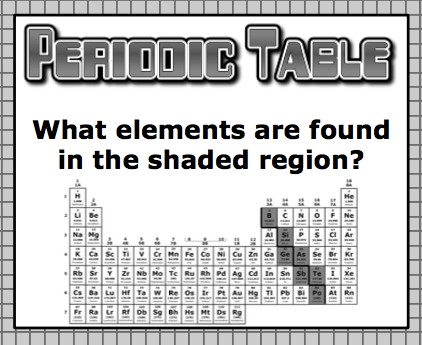
Metalloids
9.
a)
Metals
b)
Nonmetals
c)
Metalloids
10.
a)
Metals
b)
Nonmetals
c)
Metalloids
11.
a)
Metals
b)
Nonmetals
c)
Metalloids
12.
a)
Metals
b)
Nonmetals
c)
Metalloids
13.
a)
Metals
b)
Nonmetals
c)
Metalloids
14.
a)
Metals
b)
Nonmetals
c)
Metalloids
15.
Dimitri found that there was a pattern of properties that repeated every ____ elements.
a)
2
b)
4
c)
5
d)
7
16.
How many elements follow the periodic law?
a)
7
b)
98
c)
110
d)
All of them
17.
A rule that states that repeating chemical and physical properties of elements change periodically with the atomic number of the elements is the _________.
a)
periodic law
b)
alkaline-earth metals
c)
actinide
d)
group rule
18.
Pure forms of these elements are stored in oil so they won't react with oxygen and water in the air.
a)
Alkali Metals
b)
Alkaline-earth metals
c)
Halogens
d)
Noble Gases
19.
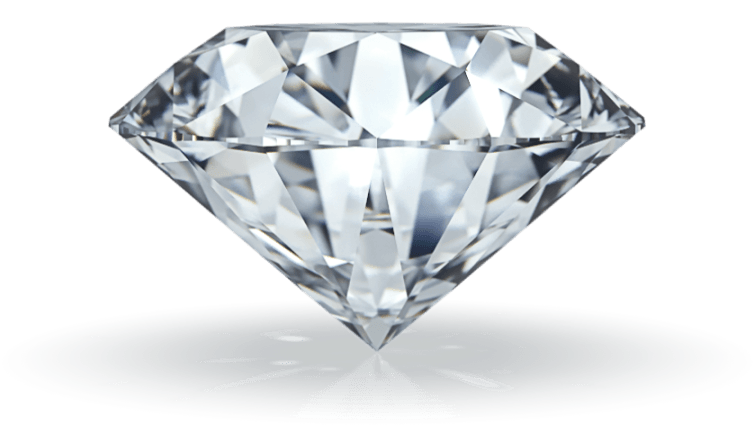
Diamonds are a pure form of what element?
a)
Carbon
b)
Oxygen
c)
Silicon
d)
Silver
20.
All of the actinides are ___________.
a)
stable
b)
radioactive
c)
shiny
d)
named after scientists
21.
This class of elements are sometimes called "semiconductors."
a)
Metals
b)
Nonmetals
c)
Metalloids
d)
Groups
22.
Which is a halogen?
a)
Helium
b)
Chlorine
c)
Oxygen
d)
Neptune
23.
Which is an alkali metal?
a)
Magnesium
b)
Iron
c)
Sodium
d)
Europium
24.
Elements in a ..................have similar chemical properties.  
a)
period
b)
group
c)
row
25.
A proton is....
a)
A negatively charged subatomic particle
b)
A positively charged subatomic particle
c)
A neutrally charged subatomic particle
d)
The only subatomic particle located in the nucleus
26.
In the modern periodic table elements are arranged by:
a)
atomic mass
b)
atomic number
c)
valence electrons
d)
number of isotopes
27.
How many electrons does Oxygen need to fill its outer shell?
a)
3
b)
4
c)
1
d)
2
28.
How many Valance electrons does Iodine Have?
a)
6
b)
16
c)
7
d)
17
29.
The period for Bromine is ___________.
a)
3
b)
2
c)
4
30.
Beryllium is in group number______.
a)
Group 2
b)
Group 3
c)
Group 4
d)
Group 7
31.
The periodic table has __ periods.
a)
18
b)
8
c)
2
d)
7
32.
An element's identity is determined by the number of
a)
electrons.
b)
protons.
c)
neutrons.
d)
valence.
33.
Group 18 elements are known as the _____ _____ and have full valence shells.
a)
royal gases.
b)
supreme solids.
c)
noble gases.
d)
legit liquids.
34.
Elements in the same ________ are more chemically similar.
a)
group
b)
period
c)
club
d)
table
35.
Which elements have the most similar chemical properties?
a)
K and Na
b)
K and Ca
c)
K and Cl
d)
K and S
36.
What period and group is Silver (Ag)? 
a)
Period 2, Group 1
b)
Period 3, Group 16
c)
Period 5, Group 11
d)
Period 2, 14
37.
The elements in this group have 5 valence electrons and include elements N, P, and As.
a)
Group 5
b)
Group 1
c)
Group 18
d)
Group 15
38.
The elements in this group only have 1 valence electron and include Li, Na, and K. 
a)
Group 11
b)
Group 1
c)
Group 3
39.
Which of the following is not a property of metals?
a)
brittle
b)
malleable
c)
lustrous
d)
conductive
40.
Rows on the period table are called _____ while columns are called _____.
a)
groups, families
b)
groups, periods
c)
periods, groups
d)
families, groups
41.
The periodic table has __ groups.
a)
8
b)
7
c)
18
d)
2
42.

How many valence electrons do atoms need to be stable?

a)

1

b)

2

c)

6

d)

8

43.

Which element is not a metal?

a)

K

b)

Re

c)

Al

d)

B

44.
Which is a halogen?
a)
Helium
b)
Chlorine
c)
Oxygen
d)
Neptune
45.
Which is an alkali metal?
a)
Magnesium
b)
Iron
c)
Sodium
d)
Europium
46.
Calcium is most like which of the following?
a)
Barium
b)
Potassium
c)
Cesium
d)
Nitrogen
47.
The noble gases have how many valence electrons?
a)
1
b)
2
c)
7
d)
8
48.
Membership in a family is based on the number of 
a)
electrons
b)
valence electrons
c)
protons
d)
neutrons
49.
If a material can easily be drawn into the shape of a wire, it is
a)
Ductile
b)
Magnetic
c)
Malleable
d)
Reactive
50.
What is the name of the group that never reacts--ever ever they are stable with a full outermost ring!!!
a)
noble gases
b)
transition
c)
halogens
d)
borons
51.
As you move left to right across a period, the atomic radius will ....
a)
decrease
b)
increase
c)
stay the same
52.
As you move from Carbon to Nitrogen, the atomic radius will ....
a)
decrease
b)
increase
c)
stay the same
53.
As you move down a group, the atomic radius will ....
a)
decrease
b)
increase
c)
stay the same
54.
Why did Mendeleev leave blanks in his periodic table?
a)
forgot elements
b)
left room for elements not yet discovered
c)
placed elements in wrong positions leaving gaps
55.

2 rows beneath the main periodic table

a)

Lanthanide

b)

Lanthanide and Actinide

c)

Lanthanide and Hydrogen

d)

Actinide and Hydrogen

56.

Who arranged the periodic table by increasing atomic number?

a)

Mendeleev

b)

Rutherford

c)

Bohr

d)

Mosely

57.

_______________ developed the first periodic table and arranged the elements in order of increasing atomic mass.

a)

Stevie Wonder

b)

Sasha Vujacic

c)

Dmitri Mendeleev

d)

James Mosely

58.
What are elements in groups 3-12 called?
a)
nonmetals
b)
metals
c)
halogens
d)
transition elements
59.

What happens to the ionization energy of the alkali metals as you move down the group? (this makes higher energy levels more reactive)

a)

increases

b)

decreases

60.

What is group 2 on the periodic table also known as?

a)

alkali metals

b)

alkaline-earth metals

c)

halogen

d)

noble gases

61.

What is group 17 on the periodic table also known as?

a)

alkali metals

b)

alkaline-earth metals

c)

halogen

d)

noble gases

62.
Which has the greater EN: 
H or F?
a)
H
b)
F
63.
Which has the greater EN: 
N or C?
a)
C
b)
N
64.
Which has the greater EN: 
Cl or Al?
a)
Cl
b)
Al
65.
Which of the following will have a lower ionization energy than Scandium (Sc)?
a)
Helium (He)
b)
Titanium (Ti)
c)
Calcium (Ca)
d)
Magnesium (Mg)
66.
As atoms of elements in group 16 are considered in order from top to bottom, the electronegativity of each successive element....
a)
decreases
b)
increases
c)
remains the same
d)
none of the above
67.
Which atom has the largest atomic radius?
a)
potassium
b)
rubidium 
c)
francium
d)
cesium
68.
As you move down the periodic table atoms get bigger.  This is because ____________.
a)
The atoms have more mass.
b)
The atoms have more protons.
c)
The atoms have more energy levels
d)
The atoms have more nuetrons
69.
As you move across the periodic table atoms tend to get smaller because, ______________.
a)
the atoms have more mass.
b)
the atoms have less mass
c)
the atoms have more protons.
d)
the atoms have less electrons.
70.
Atoms that have a high electronegativity, _______________.
a)
give up their electrons more easily.
b)
hold on to their electrons more tightly.
c)
have more electron shells.
71.
The element with the largest electronegativity in the halogens is - 
a)
At
b)
F
c)
Cl
d)
Br
72.
Which statement correctly and completely identifies a trend?
a)
Atomic radius decreases across a period and increases down a group.
b)
Electronegativity decreases across a period and decreases down a group.
c)
Ionization energy increases across a period and increases down a group.
d)
Ionic radius increases across a period and increases down a group.
73.
Electronegativity __________ from left to right within a period and __________ from top to bottom within a group.
a)
decreases, increases 
b)
increases, increases
c)
increases, decreases 
d)
stays the same, increases
74.

Main-group elements are elements whose electron configuration end in either ____ or ____ subshells.

a)

s or p

b)

s or d

c)

p or d

d)

d or f

75.
Electronegativity is...
a)
how good an atom is at attracting electrons
b)
the ability of an atom to lose electrons
c)
the energy required to remove an electron from a specific atom
d)
how easy it is to make friends. 
76.
Elements on the LEFT side of the periodic table will most likely form:
a)
Positive ions
b)
Negative ions
c)
Neutral Ions
d)
None of these
77.
Most atoms have no net charge because they have....
a)
an equal number of charged and non-charged particles
b)
neutrons in their nuclei
c)
an equal number of electrons and protons
d)
an equal number of neutrons and protons
78.
What is an ion?
a)
An atom that has lost or gained protons
b)
An atom that has lost or gained neutrons
c)
An atom that has lost or gained electrons
d)
An atom with a charge of zero
79.
If an atom loses electrons when forming an ion, the charge will be:
a)
positive
b)
negative
c)
neutral
80.
Which of the following has an oxidation number of +3?
a)
oxygen
b)
lead
c)
calcium
d)
aluminum
81.
What charge will an Oxygen ion have? 
a)
+1
b)
-1
c)
+2
d)
-2
82.
What is the charge of Lithium?
a)
+1
b)
1
c)
2
83.
What is the charge of Aluminium?
a)
3
b)
+3
c)
+2
d)
+1
84.
What is the charge of Gallium?
a)
+3
b)
+2
c)
+1
d)
3
85.
What is the charge of chloride?
a)
-1
b)
1
c)
+2
d)
+1
86.
What is the charge of Neon?
a)
0
b)
+1
c)
-1
d)
1
87.
What is the charge of Zinc?
a)
2
b)
+2
c)
+3
d)
+4
88.
How many valence electrons does hydrogen have?
a)
1
b)
2
c)
3
d)
4
89.
What is the charge of Bromide?
a)
-1
b)
1
c)
+1
d)
+2
90.
How many valence electrons does Nitride have?
a)
8
b)
5
c)
3
d)
2
91.
How many valence electrons does calcium have?
a)
2
b)
4
c)
6
d)
7
92.

What is the charge on a magnesium ion?

a)

Cannot be determined

b)

2+

c)

3+

d)

3-

e)

2-

93.

What is the charge on an aluminum ion?

a)

Cannot be determined

b)

2+

c)

3+

d)

3-

e)

2-

94.

What 2 subshells will valence electrons be found in (CHOOSE 2)?

a)

s

b)

p

c)

d

d)

f