wayground logo

Free Printable Worksheets

Font size

S
M
L
XL
Worksheets

Savvas Phy Sci Unit 8, Lessons 1-3

Total questions: 95

Worksheet time: 2hrs 34mins
Name
Class
Date
1.
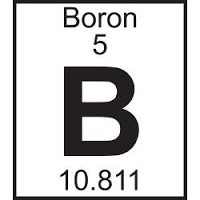
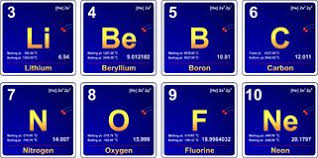
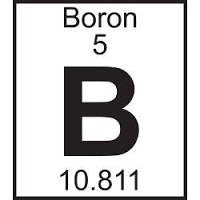
How many Electrons
a)
2.5
b)
5
c)
6
d)
10.81
2.
Where is most of the mass of an atom located?
a)
In the nucleus
b)
Electron cloud
c)
In the electron
d)
Evenly spread throughout the atom
3.
Which of the following is NOT a type of subatomic particle?
a)
plasmids
b)
proton
c)
neutron
d)
electron
4.
Which two types of atomic particles carry an electrical charge?
a)
protons and electrons
b)
quarks and neutrons
c)
neutrons and electrons
d)
protons and neutrons
5.

The positive particles of an atom are

a)

electrons

b)

positrons

c)

neutrons

d)

protons

6.
the central region of an atom where its neutrons and protons are is its 
a)
nucleus 
b)
electron cloud
c)
core 
d)
center 
7.
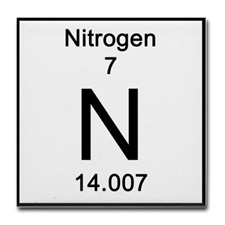
Which number here is my atomic number?
a)
5
b)
10.811
8.
How many protons does this atom have?
a)
2.5
b)
6
c)
5
d)
10.811
9.
In order for me to find the number of neutrons, I must round the atomic mass and then do what?
a)
atomic number-atomic mass
b)
atomic number x atomic mass
c)
atomic mass + atomic number
d)
atomic mass - atomic number
10.
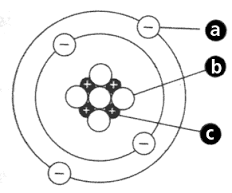
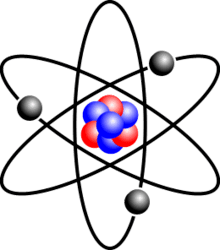
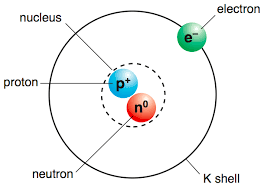
What part of the atom is the arrow pointing to?
a)
nucleus
b)
proton
c)
electron shell
d)
electron
11.
Particles in an atom that are neutral and have no charge are 
a)
negatrons 
b)
electrons 
c)
neutrons 
d)
protons 
12.
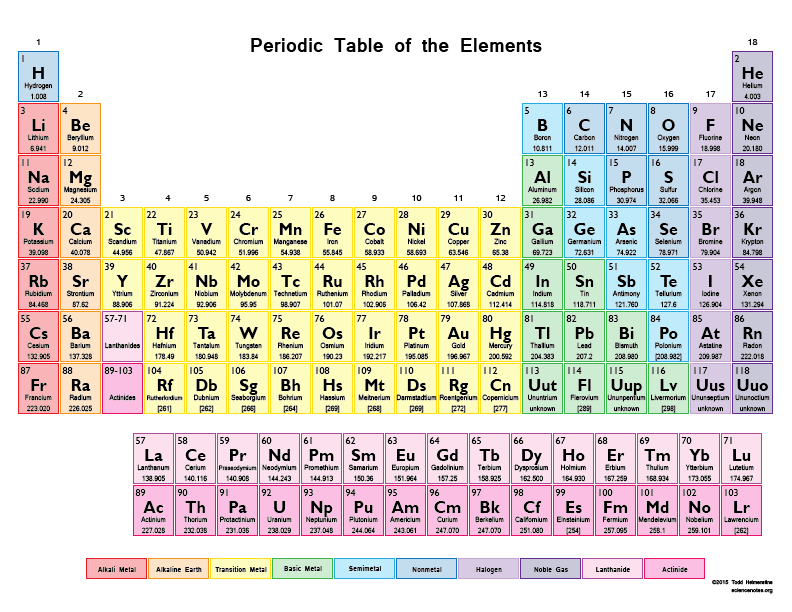
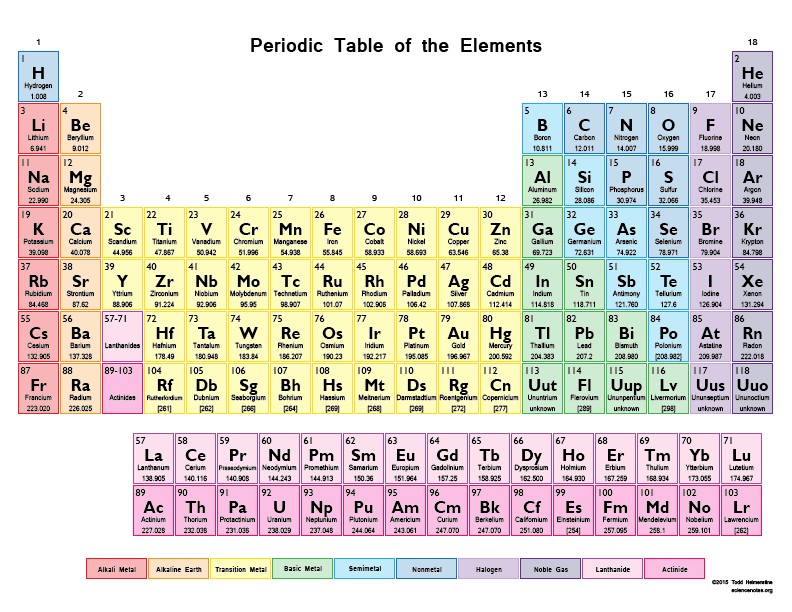
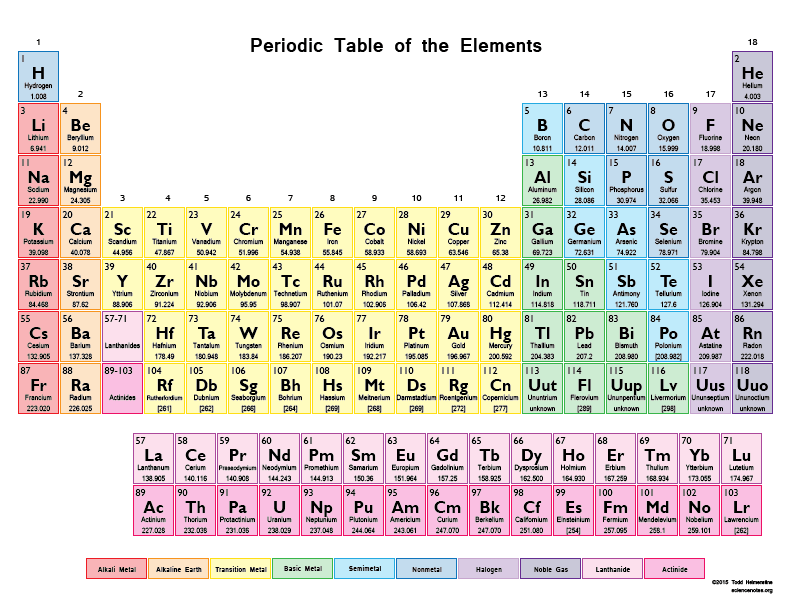
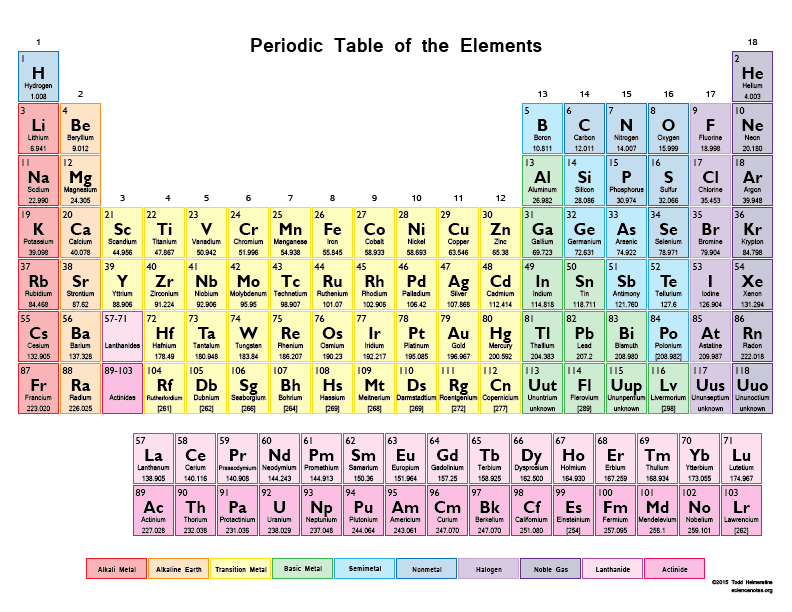
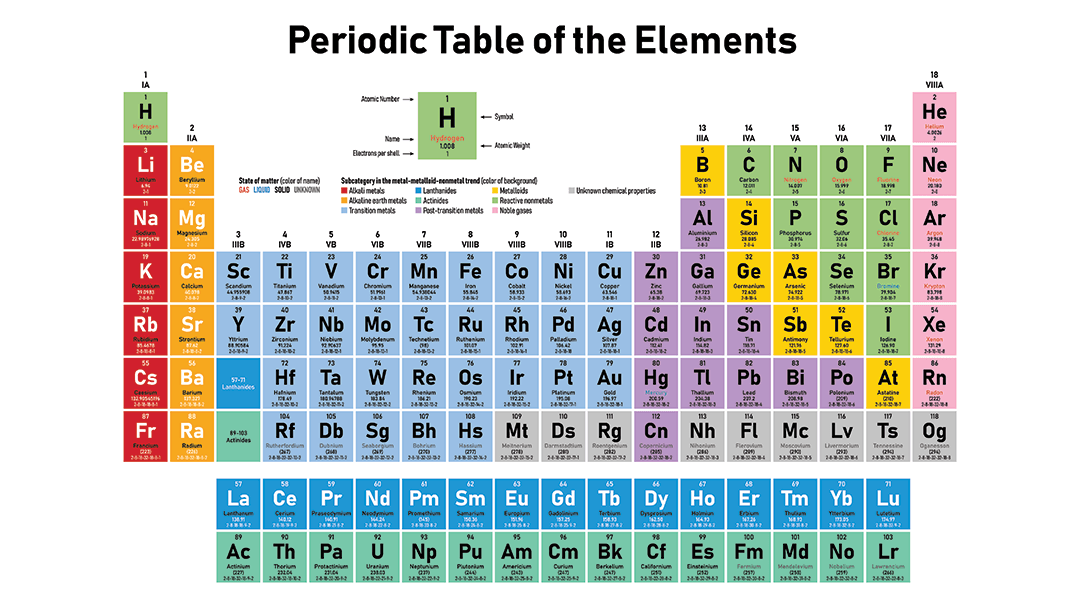
A section of the Periodic Table of Elements is provided. What is the chemical symbol for magnesium?
a)
12
b)
Mg
c)
24.31
d)
Magnesium
13.
B and C are found in the ______ of an atom.
a)
Energy levels
b)
Space
c)
Nucleus
d)
Outside
14.
Which of these is the electron?
a)
A
b)
B
c)
C
d)
D
15.
Mr Negative here is better known as? His charge is negative.
a)
Protron
b)
Neutron
c)
Electron
d)
Neceus
16.
all matter is made of what 
a)
energy 
b)
atoms 
c)
electrons 
d)
compounds 
17.
an atom with atomic number 6 would have how many protons 
a)
6
b)
12
c)
3
d)
cannot be determined 
18.
Mr Green here is neutral and is better known as a_________.
a)
Proton
b)
Neutron
c)
Electron
d)
Pea
19.
Which of these is the proton.
a)
A
b)
B
c)
C
d)
None
20.
The atomic number tells you what?
a)
number of electrons
b)
number of protons
c)
number of neutrons
d)
both electrons and protons in an atom.
21.
What is the atomic number?
a)
the number of protons
b)
the number of protons and neutrons
c)
the number of neutrons
d)
the number of protons and electrons
22.
What is the mass number defined as?
a)
the number of protons
b)
the number of protons and neutrons
c)
the number of neutrons
d)
the number of protons and electrons
23.
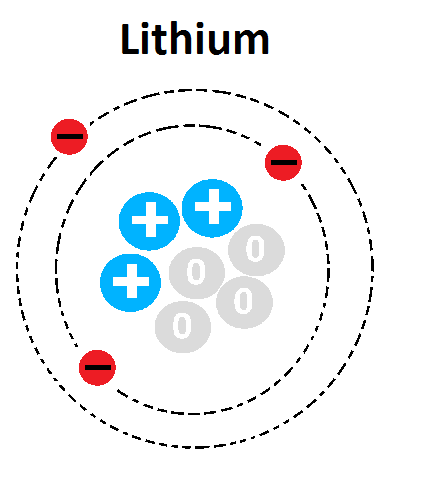
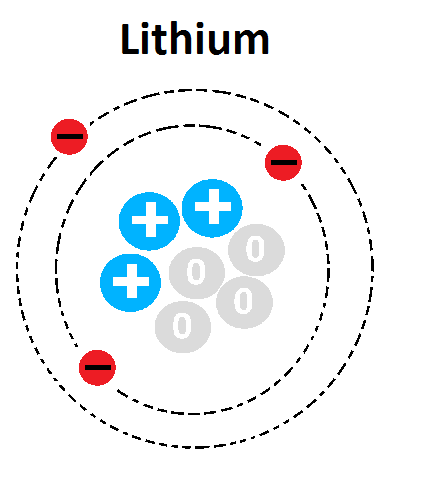
What is the atomic number of this atom?
a)
1
b)
3
c)
4
d)
7
24.

What is the mass number of this atom?

a)

1

b)

3

c)

4

d)

7

25.

What is the atomic number of Barium, Ba? (enlarge the periodic table)

a)

20

b)

38

c)

56

d)

88

26.

How many protons are in a sodium atom, Na? (tap to enlarge the periodic table)

a)

Sodium has 1 proton.

b)

Sodium has 3 protons.

c)

Sodium has 11 protons

27.

Atoms of the same element which have a different number of neutrons are called _________________.

a)

ions

b)

isotopes

c)

quarks

d)

molecules

28.

Which subatomic particle has a negative charge in the atom?

a)

proton

b)

neutron

c)

electron

d)

quark

29.

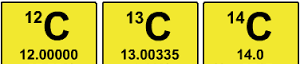
How many neutrons does C-14 contain? (tap to enlarge the image)

a)

6

b)

7

c)

14

d)

8

30.

How many neutrons does an atom of the isotope Neon-22 have? (tap to enlarge the image)

a)

12

b)

10

c)

22

d)

20

31.

How many electrons are in an atom with an atomic number of 50?

a)

5

b)

8

c)

50

d)

2

32.

ALL atoms of the same element have:

a)

same number of proton

b)

same number of nucleon

c)

different number of neutron

d)

different number of electron

33.
What do these isotopes of carbon all have in common?
a)
neutrons & mass number
b)
atomic number and neutrons
c)
atomic number and electrons
d)
protons, atomic number, and mass number
34.
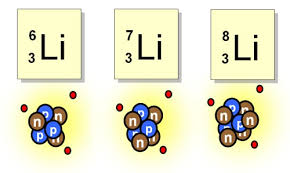
which atom has  4 neutrons?
a)
Li-6
b)
Li-7
c)
Li-8
d)
they have the same # of neutrons
35.
What quantities vary between isotopes of an element?
a)
protons, electrons, and atomic mass
b)
protons, electrons, and atomic number
c)
neutrons and electrons
d)
neutrons and atomic mass
36.
How many neutrons in C-14?
a)
6
b)
7
c)
14
d)
8
37.
If X is the symbol for an element, which of the following two symbols represent    isotopes of the same element?     I. 7735X  II. 7733X  III. 8137X  IV. 8135 X
a)
I and II
b)
III and IV
c)
I and IV
d)
I and III
38.
How many neutrons does the isotope below have?     89 36Kr
a)
53
b)
36
c)
89
d)
125
39.
Four isotopes of lead include lead-204, lead-206, lead-207, and lead-208.  The average atomic mass of lead is 207.2.  Which isotope of lead is likely to be the most abundant.
a)
204
b)
206
c)
207
d)
208
40.
What is the number of protons that the element in this image contain?
a)
14
b)
7
c)
15
d)
18
41.
Elements can have the same number of protons?
a)
True
b)
False
42.
Which subatomic particles contribute the most to the mass of an atom?
a)
Protons, Neutrons, Electrons
b)
Protons only
c)
Protons and Electrons
d)
Protons and Neutrons
43.
The number of protons is equal to 
a)
the atomic number
b)
the number of neutrons
c)
the energy levels
d)
the periodic table groups
44.

If an atom has 12 neutrons and 11 protons, what is its atomic mass?

(a)  

45.
How many neutrons does the isotope of lithium have?
a)
8
b)
3
c)
4
d)
5
46.
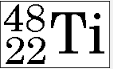
How many protons does this isotope of titanium have?
a)
48
b)
22
c)
26
d)
70
47.
In a correctly written symbol what would be located in the "A" position?
a)
number of neutrons
b)
atomic number
c)
number of electrons 
d)
mass number
48.
An isotope has three forms.  30% have a mass of 4 amu, 20% have a mass of 5 amu and 50% have a mass of 3 amu.  Average atomic mass will be closest to
a)
2 amu
b)
3 amu
c)
4 amu
d)
5 amu
49.
Calculate the average atomic mass of silver.
a)
106.38649amu
b)
111.91896amu
c)
107.8677amu
d)
121
50.
An element has two naturally occurring isotopes. One is 10.013 amu and is 19.9% abundant. The other is 11.01 amu and is 80.1% abundant. What is the average atomic mass? What element is it?
a)
9.012, Beryllium
b)
12.011, Carbon
c)
6.941, Lithium
d)
10.812, Boron
51.
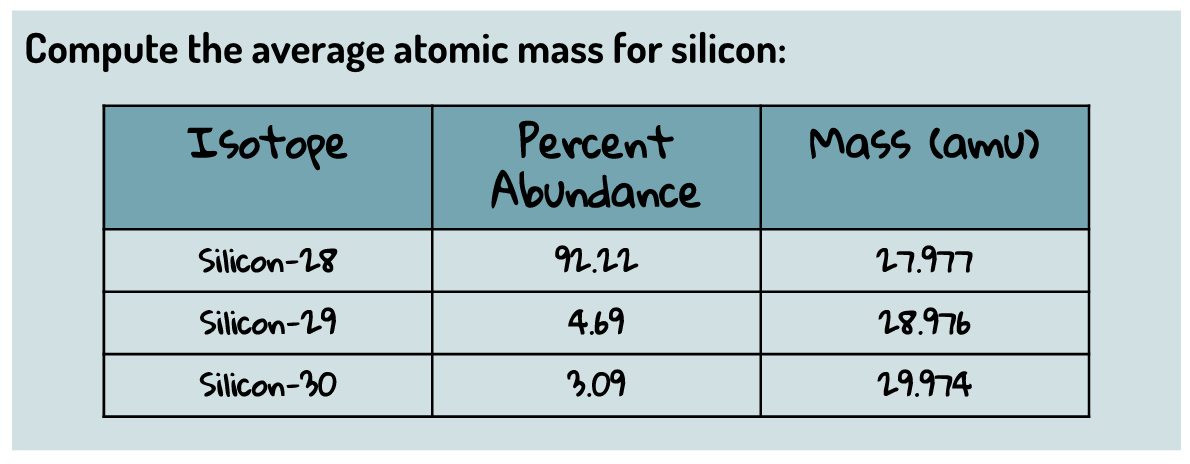
Compute the average atomic mass for silicon:
a)
27.977
b)
28.09
c)
28.976
d)
The average mass cannot be determined from provided information.
52.
Oxygen has 8 protons. What is oxygen's atomic number?
a)
16
b)
8
c)
15.999
d)
0
53.

The vertical (up and down) columns in the Periodic Table are called

a)

groups

b)

towers

c)

periods

d)

atomic numbers

54.
The Modern Periodic Table of Elements is arranged by
a)
atomic mass
b)
atomic number
c)
valence electrons
d)
number of isotopes
55.
Which group of the periodic table is composed of inert (not reactive)  gases?
a)
alkali metals
b)
alkaline earth metals
c)
halogens
d)
noble gases
56.
Which is an alkali metal?
a)
Magnesium
b)
Iron
c)
Sodium
d)
Europium
57.
Which is a halogen?
a)
Helium
b)
Chlorine
c)
Oxygen
d)
Neptune
58.
Elements in a ..................have similar chemical properties.  
a)
period
b)
group
c)
row
59.

The letter, C, is a ... of carbon.

a)

Name

b)

Nickname

c)

Chemical Symbol

d)

Pseudonym

60.

Which of the following are physical properties of metal?

a)

Luster

b)

Conductivity

c)

Malleability

d)

Ductility

61.

True or False: The reactivity of metals tends to decrease as you move from left to right across the periodic table.

a)

True

b)

False

62.

Name this group: These metals are the most reactive.

a)
b)
c)
d)
63.

Name this group: These metals are the second most reactive.

a)
b)
c)
d)
64.

Name this group: These metals are the second most reactive.

a)
b)
c)
d)
65.

Name this group: These metals contain familiar metals such as gold, iron, and copper.

a)
b)
c)
d)
66.

Name this group: These metals, located near the nonmetals, are never found uncombined in nature.

a)
b)
c)
d)
67.

Find these groups: Locate Lanthanides and Actinides.

a)
b)
c)
d)
68.

Which of the following could be properties of nonmetals?

a)

Poor electrical conductivity

b)

Poor thermal conductivity

c)

Dullness

d)

Brittleness

69.

I am a metal


I am in group 2


I am in period 6


I am…

a)

Mo

b)

Re

c)

S

d)

Ba

70.

I am a nonmetal


I am in period 2


I am in group 16/6A

a)

Ba

b)

Si

c)

Ba

d)

O

71.

Find an element with similar chemical properties to Barium (Ba).

a)

Ca an Ra, because they are in the same group and have similar chemical properties.

b)

Cs and La, b/c they are in the same period number.

c)

Ca and Y, b/c they are 90 degree angle and have similiar properties.
72.

How many valence electrons does Na have?

a)

1

b)

5

c)

6

d)

11

73.

Chlorine ( Cl) has _________ valence electrons.

a)

3

b)

5

c)

7

d)

8

74.

Ga has _______ valence electrons.

4 lines
75.

Select the elements that has 8 valence electrons.

a)

Ne

b)

Br

c)

Kr

d)

Xe

76.

What is the chemical symbol for Potassium?

a)

Po

b)

P

c)

K

d)

Pm

77.

TRUE OR FALSE Lithium and Beryllium have the same number of valence electron.

a)

TRUE

b)

FALSE

78.

All of the elements has 4 valence electrons EXCEPT______

a)

Carbon

b)

Silicon

c)

Germanium

d)

Selenium

79.

The atomic mass of Titanium is 48 and its proton is 22, therefore its number of neutron is ________

a)

22

b)

24

c)

26

d)

70

80.

Valence electrons plays a key role in chemical reactions and it increases from left to right of the periodic table.

a)

TRUE

b)

FALSE

81.
How would this element be classified?
a)
Metal
b)
Nonmetal
c)
Metalloid
d)
Metamorphic
82.
The elements argon, krypton, and xenon are all non-metals. What property would these elements have in common?
a)
Good conductor of thermal energy
b)
Poor conductor of electricity
c)
Shiny, lustrous surface
d)
Soft and malleable
83.
A student is given a sample of an unknown substance. He is asked to determine if it is classified as a metal, a metalloid, or a nonmetal. He discovered that the unknown element conducted some heat and electricity, had a shiny luster, and broke easily. This element is most likely a 
a)
metal
b)
nonmetal
c)
metalloid
d)
cannot be determined
84.
Which of the following tables correctly lists the physical properties of metals and nonmetals?
a)
A
b)
B
c)
C
d)
D
85.
Some students conducted a laboratory investigation to learn more about the physical properties of different elements. They observed four samples and recorded their observations in the table . Based on these observations, which sample is most likely a nonmetal?
a)
Sample 1
b)
Sample 2
c)
Sample 3
d)
Sample 4
86.
What does ductile mean?
a)
electricity flows easily
b)
quacks like a duck
c)
can be drawn into a wire
d)
able to bend
87.
Silicon is a semiconductor and has properties of both metals and nonmetals. What type of element is Silicon? 
a)
Metal
b)
Nonmetal
c)
Metalloid
d)
Pretty
88.
What does malleable mean?
a)
able to bend
b)
will break easily
c)
can be used for wire
d)
is shiny
89.
Having the ability to be drawn into a wire describes which property?
a)
Malleable
b)
Ductile
c)
Brittle
d)
Nonconductor
90.
An unknown substance has the following properties: luster, brittle, a nonconductor of electricity, and high density.  How would it be classified?
a)
Metal
b)
Nonmetal
c)
Metalloid
91.
What property describes the ability to reflect light brightly (shine)?
a)
luster
b)
malleable
c)
ductile
d)
brittle
92.
Which property means that a substance breaks easily in its solid state?
a)
Malleable
b)
Ductile
c)
Brittle
d)
Conductor
93.
Which of the following is not a property of nonmetals?
a)
Dull
b)
Brittle
c)
High Density
d)
Nonconductor
94.
Margaret found an unknown object on the ground while walking on the beach.  She discovered that it shatters easily, it does not conduct heat or electricity, and is not shiny.  What type of object did she find?
a)
Metal
b)
Nonmetal
c)
Metalloid
d)
Compound
95.
While observing the properties of an unknown object, Ginger discovered that electricity and heat passed through it easily.  Which property did Ginger observe?
a)
Conductor
b)
Brittle
c)
Luster
d)
Malleability