wayground logo

Free Printable Worksheets

Font size

S
M
L
XL
Worksheets

Chemistry 12th Diagnostic Test

Total questions: 90

Worksheet time: 58mins

Name
Class
Date
1.
The Billiard Ball is the nickname for ________ theory.
a)
Dalton
b)
Neils Bohr
c)
JJ Thomson
d)
Ernest Rutherford
2.
Electron cloud is based on
a)
Quantum Mechanics
b)
Gold Foil Experiment
c)
Matter is made up of small particles called atoms
d)
Nuclear Theory
3.
He developed the planetary model of the atom.
a)
Rutherford
b)
Bohr
c)
Chadwick
d)
Dalton
4.
James Chadwick discovered the ________.
a)
proton
b)
neutron
c)
electron
d)
nucleus
5.
What did Thomson discover?
a)
electron
b)
proton
c)
neutron
d)
electron cloud
6.
What does this image represent
a)
Billiard Ball
b)
Solar System
c)
Plum Pudding
d)
Electron Cloud
7.
The Gold Foil experiment was done by __________.
a)
Chadwick
b)
Bohr
c)
Rutherford
d)
Thomson
8.
The word atom comes from a Greek word "atomos" that means
a)
Invisible
b)
Indivisible
c)
Undivided
d)
Indestructable 
9.
This particle is found in the nucleus and has no charge
a)
Neutron
b)
Proton
c)
Electron
d)
Orbital
10.
This particle is found in the nucleus and has a positive charge
a)
Electron
b)
Proton
c)
Neutron
d)
Neutral
11.
This is a negatively charged particle found outside the nucleus
a)
Electron
b)
Proton
c)
Neutron
d)
Orbital
12.

Something that takes up space and has mass.

a)

volume

b)

matter

c)

mass

d)

density

13.

All matter is made of

a)

energy

b)

atoms

c)

air

d)

chemistry

14.

Matter is made up of tiny _____________ called _________________.

a)

matter, mass

b)

volume, atoms

c)

particles, molecules

d)

theories, atoms

15.

Atoms are made up of what 3 parts?

a)

positive, negative, and neutral

b)

protons, neutrons, and electrons

c)

molecules, atoms, particles

d)

water, hydrogen, oxygen

16.

The higher the atomic number, the larger _________.

a)

atom

b)

proton

c)

electron

d)

neutron

17.

__________ is the amount of matter in an object.

a)

Volume

b)

Mass

c)

Matter

d)

Density

18.

Conservation of mass means

a)

all the atoms present before a chemical reaction are not present after

b)

atoms present before chemical reactions are present after

c)

new substances and new elements are formed in a chemical reaction

19.

Atomic Mass is the number of

a)

protons and neutrons in the nucleus of an atom

b)

protons and electrons in the nucleus of an atom

c)

neutrons and electrons in the nucleus of an atom

20.

An elements is

a)

a substance that cannot be split into simpler substances

b)

a substance that can be split into simpler substances

21.

A pure substance that is a compound is made out of

a)

particles of more than one type of atom

b)

particles of the same type of atom

c)

a mixture of two or more substances that can be physically separated

22.

Signs of a chemical change include;

a)

change of colour, change of temperature, precipitate (solid) formed, gas released.

b)

change of colour, reversing back to original form, precipitate (solid) formed, gas released.

23.

Bases that dissolve in water are called

a)

caustic

b)

alkalis

c)

reactants

d)

products

24.

A Ph scale of7/8 is

a)

acidic

b)

neutral

c)

basic

25.

To neutralise an acid you add a

a)

acid

b)

base

c)

Ph indicator

d)

equal amount of water

26.

What is the molar mass of H2O?

a)

17.007 g/mol

b)

18.015 g/mol

c)

33.006 g/mol

d)

15.999 g/mol

27.

What is the molar mass of NH3?

a)

15.015 g/mol

b)

43.029 g/mol

c)

45.045 g/mol

d)

17.031 g/mol

28.

If the molar mass of CO is 28.01, what is the percent composition of oxygen in CO?

a)

57.1%

b)

42.8%

c)

15.999%

d)

12.011%

29.

What is Avogadro's number?

a)

6.02

b)

2.3×106.022.3\times10^{6.02}

c)

2.06×10232.06\times10^{23}

d)

6.02×10236.02\times10^{23}

30.

To convert from mass in grams to moles you _____________ by the molar mass.

a)

add

b)

subtract

c)

multiply

d)

divide

31.

To convert from moles to mass in grams you _____________ by the molar mass.

a)

add

b)

subtract

c)

multiply

d)

divide

32.

To convert from the number of particles to moles, you ________ by Avogadro's number.

a)

add

b)

subtract

c)

multiply

d)

divide

33.

What is the empirical formula for C2H4?

a)

CH

b)

CH2

c)

C4H2

d)

C2H4

34.

A chemical formula that shows the actual number and kinds of atoms present in one molecule of a compound is called_________.

a)

ionic formula

b)

covalent formula

c)

empirical formula

d)

molecular formula

35.
2H2 + O--------> 2H2O What  are the reactants?
a)
----->
b)
2H2O
c)
2H2 +O2
36.
How many elements are in C6H12O6?
a)
1
b)
2
c)
3
d)
4
37.
How many atoms are there TOTAL in:
H2SO4
a)
6
b)
5
c)
7
d)
3
38.
Which is the correct formula for:
 three hydrogen (H)
one sulfur (S)
four oxygen (O)
a)
H3SO4
b)
HSO4
c)
H4S3O
d)
H2O
39.
A subscript is the small number below a(n) ________ that tells the number of _______ of that element.
a)
element symbol; atoms
b)
atom; element symbol
c)
subscript; protons
d)
compound; elements
40.

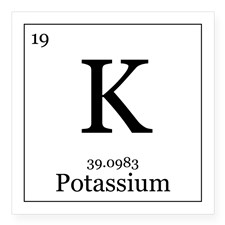
What is the number of protons that the element in this image contain?

a)

14

b)

7

c)

15

d)

18

41.

How many neutron are in the atom "K"?

a)

7

b)

2

c)

39

d)

12

42.
Most of the mass in an atom is concentrated in the...
a)
electrons
b)
nucleus
c)
protons
d)
empty space
43.
If I gain electrons I become
a)
Positive because I've added to my atom
b)
negative because I've added electrons
c)
same because i'm balanced
d)
equal because now I have electrons
44.

The proper formula for magnesium hydroxide:

a)

MgOH

b)

Mg2OH

c)

Mg(OH)2

d)

Mg2OH2

45.

How do the following two elements bond together?

Al3+ O2-

a)

AlO

b)

Al2O3

c)

Al3O6

d)

Al3O2

46.
The rate at which a radioactive element decays is its ____.
a)
quarter life
b)
whole life
c)
wonderful life 
d)
half life
47.

The three types of nuclear radiation in order of increasing penetrating power are

a)

alpha, beta, gamma

b)

alpha, gamma, beta

c)

beta, alpha, gamma

d)

gamma, alpha, beta

48.
An isotope of an element has the same number of _________, but a different number of _________.
a)
Protons, electrons
b)
Protons, neutrons
c)
Electrons, neutrons
49.

Which of the following could be the chemical formula for a compound?

a)

Na

b)

CO2

c)

H2 + O2

d)

Au

50.

Calcium (Ca) is in group 2 on the Periodic Table. What does this tell you about this element?

a)

It is not reactive with water.

b)

It has 2 valence electrons.

c)

It has 2 protons in its nucleus.

d)

It has 2 energy levels/shells in its electron cloud.

51.

Silicon (Si) is in period 3 on the Periodic Table. What does this tell you about this element?

a)

It is highly reactive with water.

b)

It has 3 valence electrons.

c)

It has 3 protons in its nucleus.

d)

It has 3 energy levels/shells in its electron cloud.

52.

What is the number of molecules in 7H2O2 ?

a)

4

b)

7

c)

2

d)

1

53.

How many atom of Carbon are in C9H8O4

a)

1

b)

8

c)

12

d)

9

54.

In which of these compounds are there twice as many oxygen atoms as hydrogen atoms?

a)

H3PO4

b)

H2SO4

c)

H2O2

d)

H2O

55.

Symbol of copper is

a)

Co

b)

Cu

c)

Ca

56.

Formula of baking soda

a)

NaHCO3

b)

Nacl

c)

H2SO4

57.
How many atoms of aluminum are on each side of the following equation: 4Al + 3O--> 2AlO3
a)
2
b)
6
c)
1
d)
4
58.
Ionic compounds are written with
a)
cation (+ ion) first then anion (- ion)
b)
anion (- ion) first then cation (+ ion)
c)
either way is fine
d)
polyatomic ions first
59.
The correct chemical formula for magnesium phosphide is
a)
MgP
b)
Mg₂P₃
c)
Mg₃P₂
d)
Mg₃(PO₄)₂
60.
When adding a subscript to a polyatomic ion, you should...
a)
multiply any subscripts on the polyatomic ion by the subscript you are adding
b)
put parentheses around the polyatomic ion before adding a subscript
c)
write the new subscript next to any subscripts on the polyatomic ion
d)
put the polyatomic ion in square brackets before adding the subscript
61.
What is the correct name for P₃Cl₆?
a)
Potassium chloride
b)
Phosphorous chloride
c)
Triphosphorous hexachloride
d)
Tetraphosphorous heptachloride
62.
What is the correct name for MgI₂?
a)
Manganese IV iodide
b)
Manganese diiodide
c)
Magnesium iodide
d)
Magnesium diiodide
63.
The correct name of Mg₃N₂ is
a)
manganese nitride
b)
magnesium nitride
c)
magnesium (III) nitride
d)
trimagnesium dinitride
64.
What is the correct formula for dinitrogen tetroxide?
a)
N₃O₃
b)
(N₂)₂(O₄)₃
c)
N₂O₄
d)
N₄O₂
65.
What is the correct formula for aluminum phosphide?
a)
Al₃P₃
b)
AlP
c)
AlPO₄
d)
AlPO₃
66.
The chemical formula for an ionic compound of aluminum and chlorine is
a)
AlCl.
b)
ClAl.
c)
AlCl3.
d)
Al3Cl.
67.
Which of the following is a covalent compound?
a)
CH4
b)
NaCl
c)
K3PO4
d)
Zn(OH)
68.
Group  15 elements form what type of charge?
a)
-1
b)
-3
c)
+3
d)
15
69.
Sulfate
a)
SO42-
b)
SO32-
c)
SO4
d)
SO3
70.
Chemical formula of Hydroxide ion?
a)
O2-
b)
H+
c)
OH-
d)
OH2-
71.
What is the chemical formula for Tetraphosphorous Pentachloride ?
a)
4P5Cl
b)
PCl
c)
P4Cl5
d)
none of the above
72.

What is the formula for copper(I) sulfate?

a)

CuSO3

b)

CuSO4

c)

Cu2SO3

d)

Cu2SO4

73.

What is the name of FeCl₂?

a)

iron chloride

b)

iron (II) chloride

c)

iron (I) chloride

d)

iron dichloride

74.

What is the name of Cu₃N₂?

a)

copper (III) nitride

b)

copper (II) nitride

c)

copper nitride

d)

tricopper dinitride

75.
What is the molarity of 4 g of NaCl (MM=58.45) in 3,800 mL of solution?
a)
0.018 M
b)
0.0011 M
c)
1.052 M
d)
0.062 M
76.
How many grams of solute are dissolved in 125.0 mL of 5.00 M NaCl (MM = 58.45)?
a)
0.625 g NaCl
b)
625 g NaCl
c)
36.5 g NaCl
d)
0.04 mol NaCl
77.

_________________________ is the number of moles of a solute dissolved per liter of solution.

a)

100

b)

solubility

c)

concentration

d)

molarity

78.

Which solution is more diluted?

Solution 1:

1000 mL of water

60g of salt


Solution 2:

500 mL of water

60 g of salt

a)

Not enough information to tell

b)

Solution 1

c)

Solution 2

d)

They are equally diluted

79.
What is the meaning of 'pH'?
a)
Positive ion of Hydrogen
b)
Potential of Hydrogen
c)
Product of Hydroxide
d)
None of the above
80.
Which ion determines a base?
a)
H+
b)
OH-
c)
OH+
d)
CO32-
81.

Which of the following ions do all acids have in common?

a)

H+

b)

Na+

c)

OH-

d)

Ca2+

82.

Choose the weakest acid from the following list of acids.

a)

HCl

b)

HCOOH

c)

H2SO4

d)

HNO3

83.
What is the formula for phosphorous acid?
a)
H3PO4
b)
H2PO4
c)
H3P
d)
H3PO3
84.
What is the formula for Hydrosulfuric Acid?
a)
H2(SO3)
b)
H2S
c)
H2(SO2)
d)
H2(SO4)
85.
What is the formula for Nitric Acid?
a)
HNO2
b)
HNO3
c)
HNO4
d)
H2NO3
86.
What is the formula for hydrochloric acid?
a)
HCl
b)
HClO
c)
H3ClO3
d)
HClO3
87.
Select the formula for the following acid: chloric acid
a)
HClO3
b)
HCl
c)
HClO4
88.
Name the acid: HC2H3O2
a)
Acetic Acid
b)
Acetous Acid
c)
Hydrogen Acetate
d)
Hydrogen Dicarbon Trihydrogen Dioxygen
89.
carbonic acid
a)
H2CO3
b)
H2CrO4
c)
H2C2O4
d)
HCO3
90.
H3PO4
a)
hydrophsophorus acid
b)
phosphoric acid
c)
hydrogen phosphorous
d)
phosphori hydroxide