wayground logo

Free Printable Worksheets

Font size

S
M
L
XL
Worksheets

Unit 1,2,& 3 Final Review

Total questions: 89

Worksheet time: 2hrs 53mins

Name
Class
Date
1.

Priya is measuring a piece of ribbon for a craft project. The ribbon is 25.0 cm long. How many meters is this?

a)

25

b)

2.5

c)

0.0025

d)

0.25

2.

Convert 3.5 kg to grams.

a)

35

b)

3500

c)

350

d)

35,000

3.

Avery, James, and Abigail are conducting a science experiment. They have 500 mL of a chemical solution. How many liters of solution do they have?

a)

5

b)

50

c)

5000

d)

0.5

4.

Convert 2.5 hours to seconds.

a)

9000

b)

90000

c)

900000

d)

900

5.
What is the measurement using the correct number of sig. figs.?
a)
89cm
b)
88.9cm
c)
88.90cm
d)
88cm
6.

Identify the lab equipment in the picture.

a)

Crucible Tongs

b)

Forceps

c)

Striker

d)

Scoop

7.
a)

beaker

b)

graduated cylinder

c)

Erlenmeyer flask

d)

test tube

8.
a)

wire gauze

b)

Bunsen burner

c)

thermometer

d)

utility clamp

9.
How many sig figs are there?
0.00400
a)
1
b)
3
c)
5
d)
6
10.
How many sig figs are there?
4000.
a)
1
b)
3
c)
4
11.
Round 1009 to three sig figs
a)
100
b)
101
c)
1010
d)
1000
12.
Round 0.010229 to four sig figs
a)
1022
b)
1023
c)
0.01023
d)
0.01022
13.
How many sig figs are there?
0.00400
a)
1
b)
3
c)
5
d)
6
14.

Which conversion factor would you use to convert from cm to inches?

a)

1 in2.54 cm\frac{1\ in}{2.54\ cm}

b)

2.54 cm1 in\frac{2.54\ cm}{1\ in}

c)

2.54 in1 cm\frac{2.54\ in}{1\ cm}

15.

How many significant figures does the measurement 10,080 sec have?

a)

2

b)

3

c)

4

d)

5

16.

How many significant figures does the measurement 1.90 × 10⁸ grams have?

a)

1

b)

2

c)

3

d)

4

17.

How many significant figures does the measurement 10.1 cm have?

a)

1

b)

2

c)

3

d)

0

18.

The projected cost is $4 billion

a)

Quantitative

b)

Qualitative

19.

The boat was 15 feet long

a)

Quantitative

b)

Qualitative

20.

The rabbit's fur was soft

a)

Quantitative

b)

Qualitative

21.

They are tired

a)

Quantitative

b)

Qualitative

22.

Water can go from liquid to solid

a)

Quantitative

b)

Qualitative

23.

The average height of the group was 5 1/2 feet

a)

Quantitative

b)

Qualitative

24.
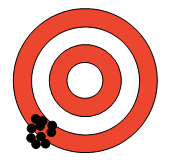
This bullseye demonstrates...
a)
High Accuracy & High Precision
b)
High Accuracy & Low Precision
c)
Low Accuracy & High Precision
d)
Low Accuracy & Low Precision
25.
?
a)
High Accuracy & High Precision
b)
High Accuracy & Low Precision
c)
Low Accuracy & High Precision
d)
Low Accuracy & Low Precision
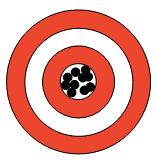
26.
This image is an example of...
a)
precision ONLY
b)
accuracy ONLY
c)
BOTH precision and accuracy
d)
NEITHER precision and accuracy 
27.
Describe the accuracy and precision of the image
a)
Accurate and Precise
b)
Accurate and not precise
c)
Not Accurate and Precise
d)
not accurate and not precise
28.

How close a measurement is to the accepted value is called..

a)

Accuracy

b)

Precision

c)

Significant

d)

Estimate

29.
A set of data are all close to each other, but they are not close to the actual value.  This set of data can be described as...
a)
accurate
b)
precise
c)
both precise and accurate
30.
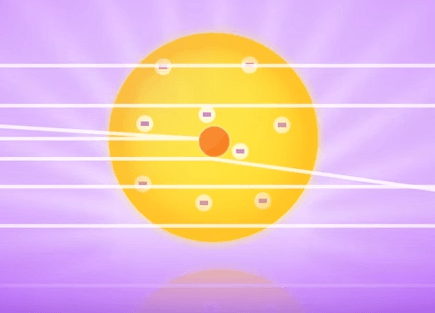
Rutherford discovered the...
a)
electron
b)
proton
c)
neutron
d)
nucleus
31.
Isotopes are elements with a different amount of
a)
protons
b)
neutrons
c)
electrons
d)
atoms
32.
Which particle does not contribute mass to the atom?
a)
Proton
b)
Neutron
c)
Electron
d)
Nucleus
33.
an element will always have the same number of 
a)
neutrons
b)
protons
c)
isotopes
d)
atoms
34.
An ______________ is the same element, with the same number of protons, but different numbers of neutrons
a)
Atom
b)
Isotope
c)
Atomic Number
d)
Mass Number
35.
The smallest particle into which an element can be divided and still be the same substance
a)
neutron
b)
atom
c)
electron
36.
Niels Bohr suggested that electrons.......
a)
are found in specific orbits
b)
electrons are scattered throughout the atom
c)
electrons move according to their energy level
d)
electrons are positive
37.
In a correctly written symbol what would be located in the "A" position?
a)
number of neutrons
b)
atomic number
c)
number of electrons 
d)
mass number
38.
How many protons are in this element?
a)
79
b)
196
c)
117
d)
Cannot be determined
39.
What is the atomic mass (rounded to the nearest whole number) of this element
a)
196
b)
196.95
c)
197
d)
79
40.
Because atoms are neutral, the number of protons will be equal to the number of __________ in an atom.
a)
Positrons
b)
Neutrons
c)
Electrons
d)
Nuclei
41.
The three main subatomic particles are electrons, protons and ____________.
a)
photons
b)
neurons
c)
neutrons
d)
quarks
42.
What are the two main parts of the atom?
a)
nucleus and cytoplasm
b)
nucleus and electron cloud
c)
core and electron cloud
d)
protons and neutrons
43.
Identify letter A
a)
Nucleus
b)
Neutrons
c)
Protons
d)
Electrons
44.
Identify letter B
a)
Nucleus
b)
Neutrons
c)
Protons
d)
Electrons
45.
Identify letter C
a)
Nucleus
b)
Neutrons
c)
Protons
d)
Electrons
46.
Identify letter D
a)
Nucleus
b)
Neutrons
c)
Protons
d)
Electrons
47.
Subatomic particle that has a negative charge and is located outside of the nucleus.
a)
Electron
b)
Proton
c)
Neutron
d)
Voltron
48.
All matter is made of what?
a)
Energy 
b)
Atoms 
c)
Electrons 
d)
Compounds 
49.
This particle is found in the nucleus and has no charge
a)
Neutron
b)
Proton
c)
Electron
d)
Orbital
50.
This particle is found in the nucleus and has a positive charge
a)
Electron
b)
Proton
c)
Neutron
d)
Neutral
51.

How many neutrons does an Oxygen-19 isotope have?

a)

19

b)

8

c)

11

d)

10

52.

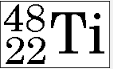
How many protons does this isotope of titanium have?

a)

48

b)

22

c)

26

d)

70

53.

A neutral atom of the isotope 2612Mg would consist of

a)

12 protons, 26 neutrons

b)

26 protons, 12 neutrons

c)

26 protons, 14 neutrons

d)

12 protons, 14 neutrons

54.

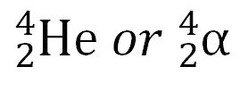
What do these symbols represent?

a)

alpha particle

b)

beta particle

c)

gamma ray

d)

neutron

55.
What do these symbols represent?
a)
alpha particle
b)
beta particle
c)
neutron
d)
gamma ray
56.
What is the noble gas shorthand electron for Sulfur atom?
a)
[Ar] 3p4
b)
[He] 3s23p4
c)
[Ne] 3s23p4
d)
[Na] 3s23p4
57.
What atom matches this electron configuration?
1s22s22p63s2
a)
Neon
b)
Magnesium
c)
Aluminum
d)
Potassium
58.
What is the charge of an atom that has lost one electron?
a)
-1
b)
-2
c)
+1
d)
+2
59.
What is the charge of an atom that has gained one electron?
a)
-1
b)
-2
c)
+1
d)
+2
60.
What atom matches this electron configuration?
1s2s2p3s2
a)
Neon
b)
Magnesium
c)
Aluminum
d)
Potassium
61.
How many electron can be found in a s orbital?
a)
2
b)
3
c)
4
d)
1
62.
What is the electronic configuration of sodium?
a)
1s22s22p63s1
b)
[Ne]3s1
c)
1s22s22p7
d)
Both A and B are correct
63.
What is the electronic configuration of iron?
a)
1s22s22p63s23p64s23d6
b)
1s22s22p63s23p63d8
c)
1s22p63s23p64s23d6
d)
1s22s22p63s23p64s13d6
64.
What atom matches this electron configuration?
1s22s22p63s23p64s23d10
a)
Zinc
b)
Copper
c)
Nickel
d)
Germanium
65.
Which electron configuration belongs to Chlorine (Cl)?
a)
1s2s2p3s3p5
b)
1s2s2p3s3p6
c)
1s2s2p3s3p7
66.

Choose the correct shortcut configuration for iodine.

a)

[Ar]4s24d104p5

b)

[Kr]5s24d105p5

c)

[Xe]5s25d105p5

d)

none of the above

67.

Each row on the periodic table represents:

a)

an energy level

b)

a sublevel

c)

an electron

d)

an orbital

68.
There are 4 different types of subshells (orbitals) s,p,d,f.
a)
true
b)
false
69.
What is the noble gas configuration for beryllium?
a)
[He]1s2
b)
[He]2s2
c)
[Li]2s1
d)
[Li]2s2
70.

How many valence electrons does Hydrogen Have?

a)

1 Valence electron

b)

2 Valence electron

c)

3 Valence electron

d)

4 Valence electron

e)

5 Valence electron

71.

How many valence electrons does Helium Have?

a)

1 Valence electron

b)

2 Valence electron

c)

3 Valence electron

d)

4 Valence electron

e)

5 Valence electron

72.
Valence electrons are: 
a)
Electrons farthest away from the nucleus
b)
Electrons closest to the nucleus
c)
Electrons that just come and go - they don't stay with the atom
d)
Electrons in the second shell
73.

All atoms are most stable with (or would "prefer") how many electrons in their valence shell?

a)

1

b)

2

c)

8

d)

18

74.
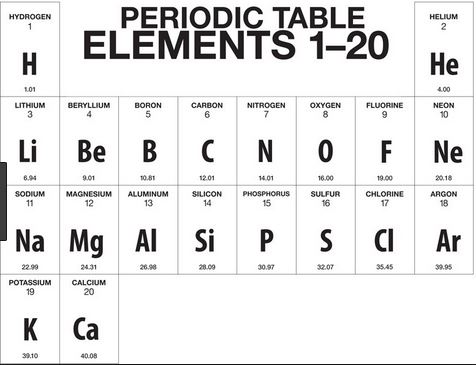
How many valence electrons are in an atom of Ar?
a)
2
b)
8
c)
4
d)
1
75.
How many valence electrons are in an atom of K?
a)
3
b)
8
c)
4
d)
1
76.
How many valence electrons are in an atom of Se?
a)
2
b)
8
c)
6
d)
5
77.
How many valence electrons are in an atom of P?
a)
4
b)
5
c)
2
d)
3
78.

What is the ion charge of Nitrogen

a)

-1

b)

+2

c)

+3

d)

-3

e)

-2

79.

What is the ion charge of Oxgyen

a)

-1

b)

+2

c)

+3

d)

-3

e)

-2

80.

What is the ion charge of Cl

a)

+1

b)

+2

c)

-3

d)

-2

e)

-1

81.
Which of the following will have a larger radius than Zinc?
a)
Gallium
b)
Aluminum
c)
Magnesium
d)
Strontium
82.
Which of the following will have a higher electronegativity than arsenic (As)?
a)
Carbon (C)
b)
Neon (Ne)
c)
Antimony (Sb)
d)
Germanium (Ge)
83.
Which of the following will have a lower ionization energy than Scandium (Sc)?
a)
Helium (He)
b)
Titanium (Ti)
c)
Calcium (Ca)
d)
Magnesium (Mg)
84.
As atoms of elements in group 16 are considered in order from top to bottom, the electronegativity of each successive element....
a)
decreases
b)
increases
c)
remains the same
d)
none of the above
85.
As you move down the periodic table atoms get bigger.  This is because ____________.
a)
The atoms have more mass.
b)
The atoms have more protons.
c)
The atoms have more energy levels
d)
The atoms have more neutrons
86.
Electronegativity is...
a)
the ability of an atom to attract/ accept electrons
b)
the ability of an atom to lose electrons
c)
the energy required to remove an electron from a specific atom
d)
how easy it is to make friends. 
87.
Ionization energy is...
a)
the energy required to add an electron to a specific atom
b)
how much energy it takes to remove an electron from an atom
c)
the energy required to shield the outer electrons from the nucleus
d)
a measure of the ability of an atom to attract electrons
88.
The atom with the largest atomic radius in Group 18 is - 
a)
Ar
b)
He
c)
Kr
d)
Rn
89.
Which statement correctly and completely identifies a trend?
a)
Atomic radius decreases across a period and increases down a group.
b)
Electronegativity decreases across a period and decreases down a group.
c)
Ionization energy increases across a period and increases down a group.
d)
Ionic radius increases across a period and increases down a group.