
Font size
 Worksheets
physics quiz 2 review
Total questions: 41
Worksheet time: 24mins
Which statement supports the law of conservation of energy?
Energy can be created
Energy can be destroyed
Energy is made of matter
Energy can be converted from one form to another
Which of the following objects is NOT experiencing an energy conversion?
An airplane taking off
A cup on a countertop
A log burning in a fire
A person riding a bike

What happens to the energy when you kick a soccer ball?
energy is created
energy is destroyed
energy is transferred to the ball
energy is transferred to your foot
Which objects has the most thermal energy?
Hot soup in a bowl
The water in a hot tub
A can of soda in the fridge
A tray of ice cubes
Where does the thermal energy come from to thaw ice cream I take out of the freezer?
It came from the fridge
It came from the surroundings
The ice cream already have enough to thaw itself
The ice cream does not gain any thermal energy

What type of diagram is being shown?
Energy conversion diagram
Energy transfer diagram

What type of diagram is being shown?
Energy conversion diagram
Energy transfer diagram

What type of diagram is being shown?
Energy conversion diagram
Energy transfer diagram

Identify the correct energy conversions that occurred as the ball dropped from point 6 - 7 on the diagram above.
KE, GE, KE, EE
GE, KE, EE
GE, EE, GE, KE
GE, EE
The molecules making up solids are always in motion. This proves that solids have _____ energy.
light
thermal
sound

The liquids in the 2 cups are the same, but the cup on the left is in a ______ state, and the cup on the right is the same liquid but in a _____ state.
gas, solid
solid, gas
liquid, solid
solid, liquid

What type of energy conversion occurs when the rubber band it released?
elastic to kinetic
gravitational to elastic
elastic to chemical
elastic to thermal

Which has more thermal energy the pot of coffee or the cup of coffee?
they have the same amount of thermal energy.
the coffee pot
the cup of coffee

When the red curling stone hits the yellow curling stone what is happening in relationship to energy.
energy is created by the yellow stone when the red stone hits it
energy is destroyed by the red stone hitting the yellow stones
energy is transferred from the red stone to the other stones

Why does the maximum bounce height of the ball get smaller over time?
The surroundings transfers energy to the ball
The ball transfers energy to the surroundings
The energy just disappears
The ball never had any energy
When we turned the friction on, what happened to the speed of the skater in the skatepark simulation activity?
It increased.
It decreased.
It stayed the same.
I didn't notice a difference.
When we turned the friction on, some of the ________________ energy turned into ________________ energy.
kinetic; thermal
gravitational potential; thermal
elastic; kinetic
chemical; thermal
Which of the following statements best describe what is occurring when there is friction?
Some of the potential energy is being lost to thermal energy as the total energy in the system changes.
Some of the potential energy is being lost to thermal energy as the total energy in the system remains the same.
Some of the kinetic energy is being lost to thermal energy as the total energy in the system remains the same.
Some of the kinetic energy is being lost to thermal energy as the the total energy in the system changes.


Matter in which atoms vibrate so much that they are far apart.
liquid
solid
gas
thermal energy
When a swimmer jumps into a pool and creates a big splash, what is the energy exchange as the swimmer hits the pool water?
Kinetic energy of the swimmer is transformed into potential energy of the pool water.
Kinetic energy of the swimmer is transferred to the pool water.
Potential energy of the swimmer is transferred to the pool water.
Potential energy of the swimmer is transformed into kinetic energy of the pool water.
You have 2 tubs that are filled halfway with water, and their temperatures are measured using the same thermometer and is equal. Bathtub A holds twice the volume as bathtub B. Which bathtub has more thermal energy?
Bathtub A has more thermal energy.
Bathtub B has more thermal energy.
The bathtubs have the same amount of thermal energy.
It would depend on the placement of the thermometer in the bathtub.
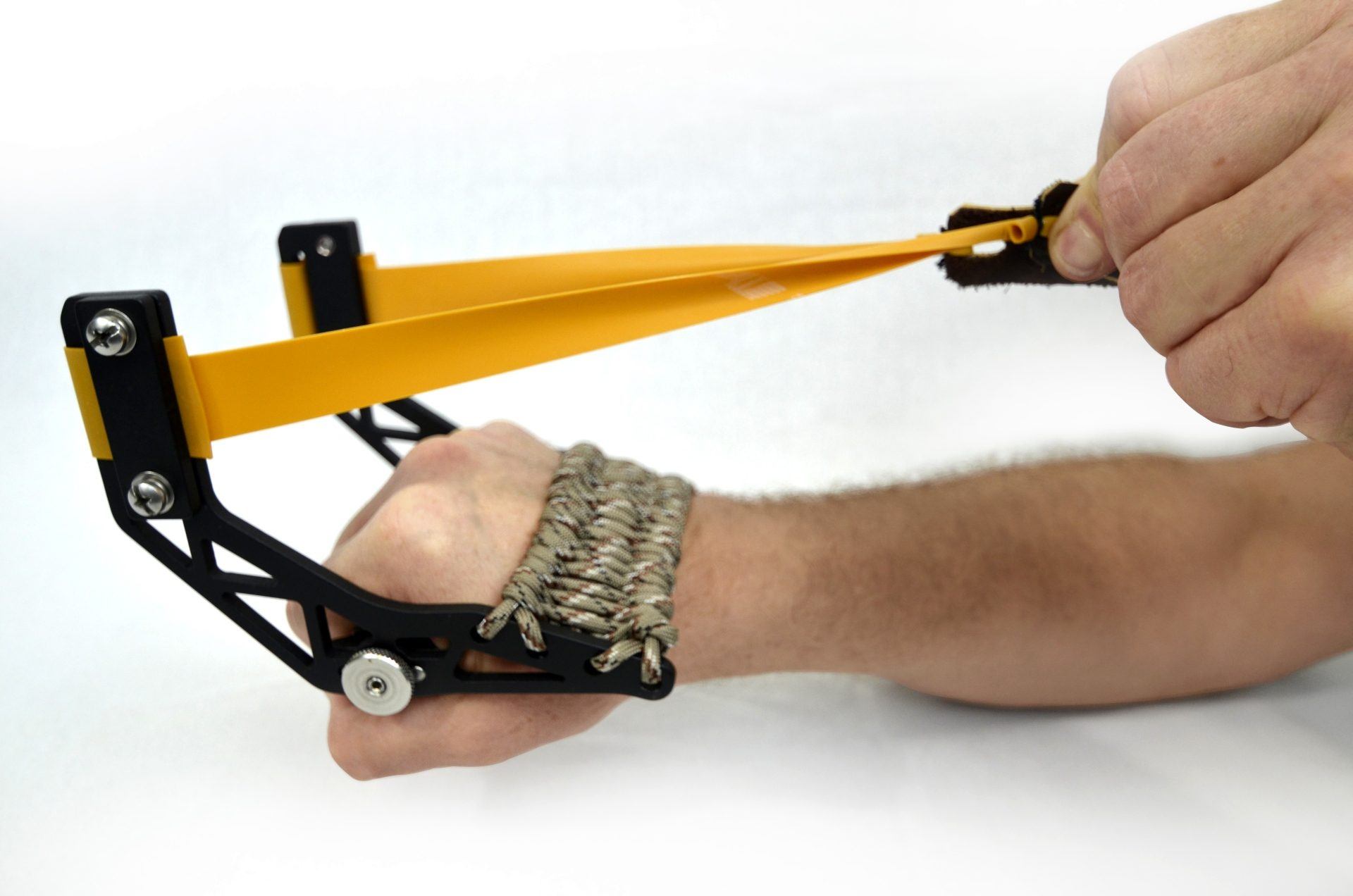
What type of energy is in this picture?
Kinetic
Elastic
Chemical
Sound

The diagram shows a cart moving freely along a track. What happens to the energy of the cart as it moves from point A to point B on the diagram?
Potential energy is transformed to kinetic energy.
Kinetic energy is transformed to potential energy.
Both potential energy and kinetic energy stay the same.
A hockey player uses her stick to hit a hockey puck. Which statement describes the overall energy transfer?
Energy is transferred from the stick to the puck.
Energy is transferred from the player to the puck.
Energy is transferred from the puck to the player.
Energy is transferred from the stick to the player.

A drawn bow possesses mechanical energy in the form of _______________. After the arrow is released, the energy is transformed into _________________.
gravitational energy; elastic energy
elastic energy; kinetic energy
gravitational energy; kinetic energy
When something is dropped, what type of energy transfer takes place?
Thermal -> Kinetic -> Potential
Gravitational -> Kinetic -> Thermal
Electrical -> Chemical

Susie was sitting at the top of the slide. Which type of energy transformation will she experience as she slides down to the bottom?
potential to light
kinetic to potential
potential to kinetic
mechanical to potential

A falling ball looses its shape and bounces off the ground because it has... (Scientific Principal #6)
kinetic energy
heat energy
elastic energy
potential energy

As a rigid (stiff) ruler is bent... (Scientific Principal #7)
its elastic energy increases.
its elastic energy decrease.
its elastic energy stays the same.
Rigid rulers can not have elastic energy.

Why doesn't a bouncing ball bounce for ever? (Scientific Principal #8)
The kinetic energy and gravitational energy change into another type of energy.
There is not enough kinetic and potential energy.
The Earth's gravity becomes less as the ball continues to bounce.
The elastic energy increases.

Which of the following in NOT true about a bouncing ball?
(Scientific Principal #9)
The ball becomes deformed when it hits the ground.
The ball will eventually stop bouncing.
Its energy changes between gravitational energy and kinetic energy.
Its energy eventually disappears.

What is the molecular difference between a cold object and a hot object? (Scientific Principal #10)
Colder objects have molecules that move faster than objects that are hot.
Colder objects do not have molecules.
Hotter objects have molecules that move faster than colder objects.
Hotter objects do not have molecules.

Which has more thermal energy, a small amount of water in a bathtub or a large amount of water in a lake at the same temperature? (Scientific Principal #11)
A small amount of water in a bathtub
A large amount of water in a lake
They both have the same amount of thermal energy.
Water does not contain thermal energy.

The total kinetic energy of molecules or atoms in an object is known as its ... (Scientific Principal #12)
electrical energy (EE)
potential energy (PE)
thermal energy (TE)
kinetic energy (KE)
Which factors affect Elastic Energy? (choose all that apply)
shape change
rigidity
movement
squeeze ability
What are energy transfers?
One object's energy is increased
One object's energy moves to another object.
One object's energy disappears from that object.
One object's energy is decreased


