wayground logo

Free Printable Worksheets

Font size

S
M
L
XL
Worksheets

Gr8 Fall Semester Showdown

Total questions: 100

Worksheet time: 1hrs 18mins

Name
Class
Date
1.
What number on the element key tells you how many protons an element has?
a)
Atomic Mass
b)
Element name
c)
Atomic number
d)
Element Symbol
2.
Which description about the proton is accurate?
a)
Positively charged particle with a mass less than 0 amu
b)
A neutrally charged particle with a mass less than 0 amu
c)
Positively charged particle with a mass of 1 amu
d)
A neutrally charge particle with a mass of 1 amu
3.
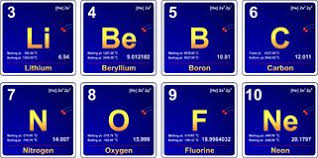
The following element key shows how many protons?
a)
16
b)
15.999
c)
Oxygen
d)
8
4.
Elements can have the same number of protons?
a)
True
b)
False
5.
Which subatomic particle causes the nucleus to have a positive charge?
a)
Neutron
b)
Electrons
c)
Protons
d)
Valence electrons
6.
Which of the following is NOT an accurate description of the nucleus?
a)
positively charged from the protons
b)
extremely dense from neutrons and protons
c)
negatively charged
d)
in the center of the atom
7.

The atoms of a certain element each contain 11 protons and 1 valence electron. Which statement correctly identifies this element and describes its chemical reactivity?

a)

The element is sodium, and it is highly reactive.

b)

The element is fluorine, and it is not very reactive.

c)

The element is sodium, and it is not very reactive.

d)

The element is fluorine, and it is highly reactive.

8.

A chemist is identifying the elements present in a sample of seawater. What characteristic of an element's atoms always determines the element's identity?

a)

The number of protons.

b)

The number of neutrons.

c)

The location of valence electrons.

d)

The number of valence electrons.

9.

What element has 7 protons?

a)

Nitrogen (N)

b)

Fluorine (F)

c)

Lithium (Li)

d)

Carbon (C)

10.
How many protons are in Beryllium?
a)
4
b)
9
c)
5
d)
2
11.
Which subatomic particles contribute the most to the mass of an atom?
a)
Protons, Neutrons, Electrons
b)
Protons only
c)
Protons and Electrons
d)
Protons and Neutrons
12.
What subatomic particles would you find in the nucleus of an atom?
a)
Protons only
b)
Protons and Neutrons
c)
Neutrons and Electrons
d)
Protons and Electrons 
13.
If an atom has 12 positively charged subatomic particles, which of the following must it also have to be considered a neutral atom?
a)
12 neutrons
b)
12 electrons
c)
12 protons
d)
24 protons and neutrons
14.
An atom has 10 protons, 15 neutrons and 10 electrons what is its mass number.
a)
20
b)
10
c)
5
d)
25
15.
An element with a mass number of 11 and an atomic number of 5 has how many neutrons?
a)
11
b)
5
c)
6
d)
16
16.
What is the element name of the atom pictured? 
a)
Fluorine
b)
Neon
c)
Argon
d)
Potassium
17.
Which letter represents an electron?
a)
A
b)
B
c)
C
d)
D
18.
During the phases of the Moon, the Moon appears to change shape.  This change in appearance is due to the Moon...
a)
physically changing size and shape.
b)
moving closer and then farther away from Earth.
c)
reflecting a different amount of light due to alignment with Earth and the Sun.
d)
having craters on its surface.
19.
As the moon's shape appears to get smaller, we say that the moon is _.
a)
swelling
b)
waxing
c)
waning
d)
disappearing
20.
Phases of the moon in which the moon appears to be getting larger are referred to as _.
a)
waxing
b)
waning
c)
new
d)
eclipse
21.
The cycle of the moon lasts about a _.
a)
day
b)
year
c)
week
d)
month
22.
What phase comes BEFORE this one?
a)
Waxing Crescent
b)
Waxing Gibbous
c)
Waning Gibbous
d)
Waning Crescent
23.
What phase comes AFTER this one?
a)
Waning Crescent
b)
Waning Gibbous
c)
Waxing Crescent
d)
Third Quarter
24.
When the Moon is between the Earth and the Sun, it is most likely in what phase?
a)
New
b)
3rd Quarter
c)
Full
25.
A[n] ______________ tide occurs when the sun is at right angles to the line between Earth and the moon. 
a)
high
b)
neap
c)
low
d)
spring
26.
Differences in the moon's and sun's pull on different sides of the Earth cause _________.
a)
gravity
b)
lunar phases
c)
tides
d)
dabbing
27.
A[n] ___________ tide occurs when the sun, Earth, and the moon are nearly in a line. 
a)
spring
b)
high
c)
low
d)
neap
28.
Which body has the greater effect on Earth's tides?
a)
Sun
b)
Saturn
c)
Moon 
d)
Venus
29.

Wha type of tide would this arrangement of earth-moon-sun create?

a)

full moon tide

b)

new moon tide

c)

neap tide

d)

spring tide

30.
What causes tides?
a)
gravity
b)
wind
c)
spring
d)
neap
31.
How many low tides and high tides happen in a day?
a)
1 low tide, 1 high tide
b)
4 low tides, 4 high tides
c)
3 low tides, 3 high tides
d)
2 low tides, 2 high tides
32.
The Moon has a greater influence on Earth tides than the Sun because...
a)
it is smaller than the Sun
b)
it revolves around the Earth
c)
it is closer to the Earth
33.
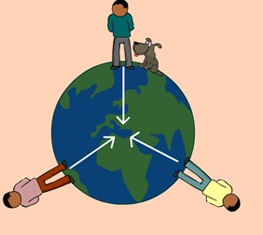
What is gravity?
a)
A force
b)
Energy
c)
A push
d)
All of them
34.
Gravity attracts all objects towards one another.
a)
False
b)
True
c)
It depends
35.
As distance between two objects increase the pull of gravity 
a)
Increases
b)
Decreases
c)
Stays the same
36.
Two factors effecting the magnitude of the force of gravity between 2 objects are...
a)
mass and distance 
b)
mass and matter
c)
distance and weight 
d)
weight and mass
37.
Every object in the universe attracts every other object.
a)
True
b)
False
38.

How long does it take the Earth to spin once on its axis?

a)

365.25 days

b)

1 day

c)

24 hours

d)

1 month

39.

What season is it in the Northern Hemisphere during the month of December?

a)

Summer

b)

Autumn

c)

Winter

d)

Spring

40.

Which region(s) of the Earth get at least one day a year where the sun does not set?

a)

Tropic of Capricorn and Tropic of Cancer

b)

The Equator

c)

The Arctic and Antarctic Circles

41.
What causes the sun to look like it is rising in the east and setting in the west?
a)
moon's orbit
b)
sun's rotation
c)
Earth's revolution
d)
Earth's rotation
42.
Movement of Earth around the sun.
a)
Rotation
b)
Revolution
43.
What season is letter A in the northern hemisphere?
a)
Winter
b)
Summer
c)
Spring
d)
Fall
44.
What happens when the area in which you live tilts away from the sun?
a)
It is summer.
b)
It is spring.
c)
It is winter.
d)
It is fall.
45.
Why is it warmer in the summer?
a)
Closer to the sun
b)
More direct light from Earth's tilt
c)
Stronger light from the sun
d)
Earth spins slower
46.
A year last from January to December. Is that because of rotation or revolution?
a)
rotation
b)
revolution
47.
This, along with the tilt of the Earth, is the reason we experience different seasons
a)
rotation
b)
revolution
48.
Why is the Equator warmest?
a)
Because it is closest to the sun.
b)
Because it receives the most direct sunlight
c)
Because no clouds form here.
d)
Because it is far from the sun
49.
Which season is taking place in the Northern Hemisphere in Position 4?
a)
Winter
b)
Spring
c)
Summer
d)
Fall
50.
The distance that light travels in one year...
a)
Light year
b)
Quantumyear
c)
Stellar-year
d)
1 million kilometers
51.
A large cloud of gas and dust in interstellar space; the predecessor to stars...
a)
Constellation
b)
Black hole
c)
Nebula
d)
Galaxy
52.
In the diagram given, what happens as we move to the left?
a)
Stars Get Larger
b)
Stars get Colder
c)
Stars get hotter
53.
Compared to the rest of the stars, our sun is considered...
a)
Extremely Large and Cold
b)
Small with a medium temperature
c)
Medium size with medium temperature
54.
Which category is our Sun located in?
a)
White Dwarfs
b)
Supergiants
c)
Main Sequence
d)
Giants
55.
The HR Diagram shows a relationship of a star's surface temperature and its
a)
color
b)
size
c)
apparent magnitude
d)
absolute magnitude
56.
At 10,000 degrees Celsius, hydrogen begins to change into helium and energy is released in a process called
a)
supernova
b)
pulsar
c)
nuclear fusion
d)
nuclear fission
57.
Light Years are a measure of:
a)
time
b)
speed
c)
distance
d)
light
58.

Proxima Centauri is the closest star to Earth after the Sun and is located 4.3 light years away from Earth. How long does it take light from Proxima Centauri to reach Earth?

a)

1 year

b)

4.3 years

c)

43 years

d)

10 trillion years

59.

Look at the H-R diagram. Which star is

sort of cool, dim (not too much light), and red?

a)

Betelguse

b)

Sirius B

c)

Procyon B

d)

Barnard's star

60.

Our sun is in a disk shaped galaxy located at which position?

a)

A

b)

B

c)

C

61.
What type of galaxy is this?
a)
Spiral
b)
Elliptical
c)
Irregular 
d)
Irrational
62.
How do we know that galaxies are moving away from us?
a)
Cosmic Microwave Background (CMB)
b)
Redshift of Galaxies
c)
Light Element Abundance
d)
Telescopes
63.
What is the definition of CONVECTION
a)
When heat transfers through waves.
b)
When heat transfers from objects that are touching.
c)
a  hot liquid or air that  expands, becomes less dense, and rises or becomes more dense, and sinks.
d)
Heat traveling from the sun
64.
Convection currents in the atmosphere create what? 
a)
wind
b)
steam
c)
ocean current
d)
volcanoes
65.
Which of the following is needed for convection to happen?
a)
Fluid/s
b)
Light in the form or rays
c)
Electromagnetic waves
d)
Fire
66.
The energy from the sun is transmitted through movement of electromagnetic waves by
a)
conduction
b)
convection
c)
contraction
d)
radiation
67.
The main reason that we have currents in the ocean and air is
a)
the sun heats the air and ocean evenly everywhere
b)
the heat inside the earth heats the ocean and the ocean heats the air
c)
the sun cannot heat both the air and water, so one must heat the other
d)
the sun heats air and water more at the equator because it receives more direct sunlight
68.
Warm air is __________ dense than cold air and rises creating convection currents.
a)
more
b)
less
69.
Density can be described as
a)
The force that pulls objects to the ground
b)
A breeze that occurs only during the night where the air over the ocean is warmer than the air over the land
c)
How tightly packed an object is
d)
The protected side of a mountain that receives little or no rain
70.
The air molecules in cold temperatures have 
a)
more density
b)
no density
c)
less density
d)
convection
71.
Located at the leading edge of a temperature drop off. Bring heavy thunderstorms, rain, and hail. Cool, fair weather is likely to follow.  
a)
Warm Front
b)
Cold Front
c)
Occluded Front
d)
Stationary Front 
72.
This is the symbol for a... 
a)
Cold Front
b)
Warm Front
c)
Stationary Front
d)
Occluded Front 
73.
This is the symbol for a... 
a)
Occluded Front
b)
Stationary Front
c)
Warm Front
d)
Cold Front 
74.
This is the symbol for a... 
a)
Stationary Front
b)
Occluded Front
c)
Cold Front
d)
Warm Front 
75.
This is the symbol for a... 
a)
Stationary Front
b)
Occluded Front
c)
Cold Front
d)
Warm Front
76.
Identify the type of front that is shown in the image.
a)
Occluded Front
b)
Cold Front
c)
Stationary Front
d)
Warm Front
77.
Identify the type of front that is shown in the image.
a)
Occluded Front
b)
Cold Front
c)
Stationary Front
d)
Warm Front
78.
A severe storm that involves strong winds and forms over warm water is:
a)
tornado
b)
thunderstorm
c)
hurricane
d)
blizzard
79.
Which weather tool measures air pressure?
a)
thermometer
b)
barometer
c)
anemometer
d)
psychrometer
80.
This weather tool measures wind speed 
a)
thermometer
b)
barometer
c)
anemometer
d)
psychrometer
81.
Humidity is the...
a)
Amount of Water Vapor in the Air
b)
Amount of Wind in the Air
c)
Amount of Precipitation in the Air
d)
Amount of Pressure in the Air
82.
Warm air near the Earth’s surface rises and then cools and drops, this creates a _________________ in the atmosphere.
a)
run-off
b)
Greenhouse Effect
c)
convection current
d)
water cylce
83.
Because the earth is spinning on its axis, the global winds appear to curve. This is known as the __________ ________.
a)
Coriolis Effect
b)
Greenhouse Effect
c)
Climate Effect
d)
Atmosphere Effect
84.
Where does a hurricane form?
a)
Over a cold body of water
b)
Over a warm body of water
c)
Over cold land
d)
Over warm land
85.
What kind of weather is usually associated with a low pressure system?
a)
Sunny weather
b)
Precipitation (rain, snow, etc.)
86.
What kind of weather is usually associated with a high pressure system?
a)
Sunny weather
b)
Precipitation (rain, snow, etc.)
87.
In what direction do winds always blow?
a)
From areas of high pressure to areas of low pressure
b)
From areas of low pressure to areas of high pressure
88.
What does this symbol on a weather map indicate? 
a)
High pressure system
b)
Low pressure system
c)
Cold front
d)
Warm front
89.
When a warm air mass gently slides on top of a cold air mass, and you have drizzly rain and then warmer weather, what type of front is it?
a)
warm front
b)
cold front
c)
occluded front
d)
stationary front
90.
What would you observe if you were in the eye of a hurricane?
a)
strong, spinning winds
b)
heavy rain, thunder, and lightning
c)
calm or very little wind
91.
What does every food chain start with? (Even if it's not drawn or written there!)
a)
producers
b)
sun
c)
consumer
d)
decomposers
92.
An organism that needs to eat other organisms to obtain energy is known as a:
a)
Autotroph
b)
Producer
c)
Consumer
d)
Mutualist
93.
Consumer that eats plants
a)
heterotroph
b)
herbivore
c)
producer
d)
community
94.
Where an organism lives
a)
habitat
b)
niche 
c)
heterotrogh
d)
biosphere
95.
In this Food Web Pyramid Which type of consumer gets only 10% of the energy stored in plants?
a)
Herbivore
b)
Carnivore
c)
Omnivore
d)
Secondary Consumer
96.
The amount of energy that usually transfers from one trophic level to the next...
a)
10%
b)
20%
c)
80%
d)
50%
97.
The living portions of the ecosystem.
a)
Biotic factors
b)
Abiotic factors
98.
What are the Abiotic factors in this image? 
a)
water, sunlight, dirt, air
b)
birds and plants
c)
birds, water, dirt
d)
plants, water
99.
All of the living and nonliving things in an area that interact with each other are called a/an ______.
a)
community
b)
habitat
c)
population
d)
ecosystem
100.
Organisms that look similar and can produce fertile offspring
a)
Species
b)
Fish
c)
Community
d)
Trees