Wayground logo

Free Printable Worksheets

Font size

S
M
L
XL
Worksheets

Biology Final Exam review

Total questions: 79

Worksheet time: 1hrs 23mins

Name
Class
Date
1.
An organized process that uses observations and investigations to gain knowledge about how nature works based on fact.
a)
Science
b)
Biology
c)
Physics
d)
Chemistry
2.
What is the main focus of science?
a)
To understand the world/universe better
b)
To compete against religion and show there is no God
c)
To create technology
d)
None of these
3.
All science begins with observation and a...
a)
Question
b)
Hypothesis
c)
Experiment
d)
Data
4.
You notice that grass on the North side of the lawn is growing faster than grass on the South side. You ask the question: Why is the North grass growing faster?
What is a possible hypothesis for your question?
a)
The grass in the North is getting more sunlight
b)
The grass in the North is growing 1 inch more than the grass in the South
c)
The grass in the South is shorter than the Grass in the North
d)
All of the above
5.
A hypothesis is...
a)
a testable explanation of a question
b)
a random guess
c)
an experiment
d)
a question
6.
What do scientists do with hypotheses?
a)
They test them.
b)
They ask a question.
c)
They make another one.
d)
Nothing
7.
What is one way a scientist may test a hypothesis?
a)
With an experiment
b)
With a question
c)
With data
d)
With a conclusion
8.
Do all hypotheses need to be tested with an experiment?
a)
Yes
b)
No, they can also be tested by making observations
9.
You can test more than one hypothesis at the same time
a)
True
b)
False
10.
Why is it important to keep all other variables constant?
a)
You won't be able to determine what is having the effect on your dependent variable
b)
It is not important to keep all other variables constant
c)
Both of these
d)
Neither of these
11.
Biology =
a)
The study of living things
b)
The study of the universe
c)
The study of animals
d)
The study of plants
12.

Genetics =

a)

study of how characteristics are passed from one generation to the next

b)

the study of how living things interact with one another and nonliving world

c)

the study of plants

d)

the study of small organisms

13.

An organism is

a)

any living thing

b)

an animal

c)

a part of the body

d)

a small organ

14.

A change in the environment that causes a response is a...

a)

stimulus

b)

experiment

c)

development

d)

adaptation

15.

The "building blocks" are

a)

cells

b)

molecules

c)

dna

d)

compounds

16.

Which of these is not alive?

a)

A bacterium

b)

A fungus

c)

An oak tree

d)

A rock

17.

Which is not a characteristic of living things?

a)

Has a brain

b)

Grows and develops

c)

Made of cells

d)

Uses energy

18.

Which isn't a reason that organisms need to be able to move?

a)

Find mates

b)

Avoid predators

c)

Find food

d)

To think

19.

The ability to cause a change

a)

Energy

b)

Stimulus

c)

Homeostasis

d)

Work

20.

Animals obtain energy from...

a)

The atmosphere

b)

The sun

c)

Other organisms

d)

None of these

21.

Change in shape or structure over time

a)

Development

b)

Movement

c)

Reproduction

d)

Adaptation

22.

Which is not a potential stimulus?

a)

Light

b)

Temperature

c)

Nearby predator

d)

Homeostasis

23.

Organisms produced from parents of the same species

a)

Offspring

b)

Reproduction

c)

Organism

24.

Homeostasis =

a)

keeping stable conditions inside

b)

staying home

c)

not responding to stimuli

d)

growing and developing

25.

Which statement best describes an activity that will contribute to the maintenance of homeostasis in an organism?

a)

A desert rattlesnake enters an underground burrow on a hot summer day.

b)

A shark swims toward a highly polluted region of the ocean.

c)

Roots of a will tree grow away from a moisture-rich region of the soil.

d)

A polar bear sheds most of its fur during the coldest months of the winter.

26.

What is the stimulus in the following situation: All the students begin to pack up after the lunch bell rings?

a)

The lunch bell ringing

b)

All the students

c)

Students begin to pack

d)

There is no stimuls in this situation.

27.

Which list is in order from simplest to the most complex?

a)

cell, organ system, organ, tissue, organism

b)

cell, organism, organ system, organ, tissue

c)

cell, tissue, organ system, organ, organism

d)

cell, tissue, organ, organ system, organism

28.

Which one of these is NOT one of the characteristics of living things?

a)

All living things get & use energy

b)

All living things respond to the environment

c)

All living things drink water

d)

All living things can reproduce

29.
control the cell's activities; contains the cell's DNA
a)
mitochondria
b)
cell membrane
c)
nucleus
d)
golgi body
30.
The main function of chloroplasts is:
a)
To control what enters and leaves the cell.
b)
To break down food to release energy for the cell.
c)
To control all activities of the cell.
d)
To produce food for the cell using the sun's energy.
31.
What is the function of the cell membrane?
a)
To protect and support the cell
b)
To perform different functions in each cell
c)
To control what enters and leaves the cell
d)
To form a hard outer covering for the cell
32.
This organelle makes proteins. 
a)
Cell membrane
b)
Nucleus
c)
Ribosome
d)
ER
33.
This organelle takes food and turns it into ENERGY for plant and animal cells.
a)
Chloroplast
b)
Mitochondria
c)
Lysosome
d)
Ribosome
34.

DNA is wound up tightly in...

a)

Chromosomes

b)

Chloroplasts

c)

Vacuoles

d)

Ribosomes

35.

A cut heals because cells...

a)

Reproduce

b)

Grow

c)

Move

d)

Work together

36.
Name the phase:
a)
Anaphase
b)
Telophase
c)
Metaphase
d)
Prophase
37.
Name the phase:
a)
Prophase
b)
Metaphase
c)
Anaphase
d)
Telophase
38.
Name the phase:
a)
Prophase
b)
Metaphase
c)
Anaphase
d)
Telophase
39.
Name the phase:
a)
Prophase
b)
Metaphase
c)
Anaphase
d)
Telophase
40.
Process that produces sex cells (gametes).
a)
Mitosis
b)
Meiosis
c)
Both Mitosis and Meiosis
41.
Produces genetically identical daughter cells.
a)
Mitosis
b)
Meiosis
c)
Both Mitosis and Meiosis
42.

The process by which cells obtain energy from food

a)

Cellular Respiration

b)

Photosynthesis

43.

The process by which plant cells make their own food

a)

Cellular Respiration

b)

Photosynthesis

44.

Water + Carbon Dioxide + Light energy → Sugar + Oxygen

a)

Cellular Respiration

b)

Photosynthesis

45.

Sugar + Oxygen → Water + Carbon Dioxide + ATP energy

a)

Cellular Respiration

b)

Photosynthesis

46.

What is the form of chemical energy released by a cell?

a)

ATP

b)

DNA

c)

O2

d)

CO2

47.
Creates glucose ( sugar)
a)
Cellular Respiration
b)
Photosynthesis 
c)
Both Cellular Respiration and Photosynthesis
48.
Creates carbon dioxide.
a)
Cellular Respiration
b)
Photosynthesis 
c)
Both Cellular Respiration and Photosynthesis
49.
Creates oxygen. 
a)
Cellular Respiration
b)
Photosynthesis 
c)
Both Cellular Respiration and Photosynthesis
50.
Occurs in plant cells.
a)
Cellular Respiration
b)
Photosynthesis 
c)
Both Cellular Respiration and Photosynthesis
51.
The main source of energy for ALL life comes from ____.
a)
the Earth
b)
the moon
c)
the sun
d)
the food we eat/make
52.
Occurs in animal cells. 
a)
Cellular Respiration
b)
Photosynthesis 
c)
Both Cellular Respiration and Photosynthesis
53.

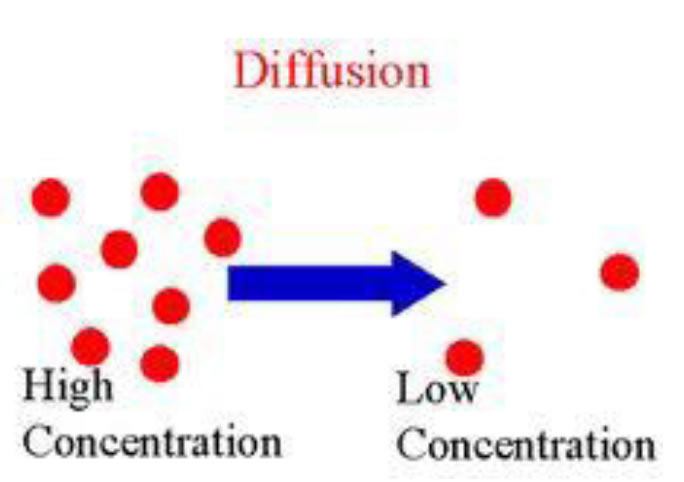
Diffusion is a form of passive transport

a)

True

b)

False

54.
Movement of particles from high to low concentration. 
a)
Passive Transport
b)
Active Transport
55.
Solutes move with the concentration gradient, therefore no energy is used. 
a)
Passive Transport
b)
Active Transport
56.

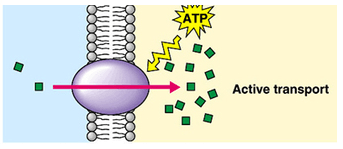
ATP is used for energy in which type of transport

a)

Passive Transport

b)

Active Transport

57.
Solutes move against the concentration gradient, therefore energy is needed. 
a)
Passive Transport
b)
Active Transport
58.
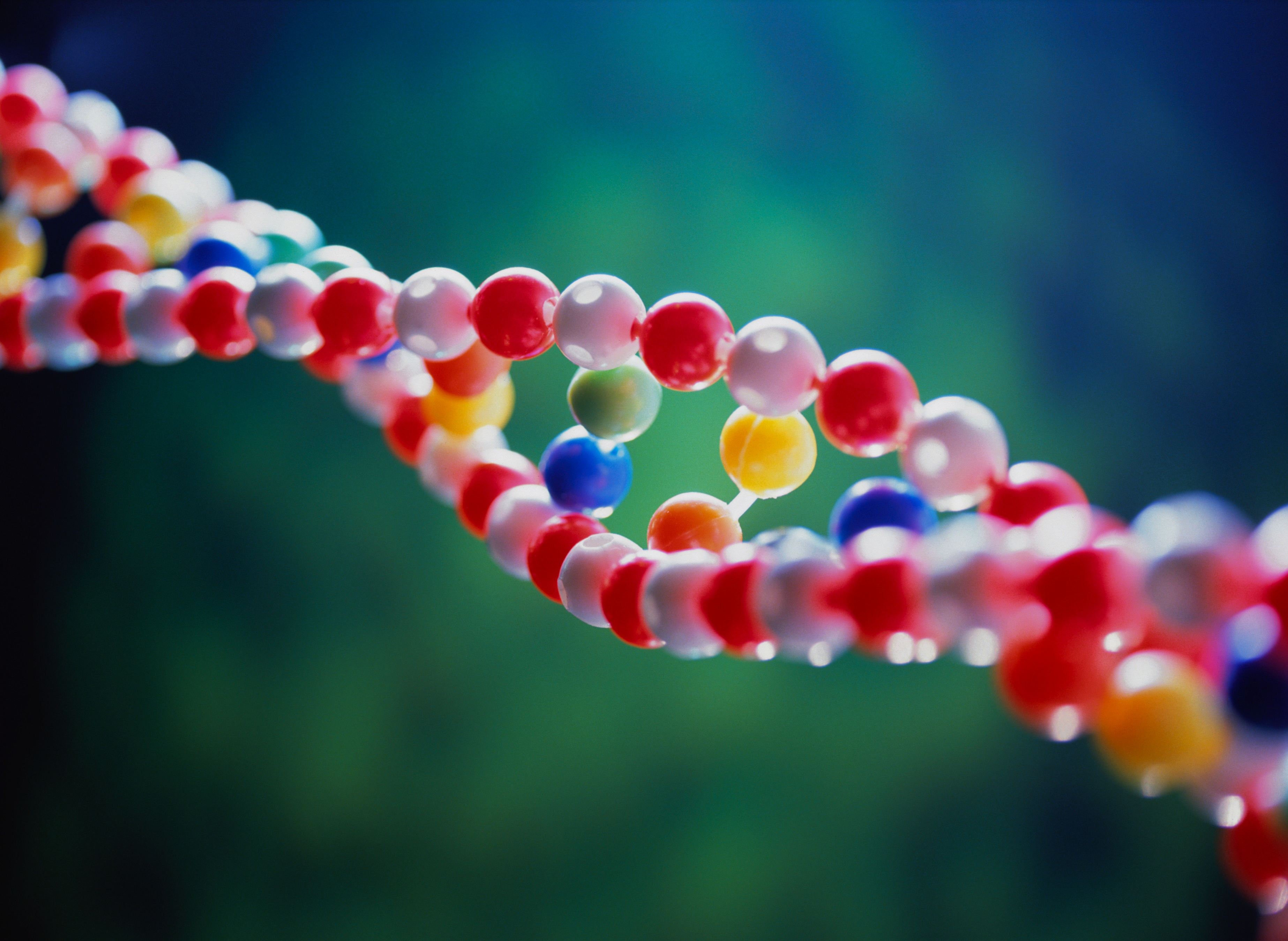
Which of the following best describes a DNA molecule?
a)
double helix
b)
contains ribose
c)
made of amino acids
d)
contains Uracil
59.
Why is DNA important?
a)
it is very small and very complicated
b)
it's in everything
c)
it serves as the blueprint for traits of all living things
d)
because we eat it every day for energy
60.
Which of the following is a phenotype?
a)
BB
b)
Bb
c)
bb
d)
Blue eyes
61.
the passing of genetic traits from parent to offspring.
a)
heredity
b)
trait
c)
gene
d)
allele
62.
Magda is a tall, 11 year old drummer. She has a scar on her right cheek. She is good at swimming. Which of her traits did Magda most likely inherit?
a)
height
b)
the scar
c)
ability to swim
d)
ability to play drums
63.
G = green, g = yellow
The genotype for a yellow plant is...
a)
GG
b)
Gg
c)
gg
d)
all of the choices result in yellow
64.

an inherited characteristic

a)

trait

b)

DNA

c)

genetics

d)

heridity

65.

Eye color is an example of a...

a)

trait

b)

heredity

c)

homozygous

d)

recessive allele

66.

Contain information about inherited traits (they are just segments of your DNA)

a)

Genes

b)

Traits

c)

Heredity

d)

Genetics

67.

TT

a)

Heterozygous

b)

Homozygous

68.

tt

a)

Heterozygous

b)

Homozygous

69.

Tt

a)

Heterozygous

b)

Homozygous

70.
A homozygous dominant dog with brown fur is crossed with a heterozygous dog with brown fur. What are the percentages of the possible genotypes?
a)
100% BB
b)
75% BB and 25%Bb
c)
50 % BB and 50% Bb
d)
50% Bb and 50% bb
71.

Brown eyes (B) is dominant to Blue (b). Two brown eyed parents (Bb) have a baby. What is the chance the baby is blue eyed?

a)

0 %

b)

25%

c)

50%

d)

75%

72.
Brown fur is dominant to white fur in dogs. A homozygous dominant dog is crossed with a heterozygous dog. What are the percentages of the possible genotypes?
a)
100% BB
b)
75% BB and 25%Bb
c)
50 % BB and 50% Bb
d)
50% Bb and 50% bb
73.
W=white hair
w= non-white hair
If you cross a horse with WW and a horse with ww what fraction of the offspring would be expected to have white hair?
a)
none
b)
3/4
c)
1/2
d)
all
74.
Snap dragon color is a incomplete dominant trait.  A red flower (RR) is crossed with white flower (rr)? What color are flowers that are Rr?
a)
Red
b)
Red and White
c)
White
d)
Pink
75.

Why do sex cells only have half the number of chromosomes?

a)

They don't have half the number, they have twice as many chromosomes

b)

So that after fertilization, the offspring will have a full set of chromosomes

c)

So that after fertilization, the offspring will have a half set of chromosomes

d)

All of these

76.
Which sex chromosomes would indicate a typical human male?
a)
XX
b)
X
c)
XY
d)
XXY
77.
Any change in the sequence of DNA is...
a)
transgenic shift
b)
Single Genotype
c)
Monohybrid Trait
d)
Mutation
78.

The methods used to produce new forms of DNA are called

a)

plasmids

b)

restrictive enzymes

c)

DNA replication

d)

genetic engineering

79.

Which is not an example of genetic engineering?

a)

Selective breeding

b)

Cloning

c)

Gene splicing

d)

DNA replication