
 Worksheets
Semester 1 Final Exam Review
Total questions: 92
Worksheet time: 4hrs 15mins
Name
Class
Date
1.
What type of transport does not require energy?
a)
active
b)
endocytosis
c)
passive
d)
exocytosis
2.
What type of transport uses energy?
a)
active
b)
diffusion
c)
passive
d)
osmosis
3.
Which type of transport usually helps get large particles in and out of a cell?
a)
active
b)
passive
4.
Which type of transport usually involves smaller particles?
a)
active
b)
passive
5.
What term is used to describe the movement across a membrane from an area of high concentration to an area of low concentration?
a)
endocytosis
b)
exocytosis
c)
diffusion
d)
engulfing
6.
What type of transport involves the movement of water molecules through a membrane?
a)
diffusion
b)
osmosis
c)
endocytosis
d)
exocytosis
7.
Which term describes how larger molecules are brought into a cell through engulfing?
a)
diffusion
b)
osmosis
c)
endocytosis
d)
exocytosis
8.
Which term describes how larger particles exit the cell through engulfing?
a)
diffusion
b)
osmosis
c)
endocytosis
d)
exocytosis
9.
What are the raw materials for photosynthesis?
a)
carbon dioxide and glucose
b)
oxygen and glucose
c)
carbon dioxide and water
d)
glucose and water
10.
What are the raw materials for cellular respiration?
a)
oxygen and water
b)
oxygen and glucose
c)
glucose and carbon dioxide
d)
water and carbon dioxide
11.
What are the products of photosynthesis?
a)
glucose, oxygen, and ATP energy
b)
glucose and oxygen
c)
carbon dioxide, water, and ATP energy
d)
carbon dioxide and water
12.
What are the products of cellular respiration?
a)
glucose, carbon dioxide, and ATP energy
b)
glucose and carbon dioxide
c)
carbon dioxide and water
d)
carbon dioxide, water, and ATP energy
13.
Photosynthesis needs to be in the presence of ___________ to take place
a)
oxygen
b)
sunlight
c)
moonlight
d)
hydrogen
14.
How many chromosomes to daughter cells have compared to their mother cells?
a)
half
b)
same
c)
double
d)
none
15.
Mitosis creates ____ daughter cells.
a)
1
b)
2
c)
4
d)
8
16.
Where does photosynthesis take place?
a)
nucleus
b)
chloroplast
c)
mitochondria
d)
vesicle
17.
Where does cellular respiration take place?
a)
nucleus
b)
chloroplast
c)
mitochondria
d)
vesicle
18.
What word describes a membrane that only allows certain things through it?
a)
passive
b)
active
c)
semipermeable
d)
impermeable
19.
The ability to maintain a stable internal condition despite changing external conditions is known as __________.
a)
transport
b)
photosynthesis
c)
mitosis
d)
homeostatsis
20.
Dogs' cells have 78 chromosomes in them. After a dog's cell has gone through mitosis how many chromosomes will the daughter cells have?
a)
39
b)
78
c)
156
d)
234
21.
Which types of organisms perform photosynthesis
a)
plants
b)
animals
c)
plants and animals
d)
bacteria only
22.
Which types of organisms perform cellular respiration?
a)
plants only
b)
animals only
c)
both plants and animals
d)
bacteria only
23.

Which process is illustrated in this picture, given that the particles shown are water molecules?
a)
diffusion
b)
osmosis
c)
endocytosis
d)
active transport
24.

Which direction would an arrow need to point to show the movement of molecules during diffusion?
a)
left
b)
right
c)
up
d)
down
25.

Which type of transport is shown in this illustration?
a)
active
b)
passive
c)
diffusion
d)
osmosis
26.

True or False: Energy would need to be used in the transport shown in this picture.
a)
True
b)
False
27.

True or False: Energy would be needed to make in the type of transport shown in this picture.
a)
True
b)
False
28.
True or False: Energy is created during photosynthesis.
a)
True
b)
False
29.
Which process is allows us to heal cuts and grow?
a)
photosynthesis
b)
cellular respiration
c)
mitosis
d)
meiosis
30.
What is the smallest unit of any living organism?
a)
Organ
b)
Organ System
c)
Tissue
d)
Cell
31.
Many cells that work together to perform a similar function make up a(n):
a)
Cell
b)
Organ
c)
Tissue
d)
Organ System
32.
Tissues that work together to fulfill a specific role in the body is called a(n)
a)
Cell
b)
Organ
c)
Tissue
d)
Organ System
33.
Organs work together to make up a(n)
a)
Cell
b)
Organ
c)
Organ System
d)
Tissue
34.
This system provides structure and support for the body
a)
Skeletal
b)
Muscular
c)
Nervous
d)
Excretory
35.
Which system is responsible for the production of blood cells?
a)
Circulatory
b)
Skeletal
c)
Nervous
d)
Excretory
36.
This system works in pairs to allow for movement?
a)
Muscular
b)
Skeletal
c)
Nervous
d)
Respiratory
37.
Which system helps generate warmth?
a)
Nervous
b)
Digestive
c)
Immune
d)
Muscular
38.
Which of the following best describes the function of the circulatory system?
a)
It transports nutrients and waste through the body.
b)
It brings in oxygen for the body.
c)
It removes waste out of the body.
d)
It breaks down food into smaller molecules.
39.
Why is the respiratory system important to the body?
a)
It provides carbon dioxide for cellular respiration and removes oxygen.
b)
It brings in glucose for cellular respiration and removes water.
c)
It brings in oxygen needed for cellular respiration and removes carbon dioxide.
d)
It brings in water for cellular respiration and removes glucose.
40.
What does the digestive system do for the body?
a)
It controls all other body systems and coordinates movement.
b)
It allows for movement.
c)
It filters and removes waste.
d)
It breaks down food in smaller molecules.
41.
How would the body be affected if it lacked the excretory system?
a)
Waste would not be removed from the body.
b)
The body would not be able to break down food.
c)
The body would not be able to control any movement.
d)
The body would not be able to transport nutrients and waste.
42.
Which of the following best describes the role of the nervous system?
a)
It moves nutrients and waste around the body.
b)
It provides a framework for the body and gives posture.
c)
It monitors and controls all processes in the body.
d)
It helps break down food into smaller molecules.
43.
Which system acts as a defense system against pathogens?
a)
Skeletal
b)
Immune
c)
Respiratory
d)
Nervous
44.
Smooth muscle can be found in the walls of blood vessels and in the _____.
a)
spinal cord
b)
joints
c)
lungs
d)
digestive tract
45.
What type of muscle is only found in the heart?
a)
cardiac muscle
b)
smooth muscle
c)
skeletal muscle
d)
biceps muscle
46.
Which dome-shaped muscle contracts to begin the process of inhaling (breathing in)?
a)
lungs
b)
diaphragm
c)
heart/cardiac
d)
pharnyx
47.
To digest food, your stomach works with organs such as the ______.
a)
lungs
b)
heart
c)
intestines
d)
bladder
48.
Which organ passes oxygen to the blood?
a)
lungs
b)
heart
c)
brain
d)
stomach
49.
Which system includes the heart and blood vessels?
a)
respiratory
b)
circulatory
c)
excretory
d)
nervous
50.
Where is urine stored until it can be eliminated?
a)
kidneys
b)
stomach
c)
bladder
d)
liver
51.
What is the term for a disease-causing organism?
a)
t-cell
b)
antibody
c)
cell
d)
pathogen
52.
What are two examples of pathogens?
a)
poor diet and little sleep
b)
smoking and no exercise
c)
lungs and heart
d)
bacteria and viruses
53.
What protects the spinal cord?
a)
Skull
b)
Vertebrae (spine)
c)
Ribs
d)
Cartilage
54.

Based on your knowledge of this body system, how would the body be affected if it stopped working?
a)
The body would not be able to fight off illness.
b)
The body would not be able to gather oxygen.
c)
The body would not be able gather nutrients.
d)
The body would not be able to stand upright.
55.
When these two systems work together, they are able to send disease-fighting cells throughout the body.
a)
immune and circulatory
b)
circulatory and nervous
c)
respiratory and immune
d)
respiratory and nervous
56.
On the way home from school, Ralph was surprised when his friend jumped out in front of him. In his surprise, he jumped and screamed. These responses to a stimulus are a part of which body system?
a)
Skeletal
b)
Respiratory
c)
Nervous
d)
Digestive
57.
Which two systems work together to gather and transport oxygen through the body?
a)
skeletal and respiratory
b)
muscular and circulatory
c)
skeletal and muscular
d)
respiratory and circulatory
58.
The smallest of blood vessels with thin walls to allow nutrients and waste to pass through them are called _______.
a)
Arteries
b)
Veins
c)
Aorta
d)
Capillaries
59.
All living things are made of...
a)
atoms
b)
cells
c)
bacteria
d)
plants
60.
Where is the DNA found in a prokaryotic cell?
a)
floating around in the cytoplasm
b)
in the nucleus
61.
What type of cell has a nucleus?
a)
eukaryotic
b)
prokaryotic
62.

Under a microscope, what kind of cells lack membrane-bound internal organelles?
a)
Prokaryotes
b)
Eukaryotes
c)
Plants
d)
Animals
63.

The picture illustrates a
a)
Prokaryotic Plant Cell
b)
Prokaryotic Animal Cell
c)
Eukaryotic Plant Cell
d)
Eukaryotic Animal Cell
64.
Controls what enters/leaves a cell
a)
cell membrane
b)
Nuclear membrane
c)
cell wall
d)
cytoplasm
65.
stiff, protective outer layer of plant cells
a)
cell membrane
b)
nuclear membrane
c)
cell wall
d)
cytoplasm
66.
collect sunlight which it converts to sugars
a)
chloroplasts
b)
cytoplasm
c)
cell wall
d)
mitochondria
67.
hold/store water, mainly found in plant cells
a)
nuclolus
b)
ribosomes
c)
golgi bodies
d)
vacuoles
68.
break down (digest) worn out cell parts, mostly in animal cells
a)
cytoplasm
b)
lysosomes
c)
mitochondria
d)
vacuoles
69.
jello-like material, fills the space between cell organelles, is where many chemical reactions occur
a)
cytoplasm
b)
chromatin
c)
chloroplast
d)
cell membrane
70.
control, read, and direct the cell using DNA instructions
a)
nucleus
b)
mitochondria
c)
endoplasmic reticulum
d)
lysosome
71.
releases energy for cells to use, most common in animal cells
a)
mitochondria
b)
ribosomes
c)
lysosomes
d)
nucleolus
72.

What am I?
a)
cell wall
b)
mitochondria
c)
cytoplasm
d)
chloroplast
73.

What am I?
a)
Nucleus
b)
Golgi Body
c)
Mitochondrion
d)
Plasma Membrane
74.
The purpose of selective breeding is to
a)
Get bigger animals
b)
get smaller animals
c)
create animals with desirable traits
d)
create animals with bad traits
75.
Which is another term for selective breeding?
a)
Artificial selection
b)
Natural Selection
c)
Intelligent selection
76.
Problems with selective breeding include
a)
Better animals
b)
More Meat
c)
Animals can have bad health problems
d)
more diversity
77.
The cells produced via meiosis are called:
a)
sex cells
b)
somatic cells
c)
body cells
d)
skin cells
78.
If a body cell in a butterfly contains 24 chromosomes, a butterfly egg would contain
a)
3
b)
6
c)
12
d)
24
79.
How many daughter cells are produced from meiosis ?
a)
10
b)
6
c)
4
d)
2
80.
At the end of mitosis you have _____ cells
a)
identical
b)
different
c)
identical twins
d)
variety
81.
products of meiosis are genetically
a)
different
b)
identical
82.
Which organelle belongs in plant cells only?
a)
Cell Membrane
b)
Mitochondrion
c)
Chloroplast
d)
Nucleus
83.
Which organelle belongs in plant cells only?
a)
Cytoplasm
b)
Mitochondrion
c)
Cell Wall
d)
Nucleus
84.
Which organelle belongs in plant cells only?
a)
Cytoplasm
b)
Mitochondrion
c)
Large Central Vacuole
d)
Cell Membrane
85.
Which organelle belongs in both plant and animal cells?
a)
Chloroplast
b)
Mitochondrion
c)
Large Central Vacuole
d)
Cell Wall
86.
Which organelle belongs in both plant and animal cells?
a)
Chloroplast
b)
Cell Wall
c)
Large Central Vacuole
d)
Cell Membrane
87.
Which of the following lists these levels in the correct order of organization from the simplest to the most complex?
a)
cells, tissues, organs, organ systems, organisms
b)
organisms, organ systems, organs, tissues, cells
c)
tissues, cells, organs, organisms, organ systems
d)
organs, organ systems, organisms, cells, tissues
88.
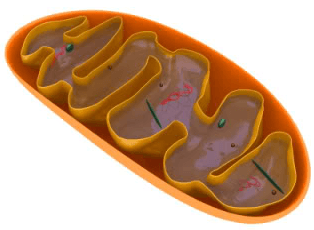
What are tiny organelles that convert glucose into ATP?
a)
Ribosomes
b)
Vesicles
c)
Cytoskeleton
d)
Mitochondria
89.
What type of cell does not have a defined nucleus or membrane bound organelles.
a)
Animal Cell
b)
Prokaryote
c)
Eukaryote
d)
Plant Cell
90.
What type of cell has a defined nucleus and membrane bound organelles.
a)
Bacteria
b)
Prokaryote
c)
Eukaryote
d)
Archaeabacteria
91.
Which of the following organelles can only be found in animal cells?
a)
Chloroplast
b)
Lysosome
c)
Cytoplasm
d)
Large Central Vacuole
92.
Dogs' cells have 78 chromosomes in them. After a dog's cell has gone through meiosis how many chromosomes will the daughter cells have?
a)
39
b)
78
c)
156
d)
234
100 %

