wayground logo

Free Printable Worksheets

NEW

Font size

S
M
L
XL
Worksheets

Evolution/Classification Review

Total questions: 71

Worksheet time: 1hrs 19mins

Name
Class
Date
1.
Two species that evolve in response to each other over time is called
a)
convergent radiation
b)
adaptive radiation
c)
coevolution
2.
Natural selection shows that individuals that tend to survive are those that 
a)
have characteristics their parents acquired by use and disuse.
b)
characteristics that plant and animal beeders value.
c)
have the greatest number of offspring
d)
have variations best suited to their environmental conditions.
3.
Structures that are shared by related species and have been inhertited from a common ancestor are 
a)
homologus structures
b)
analogous structures
c)
vestigial structures
d)
convergent structures
4.
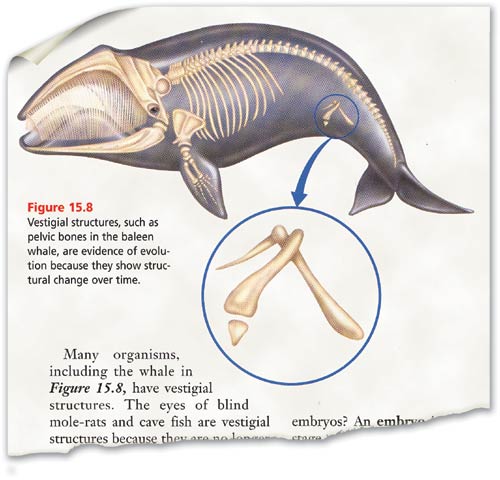
The pelvic and femur or thigh bone involved in walking would be considered __________ in a whale because they not longer aid in movement.
a)
fossil evidence
b)
vestigial structures
c)
acquired traits
d)
natural varation
5.
Scientist assign every organism a two-word, universally accepted name, according to the system knows as
a)
traditional classification
b)
the three domains
c)
binomial nomenclature
d)
cladistics
6.
Which is the correct order of taxa from largest to smallest in the classification system?
a)
kingdom, phylum, class, family, order, genus, species
b)
species, genus, family, order, class, phylum, kingdom
c)
species, genus, order, family, class, phylum, kingdom 
d)
kingdom, phylum, class, order, family, genus, species
7.
According to this cladogram, sharks are MOST closely related to which organism? 
a)
Amphibians
b)
Ray finned fish
c)
Crocodiles
d)
Birds
8.
Which kingdom?
eukaryote, multicellular, heterotroph, sexual or asexual reproduction, and most move at some point in their life cycle
a)
Eubacteria
b)
Animalia
c)
Archaeabacteria
d)
Protista
9.
Which kingdom?
-eukaryote, multicellular, autotroph, sexual or asexual reproduction, and use photosynthesis
a)
Plantae
b)
Animalia
c)
Protista
d)
Fungi
10.
For the Galapagos Finches, why do different islands have finches with different sized beaks?
a)
Beak shape on each island is random
b)
Birds with beaks best able to eat the food avalable on the island survived
c)
Particular beak shapes are best for protecting against predators
d)
Particular beak shapes are best for protecting against prey
11.
Why are beneficial traits more likely to be passed onto offspring because...
a)
organisms with beneficial traits are more likely to survive and reproduce.
b)
beneficial  traits come from dominant alleles.
c)
beneficial traits come from recessive alleles.
d)
the beneficial trait is aquired during the life of the organism.
12.
Which of the following is a term for a group of similar organisms that can reproduce to make fertile offspring?
a)
domain
b)
population
c)
species
d)
kingdom
13.
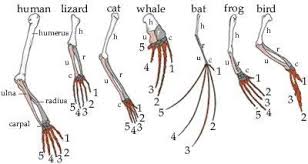
Some organisms that share a common ancestor have features that have different functions, but similar structures.  These are known as
a)
vestigial structures
b)
fossil structures
c)
homologous structures
d)
dominant structures 
14.
An earthquake causes an ocean channel top open and separate an island into two.  The population in each island eventually become different species.  This is an example of
a)
geographic isoliation
b)
genetic drift
c)
non-random mating
d)
artificial selection 
15.
The first living organism must have been...
a)
An anaerobic prokaryote
b)
An aerobic prokaryote
c)
An anaerobic eukaryote
d)
An aerobic eukaryote
16.
According to the phylogenetic tree, a dog is most closely related to...
a)
a cow
b)
a human
c)
a horse
d)
a mouse
17.
Darwin observed many similarities among different species of finches on the Islands. This help explains the finches
a)
can interbreed
b)
acquire traits through use and disuse 
c)
eat the same food
d)
decended from a common ancestor
18.
What is another name for natural selection?
a)
survival of the smartest
b)
survival of the fastest
c)
survival of the biggest
d)
survival of the fittest
19.
What is a structure that is similar across species?
a)
vestigial
b)
homologous
c)
adaptaion
d)
variation
20.
What is a change in an organism that allows for it to survive in its environment?
a)
homologous
b)
vestigial
c)
variation
d)
adaptation
21.
What is an organism that has similar characteristics and can reproduce?
a)
species
b)
organism
c)
embryology
d)
vestigial 
22.
What is this an example of?
a)
embryology
b)
fossil record
c)
homologous structures
d)
vestigial structures
23.
What is this an example of?
a)
vestigial structures
b)
embryology
c)
homologous structures
d)
fossil record
24.
What is this an example of?
a)
natural selection
b)
macro evolution
c)
extinction
d)
embryo
25.
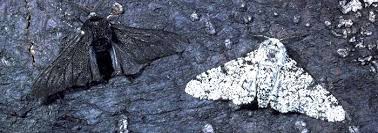
Due to the Industrial Revolution, the Peppered Moth evolved in appearance.  Predict which moth would increase in population.
a)
light 
b)
dark
26.
Which layer is the oldest?
a)
1
b)
2
c)
3
d)
4
27.
Mutations are important because they bring about
a)
death of the organism in which they develop
b)
genetic variation needed for a population to evolve
c)
benefits for the individual, not for the population
d)
Hardey-Weinberg equilibrium within a population
28.
Finches on the Galapagos Islands had different beaks in order to help them do what?
a)
Build nests
b)
Fight off predators
c)
Collect food sources
d)
Compete with rivals
29.
This scientist came up with the idea of natural selection.
a)
Jean Baptiste Lamarck
b)
Gregor Mendel
c)
Charles Darwin
d)
Thomas Malthus
30.
Which of the following is an example of a vestigial structure?
a)
the wings of a red-tailed hawk
b)
the hind limbs of a house cat
c)
the fins of sharks
d)
the tailbone of a human
31.
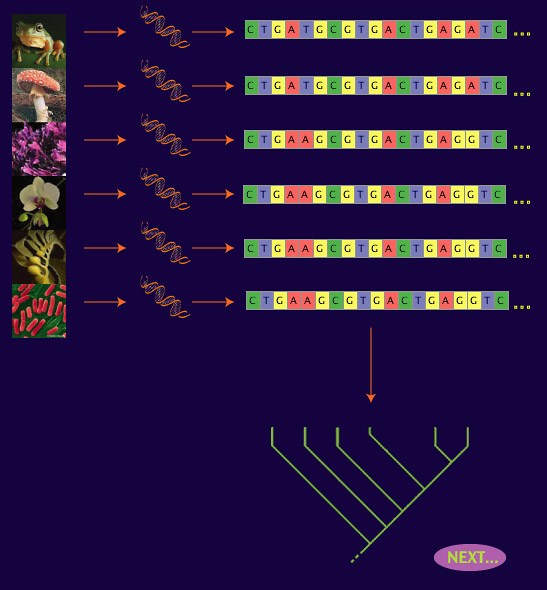
If species A and B have very similar genes and proteins, what is probably TRUE?
a)
species A and B share a relatively recent common ancestor
b)
species A evolved independently of species B for a long period
c)
species A is younger than species B
d)
species A is older than species B
32.
Two organisms that are closely related would have
a)
very similar DNA sequence
b)
exactly the same DNA sequences
c)
no proteins in common
d)
completely different DNA sequence
33.
Which domain includes all animals and plants?
a)
Archaea
b)
Eukarya
c)
Bacteria
34.
Which domain is capable of living in extreme environments like hot springs, geysers, or very salty waters?
a)
Bacteria
b)
Archaea
c)
Eukarya
35.
Choose the correct way to write the scientific name for humans:
a)
homo sapiens
b)
Homosapiens
c)
Homo sapiens
d)
Homo Sapiens
36.
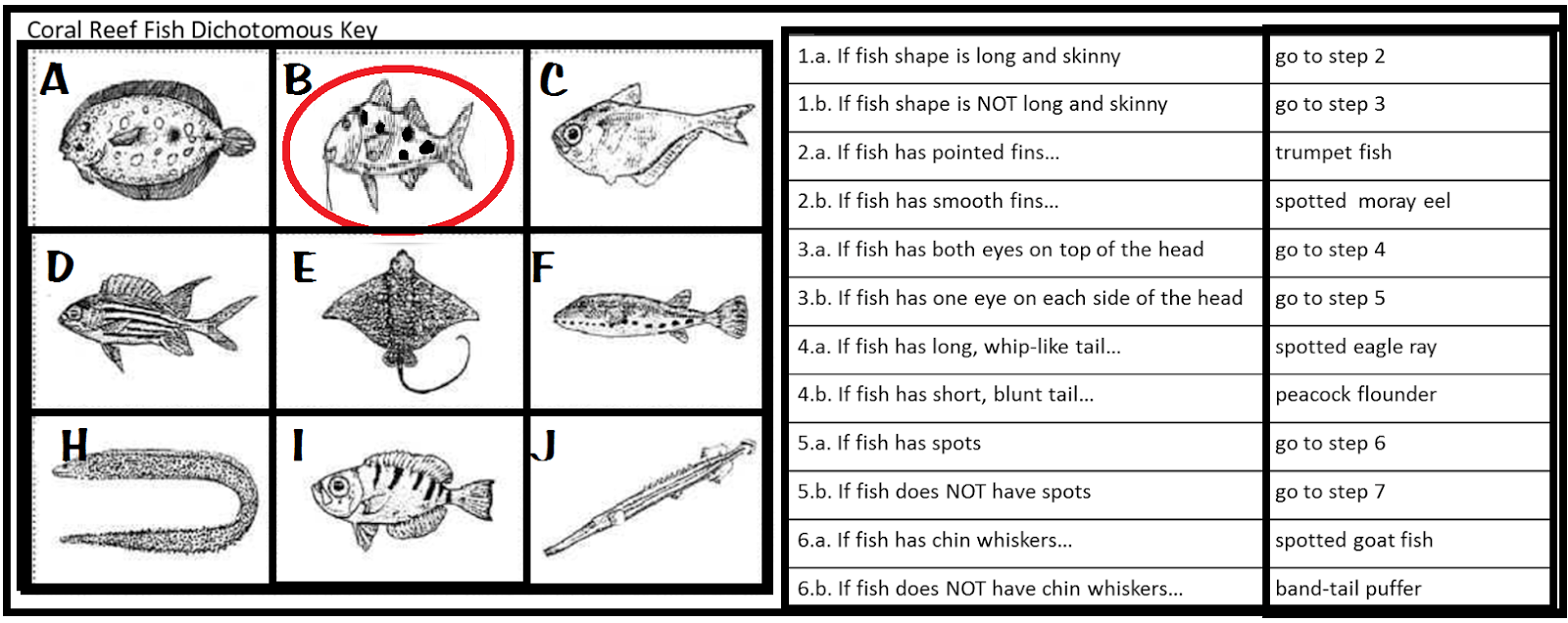
Using this dichotomous key, identity the name of the circled fish.
a)
band-tail puffer
b)
spotted goat fish
c)
peacock flounder
d)
trumpet fish
37.

A group of related families is called a(n)______________.

a)

species

b)

order

c)

genus

d)

phylum

38.
A group of related classes is called a(n)__________,
a)
phylum
b)
order
c)
family
d)
kingdom
39.
What is a dichotomous key used for in science?
a)
To organize biomes
b)
Classify organisms
c)
Identify bacteria only
d)
None of these
40.
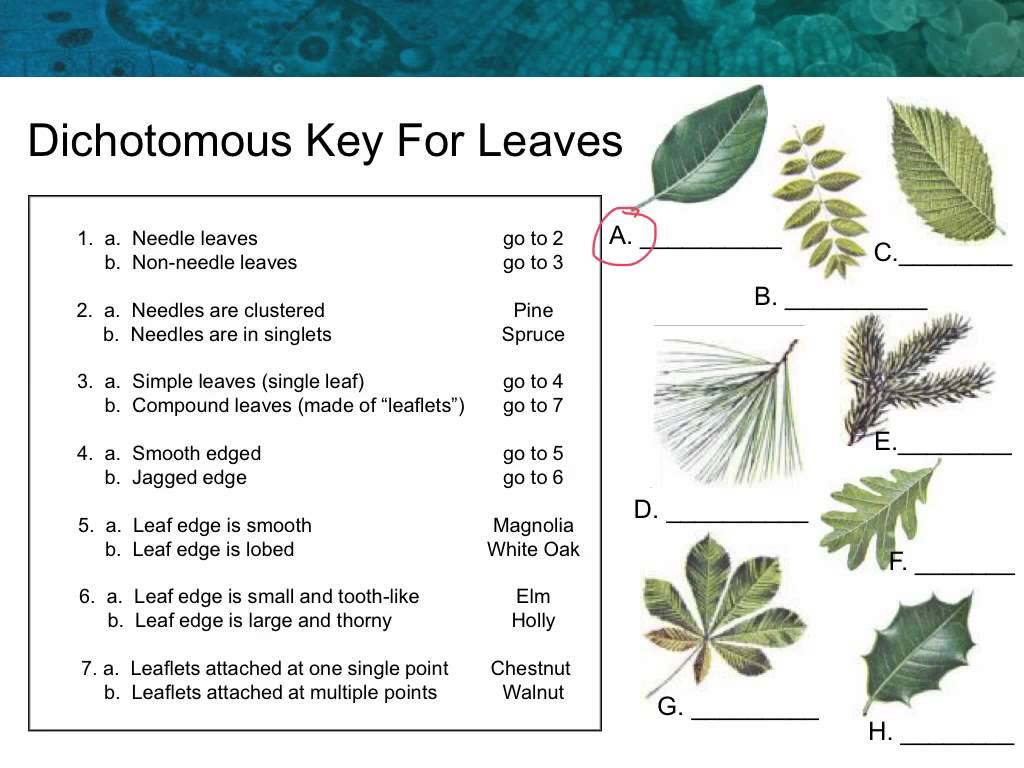
A dichotomous key for trees is provided. Hikers found a tree that has large brown cones and single sharp needles. What species of tree have the hikers found?
a)
Juniper
b)
Pine
c)
Spruce
d)
Fir
41.
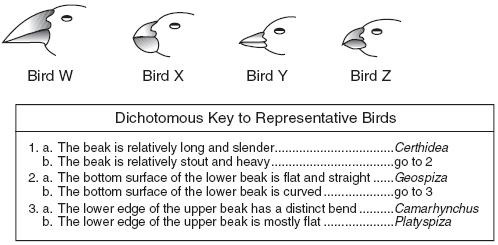
What is the name of bird W?
a)
Certhidea
b)
Geospiza
c)
Camarhynchus
d)
Platyspiza
42.
The 8 levels of classification, most broad to most specific.
a)
Domain, Genus, Family, Order, Class, Phylum, Kingdom, Species
b)
Domain, Species, Kingdom, Genus, Phylum, Family, Class, Order
c)
Domain, Kingdom, Phylum, Class, Order, Family, Genus, Species
d)
Order, Kingdom, Species, Domain, Phylum, Family, Class, Genus
43.

The geographic isolation of two populations of a species tends to increase differences between their gene pools (genes within their population) because it

a)

prevents interbreeding between populations.

b)

causes temporal isolation of the two populations.

c)

increases differences in courtship behavior.

d)

allows interbreeding between populations.

44.

The founder of modern evolution theory is considered to be _____.

a)

Charles Darwin

b)

Alexander Oparin

c)

Carlos Linneaus

d)

Lynn Margulis

45.

Structures that have similar evolutionary origin and structure but are adapted for different purposes, such as a bat wind and a human arm, are called ______.

a)

embryological structures

b)

analogous structures

c)

homologous structures

d)

homozygous structures

46.

A paleontologist is comparing the fossilized remains of two primates. Both animals had a prehensile tail. What can be concluded from this evidence?

a)

They were not related.

b)

The lived on the ground.

c)

hey evolved from a common ancestor.

d)

They had bipedal locomotion.

47.

Based on their names, you know that the babboons Papiio annubis and Papiio cynocephalus do NOT belong to the same

a)

class.

b)

family.

c)

genus.

d)

species.

48.

The flying squirrel of North America closely resembles the flying phalanger of Australia. They are similar in size and have long, bushy tails and skin fold that allow them to glide through the air. The squirrel is a placental mammal, while the phalanger is a marsupial, but they live in similar environments. The close resemblances, even though genetically and geographically separated by great distances, can best be explained by _____.

a)

convergent evolution

b)

divergent evolution

c)

spontaneous generation

d)

vestigial structures

49.

In each generation, the wings of experimental fruit flies were clipped short for fifty generations. The fifty-first generation emerged with normal-length wings. This observation would tend to disprove the idea that evolution is based on

a)

inheritance of natural variations.

b)

inheritance of acquired characteristics.

c)

natural selection.

d)

survival of the fittest.

50.

Which is the best evidence of an evolutionary relationship between two organisms?

a)

similarity in behavior

b)

similarity in DNA

c)

similarity in niche

d)

similarity in habitat

51.

When lions prey on a herd of antelopes, some antelopes are killed and some escape. Which part of Darwin's concept of natural selection might be used to describe this situation?

a)

acquired characteristics

b)

reproductive isolation

c)

survival of the fittest

d)

descent with modifications

52.

Walruses live in the Arctic and have a thick fat layer. The ancestors of modern-day walruses might not have had such a thick layer. Over time, the walruses have probably changed. According to the theory of evolution by natural selection, what is the most likely reason that this change has probably occurred?

a)

The walruses wanted to adapt to teh cold climate, so they learned to develop thicker fat layers.

b)

The walruses that had thicker fat layers were more apt to survive and live to reproduce.

c)

The walruses inherited a thicker fat layer from their parents.

d)

Each successive generation, more walruses have thicker fat layers.

53.

Variation within a species was important to the development of Darwin's theory of evolution. Which statement does individual variation help explain?

a)

Resources become limited over long periods of time.

b)

Populations often increase rapidly and without warning.

c)

Competition is fierce among members of different species.

d)

Some organisms survive and reproduce better than others.

54.

What is the difference between the full classification of organisms and their scientific names?

a)

The full classification of organisms and their scientific names vary in different countries.

b)

The scientific names of organisms include the order and family of the organisms, but the full classification includes only the species name.

c)

The full classification of organisms will include more categories of organisms than their scientific names.

d)

The scientific names of organisms include a single nomenclature, but the full classification includes various nomenclatures.

55.

The use of pesticides on crops has been a common farming practice for decades. What has been the greatest effect of natural selection through the use of pesticides on certain insect populations?

a)

Natural selection has been altered beause the insects and their predators are killed.

b)

The rate of selection is increased because the pesticides do not kills the insects that are naturally resistant to it.

c)

The rate of selection is increased because the pesticides do not kills the insects that are naturally resistant to it.

d)

The pesticides have altered natural selection by causing the insect DNA to spontaneously mutate.

56.

This diagram represents the bone structures of the front limbs of four different animals. What do the similarities of the structures suggest about these organisms?

a)

They grow at the same rate.

b)

They live in the same environment.

c)

They live for the same length of time.

d)

They evolved from a common ancestor.

57.

According to fossil records, the horses that lived 50 million years ago were much smaller, weaker, and slower than modern horses. Which process is most likely responsible for the changes that have led to the increased size, strength, and speed in horses?

a)

commensalism

b)

inbreeding

c)

migration

d)

natural selection

58.
Two organisms of different species exist in a relationship in which each individual benefits from the activity of the other:
a)
commensalism
b)
parasitism
c)
herbivory
d)
mutualism
59.
The two species, Paramecium aurelia and Paramecium caudatum, which do not prey upon each other, fighting to grow in the same test tube is an example of which of the following?
a)
Competition
b)
Predation
c)
Commensalism
d)
Exclusion
60.

A type of learning in which an animal, at a critical time in its life, forms a social attachment to another object is called _____.

a)

trial-and-error

b)

habituation

c)

motivation

d)

imprinting

61.

DTR: Leech sucking blood

a)

Mutualism

b)

Commensalism

c)

Parasitism

d)

Predation

62.

DTR: Barnacles live on a whale and get nutrients that float nearby. The whale does not receive a benefit and doesn't get hurt from this relationship

a)

Mutualism

b)

Commensalism

c)

Parasitism

d)

Predation

63.
The behavior of some animals to attract other animals
a)
Courtship
b)
Dating
c)
Showing off
d)
Hibernation
64.
Squirrels in cities that are no longer afraid of humans are an example of ...
a)
Habituation
b)
Imprinting
c)
Insight Learning
d)
Classical Conditioning
65.
During the winter months when temperatures drop, some animals’ body temperatures and breathing rates greatly reduce. This is called 
a)
courtship
b)
hibernation
c)
heredity
d)
migration
66.
Which of the following is a reflex?
a)
a bird building a nest
b)
hibernation
c)
blinking your eyes when something moves towards them
d)
a beaver building a dam
67.
Every morning, Mrs. Jones opens a can of cat food using the electric can opener and feeds her cat. At dinnertime, Mrs. Jones used the electric can opener to open a can of soup. Upon hearing the whirring sound of the can opener, her cat came running. What type of behavior does her cat show?
a)
trial & error
b)
imprinting
c)
conditioning
d)
instinct
68.
Which of the following terms is another term for innate?
a)
instinct
b)
learned
c)
trial and error
d)
copying
69.

A (an) ____ is an environmental change that directly influences the activity of an organism.

a)

stimulus

b)

behavior

c)

innate response

d)

fixed action pattern

70.

A _________ is defined as a way an animal responds to a stimulus.

a)

response

b)

instinct

c)

attitude

d)

behavior

71.

________________ behaviors result from an interaction between innate behaviors & past experiences.

a)

Genetic

b)

Hunting

c)

Innate

d)

Learned