Wayground logo

Free Printable Worksheets

Font size

S
M
L
XL
Worksheets

Grab a Tissue, it's Tissue Time.

Total questions: 60

Worksheet time: 2hrs 37mins
Name
Class
Date
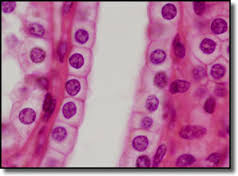
1.
Identify:
a)
Columnar
b)
Cuboidal
c)
Pseudostratified
d)
Transitional
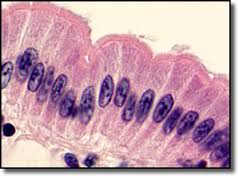
2.
Identify:
a)
Pseudostratified
b)
Smooth Muscle
c)
Transitional
d)
Stratified Squamous
3.
Identify:
a)
Smooth Muscle
b)
Columnar
c)
Transitional
d)
Pseudostratified
4.
Identify:
a)
Pseudostratified
b)
Simple cuboidal
c)
Transitional
d)
Simple Squamous
5.
Identify:
a)
Pseudostratified
b)
Smooth Muscle
c)
Transitional
d)
Stratified Squamous
6.
Found in organs like the bladder that need to stretch
a)
Areolar
b)
Stratified squamous
c)
Pseudostratified
d)
Transitional
7.
Used in places where diffusion needs to occur, such as blood vessels and air sacs in the lungs
a)
Cuboidal
b)
Columnar
c)
Simple Squamous
d)
Stratified Squamous
8.
Used in places needing protection from scrapes and abrasions such as the skin and esophagus
a)
Cuboidal
b)
Pseudostratified
c)
Simple Squamous
d)
Stratified Squamous
9.
Which of the following is not a function of epithelial tissue?
a)
Absorption
b)
Excretion
c)
Communication
d)
Protection
10.
This term means "a single layer".
a)
squamous
b)
stratified
c)
simple
d)
transitional
11.
These structures aid with movement along the epithelial surface.
a)
flagella
b)
microvilli
c)
cilia
12.
Secretes mucus in the respiratory tract, specifically the trachea
a)
Transitional
b)
Pseudostratified
c)
Simple Squamous
d)
Stratified Squamous
13.

Epithelial Tissue _________.

a)

is highly vascularized

b)

has a basement membrane

c)

is usually acellular

d)

contains a number of neuron types

14.

The gland type that secretes products such as milk, saliva, bile, or sweat through a duct is a(n)

a)

Endocrine Gland

b)

Exocrine Gland

15.

This type of gland such as the salivary gland secrete their products by exocytosis. This does not harm the cell in anyway.

a)

Holocrine

b)

Apocrine

c)

Merocrine

16.

These glands accumulate their products within their cells until they rupture, destroying the cell and releasing the secretion. The cell is then replaced by a new cell.

a)

Holocrine

b)

Apocrine

c)

Merocrine

17.
The ability to resume original length without damage is...
a)
stretch
b)
elasticity
c)
plasticity
d)
pliability
18.
What tissue is this
a)
Bone
b)
Cartilage
c)
Blood
d)
Adipose
19.
Name this tissue
a)
Bone
b)
Cartilage
c)
Blood
d)
Adipose
20.
Chondrocytes are found in cavities called ___.
a)
lacunae
b)
lamellae
c)
canaliculi
21.
Which connective tissue contains a gel-like matrix and is found in the nose, ear, and at the end of bones.
a)
Bone
b)
Cartilage
c)
Blood
d)
Adipose
22.
Name this tissue
a)
Bone
b)
Hyaline cartilage
c)
Fibrocartilage
d)
Adipose
23.
ID
a)
Dense Regular CT
b)
Dense Irregular CT
c)
Elastic Cartilage
d)
Hyaline Cartilage
24.
ID
a)
Dense Regular Connective Tissue
b)
Dense Irregular Connective Tissue
c)
Elastic Cartilage
d)
Fibrocartilage
25.
‘I am bone!’
a)
Chrondro-
b)
Fibro-
c)
Hemo-
d)
Osseous
26.
‘I am blood!’
a)
Chrondro-
b)
Fibro-
c)
Hemo-
d)
Osseous-
27.
‘I am cartilage!’
a)
Chrondro-
b)
Fibro-
c)
Hemo-
d)
Osseous-
28.
Connective tissue is
a)
The tissue that protects, supports, and binds together other body tissue
b)
Tissue that is the lining, covering, and glandular tissue of the body
c)
Tissue that contracts and shortens to produce movement
29.
Connective tissue fibers include
a)
proteoglycans, adhesion proteins and interstitial
b)
collagen, elastic and reticular
c)
osteoblasts, fibroblasts and hemoblasts
30.
This type of connective tissue fiber forms strong, rope-like structures such as tendons and ligaments.
a)
Elastic
b)
Collagen
c)
Reticular
d)
Bone
31.
This type of cartilage forms a cushion-like disk between the vertebrae.
a)
Fibrocartilage
b)
Elastic cartilage
c)
Hyaline cartilage
32.
Which type of connective tissue cells secretes proteins into the matrix to make fibers?
a)
fibroblasts
b)
chondrocytes
c)
mast cells
d)
macrophages
33.
Commonly known as fat. Forms the subcutaneous layer beneath skin.
a)
Blood
b)
Bone
c)
Cartilage
d)
Adipose
34.
Attach muscles to bones
a)
Tendons
b)
Ligaments
35.
This type of dense connective tissue connects bone to bone at joints 
a)
Tendons
b)
Ligaments
36.
What is the most abundant tissue, by weight, in the human body?
a)
Epithelial
b)
Muscular
c)
Nervous
d)
Connective
37.
Osteoblasts are a type of cell which would be found in which type of tissue?
a)
Blood
b)
Cartilage
c)
Dense connective
d)
Bone
38.

How many types of muscle tissues are there?

a)

3

b)

4

c)

5

d)

2

39.

Where is the cardiac muscle located?

a)

Attached to the skeleton

b)

In the stomach

c)

In the heart

40.

Where is the smooth muscle located?

a)

Attached to the skeleton

b)

In the stomach

c)

In the heart

41.

Where is the skeletal muscle located?

a)

Attached to the skeleton

b)

In the stomach

c)

In the heart

42.

True or false

The skeletal muscle is also known as voluntary muscle

a)

True

b)

False

43.

The three major types of muscle are

a)

Nerve, Skeletal, and Smooth

b)

Cardiac, Skeletal, and Skin

c)

Skeletal, Cardiac, and Smooth

d)

External, Internal, and Skeletal

44.

Muscles are important to

a)

create energy for the body.

b)

movement.

c)

hold the skin in place.

d)

sleep.

45.

Can you voluntarily control your cardiac muscle?

a)

Yes

b)

No

46.

What muscle type is this?

a)

cardiac

b)

skeletal

c)

smooth

47.

What type of muscle is/are voluntary?

a)

smooth and cardiac

b)

smooth

c)

skeletal and smooth

d)

skeletal

48.

What type of muscle(s) is involuntary?

a)

skeletal and smooth

b)

cardiac and skeletal

c)

smooth and cardiac

d)

skeletal

49.

The main components of the nervous system include all of the following except:

a)

brain

b)

vertebrae

c)

spinal cord

d)

nerves

50.

The nerve cells that generate and conduct nerve impulses are called:

a)

dendrites

b)

axons

c)

myalin

d)

neuron

51.
What do neuroglia do?
a)
Release neurotransmitters
b)
Support and nourish neurons
c)
Release calcium to activate neurons
d)
Absorb nutrients from neurons
52.
What is the function of the nervous system?
a)
Transport nutrients around the body
b)
Send and receive messages to respond to a change in an organisms environment
c)
Brings oxygen into the body
d)
Moves body parts
53.

Macrophages carry out?

a)

Fision

b)

Phagocytosis

c)

Digestion

d)

Diffusion

54.

Massive Cells that release heparin and histamine?

a)

Mast Cells

b)

Measly Cells

c)

Puny Cells

55.

What produces cartilage and then embeds itself in that cartilage?

a)

bone

b)

cartilage

c)

chondrocytes

d)

neuron

56.

What color is blood?

a)

Blue

b)

Red

c)

Green

d)

I have no blood, i am a vampire.

57.

Select facts about White Blood Cells.

a)

natural immune response

b)

made in bone marrow

c)

white

d)

also known as leukocytes

58.

Help clot your blood...

a)

platelets

b)

bandaids

c)

vampire spit

d)

red blood cells

59.

What do mucous membranes secrete?

a)

Mucus

b)

Saliva

c)

Milk

d)

Serous fluid

60.

Lets get Serous. What membrane secretes serous fluid?

a)

Mucous Membrane

b)

Serous Membrane

c)

Cutaneous Membrane