Wayground logo

Free Printable Worksheets

Font size

S
M
L
XL
Worksheets

Atoms and the Periodic Table

Total questions: 60

Worksheet time: 42mins

Name
Class
Date
1.
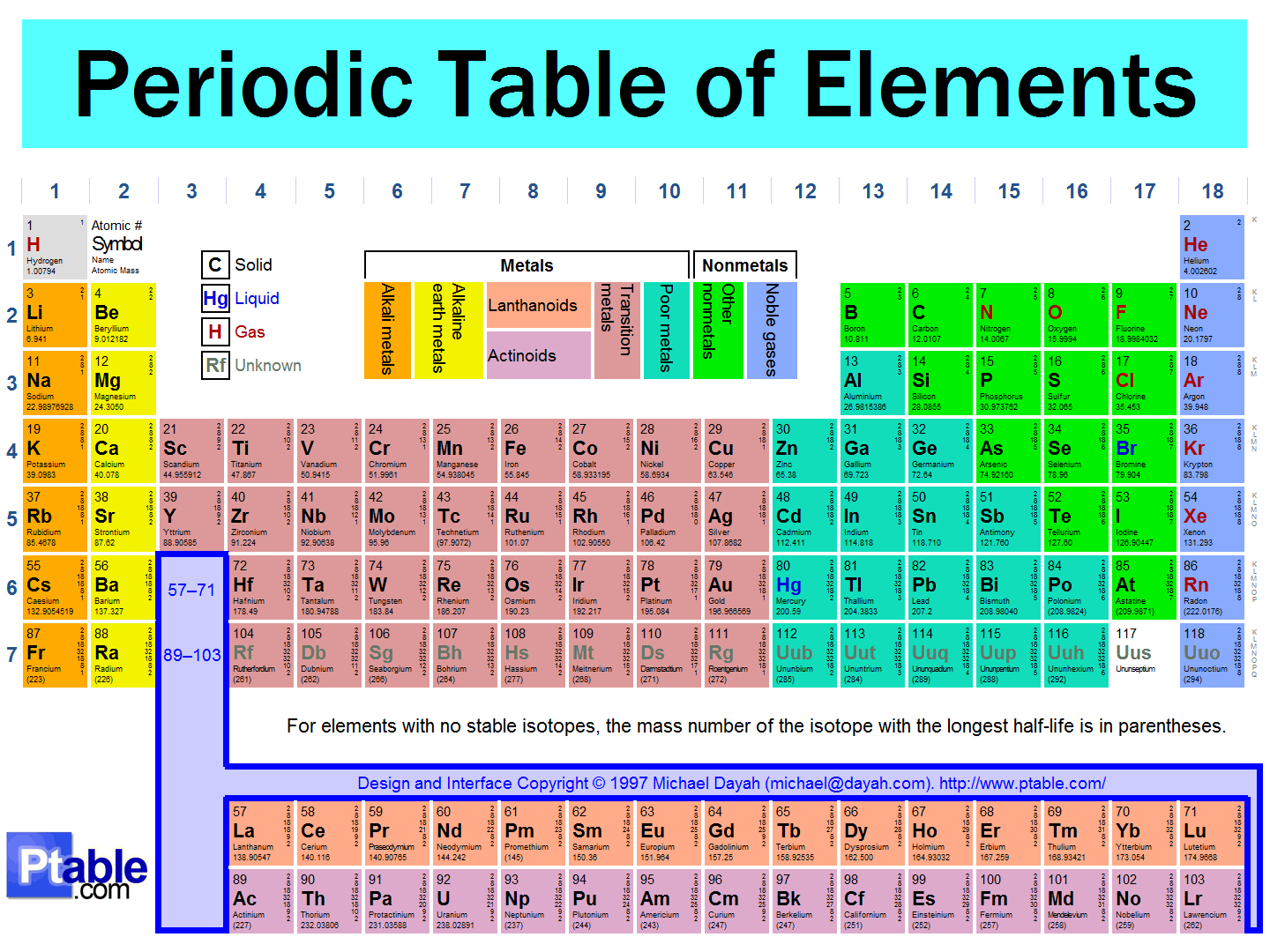
Sodium has an atomic number of 11, how many protons does this atom have?
a)
22
b)
11
c)
12
d)
2
2.
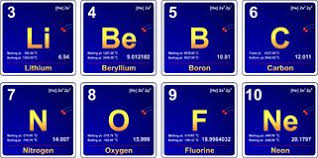
What is the atomic mass of Neon?
a)
10
b)
20.18
c)
10.18
d)
20.18
3.

How many electrons are in Beryllium?

a)

4

b)

9

c)

5

d)

2

4.
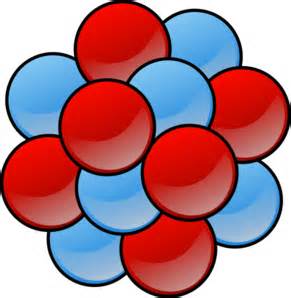
What is the atomic number of this nucleus?
a)
1
b)
3
c)
4
d)
7
5.
What does the nucleus of an atom contain?
a)
Electrons and neutrons
b)
Protons and neutrons
c)
Neutrinos and positrons
d)
DNA and RN
6.

What is the neutral particle in an atom

a)

protons

b)

neutrons

c)

electrons

d)

nucleus

7.

What is a positive particle in an atom?

a)

Protons

b)

Neutrons

c)

Electrons

d)

nucleus

8.

How do you calculate the number of protons in an element?

a)

Look at the atomic number-it is the same number

b)

look at the atomic mass-it is the same number

c)

Atomic mass-Atomic number

d)

Ugh, now we have to do math in science?!?

9.

How do you calculate the number of neutrons?

a)

Look at the atomic number-it is the same number

b)

Look at the atomic mass-it is the same number

c)

atomic mass-atomic number

d)

Neutrons too?!? Oh good grief!

10.

Calcium has an atomic number of 20 and an atomic mass of 40. How many protons does Calcium have

a)

20

b)

40

c)

60

d)

80

11.
Where is the proton located?
a)
In the very dense nucleus
b)
Floating around in the negative electron cloud
c)
the loose nucleus
d)
the positive electron cloud
12.

Which subatomic particle has a negative charge?

a)

Neutron

b)

Electrons

c)

Protons

13.
The electron cloud is the home of the proton?
a)
True
b)
False
14.
A stable element with 27 electrons will contain how many protons?
a)
27 protons in the electron cloude
b)
59 protons in the extremely dense nucleus
c)
27 protons in the extremely dense nucleus
d)
59 protons in the electron cloud
15.
Elements can have the same number of protons?
a)
True
b)
False
16.
The electron cloud is the home of the proton?
a)
True
b)
False
17.
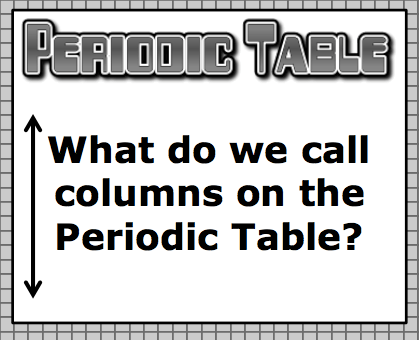
a)
Periods
b)
Groups
18.
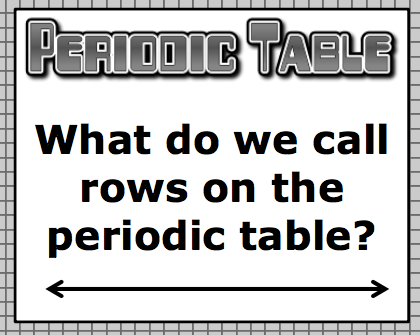
a)
Periods
b)
Groups
19.
a)

orbitals

b)

valence electrons

c)

protons

d)

neutrons

20.
a)
energy levels
b)
valence electrons
c)
protons
d)
neutrons
21.
a)
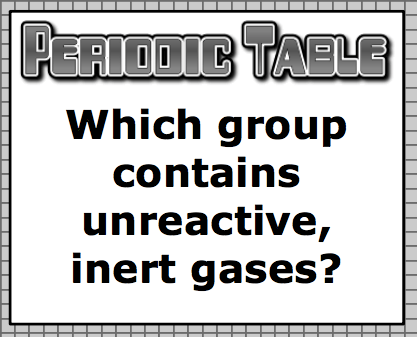
Group 1
b)
Group 17
c)
Group 2
d)
Group 18
22.
a)
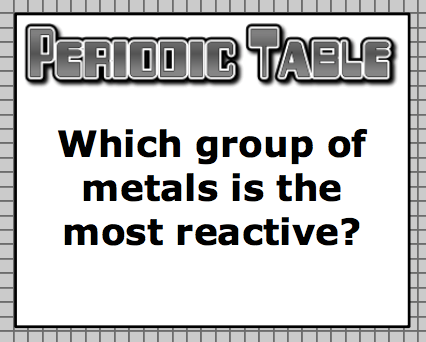
Group 1
b)
Group 17
c)
Group 18
d)
Group 2
23.
a)
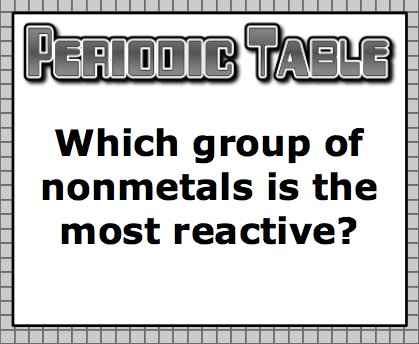
Group 1
b)
Group 17
c)
Group 18
d)
Group 2
24.
a)
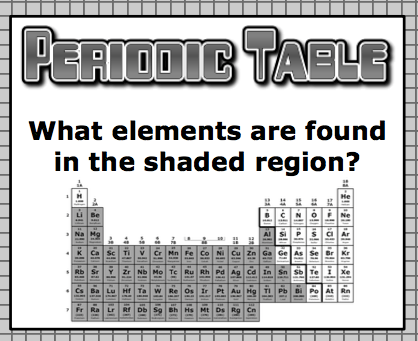
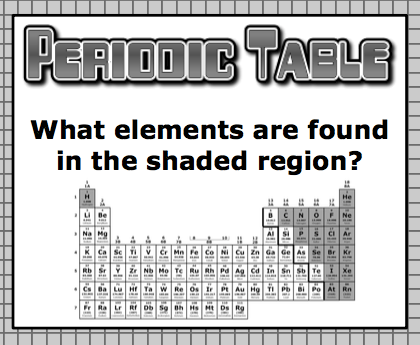
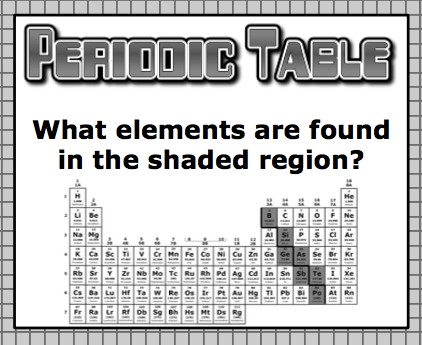
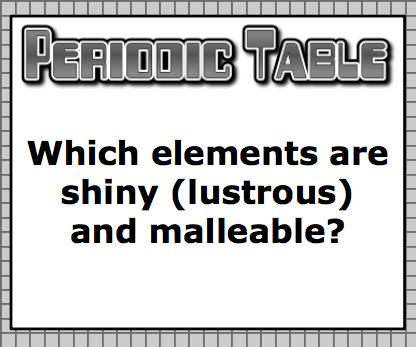
Metals
b)
Nonmetals
c)
Metalloids
25.
a)
Metals
b)
Nonmetals
c)
Metalloids
26.
a)
Metals
b)
Nonmetals
c)
Metalloids
27.
a)
Metals
b)
Nonmetals
c)
Metalloids
28.
a)
Metals
b)
Nonmetals
c)
Metalloids
29.
a)
Metals
b)
Nonmetals
c)
Metalloids
30.
a)
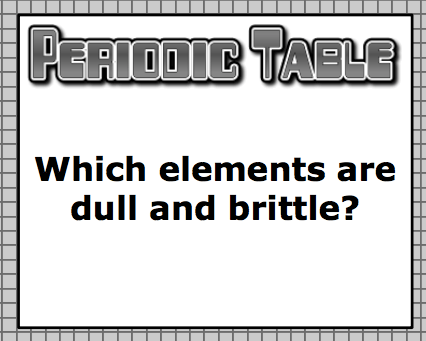
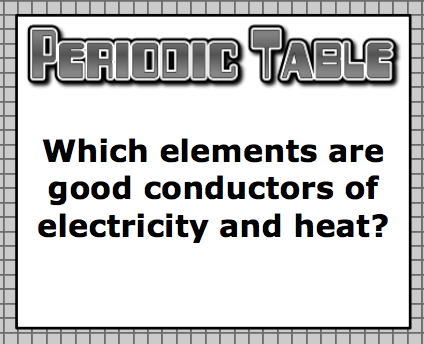
Metals
b)
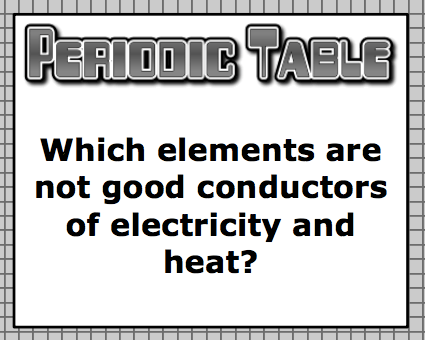
Nonmetals
c)
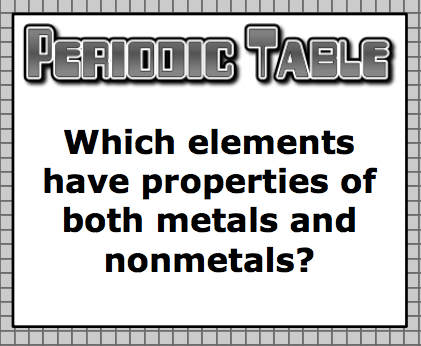
Metalloids
31.
a)
Metals
b)
Nonmetals
c)
Metalloids
32.
Pure forms of these elements are stored in oil so they won't react with oxygen and water in the air.
a)
Alkali Metals
b)
Alkaline-earth metals
c)
Halogens
d)
Noble Gases
33.
What group of elements don't have individual names?
a)
Alkaline-earth Metals
b)
Transition Metals
c)
Alkali Metals
d)
Halogens
34.
Most of the elements on the periodic table are classified as _____.
a)
Metals
b)
Nonmetals
c)
Metalloids
d)
Periods
35.
This class of elements are sometimes called "semiconductors."
a)
Metals
b)
Nonmetals
c)
Metalloids
d)
Groups
36.
A neutron has a charge of
a)
+2
b)
No charge
c)
-1
d)
+1
37.
How many Valance electrons does Iodine Have?
a)
6
b)
16
c)
7
d)
17
38.
An element's identity is determined by the number of
a)
electrons.
b)
protons.
c)
neutrons.
d)
valence.
39.
Group 18 elements are known as the _____ _____ and have full valence shells.
a)
royal gases.
b)
supreme solids.
c)
noble gases.
d)
legit liquids.
40.
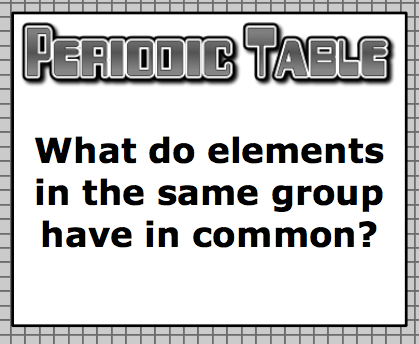
Elements in the same ________ are more chemically similar.
a)
group
b)
period
c)
club
d)
table
41.

The elements in this group have 2 valence electron and include Be, Mg, and Ca.

a)

Transition metals

b)

Alkaline metals

c)

Alkali metals

42.
Jack has a rock. The rock has a mass of 14g and a volume of 2cm3. What is the density of the rock?
a)
7 mL
b)
7 g/cm3
c)
28 g/cm3
d)
1/7 g/cm3
43.
Which units of measurement are used for volume?
a)
grams
b)
centimeters
c)
grams/milliliter
d)
milliliter
44.
What is the formula for density?
a)
density = mass x volume
b)
density = mass / volume
c)
density = mass + volume
d)
density = mass - volume
45.
Frank has an eraser. It has a mass of 4g, and a volume of 2cm3. What is its density?
a)
8 g/cm3
b)
2 g/cm3
c)
1/2 g/cm3
d)
24 g/cm3
46.

What is the smallest unit of matter called

a)

elements

b)

atoms

c)

compounds

d)

cells

47.
How many neutrons are in a Gold atom?
a)
79
b)
196
c)
118
d)
275
48.
How many electrons does a Copper atom have?
a)
63
b)
29
c)
92
d)
34
49.
What element is represented in this Bohr Model? 
a)
Carbon
b)
Hydrogen
c)
Aluminum
d)
Lithium
50.
What's a valence electron?
a)
electrons in the second energy level
b)
electrons in the outermost energy level
c)
the atomic number
d)
electrons in the first level
51.
The majority of an atom's mass exists where?
a)
In the nucleus
b)
In the electron cloud
c)
In the space between the nucleus and the electrons
d)
In the neutrons
52.

Traveling down a family the atomic radius ______________.

a)

Increases

b)

Decreases

c)

Stays the same

53.

Reactivity __________ as you go from top to bottom of the group.

a)

Decreases

b)

Increases

c)

Stays the same

54.

Elements in group 1 are more dense than elements in group 10.

a)

True

b)

False

55.

Hydrogen is more reactive than Helium.

a)

True

b)

False

56.

Mass ___________as you travel down a group.

a)

Decreases

b)

Increases

c)

Stays the same

57.

Group 18 are the most reactive nonmetals.

a)

True

b)

False

58.

The atomic model has never changed over time.

a)

True

b)

False

59.

Elements on the periodic table are arranged by increasing what?

a)

Atomic Mass

b)

Melting points

c)

Atomic number

d)

Orbitals

60.

Your grade on this test will be _____________.

a)

A, I've got this!

b)

B, I'm trying my best.

c)

C, I'm struggling to pay attention. (5th period!)

d)

None of the above