
 Worksheets
Space Revision Quiz
Total questions: 57
Worksheet time: 50mins

All stars begin their life as a
Main Sequence
Nebula
Protostar
Black Dwarf

The life cycles of stars are determined by their:
mass (size)
colour
distance from Earth
how bright they are


A ________ is an object so dense with so much gravity that even light cannot escape.
neutron star
white dwarf
black hole
black dwarf

This is an image of the first stage in the formation of a star, also known as a ....
Main Sequence
Planetary Nebula
Supernova
Nebula
The stage after the main sequence star:
red giant
nebula
white dwarf
black dwarf
The super red giant ends its life as a massive explosion called
supernova
planetary nebula
constellation
Andromeda
Black hole ends life of the biggest stars in the universe
true
false
Supernova happens after
super red giant
nebula
protostar
white dwarf

Which one is the smallest?
Sun
moon
Earth
Jupiter

Which has the highest gravity?
Mercury
Neptune
The sun
Jupiter

The third planet from the sun is
Earth
Mars
Jupiter
Venus

The planet with the rings around is called...
Earth
Saturn
Uranus
Jupiter

What is the consequence of the fact that the earth's axis is tilted?
We get seasons
We get day and night
We get rain
We get earthquakes
How long does it take the earth to orbit around the sun once?
356 and 1/4 days
365 and 1/4 days
around 366 days
245 days

The time it takes the earth to orbit around the sun once is called...
a month
a day
a year
a decade

How long is one day on earth?
48 hours
72 hours
24 hours
20 hours

When it is summer in northern hemisphere, it is.......... in the southern hemisphere.
spring
autumn
summer
winter

What causes day and night?
The earth's tilt
The earth orbiting the sun
The earth spinning on its axis
The distance from the sun
What is the name of the theory that explains the origins of the universe?
The Big Bang Theory
The Theory of Relativity
Newton's Laws of Motion
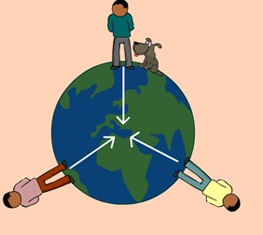

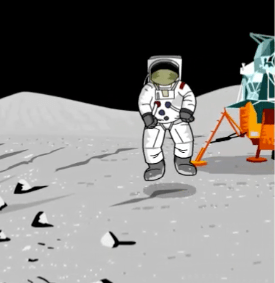
Your mass stays the same wherever you are
true
false
Mass is measured in
kilograms
newtons
amps
Kelvins
Weight is measured in
Newtons
kilograms
Kelvins
volts
Our galaxy is called
The solar system
Proxima Cantauri
Andromeda
Milky Way


What happens when the area in which you live tilts away from the sun?
It is summer
It is spring
It is winter
It is fall


Which season is taking place in the Southern Hemisphere in Position 1?
Winter
Spring
Summer
Fall

Which season is taking place in the Northern Hemisphere in Position 1?
Winter
Spring
Summer
Fall

How long does it take the earth to orbit around the sun once?
356 and 1/4 days
365 and 1/4 days
around 366 days
245 days
What happens when the area in which you live tilts away from the sun?
It is summer
It is spring
It is winter
It is autumn
What happens when the area in which you live tilts towards the sun?
It is summer
It is spring
It is winter
It is autumn


Y = day
Y = night
Which answer correctly explains the time of day it is in each region?
X is night time because it is facing towards the Sun.
X is daytime because it is facing towards the Sun.
Y is night time because it is facing towards the Sun.
Y is daytime because it is facing towards the Sun.
How many months in a year?
10
11
12
13
Calculate a weight of a cheetah on earth.
mass = 67kg
gravitational field strength = 10 N/kg
weight = mass x gravitational field strength
670 kg
670 N
6.7 N
0.67 N
Calculate a weight of a cheetah on the moon.
mass = 67 kg
gravitational field strength = 1.6 N/kg
weight = mass x gravitational field strength
107.2 kg
107.2 N
10.72
107.2
A solar system is .........
a star with planets orbiting around it
a collection of billions of stars
a collection of billions of galaxies
A galaxy is .........
a star with planets orbiting around it
a collection of billions of stars
a collection of billions of galaxies
An universe is .........
a star with planets orbiting around it
a collection of billions of stars
a collection of billions of galaxies
Your weight stays the same wherever you are
true
false
Your weight changes depending where you are
true
false

