wayground logo

Free Printable Worksheets

Font size

S
M
L
XL
Worksheets

The Changing Earth Unit 2 Assessment Review

Total questions: 65

Worksheet time: 49mins

Name
Class
Date
1.

Earth's geosphere is always changing. Scientists explain the timing of these changes as...

a)

Uniformitarianism ONLY because of slow changes over a long period of time.

b)

Catastrophism ONLY sudden drastic events.

c)

BOTH uniformitarianism and catastrophism.

2.

Theory that Earth changes ONLY because of slow changes over long periods of time.

a)

Uniformitarianism

b)

Catastrophism

3.

Theory that Earth changes ONLY because of rapid sudden events.

a)

Catastrophism

b)

Uniformitarianism

4.

Volcanic eruptions & asteroid impacts are examples of this time of events...

a)

Uniformitarianism

b)

Catastrophism

5.

Mountains slowly being weathered and eroded away over millions of years is an example of...

a)

Catastrophism

b)

Uniformitarianism

6.

The movement of plate tectonics to form mountains, volcanoes or cause earth quakes are an example of...

a)

Unifromitarianism

b)

Catastrophism

7.

Weathering and erosion of rocks on Earth's surface is driven by this type of energy...

a)

chemical

b)

kinetic

c)

geothermal

d)

thermal

8.

What type of rock is found on the top of Table Mountain?

a)

Sedimentary

b)

Metamorphic

c)

Igneous

9.

Which event(s) in the formation of Table Mountain was driven by thermal energy?

a)

Erosion of sides of mountain around the dried lava flow.

b)

Tectonic plates moving towards each other to make the mountain.

c)

The volcanic eruption that sent lava down the ancient river bed.

10.

Which event in the formation of Table Mountain was driven by geothermal energy?

a)

Tectonic plates moving towards each other creating the mountain.

b)

Volcanic eruption sending lava down the ancient river bed.

c)

The erosion of the sides of the dried lava bed.

11.

In the formation of Table Mountain which processes would be described as uniformitarianism?

a)

Tectonic plates moving towards each other to form the mountain.

b)

The volcanic eruption that send lava down the ancient river bed.

c)

The erosion of the sides of the mountain around the dried lava.

12.

In the formation of Table Mountain which processes would be described as catastrophism?

a)

Tectonic plates moving towards each other to form the mountain.

b)

The erosion of the sides of the mountain around the dried lava bed.

c)

Volcanic eruption sending lave down the ancient river bed.

13.
Name this boundary
a)
Convergent
b)
Divergent
c)
Transform
d)
Sergent
14.
Name the boundary
a)
divergent
b)
convergent
c)
transform
d)
sergent
15.
Name the boundary
a)
convergent
b)
transform
c)
divergent
d)
sergent
16.
Which of the following is associated with transform boundary?
a)
volcanoes
b)
mountains
c)
trenches
d)
earthquakes and fault line
17.
Which of the following is where one plate slides under another plate?
a)
submarine zone
b)
divergence zone
c)
subduction zone
d)
lower zone
18.
Mountains form from....
a)
Plates sliding past one another
b)
collision of plates
c)
plates moving away from each other
d)
none of these
19.
Earth's plates are....
a)
Constantly moving and changing the face of the Earth
b)
Never moved
c)
Move seldom and very fast
d)
move when they feel like it
20.
Whenever a subduction zone is formed a ____ is formed.
a)
mountains
b)
Island arc
c)
rift valley
d)
volcanoes
21.
Plate movement is caused by _____
a)
The rotation of the Earth
b)
Ocean tides
c)
Convection current in the mantle
d)
The moon's gravity
22.
What type of boundary creates a new seafloor?
a)
convergent continental to continental
b)
convergent ocean to continental
c)
convergent ocean to ocean
d)
divergent 
23.
Which type of plate boundary would cause folded mountains to form? 
a)
transform
b)
convergent
c)
divergent
d)
subduction
24.
According to Wegener's hypothesis of continental drift, 
a)
Earth's surface is made up of seven major landmasses
b)
the continents DO NOT move
c)
Earth is slowly cooling and shrinking
d)
the continents were once joined together in a single landmass
25.
What type of evidence was NOT used by Alfred Wegener to support his continental drift hypothesis?
a)
evidence from landforms
b)
evidence from fossils
c)
evidence from human remains
d)
evidence from climate
26.
Most geologists rejected Alfred Wegener's idea of continental drift because...
a)
it did not agree with their current theory
b)
Wegener was interested in what Earth was like millions of years ago
c)
Wegener used several different types of evidence to support his hypothesis
d)
Wegener could not identify the force that moved the continents
27.
How does freezing water cause the weathering of rocks?  The freezing water—
a)
keeps the rocks in place.
b)
makes the rocks last longer.
c)
expands cracks and breaks rocks.
d)
causes rocks to fall in landslides.
28.
The process that breaks down rocks and other materials on Earth's surface is called
a)
Weathering
b)
Erosion
c)
Deposition
d)
Decomposition
29.
A cliff formed near the ocean.  Which statement best describes how this cliff formed?
a)
Warm air melted the rock.
b)
Sun rays evaporated the rock.
c)
Ocean waves washed away rock.
d)
Plant roots pushed away the rock.
30.
What is the process that picks up and moves weathered rocks?
a)
Deposition
b)
Landslide
c)
Weathering
d)
Erosion
31.
Deposition changes the Earth’s surface because bits of broken rock and soil _____.
a)
stop rivers from flowing.
b)
make rich farmlands.
c)
are dropped in new places.
d)
move very slowly.
32.
The process by which water, ice, wind, or gravity moves weathered rock and soil from one place to another.
a)
Weathering
b)
Erosion
c)
Deposition
d)
Crop Rotation
33.
Which of these is an example of erosion?
a)
Light shining onto a mountain.
b)
Rain breaking down rocks on a mountain into smaller pieces. 
c)
Wind blowing away sediment to a new place on the mountain.
d)
All of the above.
34.
How do plants weather rocks?
a)
During photosynthesis
b)
When roots grow into cracks of rocks and expand the rock breaks.
c)
When the plant moves water from the roots to the leaves, the rock breaks.
d)
Plants don't weather rocks.
35.
What is the wearing away or breaking down of rocks called?
a)
Deposition
b)
Erosion
c)
Glaciers
d)
Weathering
36.
Which of the following is NOT a slow change to Earth's surface?
a)
Weathering
b)
Erosion
c)
Deposition
d)
Landslides
37.
Which of the following is NOT a fast change in Earth's surface?
a)
Landslides
b)
Erosion
c)
Volcanoes Erupting
d)
Earthquakes
38.
Rock that forms when sediment from older rocks get pressed and cemented together.
a)
Sedimentary Rock
b)
Metamorphic Rock
c)
Igneous Rock
39.
The process by which igneous rocks are formed...
a)
heat and pressure
b)
melting and cooling
c)
weathering and erosion
40.
The process by which metamorphic rocks are formed...
a)
heat and pressure
b)
erosion and deposition
c)
melting and cooling
41.
Rock that forms when pressure and temperature change existing rock.
a)
Igneous Rock
b)
Sedimentary Rock
c)
Metamorphic Rock
d)
Rock Cycle
42.
The name rock is given when it is broken down into smaller pieces.
a)
texture
b)
weathering
c)
sediment
d)
erosion
43.
True or False: Once a rock is sedimentary, it cannot become an igneous rock.
a)
True
b)
False
44.
What are the 3 major types of rocks?
a)
Igneous, Metamorphic, Sedimentary
b)
Metamorphic, Igneous, Cementation
c)
magma, lava, crystals
45.
Each rock type can follow only one pathway of the rock cycle.
a)
True
b)
False
46.
What process is used to form sedimentary rocks?
a)
Lava cools and hardens to form a rock.
b)
Weathering, Erosion, Deposition, Compaction, Cementation
c)
Extreme heat and pressure from inside the Earth turn rocks into new rocks.
d)
Magma trapped under the Earth's surface cools and solidifies.
47.
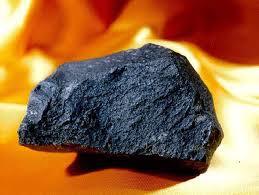
This rock was found near the mouth of a volcano. What type of rock is this?
a)
Sedimentary
b)
Igneous
c)
Metamorphic
48.
When sediments are pressed together tightly, this is called ____________.
a)
Compaction
b)
Cementation
c)
Weathering
d)
Erosion
49.
The process in which sediment are fused or glued together.
a)
compaction
b)
deposition
c)
organic rock
d)
cementation
50.
What is deposition?
a)
Dropping off sediment
b)
Movement of sediment
c)
Breaking down of sediment 
51.

all of the continents joined together to form a supercontinent

a)

Pangaea

b)

Eurasia

c)

America

d)

Atlantis

52.

mountains in Africa match up with mountains in South America when the two continents are placed together like a puzzle

a)

landform evidence

b)

fossil evidence

c)

climate evidence

53.

plants and animals were found in several places separated by large distances or water

a)

landform evidence

b)

fossil evidence

c)

climate evidence

54.

tropical plant remains were found in Antarctica which suggests it used to be in a region with a warmer climate

a)

landform evidence

b)

fossil evidence

c)

climate evidence

55.

fossils of similar organisms have been found on several continents separated by oceans

a)

landform evidence

b)

fossil evidence

c)

climate evidence

56.

woody, seed-bearing shrub/tree have been discovered in South America, Africa, India, Australia, and Antarctica

a)

Glossopteris

b)

Mesosaurus

c)

Lystrosaurus

57.

a freshwater reptile found in Africa and South America, suggesting that these two continents were joined at one time and split apart

a)

Glossopteris

b)

Mesosaurus

c)

Lystrosaurus

58.

deep scratches in rocks made as the glaciers moved across land

a)

glacial grooves

b)

claw marks

c)

continent scratches

d)

ice prints

59.

On the ocean floor, Earth's crust is constantly recycling. Some areas are diverging and others are sub-ducting. This supports...

a)

Law of Conservation of Energy

b)

Theory of Natural Selection

c)

Law of Conservation of Matter

d)

Newtons Three Laws of Motion

60.

Which subsystem on earth is made up of rock?

a)

biosphere

b)

atmosphere

c)

geosphere

d)

hydrosphere

61.

Which subsystem on Earth is made up of water?

a)

hydrosphere

b)

biosphere

c)

atmosphere

d)

geosphere

62.

What subsystem on Earth is made up of living things?

a)

geosphere

b)

atmosphere

c)

hydrosphere

d)

biosphere

63.

Which plate boundary would you find NEW land?

a)

convergent plate boundary

b)

divergent plate boundary

c)

transform plate boundary

64.

What is the mechanism for how plates move? Which happens to be the missing evidence of Wegeners Theory of Continental Drift.

a)

Plates move as a result of geothermal energy heating up the magma and creating convection currents.

b)

Plates move as a result of thermal energy heating up magma and creating convection currrents.

65.

What is NOT a true statement about the Rock Cycle.

a)

Rock cycle shows that rocks can change from one form to another.

b)

Rock cycle shows us that ALL rocks come from existing rocks.

c)

Rocks cycle can be changed by processes on or below the Earth's surface.

d)

Rocks cycle shows that NEW rocks just keep being created and old rocks are never recycled.