Wayground logo

Free Printable Worksheets

Font size

S
M
L
XL
Worksheets

Animal Systems Review

Total questions: 76

Worksheet time: 2hrs 38mins

Name
Class
Date
1.
In which of the following ways do plant hormones differ from hormones in animals?
a)
Plant hormones may travel in air or through vascular systems.
b)
Animal hormones are primarily for mating and embryonic development.
c)
Animal hormones are found in much greater concentration.
d)
Plant hormones interact primarily with intracellular receptors.
2.
When a neuron responds to a particular neurotransmitter by opening gated ion channels, the neurotransmitter is serving as which part of the signal pathway?
a)
relay molecule
b)
endocrine molecule
c)
signal molecule
d)
receptor
3.
At puberty, an adolescent female body changes in both structure and function of several organ systems, primarily under the influence of changing concentrations of estrogens and other steroid hormones. How can one hormone, such as estrogen, mediate so many effects?
a)
Estrogen is produced in very large concentration and therefore diffuses widely.
b)
Estrogen binds to specific receptors inside many kinds of cells, each of which have different responses to its binding.
c)
The subcomponents of estrogen, when metabolized, can influence cell response.
d)
Estrogen is kept away from the surface of any cells not able to bind it at the surface.
4.
Lipid–soluble signaling molecules, such as testosterone, cross the membranes of all cells but affect only target cells because
a)
intracellular receptors are present only in target cells.
b)
only target cells retain the appropriate DNA segments.
c)
only target cells possess the cytosolic enzymes that transduce the testosterone.
d)
most cells lack the Y chromosome required.
5.

When a neuron is at REST,

a)

the inside of the neuron is negatively charged compared to the outside.

b)

the inside of the neuron is positively charged compared to the outside.

c)

there is no charge difference established

d)

none of these is true

6.

Depolarization occurs when

a)

sodium channels open

b)

potassium channels open

c)

sodium channels close

d)

potassium channels close

7.

What maintains the resting membrane potential in a neuron?

a)

sodium-potassium pumps

b)

sodium channels

c)

potassium channels

d)

gravity

8.
The area of the neuron that transmits an impulse
a)
dendrite
b)
axon
c)
cell body
d)
nucleus
9.
This neuron sends the impulse and releases neurotransmitters
a)
presynaptic cell
b)
postsynaptic cell
10.
This neuron receives the impulse and has receptor sites for neurotransmitters
a)
presynaptic cell
b)
postsynaptic cell
11.
What number(s) on the graph represents the Resting Potential?
a)
1 and 2
b)
1 and 5
c)
2 and 3
d)
3 and 4
12.

If I step on a nail...what type of neuron take that signal TO the CENTRAL NERVOUS SYSTEM?

a)

interneurons

b)

motor

c)

sensory

d)

receptors

13.

If I step on a nail...what type of neurons send the response from the brain to my muscles?

a)

motor

b)

interneurons

c)

sensory

d)

not neurons, muscle tissue sends the response

14.
Which blood vessel carries "dirty" blood? 
a)
Renal artery 
b)
Renal vein 
15.
Urine is carried from the kidneys to the bladder by two thin tubes called:
a)
Ureters
b)
Tubulars
c)
Capillaries
d)
Urinary Tract 
16.
The functional or working unit of the kidney is the ________.
a)
renal artery
b)
renal cortex
c)
nephron
d)
ureter
17.
The three stages of urine production are _______, ______________,  and ___________.
a)
filtration, reabsorption, and secretion
b)
filtration, urine secretion, and leukocytosis
c)
reabsorption, discretion, and secretion
d)
secretion, absorption, and dissemination
18.
The _________ is/are responsible for urine storage.
a)
Bladder
b)
Kidneys
c)
Ureter
d)
Urethra
19.
What is normally found in urine?
a)
red blood cells
b)
bacteria
c)
proteins
d)
urea
20.
What is #4?
a)
Kidney
b)
Ureter
c)
Bladder
d)
Urethra
21.
The main function of the urinary system is to:
a)
Get rid of waste and extra fluid
b)
Keep waste in the body
c)
Get rid of nutrients
d)
Make you poop
22.

What acts as a filter in the nephron?

a)

Glomerulus

b)

Bowman's Capsule

c)

Loop of Henle

d)

Collecting Tubule

23.

What hormone, secreted by the pituitary controls the amount of water that is reabsorbed in the kidneys?

a)

Thyroxine

b)

Anti-diuretic hormone

c)

Thyroid stimulating hormone

d)

Progesterone

24.

Which of the following is NOT filtered out of the blood in the kidneys?

a)

Blood cells

b)

Amino acids

c)

Urea

d)

Glucose

25.

What system in the human body will attack a transplant that isn't adequately tissue matched?

a)

Immune

b)

Circulatory

c)

Endocrine

d)

Urinary

26.
Which of the following immune system cells is most severely depleted by HIV/AIDS
a)
Plasma B cells
b)
Memory B cells
c)
Helper T cells
d)
Memory T cells
27.
In angiosperms, when the ovule is fertilized, the zygote develops into an embryonic plant. Which part will become the seed. 
a)
Ovule
b)
Ovary
c)
Pollen Grains
d)
Cotyledon
28.
During a dive, a Weddell seal diverts oxygenated blood cells to the eyes and brain/spinal cord. Which is the most likely reason for this adaptation? 
a)
To increase the number of RBC's in the nervous system
b)
To increase the amount of oxygen reaching the skeletomuscular system 
c)
To increase the amount of oxygen reaching the Central Nervous System
d)
To increase the oxygen concentration in the lungs. 
29.

The animal's digestive tract forms from the _______.

a)

endoderm

b)

mesoderm

c)

ecotoderm

d)

protostome

30.

The embryo layer that forms the skin and nervous tissue is the _____.

a)

endoderm

b)

mesoderm

c)

ectoderm

d)

deuterostome

31.

The middle layer of the blastocyst is the

a)

endoderm

b)

ectoderm

c)

mesoderm

d)

deuterostome

32.

______ implants itself into the lining of the uterus.

a)

blastual

b)

gastrula

c)

blastocyst

d)

morula

33.
Human reproduction usually involves
a)
internal fertilization and internal development
b)
external fertilization and external development
c)
internal fertilization and external development
d)
external fertilization and internal development
34.
Gametes are haploid
a)
True
b)
False
35.
This organ connects the fetus to the uterine wall:
a)
The placenta
b)
The blastocyst
c)
The zygote  
d)
The cervix
36.
In which structure does fertilization usually take place?
a)
the vagina
b)
The testes
c)
Uterus
d)
Fallopian Tubes (aka- the oviduct)
37.
Where is a likely location for receptors for the hormone testosterone?
a)
The cells of the female reproductive sytsem.
b)
the cells of the male reproductive system.
c)
liver cells.
d)
Pancreas cells.
38.
What is the function of sperm?
a)
conveys a chemical message to resceptors of the repropductive system.
b)
 to deliver a diploid number of chromosomes to the diploid egg
c)
provides necessary nutrients for the fetus
d)
transfer of genetic material
39.
Structure A usually produces: 
a)
sperm and eggs
b)
testosterone and eggs
c)
estrogen, progesterone, and eggs 
d)
estrogen, progesterone, and testosterone
40.
 Which structure produces the male hormone responsible for characteristics such as muscle development, deep voice, and gamete production?  
a)
a
b)
e
c)
b
d)
d
41.

Which of the following are proteins that fight off diseases?

a)

Antibodies

b)

B Cells

c)

Antigens

42.

Which of the following remember antigens that have already attacked the body?

a)

Antibodies

b)

B Cells

c)

Antigens

d)

Memory Cells

43.

Which of the following get rid of good cells that have been infected?

a)

Antibodies

b)

B Cells

c)

Memory Cells

d)

T Cells

44.

What do killer T-cells do?

a)

Kill all of the helper T-cells.

b)

Create antibodies to be produced into the blood stream.

c)

Destroy cells that have been infected.

45.
A white blood cell that makes antibodies
a)
T cell
b)
bacteria
c)
B cell
d)
mast cell
46.
The body’s nonspecific defenses against invading pathogens include
a)
antibiotics.
b)
mucus, sweat and tears.
c)
antibodies.
d)
Killer T cells.
47.

What attacks microbes indiscriminately?

a)

The adaptive immune system

b)

The innate immune system

c)

The lymphatic system

d)

The nervous system

48.
Humans have
a)
adaptive immunity
b)
innate immunity
c)
both adaptive and innate immunity
d)
an unlisted form of immunity
49.
Antibodies are made by...
a)
Your own cells.
b)
The pathogen.
50.

The skin, mucous membranes, natural secretions, and natural flora are all part of the

a)

First line of defense

b)

Second line of defense

c)

Third line of defense

51.
What does the stomach do?
a)
Nothing
b)
Adds digestive juices to the food
c)
Goes out to the rectum
d)
Barley any of these
52.
Muscular tube that connects the mouth to the stomach
a)
Epiglottis
b)
Peristalsis
c)
Stomach
d)
Esophagus
53.
Type of digestion in the stomach:
a)
Mechanical
b)
Chemical
c)
Both
54.
As waste moves through the digestive system, the ______ absorbs water before storing waste in the rectum.
a)
Small intestine
b)
Stomach
c)
Esophagus
d)
Large intestine
55.
What is a synapse?
a)
The space between the axon of one neuron and the cell that is receiving a signal
b)
a chemical signalling molecule
c)
 a type of neuron
d)
a part of the axon
56.

Acetylcholine, a common neurotransmitter, is synthesized in the pre-synaptic end of a neuron and released into the synaptic cleft as shown in the illustration above. What would be a likely result of an increase in the amount of acetylcholinesterase present in the synaptic cleft?

a)

More sodium would enter the sodium/potassium ion channels of the postsynaptic dendrite

b)

More potassium would enter sodium/potassium ion channels of the postsynaptic dendrite

c)

Fewer sodium/potassium ion channels would be opened in the postsynaptic dendrite

d)

Fewer vesicles in the pre-synaptic axon terminal would contain acetylcholine

57.
Which of the following is the correct order of organization in living things from most basic (simple) to most complex?
a)
a.  Organism, cell, tissue, organ, organ system
b)
a.  Organ system, organ, tissue, cell, organism
c)
a.  Cell, tissue, organ, organ system, organism
d)
a.  Cell, organ, tissue, organ, organism, organ system
58.
A group of similar cells that come together to perform a specific function is a/an
a)
organ
b)
organism
c)
organ system
d)
tissue
59.
The cell is the building block of all living things.
a)
True
b)
False
60.
What is the difference between a cell and a tissue?
a)
cell is basic unit of life; tissue is group of cells that work as one
b)
cell is group of tissues; tissue is basic unit of life
c)
cell is basic unit of life; tissue is groups of different cells
d)
cell is group of organs; tissue is group of different cells
61.

This system carries food, gases and wastes throughout the body

a)

circulatory system

b)

respiratory system

c)

nervous system

62.
This system allows the body to take in oxygen and excrete, or get rid of waste gases.
a)
Nervous System
b)
Muscular System
c)
Respiratory System
63.
This system protects the body's organs, provides support for the body.
a)
Nervous System
b)
Skeletal System
c)
Respiratory System
64.
This system is made up of stretchy tissue called muscles.
a)
Nervous System
b)
Skeletal System
c)
Muscular System
65.
This system includes the mouth, stomach, liver, tongue, esophagus, stomach, small intestines and large intestines.
a)
Nervous System
b)
Digestive System
c)
Muscular System
66.
This system helps the body respond to signals and information from both inside and outside the body.
a)
Nervous System
b)
Muscular System
c)
Skeletal System
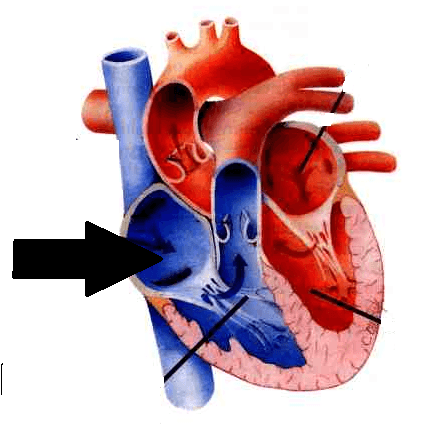
67.
Identify
a)
Left atrium
b)
Right atrium
c)
Left ventricle
d)
Right ventricle
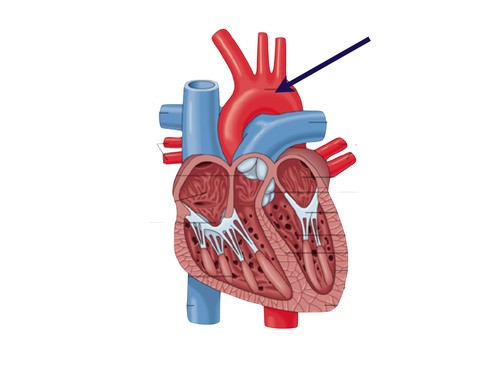
68.
Identify
a)
Pulmonary veins
b)
Pulmonary artery
c)
Aorta
d)
Vena cava
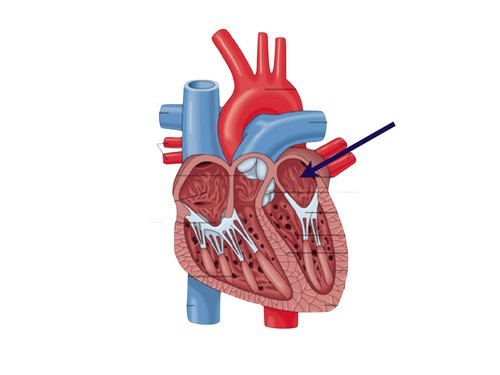
69.
Identify
a)
Left atrium
b)
Right atrium
c)
Left ventricle
d)
Right ventricle
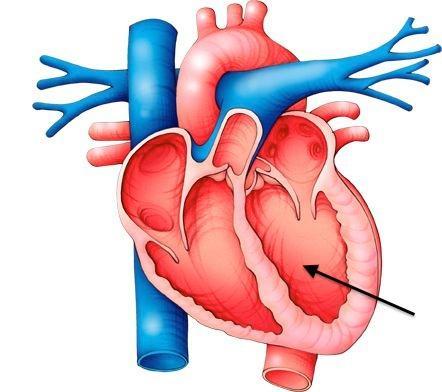
70.
Identify
a)
Left atrium
b)
Right atrium
c)
Left ventricle
d)
Right ventricle
71.
The aorta is the largest artery in the body. The blood leaving the aorta is full of?
a)
Oxygen 
b)
Carbon Dioxide 
c)
White blood Cells 
d)
Potassium 
72.
The common passageway shared by the respiratory and digestive systems is the 
a)
glottis. 
b)
pharynx. 
c)
larynx. 
d)
trachea
73.
If the environment gets cold, we will often shiver in order to:
a)
keep body temperature the same as the external temperature
b)
decrease body temperature
c)
increase body temperature
d)
regulate blood pressure
74.
Which is NOT a function of the skin?
a)
Insulation
b)
Movement
c)
Excretion
d)
Thermoregulation
75.

The kidneys produce urine by filtration of the blood and selective re-absorption of useful substances such as glucose, some ions and water.

a)

True

b)

False

c)

Not sure

76.

What is the main function of the kidney?

a)

Remove urine from the body

b)

To add salt to blood

c)

Maintain water balance of the body

d)

To break down proteins