wayground logo

Free Printable Worksheets

Font size

S
M
L
XL
Worksheets

Review for Benchmark 2019

Total questions: 126

Worksheet time: 3hrs 55mins

Name
Class
Date
1.
Which type of energy is produced when the handle of a pencil sharpener turns?
a)
Light Energy
b)
Magnetic Energy
c)
Electrical Energy
d)
Mechanical Energy
2.
Which of the following is a way thermal energy is used at school every day?
a)
Cooking food for lunch
b)
Writing with a pencil
c)
Looking in a mirror
d)
Turning on the lights
3.
Heat is another name for-
a)
thermal energy
b)
magnetic energy
c)
electrical energy
d)
mechanical energy
4.
Which of the following does NOT produce light energy?
a)
car
b)
phone
c)
picture frame
d)
computer
5.
How are Sedimentary Rocks formed?
a)
Cooling and Hardening
b)
Heat and Pressure
c)
Compacting and Cementing
d)
Melting
6.
Where can the oldest layer be found?
a)
The top layer
b)
The middle layer
c)
They are all the same age
d)
The bottom layer
7.
What are the 3 main fossil fuels?
a)
Coal, Oil, and Gasoline
b)
Coal, Oil, and Natural Gas
c)
Electricity, Gasoline, Petroleum
d)
Coal, Oil, Non-renewable Resources
8.
Fossil Fuels formed over long periods of time after particles in water settled to the sea floor and formed marine mud.  What kinds of particles needed to be present in the marine mud in order for fossil fuels to form.
a)
Mostly sand and a few small bits of wood
b)
Mostly decaying organisms
c)
Mostly lava and a few sedimentary rocks
d)
Mostly metal minerals
9.
Oil and natural gas were formed from ___________________
a)
marine organisms
b)
dead plants
c)
trees
10.
Petroleum and natural gas form from...
a)
strong winds
b)
cooled magma
c)
radioactive materials
d)
remains of plants and animals 
11.
Which of the following is a fossil fuel?
a)
Wind
b)
Coal
c)
Solar
d)
Biomass
12.
Characteristics passed from parents to their offspring.
a)
behavior
b)
learned trait
c)
inherited trait
d)
function
13.
A behavior that is developed by observing others or by being taught is a 
a)
learned behavior 
b)
inherited trait
c)
adaptation 
d)
function
14.
What is NOT an example of an inherited TRAIT?
a)
eye color
b)
tongue rolling
c)
height
d)
speaking a language
15.
Which of these is not an inherited trait?
a)
a bird building a nest
b)
a turtle burying its eggs
c)
a bear hibernating in winter
d)
a horse pulling a plow
16.
Which characteristic would most likely be inherited by a baby?
a)
brown hair
b)
crying a lot
c)
ability to jump high
d)
his ability to talk
17.
The following are inherited traits of humans EXCEPT...
a)
long hair
b)
blue eyes
c)
long eyelashes
d)
small dimples
18.
Which characteristic is inherited?
a)
hair color
b)
sleeping late
c)
enjoying hiking
d)
loving to read
19.
Which is an example of a learned characteristic?
a)
color of a dog's fur
b)
color blindness of a person
c)
the ability of a mouse to run a maze
d)
a person's ability to roll their tongue
20.
Which best describes an inherited trait?
a)
a characteristic one chooses to express
b)
a characteristic one receives from the food one eats
c)
a characteristic that is passed on from one's parents
d)
a characteristic that is influenced by one's surroundings
21.
All of the following are learned EXCEPT:
a)
reading a book
b)
sneezing
c)
using a knife and fork
d)
avoid poison ivy
22.

Smelts are fish that lay their eggs in the sand of a beach. When the eggs hatch, the babies know to go to the water. This is an example of...

a)

inherited behavior/instinct

b)

camouflage

c)

hibernation

d)

learned behavior

23.
Crows are black birds with excellent hearing. In the wild they live 6-7 years. Some crows in Japan open hard-shelled nuts by dropping them in front of moving cars. Which of these is a learned behavior?
a)
excellent hearing
b)
dropping nuts in front of cars
c)
living 6-7 years
d)
having black feathers
24.
_______ is the type of soil used most often with plants and on farms. It is a mixture of clay, sand, and silt.
a)
loam
b)
humus
c)
soil
d)
dirt
25.
Ellen grabs a topsoil sample in her hand. She rolls it into a ball. The soil feels gritty and the ball falls apart. What part of the topsoil most likely made the topsoil feel gritty?
a)
clay
b)
sand
c)
silt
d)
humus
26.
When plants, animals, and other organisms die, they break down and become part of the soil. What is this part of the soil called?
a)
sand
b)
silt
c)
clay
d)
humus
27.
You dig a small hole in the soil and the next day it rains. The hole fills with water, but does not empty even after several days of dry weather. What is the soil mostly made of?
a)
clay
b)
sand
c)
humus
d)
silt
28.
Which type of soil can hold the greatest amount of water?
a)
sand
b)
silt
c)
clay
d)
loam
29.
Many plants cannot grow in sandy soil. Why is this true?
a)
Sandy soil does not hold enough water.
b)
Air cannot pass through sandy soil.
c)
Roots cannot easily push through sandy soil.
d)
Sandy soil has too many nutrients.
30.
a)
A
b)
B
c)
C
d)
D
31.
5.5A - This is a picture of oil and water.  Why does the oil float on top of the water?
a)
The water is less dense than the oil so it floats on top of the oil.
b)
The oil is less dense than the water so it floats on top of the water.
c)
The oil is more dense than the water so it sinks.
d)
The oil is less dense than the water so it sinks.
32.
5.5A - A student reads the label on the bottle of salad dressing shown below. Why would the student shake the salad dressing well before using it?
a)
Vinegar and oil have different densities.
b)
Vinegar and oil easily form a solution
c)
Vinegar and oil both contain water
d)
Vinegar and oil are both liquids
33.
What could be added to this picture to make the light bulb work?
a)
an open switch
b)
a closed switch
c)
a rubberband
d)
a wooden sticks
34.
A student puts four objects in a bucket filled with water. The objects are listed below. 
-
 Plastic ball
Glass marble
Metal paper clip
Wood block 
-
Which two objects are most likely less dense than the water?
a)
Wood block and metal paper clip
b)
Plastic ball and glass marble
c)
Metal paper clip and glass marble
d)
Wood block and plastic ball
35.
a)
F
b)
G
c)
H
d)
J
36.
a)
A
b)
B
c)
C
d)
D
37.
a)
Material B
b)
Material A
c)
Material C
d)
Material D
38.
a)
Magentism
b)
Relative Density
c)
Solubility
d)
Color
39.
A system made up of organisms interacting with one another
a)
biology
b)
abiotic
c)
biotic
d)
ecosystem
40.
Organisms that make up the living part of an ecosystem.
a)
abiotic
b)
biotic factors
c)
ecology
d)
ecosystems
41.
Nonliving things found in an ecosystem.
a)
factories
b)
factor trees
c)
biotic factors
d)
abiotic factors
42.
A group of the same type of organisms living in the same place at the same time.
a)
threatened species
b)
populations
c)
community
d)
limiting factor
43.
Decomposers get their food by __________.
a)
making it themselves
b)
eating live organisms
c)
using dead organisms
d)
eating themselves
44.
In an ecosystem, producers and consumers are both __________.
a)
biotic factors
b)
very nice
c)
cranky
d)
abiotic factors
45.
Which word describes a push or pull on an object?
a)
Position
b)
Hypothesis
c)
Mass
d)
Force
46.
The location of an object.
a)
Speed
b)
Position
c)
Friction
d)
Gravity
47.
A polar bear slides down an ice covered hill. As he slides, he slows down. Eventually he comes to a stop. What force  acts on an object to slow or stop its motion?
a)
Speed
b)
Friction
c)
Gravity
d)
Direction
48.
Which experiment listed below will best determine how friction affects the speed of a rolling object?
a)
Roll 3 objects of various sizes across the floor.
b)
Roll 3 objects of equal size from various heights across the floor.
c)
Roll 3 objects of equal size across 3 different types of surfaces.
d)
Roll 3 objects of equal size from equal heights across the floor.
49.
Looking at the picture, what two tools would be needed to measure the effect of friction on the ball?
a)
Hand lens and balance
b)
Balance and spring scale
c)
Measuring tape and stop watch
d)
Spring scale and hand lens
50.
A student drops a ball from shoulder height. The ball bounces 5 times before coming to a stop. What force causes the ball to fall to the ground?
a)
Friction
b)
Magnetism
c)
Position
d)
Gravity
51.
A boy applies a pushing force on a ball thrown into the air. What applies a pulling force on the ball at the same time?
a)
Gravity
b)
The height of the boy
c)
Friction
d)
The mass of the ball
52.

Which organism receives its energy directly from the Prairie Grasses?

a)

Sun

b)

Plants

c)

Deer

d)

Snake

53.

The diagram shows a prairie food web. In the food web shown, all of the following are consumers EXCEPT –

a)

Prairie Grass

b)

Mountain Lion

c)

Squirrel

d)

Robin

54.

In the food web diagram, what do the arrows represent?

a)

Life Cycle

b)

Metamorphosis

c)

How food is produced by organisms

d)

The flow of energy through an ecosystem

55.

Which organisms transfer the most energy within the food web?

a)

Bass, because they are predators in this web

b)

Copepods, because they support two chains in this web

c)

Crayfish, because they are at the bottom of this web

d)

Algae, because they are the producers in this web

56.
The Sun is important in many ways.  What is the purpose of the Sun in a food chain? 
a)
The Sun provides energy for animals to stay warm.
b)
The Sun provides light for animals to see.
c)
The Sun provides energy for plants to survive.
d)
The Sun provides energy for plants to make food.
57.
They caracal is prey to which animal?
a)
snake
b)
mouse
c)
grasshopper
d)
baboon
58.
Which of the following is a predator of the shrew?
a)
cricket
b)
grasshopper
c)
frog
d)
snake
59.
What type of consumer is the wolf?
a)
herbivore
b)
omnivore
c)
carnivore
d)
decomposer
60.
A student conducts an investigation using caramel candy, paper plates, and a stopwatch. The student places a piece of the caramel candy on each of three plates. The student puts the plates in different locations around the school. The student will record the time it takes for each piece of caramel candy to change state and other observations in the table below.  Which question is the student most likely trying to answer with this investigation?
a)
In which location does the caramel candy change state the fastest?
b)
What causes the caramel candy to keep its shape?
c)
Why does the caramel candy change state?
d)
At what temperature does the caramel candy melt?
61.
How could you show evaporation in the water cycle?
a)
Place a half cup of water inside a baggie. Tape it to a sunny window. Observe what happens to the water in the cup.   
b)
Place a thermometer in a sunny window and record the temperature at the same time for 7 days in a row.    
c)
Record the rainy days and temperature on those days for at least 30 days to get a pattern.    
d)
Place ices cubes in a baggie. Set the baggie in the freezer. Observe what happens after 7 days.    
62.
A student observed liquid wax dripping down the side of a burning candle. After putting out the candle’s flame, the student left the room. Several hours later the student observed that there was no longer any liquid on the side of the candle. Which statement explains what most likely happened to the liquid wax?
a)
The heat given off by the flame caused the candle wax to evaporate.
b)
The liquid wax changed back into a solid as it cooled.
c)
The liquid wax condensed and was absorbed by the candle.
d)
None of the above
63.
Alternative energy is
a)
Generated by natural resources and is renewable
b)
man made
c)
nonrenewable
d)
not helpful to us in Texas
64.
Wind energy is 
a)
generated from moving water
b)
starts with moving air and generates electricity
c)
starts with the sun
d)
comes from the earth
65.
Geothermal energy is energy from 
a)
the sun
b)
heat from deep in the earth
c)
wind
d)
inexhaustable
66.
Energy from the sun is called
a)
Biofuels
b)
Solar
c)
Geothermal
d)
Hydroelectric
67.
Nonrenewable resources are
a)
man-made resources
b)
cannot be replaced quickly
c)
can be replaced in a short amount of time
d)
never run out
68.
There are 5 forms of Alternative Energy
a)
True
b)
False
69.
Corn, wheat, and soybeans can be made into a substance called ethanol. In some places, ethanol is part of a mixture used to power cars and trucks. What type of alternative energy resource is ethanol?
a)
Hydroelectric
b)
Geothermal
c)
Biofuels
d)
Solar
70.
All of the following are considered alternative energy sources EXCEPT –
a)
Wind
b)
Coal
c)
Biofuel
d)
Solar
71.
Light travels
a)
around corners
b)
in a straight line
72.
Light bounces when it is 
a)
reflected
b)
absorbed
c)
refracted
73.
Light bends when it is 
a)
refracted
b)
reflected
c)
absorbed
74.
mirror
a)
absorbs
b)
reflects 
c)
refracts
75.
lenses
a)
reflect
b)
refract
c)
absorb
76.
smooth, shiny surfaces
a)
reflect
b)
refract
c)
absorb
77.
sunglasses and tinted windows
a)
refraction
b)
absorption
c)
reflection
78.
rainbow
a)
light is reflected
b)
light is refracted
c)
light is absorbed
79.
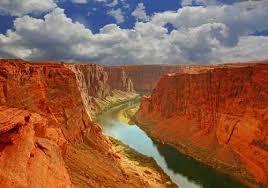
What land form is this?
a)
plain
b)
valley
c)
mountain
d)
canyon
80.
What land form is this?
a)
valley
b)
canyon
c)
plain
d)
mountain
81.

The process of moving sediment or soil from one location

to another by wind, water, ice, or gravity. (*carries it away)

a)

Erosion

b)

Weathering

c)

Deposition

d)

Delta

82.

The process of dropping or depositing rocks or sediments in another location. (*drops it, leaving it there to stay)

a)

Weathering

b)

Deposition

c)

Erosion

d)

Mass Movement

83.

New land formed where sediment is dropped at the mouth of a river. (fan-shaped)

a)

Beach Restoration

b)

Erosion

c)

Chemical Weathering

d)

Delta

84.

The process of breaking down rock into smaller, moveable

pieces. (*breaks it down)

a)

Weathering

b)

Erosion

c)

Deposition

d)

Landforms

85.

Earth’s physical features. (i.e. mountains, hills, valleys, canyons)

a)

Delta

b)

Weathering

c)

Landforms

d)

Beach Restoration

86.

The Mississippi River Delta increases in depth each year. In years with heaver rains, the rate of change is even higher. Which statement best describes the change in the river delta landform?

a)

Heavy rains increase the amount of water flowing in the river and decrease levels near the delta.

b)

Heavy rains increase the amount of sediment pushed down the river and deposited at the delta.

c)

Heavy rains increase the amount of water flowing down the river and decrease the sediment deposited at the delta.

d)

None of the above

87.

Students use a stream table to model the effect of a glacier on the surrounding terrain. The students try to control the environment so the results are similar to those in nature. All of the following are similar to a glacier EXCEPT-

a)

gravity pulls the glacier downward

b)

The glacier erodes sediment as it moves

c)

the glacier moves slowly down the model

d)

The size of the glacier is comparable to a real glacier.

88.

A teacher explains that some changes to Earth's surface are caused by wind. Students are given stopwatches and instructed to change a rock by blowing air on it for five minutes. Why will the rock remain unchanged after five minutes?

a)

Wind cannot change the surface of a rock.

b)

Wind changes Earth's surface over a long period of time.

c)

The students needed to blow air on the rock for at least 10 minutes.

d)

Changes to the surface of the Earth happen in a short time period.

89.

Students write descriptions of slow changes to Earth's surface. Which student did NOT describe a slow change to Earth's surface?

a)

Student 1: Moving water or wind dropping sediment in a new location.

b)

Student 2: Movement of sediment by wind, water , or ice.

c)

Student 3: Breaking down of rocks by wind, water, and ice.

d)

Student 4: Erupting volcano creating new land.

90.

This landform is formed by

a)

water erosion

b)

wind erosion

c)

deposition

d)

glaciers

91.

What is this landform?

a)

delta

b)

canyon

c)

valley

d)

sand dune

92.

This landform is formed by

a)

water erosion

b)

weathering

c)

deposition of sediments

d)

glaciers

93.

What is this landform?

a)

valley

b)

delta

c)

canyon

d)

sand dune

94.

This landform is formed by

a)

water erosion

b)

wind erosion and deposition

c)

glaciers

d)

weathering

95.

What is this landform?

a)

canyon

b)

delta

c)

valley (U-shaped)

d)

arch

96.
A class prepared some electrical circuits using battery, connecting wires, and three light bulbs.  Which of these circuits can make the three bulbs light?
a)
A
b)
B
c)
C
d)
D
97.
What is one problem with using a series circuit? 
a)
It has a lot of series. 
b)
If one goes down, they all go down! 
c)
It doesn't work properly.
d)
There are no problems. 
98.
Students are asked to create a system using two mirrors and a flashlight to hit a target with a beam of light. Which diagram correctly uses the two mirrors and the flashlight to hit the target?
a)
A
b)
B
c)
C
d)
D
99.
What kind of circuit is this?
a)
series
b)
parallel
100.

The picture above shows a child standing in a swimming pool. Why does the lower part of the child appear so much different in size from the upper part?

a)

The light rays that travel through water and then into air are reduced.

b)

The light rays that travel through water and then into air are enlarged.

c)

The light rays that travel through air and then into water are reflected.

d)

The light rays that travel through air and then into water are refracted.

101.
What is a switch's function in a circuit?
a)
to make the current hotter or colder
b)
turn on and off the flow of current
c)
the pathway that current flows
d)
to add more power to the circuit
102.
wood is a _____?
a)
conductor
b)
insulator
103.
What type of circuit is show in the image?
a)
Series Circuit
b)
Parallel Circuit
104.

what do you need to work a circuit

a)

my cat

b)

the sun

c)

battery

d)

a cow

105.

Each school year for 30 years, the amount of rain that fell at a school was measured and recorded. Tracking rainfall over a long period provides the most information about which characteristic of an area?

a)

Climate

b)

Temperature of one day

c)

Weather

d)

Type of soil

106.

Which of the following is a description of climate?

a)

Today it is hot and sunny in Phoenix, Arizona.

b)

Summers are usually mild in Lansing, Michigan.

c)

Last week it rained every day in San Antonio, Texas.

d)

Yesterday was cold and windy in Anchorage, Alaska.

107.
Which of the following is a description of weather data? 
a)
The Sahara desert gets very little rainfall.
b)
The average daytime high in the Amazon is 25°C.
c)
Temperatures in the Arctic are usually below freezing. 
d)
It rained two inches in Miami, Florida on May 5th. 
108.
Weather is best described as which of the following?
a)
How fast the wind is blowing
b)
The amount of water in the air
c)
How much air is pressing down on a particular area
d)
The condition of the atmosphere at one particular time and place
109.

What does this image represent?

a)

Cold front

b)

High pressure

c)

Warm front

d)

Wind

110.
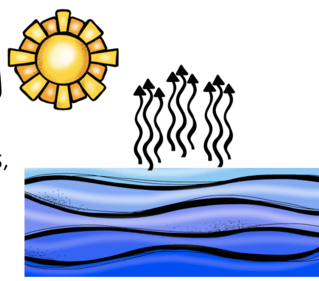
Evaporation happens when the sun ___________ water and turns it into vapor.
a)
cools
b)
heats up
c)
freezes
d)
lights up
111.
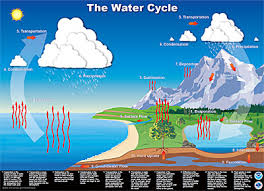
What is the energy source for the water cycle?
a)
the sun
b)
the earth
c)
water
d)
the moon
112.
Snow, sleet, hail, and rain are all examples of  ________________. 
a)
evaporation
b)
condensation
c)
accumulation
d)
precipitation
113.
During which stage do clouds form?
a)
condensation
b)
evaporation
c)
precipitation
114.
What is the relationship between the Sun, Earth and Moon?
a)
Earth revolves around the Moon, Earth revolves around the Sun. 
b)
The Sun revolves around Earth as the Moon revolves around Earth. 
c)
The Moon revolves around Earth as Earth revolves around the Sun. 
d)
Earth revolves around the Moon as the Sun revolves around Earth. 
115.
The star at the center of the Solar System that supplies heat and light to Earth; its enormous gravity keep the Solar System in orbit
a)
orbit
b)
sun
c)
crater
d)
moon
116.
To spin on an axis; a 24-hour period, or the time it takes Earth to make one complete rotation on its axis
a)
physical features
b)
rotate
c)
axis
d)
night
117.
To spin on an axis; a 24-hour period, or the time it takes Earth to make one complete rotation on its axis
a)
physical features
b)
rotate
c)
axis
d)
night
118.
Period during rotation when the side of the Earth facing the sun is lit
a)
crater
b)
day
c)
night
d)
axis
119.
In what direction does the Sun appear to move across the sky?
a)
West to east
b)
North to south
c)
East to west
d)
South to north
120.

A student observes ice forming on the edge of a school building. At what temperature did the water outside the school building most likely begin to change to ice?

a)

100*C

b)

32*C

c)

25*C

d)

0*C

121.

The classification of matter as a solid, liquid, or gas

a)

boiling point

b)

thermal energy

c)

physical state

d)

temperature

122.

___ is the physical change in a matter from a liquid to a gas

a)

evaporation

b)

melting point

c)

boiling point

d)

condensation

123.

What is the boiling point of water

a)

0 C

b)

100 F

c)

50 C

d)

100 C

124.

What is happening at the boiling point?

a)

liquid to gas

b)

gas to liquid

c)

solid to liquid

d)

liquid to solid

125.

What is water's freezing point?

a)

0 F

b)

32 C

c)

50 C

d)

0 C

126.

What is water's melting point?

a)

32 C

b)

0 C

c)

50 F

d)

0 F