wayground logo

Free Printable Worksheets

NEW

Font size

S
M
L
XL
Worksheets

Rocks Practice Test

Total questions: 71

Worksheet time: 1hrs 1mins

Name
Class
Date
1.
This rock was formed when heat and pressure changed its minerals around into new minerals. What type of rock is it?
a)
Metamorphic Rock
b)
Igneous Rock
c)
Sedimentary Rock
d)
Boring Rock
2.
This rock was formed when molten rock cooled into a solid. What type of rock is it?
a)
Igneous Rock
b)
Metamorphic Rock
c)
Sedimentary Rock
3.
This rock formed when bits of other rocks became pressed into a solid. What type of rock is it?
a)
Sedimentary Rock
b)
Metamorphic Rock
c)
Igneous Rock
4.
What are the 3 major types of rocks?
a)
Igneous, Metamorphic, Sedimentary
b)
Metamorphic, Igneous, Cementation
c)
Brown, Red, Gray
d)
Streak, Hardness, Breakage
5.
The process where one type of rock can change into another type of rock is known as ____
a)
The rock cycle
b)
Sedimentation
c)
Igneous
d)
Composition
6.
The process by which water, wind, ice, and changes in temperature break down rock into fragments called sediments.
a)
Deposition
b)
Erosion
c)
Weathering
d)
Igneous Rock
7.
This rock started as molten magma. What type of rock is this?
a)
Sedimentary
b)
Igneous
c)
Metamorphic
8.

What type of rock is this?

a)

Sedimentary

b)

Igneous

c)

Metamorphic

d)

Sand

9.

How do extrusive igneous rocks differ from intrusive igneous rocks?

a)

Extrusive rocks are larger in size.

b)

Intrusive rocks break down quicker.

c)

Extrusive rocks are arranged in layers.

d)

Intrusive rocks have larger crystals.

10.

In which location would you most likely find an igneous rock?

a)

A

b)

B

c)

C

d)

D

11.

Compaction and cementation are two common processes associated with:

a)

Extrusive igneous rocks

b)

Intrusive igneous rocks

c)

Sedimentary rocks

d)

Metamorphic rocks

12.

Which of the following is a TRUE statement?

a)

Magma is called lava after it emerges from the ground

b)

Lava cools off to form magma

c)

Magma and lava form sedimentary rocks

d)

Magma and lava are two types of metamorphic rock

13.

What process is used to form metamorphic rocks?

a)

Lava cools and hardens to form a rock.

b)

Bits of sand gravel form layers that turn into rock from pressure.

c)

I don't know :(

d)

Extreme heat and pressure from inside the Earth turns rocks into new rocks.

14.

Which type of rock forms through weathering, erosion and deposition?

a)

igneous

b)

sedimentary

c)

metamorphic

d)

what is weathering, erosion, and deposition

15.

A rock made of small pieces of broken shells and the ocean waves broke seashells into smaller pieces. Over time, these pieces moved and deposited. When they stick together, they form coquina. Coquina is most likely a(n) ________

a)

sedimentary

b)

metaphorphic

c)

igneous

d)

starfish

16.

This rock started as lava that cooled and then was heated and put under pressure over time. What type of rock is this?

a)

Sedimentary

b)

Igneous

c)

Metamorphic

17.
True or False: Once a rock is sedimentary, it cannot become an igneous rock.
a)
True
b)
False
18.
Fossils are only found in
a)
Sedimentary rocks
b)
Metamorphic rocks
c)
Igneous Rocks
d)
All rock types
19.
This rock formed when lava cooled very quickly on Earth's surface. What specific type of rock is it?
a)
Extrusive Igneous Rock
b)
Intrusive Igneous Rock
c)
Non-Foliated Metamorphic Rock
d)
Biochemical Sedimentary Rock
20.

When magma or lava from a volcano cools and hardens, it becomes an ____________________ rock.

a)

change

b)

three

c)

metamorphic

d)

sedimentary

e)

igneous

21.
The process by which igneous rocks are formed...
a)
heat and pressure
b)
melting and cooling
c)
erosion and deposition
22.
The process by which metamorphic rocks are formed...
a)
heat and pressure
b)
erosion and deposition
c)
melting and cooling
23.
The name rock is given when it is broken down into smaller pieces.
a)
texture
b)
weathering
c)
sediment
d)
erosion
24.
True or False: Igneous Rocks form from Sediment
a)
True
b)
False
25.
_______ rock forms from magma/lava
a)
Metamorphic
b)
Sedimentary
c)
Igneous
26.
Cooling & crystalization produce
a)
igneous rocks
b)
metamorphic rocks
c)
sedimentary rocks
27.
Extreme Heat and Pressure creates a _________ rock.
a)
Igneous
b)
Metamorphic
c)
Sedimentary
d)
Mineral
28.
True or False: Once a rock is sedimentary, it cannot become an igneous rock.
a)
True
b)
False
29.
When you watch a volcano erupt molten rock, you are seeing _____
a)
Lava
b)
Magma
c)
Mineral Crystals
d)
Igneous Rocks
30.
When sediments are pressed together tightly, this is called ____________.
a)
Compaction
b)
Cementation
c)
Weathering
d)
Erosion
31.
The process in which dissolved minerals crystallize and glue sediment together.
a)
compaction
b)
deposition
c)
organic rock
d)
cementation
32.
The process when rocks break into smaller pieces due to exposure to natural elements is called
a)
erosion
b)
weathering
c)
sediments
33.
What two processes make sediment?
a)
Weathering
b)
Erosion
c)
Weathering & Erosion
34.
What is mechanical weathering?
a)
Process through which rocks are physically broken into smaller pieces.
b)
Rocks are broken down through chemical changes.
c)
Rocks are worn away from acid in plant roots.
d)
Rocks broken down by machinery.
35.
Which type of climate will have faster chemical weathering?
a)
Hot and Wet
b)
Cold and Dry
c)
Hot and Cold
d)
Cold and Wet
36.
The diagrams  shows a natural process that weathers rock.
 Which statement best explains why this process results in weathering?
a)
frozen water acts as a solute
b)
water expands when it freezes
c)
the mass of water increases when it freezes
d)
frozen water dissolves most types of rock
37.
How do plants weather rocks?
a)
during photosynthesis
b)
when roots grow into cracks of rocks and expand the rock
c)
when the plant moves water from the roots to the leaves
38.
The process by which water, ice, wind or gravity moves weathered rock and soil from one place to another.
a)
weathering
b)
erosion
c)
deposition
d)
dumptruck
39.
Lichens (small green plants) growing on a large boulder release enzymes and other acids that slowly break the rock apart. This is an example of:
a)
mechanical weathering
b)
chemical weathering
40.
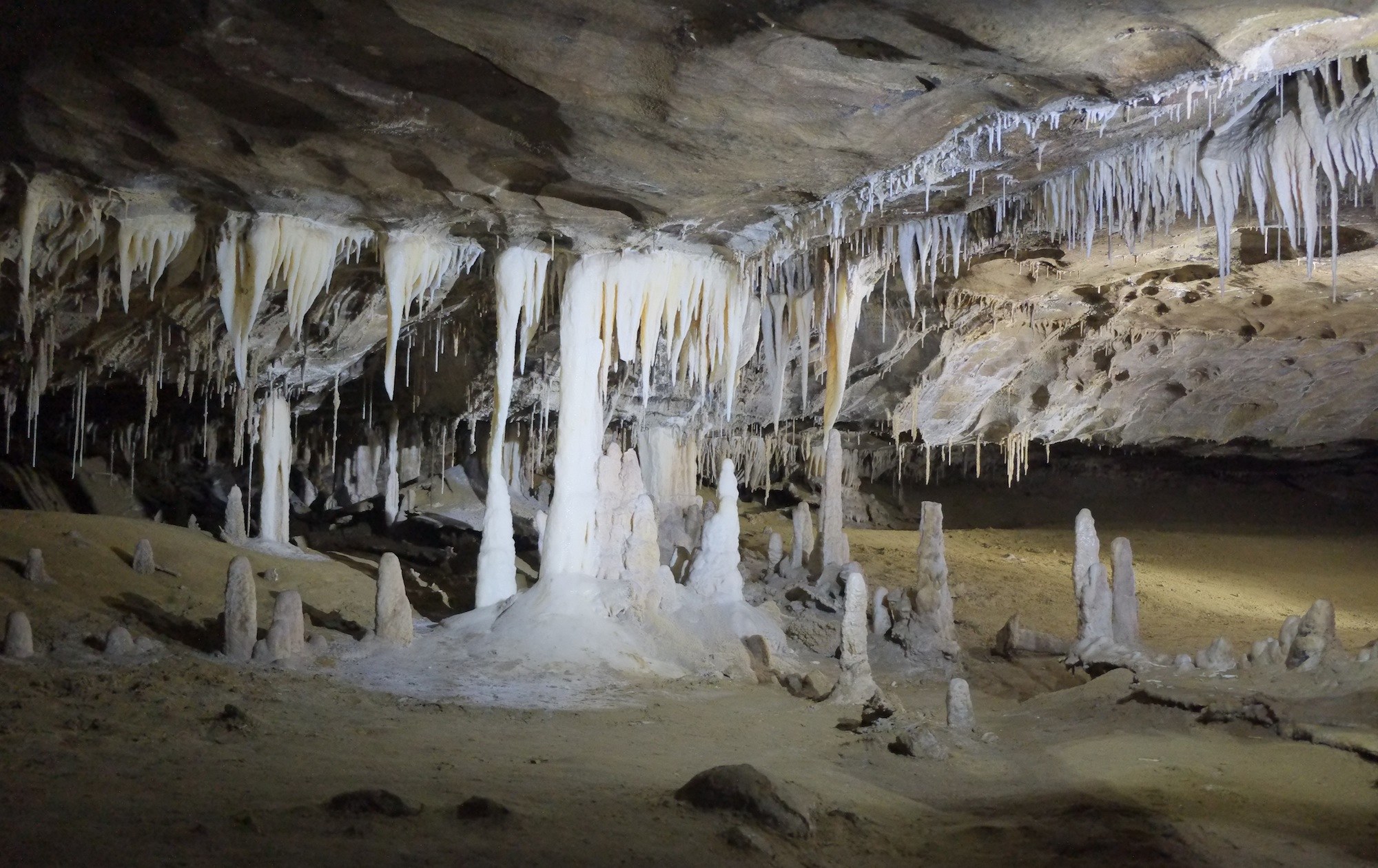
The formation of stalactites and stalagmites in a cave as water mixed with carbon dioxide creates carbonic acid, which dissolves away the limestone, is an example of:
a)
mechanical weathering
b)
chemical weathering
41.
Carbon dioxide (CO2) combines with water as raindrops fall through the atmosphere. This makes a weak acid, called carbonic acid. Carbonic acid is a very common in nature, where it works to dissolve rock. Pollutants, such as sulfur and nitrogen from fossil fuel burning, create sulfuric and nitric acid. Sulfuric and nitric acids are the two main components of acid rain, which speeds up chemical weathering.
This statue was probably destroyed by _____.
a)
Wind
b)
Humans
c)
Acid Rain
d)
Animals
42.
What force is responsible for erosion and deposition in landslides?
a)
gravity
b)
ice
c)
wind
d)
temperature
43.
An avalanche is an example of which process?
a)
Weathering
b)
Erosion
c)
Deposition
d)
Volcanic Eruption
44.
Deposition changes the Earth’s surface because bits of broken rock and soil _____.
a)
stop rivers from flowing.
b)
make rich farmlands.
c)
are dropped in new places.
d)
move very slowly.
45.
What causes the greatest erosion effect on our beaches?
a)
Waves
b)
Gravity
c)
Glaciers
d)
Wind
46.
Which of the following is NOT an agent of erosion
a)
running water
b)
wind
c)
gravity
d)
temperature changes
47.
This valley was probably made by a 
a)
river
b)
landslide
c)
glacier
d)
avalanche
48.
This landform was most likely created by
a)
wind
b)
running water
c)
gravity
d)
glaciers
49.
This type of weathering occurs when rock is physically broken down into smaller pieces of rock.
a)
mechanical weathering
b)
chemical weathering
c)
erosion weathering
d)
deposition
50.
These rocks were made smooth by wind blowing smaller rock particles across their surface.  This is an example of:
a)
ice wedging
b)
chemical weathering
c)
acid rain
d)
abrasion
51.
These rocks were broken apart from the continuous freeze/thaw of water in the cracks of the rocks. This is an example of:
a)
ice wedging
b)
acid rain
c)
permeability
d)
abrasion
52.
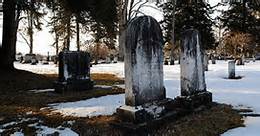
These gravestones have slowly broken down and turned a blackish color due to the action of:
a)
ice wedging
b)
abrasion
c)
acid rain
d)
mechanical weathering
53.
How might a weathered mountain appear different than an unweathered mountain?
a)
Weathered mountain would be taller.
b)
Weathered mountain would be rounder and less jagged.
c)
Weathered mountain would be more jagged and less rounded.
d)
Weathered mountain would have no trees.
54.
How is mechanical weathering different from chemical weathering?
a)
Chemical weathering happens over much shorter time frame than mechanical weathering.
b)
Chemical weathering changes the chemical composition of rocks; mechanical weathering does not.
c)
Chemical weathering occurs only in tropical climates; mechanical weathering occurs only in cool climates.
d)
Chemical weathering occurs only in the mountains; mechanical weathering occurs only on flat land.
55.
Weeds growing into the cracks in a sidewalk and the sidewalk begins to crumble is an example of:
a)
mechanical weathering
b)
chemical weathering
56.
A metal statue slowly turning green after years of being outside is an example of:
a)
mechanical weathering
b)
chemical weathering
57.
Potholes forming in the road after a cold winter is an example of:
a)
mechanical weathering
b)
chemical weathering
58.
Rocks along a riverbed that are smoothed from continuously moving water and sediment rubbing against them is an example of:
a)
mechanical weathering
b)
chemical weathering
59.
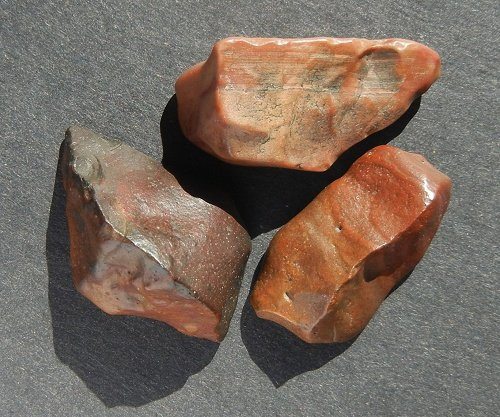
A piece of sandstone changing color (from brown to rusty red) from exposure to water and air is an example of:
a)
mechanical weathering
b)
chemical weathering
60.
The formation of stalactites and stalagmites in a cave as water mixed with carbon dioxide creates carbonic acid, which dissolves away the limestone, is an example of:
a)
mechanical weathering
b)
chemical weathering
61.
Exposure to rain and oxygen causes the metal minerals in rocks to rust and fall apart.  This is an example of:
a)
mechanical weathering
b)
chemical weathering
62.
Lichens (small green plants) growing on a large boulder release enzymes and other acids that slowly break the rock apart. This is an example of:
a)
mechanical weathering
b)
chemical weathering
63.
Select the answer that shows the order of events a rock goes through.
a)
erosion, weathering, deposition
b)
weathering, erosion, deposition
c)
deposition, weathering erosion
d)
erosion, deposition, weathering
64.
How does freezing water cause the weathering of rocks?  The freezing water—
a)
keeps the rocks in place
b)
makes the rocks last longer
c)
expands cracks and breaks rocks
d)
causes rocks to fall in landslides
65.
What are the two factors that affect the rate at which weathering occurs?
a)
climate and mass of rock
b)
climate and size of rock
c)
type of rock and size of rock
d)
type of rock and climate
66.
Which of these rock layers is relatively the newest?
a)
Kaibab formation
b)
Zoraster Granite
c)
Redwall limestone
d)
Unkar group
67.
Which of the following orders the rock layers accurately from youngest to oldest?
a)
1, 2, 3, 4, 5
b)
5, 4, 3, 2, 1
c)
2, 3, 4, 5, 1
d)
1, 2, 3, 5, 4
68.
Which fossil is relatively the oldest?
a)
Trilobite
b)
Ammonite
c)
Crinoid
d)
Gastropod
69.
Which of the following does the law of superposition tell scientists?
a)
Absolute age
b)
Relative age
c)
Exact age
d)
All of the answer choices
70.
The Law of Superposition helps scientists to determine what?
a)
The absolute age of rock layers
b)
The age of fossils
c)
The relative age of rock layers
d)
the super powers of rocks
71.
According to the law of superposition, the oldest fossils are found 
a)
At the top of the rock layers
b)
Near the bottom of the rock layers
c)
In the middle of the rock layers
d)
Somewhat near the surface