wayground logo

Free Printable Worksheets

Font size

S
M
L
XL
Worksheets

3rd 9wk Review

Total questions: 150

Worksheet time: 2hrs 23mins

Name
Class
Date
1.
Which type of rock results from melting and cooling of magma?
a)
Igneous
b)
Metamorphic
c)
Sedimentary
d)
Extrusive
2.
Which type of rock forms from extreme heat and pressure?
a)
Igneous
b)
Sedimentary
c)
Organic
d)
Metamorphic
3.
A metamorphic rock changes into an igneous rock by what two processes?
a)
Melting and cooling
b)
Extreme heat and pressure
c)
Compaction and cementation
d)
Weathering and erosion
4.
Wind, water, and ice breaking down rock is called
a)
Erosion
b)
Deposition
c)
Compaction
d)
Weathering
5.
What is the MAIN way rocks are classified?
a)
Their color and shapes
b)
How they form
c)
Mineral bands
d)
Where they form
6.
True/False: Igneous rocks can only turn into metamorphic rocks.
a)
True
b)
False
7.
The process in which dissolved minerals crystallize and glue sediment together.
a)
compaction
b)
deposition
c)
organic rock
d)
cementation
8.
Rock that forms when sediment from older rocks get pressed and cemented together.
a)
Sedimentary Rock
b)
Metamorphic Rock
c)
Igneous Rock
9.
The process by which igneous rocks are formed...
a)
heat and pressure
b)
melting and cooling
c)
weathering and erosion
10.
The process by which metamorphic rocks are formed...
a)
heat and pressure
b)
erosion and deposition
c)
melting and cooling
11.
Rock that forms when pressure and temperature change existing rock.
a)
Igneous Rock
b)
Sedimentary Rock
c)
Metamorphic Rock
d)
Rock Cycle
12.

Define "Sedimentary Rock"

a)

Formed under the earth's surface when heat and pressure are applied

b)

formed when sediments are compacted together over a long period of time

c)

when rocks are broken down

d)

I don't have a clue

13.

Define "Weathering"

a)

When rocks are broken down into sediments

b)

Process of rocks changing from one type to another

c)

Moves sediments using gravity, water, wind, or ice

d)

When sediments and particles are carried away by erosion and are dropped elsewhere

14.

Define "Metamorphic Rock"

a)

Formed when magma cools

b)

Formed under the earth’s surface when heat and pressure are applied

c)

Formed when sediments are compacted together over a long period of time

d)

Someone who studies rocks

15.

Define "Crust"

a)

The outer part of the Earth, made up of the crust and upper mantle

b)

Innermost layer of the earth, has 2 parts: inner/outer

c)

Top layer, thinnest, has valuable resources

d)

Middle layer of the earth, has 2 parts: upper/lower

16.

Define "Geologist"

a)

Mr. Dawes

b)

A person who studies bugs

c)

A person who studies geography

d)

A person who studies rocks

17.

Define "Deposition"

a)

Moves sediments using gravity, water, wind, or ice

b)

When sediments and particles are carried away by erosion and are dropped elsewhere

c)

Process of rocks changing from one type to another

d)

Formed when magma cools

18.

Define "Lithosphere"

a)

Innermost layer of the earth, has 2 parts: inner/outer

b)

Middle layer of the earth, has 2 parts: upper/lower

c)

Top layer, thinnest, has valuable resources

d)

The outer part of the Earth, made up of the crust and upper mantle

19.

Define "Inorganic"

a)

Does not come from living things

b)

Comes from living things

c)

Comes from oxygen

d)

Does not come from oxygen

20.

Define "core"

a)

Innermost layer of the earth, has 2 parts: inner/outer

b)

Middle layer of the earth, has 2 parts: upper/lower

c)

Top layer, thinnest, has valuable resources

d)

The outer part of the Earth, made up of the crust and upper mantle

21.

Define "Rock Cycle"

a)

When sediments and particles are carried away by erosion and are dropped elsewhere

b)

Moves sediments using gravity, water, wind, or ice

c)

When rocks are broken down into sediments

d)

Process of rocks changing from one type to another

22.

Define "Igneous Rock"

a)

Formed when sediments are compacted together over a long period of time

b)

Formed under the earth’s surface when heat and pressure are applied

c)

Formed when magma cools

d)

Formed by broken chunks of concrete

23.

Define "Mantle"

a)

The outer part of the Earth, made up of the crust and upper mantle

b)

Innermost layer of the earth, has 2 parts: inner/outer

c)

Middle layer of the earth, has 2 parts: upper/lower

d)

Top layer, thinnest, has valuable resources

24.

Define "Erosion"

a)

When rocks are broken down into sediments

b)

Moves sediments using gravity, water, wind, or ice

c)

When sediments and particles are carried away by erosion and are dropped elsewhere

d)

Process of rocks changing from one type to another

25.

Define "Mineral"

a)

A rock with gems

b)

A naturally-formed solid with no definite chemical formula

c)

A naturally-formed solid with a definite chemical formula

d)

A naturally-formed liquid with a definite chemical formula

26.
An avalanche is an example of which process?
a)
Weathering
b)
Erosion
c)
Deposition
d)
Volcanic Eruption
27.
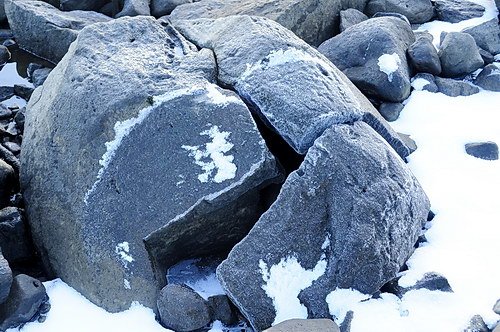
How does freezing water cause the weathering of rocks?  The freezing water—
a)
keeps the rocks in place.
b)
makes the rocks last longer.
c)
expands cracks and breaks rocks.
d)
causes rocks to fall in landslides.
28.
The process that breaks down rocks and other materials on Earth's surface is called
a)
Weathering
b)
Erosion
c)
Deposition
d)
Decomposition
29.
Over long periods of time, deposition may change the Earth’s surface by _____.
a)
forming new land features.
b)
breaking down large rocks into smaller ones.
c)
washing away beaches.
d)
moving topsoil.
30.
A cliff formed near the ocean.  Which statement best describes how this cliff formed?
a)
Warm air melted the rock.
b)
Sun rays evaporated the rock.
c)
Ocean waves washed away rock.
d)
Plant roots pushed away the rock.
31.
What is the process that picks up and moves weathered rocks?
a)
Deposition
b)
Landslide
c)
Weathering
d)
Erosion
32.
Deposition changes the Earth’s surface because bits of broken rock and soil _____.
a)
stop rivers from flowing.
b)
make rich farmlands.
c)
are dropped in new places.
d)
move very slowly.
33.
What causes the greatest erosion effect on our beaches?
a)
Waves
b)
Gravity
c)
Glaciers
d)
Wind
34.
The process by which water, ice, wind, or gravity moves weathered rock and soil from one place to another.
a)
Weathering
b)
Erosion
c)
Deposition
d)
Crop Rotation
35.
Which of these is an example of erosion?
a)
Light shining onto a mountain.
b)
Rain breaking down rocks on a mountain into smaller pieces. 
c)
Wind blowing away sediment to a new place on the mountain.
d)
All of the above.
36.
Layers of sediment forming at the bottom of the ocean floor is an example of
a)
Weathering
b)
Erosion
c)
Deposition
d)
Awesome Science
37.
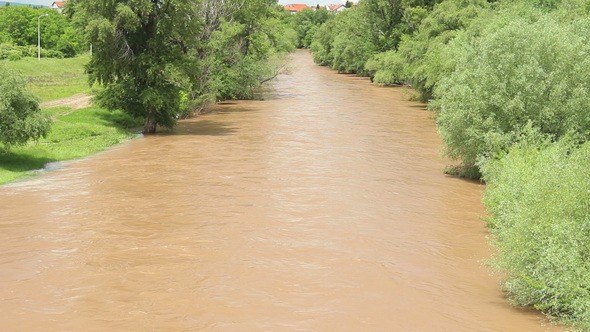
Muddy water being carried away by a fast-moving river is an example of
a)
Weathering
b)
Erosion
c)
Deposition 
d)
A nice place to swim
38.
What is an enormous mass of ice moving over land, causing weathering of rock and soil?
a)
A glacier
b)
An iceberg
c)
An ice wedge
d)
A sand dune
39.
How do plants weather rocks?
a)
During photosynthesis
b)
When roots grow into cracks of rocks and expand the rock breaks.
c)
When the plant moves water from the roots to the leaves, the rock breaks.
d)
Plants don't weather rocks.
40.
What is the wearing away or breaking down of rocks called?
a)
Deposition
b)
Erosion
c)
Glaciers
d)
Weathering
41.
Flood water pounding against a canyon wall and wearing it down is an example of
a)
Weathering
b)
Erosion
c)
Deposition
d)
An avalanche
42.
Which of the following is NOT a slow change to Earth's surface?
a)
Weathering
b)
Erosion
c)
Deposition
d)
Landslides
43.
Which of the following is NOT a fast change in Earth's surface?
a)
Landslides
b)
Erosion
c)
Volcanoes Erupting
d)
Earthquakes
44.
Wind blows sand onto rocks and slowly breaks down the rock
a)
Mechanical Weathering
b)
Chemical Weathering
c)
Erosion
d)
Deposition
45.
A mudslide dumps a large pile of mud onto a road
a)
Mechanical Weathering
b)
Chemical Weathering
c)
Erosion
d)
Deposition
46.
Water gets into cracks of a rock, when the water freezes it breaks up the rock
a)
Mechanical Weathering
b)
Chemical Weathering
c)
Erosion
d)
Deposition
47.
Waves wash sand onto land until a beach is formed
a)
Mechanical Weathering
b)
Chemical Weathering
c)
Erosion
d)
Deposition
48.
A flash flood washes away the side of a river bank
a)
Mechanical Weathering
b)
Chemical Weathering
c)
Erosion
d)
Deposition
49.
A river carries dirt and mud out of the land it runs through
a)
Mechanical Weathering
b)
Chemical Weathering
c)
Erosion
d)
Deposition
50.
Wind blows sand into the desert where it collects in giant piles called sand dunes
a)
Mechanical Weathering
b)
Chemical Weathering
c)
Erosion
d)
Deposition
51.
The thinnest layer of the Earth is the ___________.
a)
mantle
b)
crust
c)
core
52.
Tectonic plates are made up of continental crust and ________ crust.
a)
continental
b)
oceanic
c)
plates
d)
mantle
53.
There are how many different types of crust?
a)
1
b)
2
c)
5
d)
3
54.
What is the thickest layer of the Earth?
a)
the crust
b)
the mantle
c)
the outer core
d)
the inner core
55.
What is the core made of?
a)
steel
b)
iron 
c)
aluminum
d)
iron and nickel
56.
What describes the outer core?
a)
solid
b)
liquid
c)
viscous
d)
gas
57.
Why is the inner core solid?
a)
its unknown
b)
what it's made of
c)
the pressure
d)
it is colder than the outer core
58.
Which layer of the Earth is the only liquid layer?
a)
Outer Core
b)
Inner Core
c)
Mantle
d)
Lithosphere
59.
Which layer(s) of the Earth make up the asthenosphere?
a)
Part of the mantle
b)
Crust, mantle, Core
c)
Crust and upper mantle
d)
Only the crust
60.
What is the correct order (starting from the surface) of Earth's layers?
a)
crust, outer core, inner core, mantle
b)
mantle, outer core, inner core, crust
c)
crust, mantle, outer core, inner core
d)
outer core, inner core, crust, mantle
61.
What layer is a semisolid and acts like a plastic?
a)
Lithosphere
b)
Mantle
c)
Asthenosphere
d)
crust
62.
The oceanic floor is made of?
a)
Granite
b)
Basalt
c)
Cookies
d)
Water
63.
The continental floor is made up of?
a)
Flowers and grass
b)
Basalt
c)
Granite
d)
Crust
64.
What happens to pressure as we move from the crust to the inner core?
a)
Pressure Decreases
b)
Pressure Increases
c)
Nothing
65.
What happens to temperature as we move from the crust to the inner core?
a)
Decreases
b)
Increases
c)
Nothing
66.
Less dense materials rise to the top.
a)
True
b)
False
67.
Which layer of Earth has the GREATEST density?
a)
crust
b)
mantle
c)
outer core
d)
inner core
68.
Which layer of Earth is made up of tectonic plates?
a)
outer core
b)
inner core
c)
asthenosphere
d)
lithosphere
69.
Which of these layers is ALL solid iron and nickle?
a)
inner core
b)
outer core
c)
lithosphere
d)
mesosphere
70.
Which of the following occurs because of convection currents?
a)
Tectonic plates on the crust move.
b)
The mantle increases in size.
c)
Pressure in the crust increases.
d)
Pressure in the crust decreases.
71.
The area around the pacific plate where boundaries form is called...
a)
death ring
b)
fire zone
c)
ring of fire
d)
zone of fire
72.
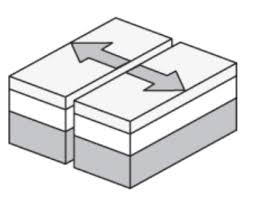
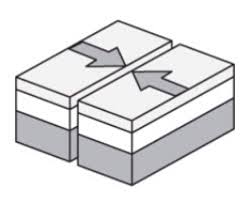
Name the boundary
a)
convergent boundary
b)
divergent boundary
c)
transform boundary
d)
sergent boundary
73.
Name the boundary
a)
convergent boundary
b)
divergent boundary
c)
transform boundary
d)
sergent boundary
74.
This layer of Earth is the thickest part
a)
crust
b)
outer core
c)
mantle
d)
inner core
75.
What describes the outer core?
a)
solid
b)
liquid
c)
viscous
d)
gas
76.
Who is the scientist who proposed Continental Drift Theory?
a)
Albert Einstein
b)
Alfred Wegener
c)
Isaac Newton
d)
John Dalton
77.
What is the theory that states that parts of the Earth's crust slowly drift atop a liquid core.
a)
Theory of Evolution
b)
Heliocentric Theory
c)
Geocentric Theory
d)
Continental Drift Theory
78.
What do you call the evidence of Wegener's Theory that tells about the remains of an organism that lived long time ago?
a)
Ashes
b)
Bones
c)
Follicles
d)
Fossils
79.
What are the two continents the fits together based on Wegener's Theory?
a)
Asia and Russia
b)
India and Asia
c)
South America and Africa
d)
Africa and Asia
80.
What is the definition of CONDUCTION?
a)
When heat is transferred from objects like rays of light or electromagnetically.
b)
a  hot liquid or air that  expands, becomes less dense, and rises or becomes more dense, and sinks.
c)
When heat transfers from objects that are touching.
d)
When heat transfers through the heater or AC in your house.
81.
What kind of heat transfer happens when the sun is heating your body?
a)
Conduction
b)
Radiation
c)
Convection
d)
Density
82.
What heat transfer happens when you burn your hand by touching a fire?
a)
Radiation
b)
Conduction
c)
Convectio
d)
I don't know!!!!!!!!!!!
83.
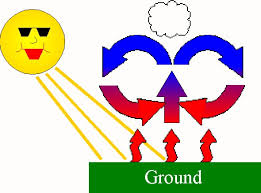
Warm air rises and the cool air sinks demonstrates this type of heat transfer. 
a)
conduction
b)
convection
c)
radiation
d)
Insolation 
84.
Ironing a shirt is an example of...
a)
condensation
b)
conduction
c)
convection
d)
radiation
85.
Warm air is __________ dense than cold air and rises creating convection currents.
a)
more
b)
less
86.
Johnny accidentally grabbed the handle of the hot pot.
a)
conduction
b)
convection
c)
radiation
87.
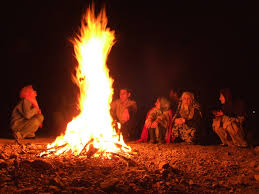
A group of friends gather around a fire to stay warm.
a)
conduction
b)
convection
c)
radiation
88.
Transfer of thermal energy through "space"
a)
conduction
b)
convection
c)
radiation
89.
The way the heat is moving from the hot coffee is called...
a)
convection
b)
radiation
c)
insulation
d)
conduction
90.
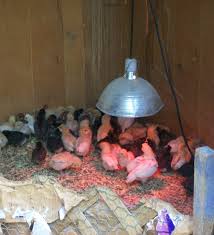
The baby chickens are kept warm from the heat lamps demonstrates this type of heat transfer. 
a)
conduction
b)
convection
c)
radiation
91.
Conduction occurs in...
a)
solids
b)
liquids
c)
gases
92.
Considering that convection is driven by differences in temperature, double-pane windows are most likely used to 
a)
create a convection current from the outside air to the inside air.
b)
increase the rate of heat flow to the outside air 2
c)
create a convection current from the inside air to the outside air.
d)
decrease the rate of heat flow to the outside air.
93.
During a heat transfer demonstration, students observed water being pumped around a closed loop in an engine. The moving water carries heat from the hot engine to the radiator. Which type of heat transfer is involved when the cooler water absorbs heat while in contact with the hot engine?
a)
Convection
b)
Conduction
c)
Insulation
d)
Radiation
94.
Heat would best be transferred by conduction between
a)
a candle and the air.
b)
an oven and a glass dish.
c)
a stove and a copper pot.
d)
water and a wooden spoon
95.
Carole owns a two story house with a heating and cooling unit on each floor. In the winter she mostly uses the downstairs unit because the volume of warm air __________ and __________ warming the whole house through __________.
a)
expands, rises, convection
b)
expands, sinks, conduction
c)
contracts, rises, conversion
d)
contracts, sinks, contraption
96.
Why does food wrapped in aluminum foil keep warm for a long time?
a)
Aluminum foil is an insulator and prevents heat loss by conduction.
b)
Aluminum foil forms an air-tight seal and prevents heat loss by convection.
c)
The silver surface of the foil reflects heat in and prevents heat loss by radiation.
d)
The silver surface of the foil absorbs heat from the surroundings and keeps the food warm.
97.
A toaster toasting bread is an example of 
a)
condensation
b)
conductio
c)
convection
d)
radiation
98.
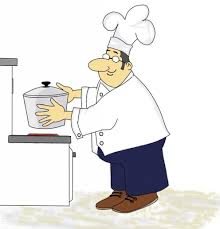
The man goes to take the hot pot off the stove with his bare hands.
a)
conduction
b)
convection
c)
radiation
99.
What happens when ice cubes melt in a glass?
a)
Heat travels from the ice to the warmer water.
b)
No energy is transferred.
c)
Heat is transferred from the warmer water to the ice cubes.
d)
The water warms up due to the humidity
100.
Hot coffee is stirred with a spoon; the spoon gets hot due to
a)
conduction
b)
convection
c)
radiation
101.
A chair is several feet from a fireplace. The side of the chair facing the fireplace gets warm due to
a)
conduction
b)
convection
c)
radiation
102.
"Lava lamps" contain colored liquids. These liquids form globs that rise to the top due to
a)
conduction
b)
convection
c)
radiation
103.
Near the ceiling of a room the air is warmer; the warm air rises because of
a)
conduction
b)
convection
c)
radiation
104.
Some cook pans have cooper on the bottom to heat evenly.
Copper transfers heat to the pan by
a)
conduction
b)
convection
c)
radiation
105.
In a swimming pool, water near the surface is slightly warmer. The warm water rises because of
a)
conduction
b)
convection
c)
radiation
106.
The metal skewer gets so hot that you drop your marshmallow into the campfire because of
a)
conduction
b)
convection
c)
radiation
107.
A house burns down. The vinyl siding of the house next door warps due to
a)
conduction
b)
convection
c)
radiation
108.
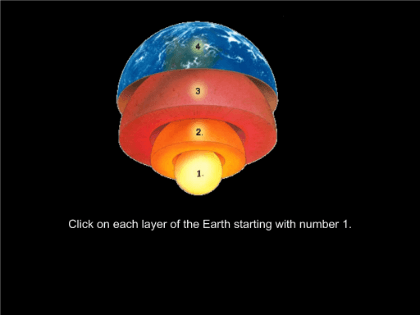
Which layer is the OUTER CORE?
a)
1
b)
2
c)
3
d)
4
109.
Which layer is the MANTLE?
a)
1
b)
2
c)
3
d)
4
110.
Which layer is the CRUST?
a)
1
b)
2
c)
3
d)
4
111.
Which layer is the THICKEST layer?
a)
Core
b)
Mantle
c)
Crust
112.
Which layer is the INNER CORE?
a)
1
b)
2
c)
3
d)
4
113.
The core is made up of which 2 metals?
a)
Iron and Nickel
b)
Iron and Bronze
c)
Nickel and Steel
d)
Iron and Steel
114.
Which layer is the HOTTEST layer?
a)
Core
b)
Mantle
c)
Crust
115.
Which layer is the layer we walk on?
a)
Core
b)
Mantle
c)
Crust
116.
Which layer is the THINNEST?
a)
Core
b)
Mantle
c)
Crust
117.
Which crust is thicker
a)
ocean
b)
continental
c)
bread
d)
pizza
118.
The lithosphere combines what two layers?
a)
Athenosphere & Crust
b)
Crust & Upper Mantel
c)
Mantel & Athenosphere
119.
What happens to pressure as we move from the crust to the inner core?
a)
Pressure Decreases
b)
Pressure Increases
c)
Nothing
120.
What happens to temperature as we move from the crust to the inner core?
a)
Decreases
b)
Increases
121.
Which layer of the earth has the lowest temperature?
a)
Crust
b)
Mantle
c)
Outer Core
d)
Inner Core
122.
Why is the inner core solid?
a)
its unknown
b)
what it's made of
c)
the pressure
d)
it is colder than the outer core
123.
What layer is a semisolid and acts like a plastic?
a)
Lithosphere
b)
Mantle
c)
Asthenosphere
124.
The oceanic floor is made of?
a)
Granite
b)
Basalt
c)
Cookies
d)
Water
125.
The continental floor is made up of?
a)
Flowers and grass
b)
Basalt
c)
Granite
d)
Crust
126.
The thinnest layer of the Earth is?
a)
Mantle
b)
Lithosphere
c)
Athenosphere
d)
Crust
127.
The asthenosphere makes up the?
a)
Upper portion of the mantel
b)
The lower portion of the crust
c)
Just the Athenosphere
128.
This layer of Earth is solid Iron and Nickel
a)
Outer Core
b)
Mantle
c)
Inner Core
d)
Crust
129.
What is the name of the layer that contains the uppermost mantle and crust
a)
Asthenosphere
b)
Mesosphere
c)
Lithosphere
d)
Transosphere
130.
This layer of Earth is the thickest part
a)
crust
b)
outer core
c)
mantle
d)
inner core
131.
What are the two types of crust
a)
continental and oceanic
b)
ocean and upper
c)
lower and upper
d)
pizza and subway
132.
Identify layer  #20.
a)
mantle
b)
asthenosphere
c)
inner core
d)
outer core
133.
Scientists determine what Earth’s interior looks like by using:
a)
Volcanoes
b)
Seismic Waves
c)
Continental Drift
d)
Convection Currents
134.
Which layer of the earth has the lowest temperature?
a)
Crust
b)
Mantle
c)
Outer Core
d)
Inner Core
135.
Which layer of the earth is under the highest pressure?
a)
Crust
b)
Mantle
c)
Outer Core
d)
Inner Core
136.
Less dense materials rise to the top.
a)
True
b)
False
137.
Oceanic crust is thicker than continental crust.
a)
True
b)
False
138.
What is the correct order (starting from the surface) of Earth's layers?
a)
crust, outer core, inner core, mantle
b)
mantle, outer core, inner core, crust
c)
crust, mantle, outer core, inner core
d)
outer core, inner core, crust, mantle
139.
Which layer of Earth has the GREATEST density?
a)
crust
b)
mantle
c)
outer core
d)
inner core
140.
Heat transfer within a fluid takes place by...
a)
convection currents
b)
radiation
c)
conduction
d)
density
141.
The thinnest layer of the Earth is?
a)
Mantle
b)
Lithosphere
c)
Athenosphere
d)
Crust
142.
The lithosphere combines what two layers?
a)
Athenosphere & Crust
b)
Crust & Upper Mantel
c)
Mantel & Athenosphere
143.
This layer of Earth is solid Iron and Nickel
a)
Outer Core
b)
Mantle
c)
Inner Core
d)
Crust
144.
What is the name of the layer that contains the uppermost mantle and crust
a)
Asthenosphere
b)
Mesosphere
c)
Lithosphere
d)
Transosphere
145.
This layer of Earth is the thickest part
a)
crust
b)
outer core
c)
mantle
d)
inner core
146.
What are the two types of crust
a)
continental and oceanic
b)
ocean and upper
c)
lower and upper
d)
pizza and subway
147.
Identify layer  #20.
a)
mantle
b)
asthenosphere
c)
inner core
d)
outer core
148.
Scientists determine what Earth’s interior looks like by using:
a)
Volcanoes
b)
Seismic Waves
c)
Continental Drift
d)
Convection Currents
149.
Which layer of the earth has the lowest temperature?
a)
Crust
b)
Mantle
c)
Outer Core
d)
Inner Core
150.
Which layer of the earth is under the highest pressure?
a)
Crust
b)
Mantle
c)
Outer Core
d)
Inner Core