
 Worksheets
Weather & Climate Unit Test Review, #Educreatord12
Total questions: 145
Worksheet time: 2hrs 1mins

Which type of Weather Front is shown in the image?
Warm front
Cold front
Stationary front
Occluded front

Which type of Weather Front is shown in the image?
Cold front
Warm front
Stationary front
Occluded front
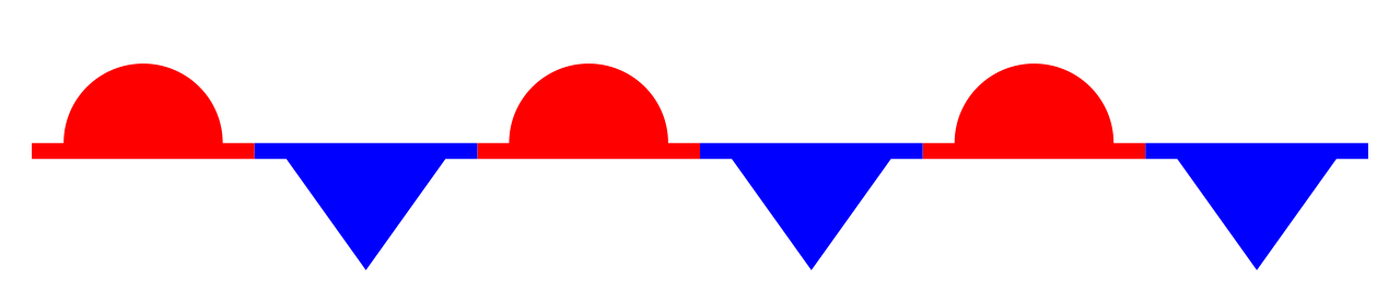
Which type of Weather Front is shown in the image?
Warm front
Cold front
Stationary front
Occluded front

Which type of Weather Front is shown in the image?
Cold
Warm
Stationary
Occluded
Where do Weather Fronts form?
Between two of the same air masses
Between two different air masses
Fill in the blanks: Warm air ________ while cool/cold air _________.
Sinks; Rises
Rises: Sinks
High Pressure Systems typically signal ___________ weather.
Fair/clear weather with sunny skies and dry air
Rainy/stormy weather with warmer temperatures and wet/moist air
Low Pressure Systems typically signal ___________ weather.
Fair/clear weather with sunny skies and dry air
Rainy/stormy weather with warmer temperatures and wet/moist air
Which of the following symbols represents a High Pressure System?


Which of the following symbols represents a Low Pressure System?
Which type of weather occurs as a result of a Warm Front?
Precipitation that stays in one area for days
Long periods of precipitation and snowstorms in northern parts of the US
Light rain, humid temperatures, & warmer weather
Which type of weather occurs as a result of a Cold Front?
Precipitation that stays in one area for days
Thunderstorms, cooler temperatures, and sometimes tornadoes
Long periods of precipitation and snowstorms in northern parts of the US
Which type of weather occurs as a result of a Stationary Front?
Precipitation that stays in one area for days
Thunderstorms, cooler temperatures, and sometimes tornadoes
Light rain, humid temperatures, & warmer weather
Which type of weather occurs as a result of a Occluded Front?
Thunderstorms, cooler temperatures, and sometimes tornadoes
Long periods of precipitation and snowstorms in northern parts of the US
Light rain, humid temperatures, & warmer weather
Which of the following descriptions represents a Warm Front?
When a cold air mass collides and slides under a warm air mass
When a cold air mass pushes into a warm air mass and moves it out of the way
When a warm air mass collides and rides over a cold air mass
Which of the following descriptions represents a Cold Front?
When a cold air mass collides and slides under a warm air mass
When a warm air mass collides and rides over a cold air mass
When neither a cold air mass nor a warm air mass moves at a frontal boundary
Which of the following descriptions represents a Stationary Front?
When a cold air mass collides and slides under a warm air mass
When a cold air mass pushes into a warm air mass and moves it out of the way
When neither a cold air mass nor a warm air mass moves at a frontal boundary
Which of the following descriptions represents a Occluded Front?
When a cold air mass collides and slides under a warm air mass
When a cold air mass pushes into a warm air mass and moves it out of the way
When neither a cold air mass nor a warm air mass moves at a frontal boundary
What are Air Masses?
Small pockets of air that do not have the same temperature, humidity, and air pressure throughout
Huge pockets of air that have the same temperature, humidity, and air pressure throughout
Where do Maritime Air Masses form?
Over the ocean
On land
Where do Continental Air Masses form?
Over the ocean
On land
Where do Polar Air Masses form?
Near the Equator
Near the Poles (North & South)
Where do Tropical Air Masses form?
Near the Equator
Near the Poles (North & South)
Tropical Air Masses bring __________ air.
Warmer
Cold
Polar Air Masses bring __________ air.
Warmer
Cold
Maritime Air Masses bring _________ air.
Wet/Moist
Dry
Continental Air Masses bring _________ air.
Wet/Moist
Dry
Which of the following describes a Continental Polar Air Mass?
Forms over land (contains dry air) and forms near the Poles (contains cold air)
Forms over land (contains dry air) and forms near the Equator (contains warmer air)
Forms over the ocean (contains wet/moist air) and forms near the Equator (contains warmer air)
Which of the following describes a Continental Tropical Air Mass?
Forms over the ocean (contains wet/moist air) and forms near the Poles (contains cold air)
Forms over land (contains dry air) and forms near the Poles (contains cold air)
Forms over land (contains dry air) and forms near the Equator (contains warmer air)
Which of the following describes a Maritime Tropical Air Mass?
Forms over land (contains dry air) and forms near the Poles (contains cold air)
Forms over land (contains dry air) and forms near the Equator (contains warmer air)
Forms over the ocean (contains wet/moist air) and forms near the Equator (contains warmer air)
Which of the following describes a Maritime Polar Air Mass?
Forms over the ocean (contains wet/moist air) and forms near the Poles (contains cold air)
Forms over land (contains dry air) and forms near the Poles (contains cold air)
Forms over the ocean (contains wet/moist air) and forms near the Equator (contains warmer air)

Which circle represents a Continental Polar Air Mass?
Green
Blue
Red
Which circle represents a Maritime Tropical Air Mass?
Green
Blue
Red
Is the orange circle on land or over water?
On land
Over water
Red
Would the red circle be considered Maritime or Continental?
Continental
Maritime
Sara wants to travel to an area with dry air and warmer temperatures. Which TWO areas could Sara travel to?
Purple and Red
Blue and Green
Which of the following types of weather are associated with a Thunderstorm?
Very strong winds, severe rain, and flooding
Lightning, thunder, wind, rain, and hail/snow
High winds and produced by severe thunderstorms (Cumulonimbus Clouds)
Which of the following types of weather are associated with a Hurricane?
Very strong winds, severe rain, and flooding
Lightning, thunder, wind, rain, and hail/snow
High winds and produced by severe thunderstorms (Cumulonimbus Clouds)
Which of the following types of weather are associated with a Tornado?
Very strong winds, severe rain, and flooding
Lightning, thunder, wind, rain, and hail/snow
High winds and produced by severe thunderstorms (Cumulonimbus Clouds)
Which of the following are necessary for a hurricane to grow stronger?
Moisture
Waves
Heat
Salt
A _________ can form when a rapidly spinning column of low pressure air called a funnel cloud touches the ground.
Tornado
Thunderstorm
Hurricane
How do the conditions for a tornado differ from the conditions for a hurricane?
Tornadoes never form where there is rain, while hurricanes always form with rain.
Tornadoes form under low pressure, while hurricanes form under high pressure.
Tornadoes form in a stable atmosphere, while hurricanes form in an unstable atmosphere.
Tornadoes generally form over land, while hurricanes form over bodies of water.
True or False: Tornados can form over land and water.
True
False
This type of severe weather produces the highest winds speeds.
Hurricane
Thunderstorm
Tornado
This type of severe weather produces very low temperatures, snow, high winds, and sometimes ice.
Snow Storm
Thunderstorm
Tornado
Hurricane
Which of the following describes the atmosphere?
the layer in which weather occurs
the layer that contains the ozone layer
the layer of water in the oceans
the layer of gases that surrounds Earth
What is the layer of gases that surrounds the planet and makes conditions on Earth suitable for living things?
gravity
air pressure
density
atmosphere
Which of the following describes the Thermosphere?
The closest layer to Earth's surface where weather and clouds are found
The coldest layer where meteors burn up and shooting/falling stars occur
The layer in which the ozone layer and weather balloons are found
The warmest layer where Aurora Borealis (The Northern Lights) can be seen
Which of the following describes the Troposphere?
The closest layer to Earth's surface where weather and clouds are found
The coldest layer where meteors burn up and shooting/falling stars occur
The layer in which the ozone layer and weather balloons are found
The warmest layer where Aurora Borealis (The Northern Lights) can be seen
Which of the following describes the Stratosphere?
The closest layer to Earth's surface where weather and clouds are found
The coldest layer where meteors burn up and shooting/falling stars occur
The layer in which the ozone layer and weather balloons are found
The warmest layer where Aurora Borealis (The Northern Lights) can be seen
Which of the following describes the Mesosphere?
The closest layer to Earth's surface where weather and clouds are found
The coldest layer where meteors burn up and shooting/falling stars occur
The layer in which the ozone layer and weather balloons are found
The warmest layer where Aurora Borealis (The Northern Lights) can be seen
Which of the following describes the Exosphere?
The closest layer to Earth's surface where weather and clouds are found
The coldest layer where meteors burn up and shooting/falling stars occur
The layer located at the edge of the atmosphere (Outer Space) where Weather Satellites orbit
The warmest layer where Aurora Borealis (The Northern Lights) can be seen
Which layer has the highest/greatest air pressure?
Troposphere
Exosphere
Thermosphere
Stratosphere
Which layer has the lowest air pressure?
Troposphere
Exosphere
Thermosphere
Stratosphere
What happens to air pressure as you go up into the atmosphere?
It stays the same
It increases
It decreases
Which of the following represents the order of the Earth's atmospheric layer from closest to Earth Surface to furthest away?
Exosphere, Mesosphere, Thermosphere, Stratosphere, Troposphere
Troposphere, Stratosphere, Mesosphere, Thermosphere, Exosphere
Stratosphere, Troposphere, Thermosphere, Mesosphere, Exosphere
Exosphere, Thermosphere, Mesosphere, Stratosphere, Troposphere
In which atmospheric layer(s) does the temperature steadily decrease as you increase altitude?
troposphere
stratosphere
mesosphere
thermosphere
exosphere
In which atmospheric layer(s) does the temperature steadily increase as you increase altitude?
troposphere
stratosphere
mesosphere
thermosphere
exosphere
The atmosphere is divided into layers based primarily on
temperature differences
density differences
air pressure differences
weather differences
Atmospheric pressure _________________ with ___________________ altitude.
decreases with increased
decreases with decreased
increases with increased
The infamous ozone layer is found within this layer. Ozone molecules in this layer absorb high-energy ultraviolet (UV) light from the Sun, converting the UV energy into heat. Unlike the troposphere, the layer actually gets warmer the higher you go! That trend of rising temperatures with altitude means that air in the stratosphere lacks the turbulence and updrafts of the troposphere beneath. Commercial passenger jets fly in the lower part, because this less-turbulent layer provides a smoother ride. The jet stream flows in this layer.
Exosphere
Thermosphere
Mesosphere
Stratosphere
Troposphere
The layer humans live in, and nearly all weather occurs in this lowest layer. Most clouds appear here, mainly because 99% of the water vapor in the atmosphere is found here. Air pressure drops, and temperatures get colder, as you climb higher.
Exosphere
Thermosphere
Mesosphere
Stratosphere
Troposphere
The "air" is very, very, very thin, making this layer even more space-like than the thermosphere. In fact, the air is constantly - though very gradually - "leaking" out of Earth's atmosphere into outer space. There is no clear-cut upper boundary. High Earth Orbit satellites can be found here.
Troposphere
Mesosphere
Stratosphere
Thermosphere
Exosphere
Most meteors burn up in this layer. Unlike the stratosphere, temperatures once again grow colder as you rise. The coldest temperatures in Earth's atmosphere, about -90° C (-130° F), are found near the top of this layer. The air is far too thin to breathe; air pressure at the bottom of the layer is well below 1% of the pressure at sea level, and continues dropping as you go higher.
Troposphere
Mesosphere
Stratosphere
Thermosphere
Exosphere
Many satellites actually orbit Earth within this layer, including the International Space Station. Variations in the amount of energy coming from the Sun exert a powerful influence on both the height of the top of this layer and the temperature within it. The aurora, the Northern Lights and Southern Lights, occur here. Another name for this layer is the “heat” layer.
Troposphere
Mesosphere
Stratosphere
Thermosphere
Exosphere

Using the graph, answer the following question. In these two layers, the temperature increases as the altitude increases.
Troposphere & Mesosphere
Stratosphere & Thermosphere
Troposphere & Thermosphere
Troposphere & Stratosphere
Using the graph, answer the following question. In these two layers, the temperature decreases as altitude increases.
Troposphere & Mesosphere
Stratosphere & Thermosphere
Troposphere & Thermosphere
Troposphere & Stratosphere
Which two answers describe the Troposphere?
Layer closest to earth
The hottest layer
Layer farthest from earth
Where weather occurs
As a part of the water cycle, water from Earth's surface enters the clouds and finally falls back to the ground in the form of rain. What is the correct sequence of processes water undergoes?
Evaporation, Condensation, Precipitation
Precipitation, Condensation, Evaporation
Condensation, Evaporation, Precipitation
Evaporation, Precipitation, Condensation

The image shows various stages in the water cycle. During which stage does water flow back towards the sea as runoff?
W
X
Y
Z
What is precipitation?
Sweat from our bodies on hot days
Warm rain but not cold snow or sleet
Gas that we use in furnaces or ovens
Any form of water that falls from the sky
Condensation occurs when water vapor_____________.
heats up and becomes liquid water
cools off and becomes liquid water
freezes and becomes ice
rains on the land
The process when plants release water vapor from their leaves is called _____________.
precipitation
evaporation
transpiration
condensation

What step of the water cycle does this picture show?
Condensation
Runoff
Precipitation
Evaporation

Which best explains why runoff is important?
It returns water to other locations on Earth
It increases the chance of flooding
It makes evaporation occur faster
It increases condensation
When water changes from a liquid to a solid it is known as...
melting.
condensation.
freezing.
evaporation.
In which area would the rate of evaporation be the lowest?
Over the ocean
Over the mountains
Over the rainforest
Over the desert
An underground layer of sand, gravel or rock that stores and carries water
water table
water cycle
aquifer
Infiltration
Turns frozen water into water vapors - skipping the melting stage
Sublimation
Percolation
Transpiration
Evaporation
Water running off the land surface
Evaporation
Sublimation
Transpiration
Run-off
When clouds get too heavy and water falls back to earth in the form of rain, snow, hail or other forms.
Precipitation
Evaporation
Percolation
Transpiration

What are formed when water vapor condenses and come together?
Clouds
Mountains
Transpiration
Valleys
When water vapor is cooled and forms droplets of liquid water
Condensation
Evaporation
Transpiration
Runoff

What type of clouds are white and feathery?
Cirrus
Stratus
Cumulonimbus
Cumulus
What type of clouds are smooth, gray, and blanket-like?
Cirrus
Stratus
Cumulonimbus
Cumulus
What type of clouds are white and fluffy?
Cirrus
Stratus
Cumulonimbus
Cumulus
What type of clouds are dark gray and fluffy?
Cirrus
Stratus
Cumulonimbus
Cumulus
What type of clouds indicate good/ fair weather?
Cirrus
Stratus
Cumulonimbus
Cumulus
What type of clouds indicate good/ fair weather, but it could rain later in the day?
Cirrus
Stratus
Cumulonimbus
Cumulus
What type of clouds indicate sleet, light rain, or light snow?
Cirrus
Stratus
Cumulonimbus
Cumulus
What type of clouds indicate big storms and lots of rain?
Cirrus
Stratus
Cumulonimbus
Cumulus

What type of clouds are these?
Cirrus
Stratus
Cumulonimbus
Cumulus

What type of clouds are these?
Cirrus
Stratus
Cumulonimbus
Cumulus

What type of clouds are these?
Cirrus
Stratus
Cumulonimbus
Cumulus

What type of clouds are these?
Cirrus
Stratus
Cumulonimbus
Cumulus
How do the conditions of a tornado differ from the conditions of a hurricane?
Tornadoes never form where there is rain, while hurricanes always form with rain.
Tornadoes form under low pressure, while hurricanes form under high pressure.
Tornadoes form in a stable atmosphere, while hurricanes form in an unstable atmosphere.
Tornadoes generally form over land, while hurricanes form over bodies of water.
Residents in a seaside town experience onshore breezes from the ocean during hot sunny days and offshore breezes from the land during cool nights. How does the ocean affect this pattern?
Warm air sinks over the ocean and moves onto land
Cold air rises over the land and moves over the ocean
The land heats and cools faster than the ocean heats and cools
The ocean heats and cools faster than the land heats and cools
A weather balloon is about 2 meters wide when it is near the ground. It grows to about 6 meters wide at higher altitudes. Which change most likely makes the balloon grow wider at higher altitudes?
More gases enter the balloon
The gas inside the balloon gets much hotter
Sunlight breaks down the material
The air pressure surrounding the balloon decreases
Which of these actions causes wind?
Uneven heating of Earth’s surface
Rotation of Earth on its axis
Movement of air from water to land
Air passing Earth as it revolves around the Sun
Which process directly adds Carbon into the atmosphere?
Increasing plant populations
Burning fossil fuels
Decreasing animal populations
Forming sedimentary rock
Cumulonimbus clouds often form along cold fronts. Which type of weather is most likely to occur along a cold front?
Moderate temperatures with mild breezes
Storms with hurricane winds
Rain with possible severe thunderstorms
High temperatures with low winds
If a northern coastline such as the Norway coast is located near a warm ocean current:
The climate will be colder than normal for that latitude
The climate will be warmer than normal for that latitude
Spring is longer than normal for that latitude
Spring is shorter than normal for that latitude
Which of these could cause water vapor to condense into rain droplets?
Air rising into colder regions of the atmosphere
Sunlight warming the surface of the oceans
Lightning heat the air in the atmosphere
Winds blowing along the surface of the ground
How does the latitude of a region affect its climate?
By increasing the length of days throughout the year
By increasing the amount of energy the land can absorb
By determining the angle of sunlight throughout the year
By determining the rate that tectonic plates move
The oceans most influence global climate by
Releasing heat to the atmosphere
Cooling bordering land masses
Providing continuous onshore winds
Removing water vapor from the atmosphere
Which of these events is an example of climate change?
Afternoon clouds form and block the sun
A series of tornadoes occurs over a one-week period
An overnight temperature drop causes frost to form
The average amount of annual precipitation decreases
Which of the following can be seen in a satellite image?
A high-pressure system
A tornado's funnel rotation
Cirrus clouds
Hurricane clouds
Hurricanes are large, powerful storms that form as they travel over warm ocean waters. Choose the two things that oceans add to make hurricanes so powerful.
Salt
Heat
Moisture
Waves
Two cities are located only 50 kilometers apart, but have different climates. Which of these factors is the most likely cause of this difference in climate?
Elevation
Population
Latitude
Longitude
Which property of water vapor allows it to function as a greenhouse gas?
Water vapor expands when exposed to sunlight
Water vapor absorbs and re-emits heat radiated from Earth
Water vapor changes ultraviolet radiation into carbon dioxide
Water vapor transmits heat as solar radiation

A High-Pressure System (H) is moving to the Southeast as shown on the weather map. Cold air is usually found north and west of a high-pressure system. Warm air is to the south and east of the front. Continental air is drier while oceanic air has more moisture. Based on this information, which is the best prediction for weather one day after the system passes the point marked X?
Wet air with cooler temperatures
Drier air with cooler temperatures
Wet air with warmer temperatures
Drier air with warmer temperature
Which process in the Water Cycle is directly affected by the warming of the ocean water?
Collection
Evaporation
Precipitation
Runoff
What is the most abundant gas in Earth’s atmosphere?
Oxygen
Nitrogen
Carbon dioxide
Methane
Which is the correct symbol for a cold front?



Which of the following most affects the path of a weather system in the United States?
The width of the jet stream
The speed of the jet stream
The location of the jet stream
The temperature of the jet stream
A student reads the following statement: the presence of greenhouse gases in Earth’s atmosphere is important to Earth’s ability to support human life. How would Earth be different without greenhouse gases in the atmosphere?
More heat from solar radiation would escape into space
More solar radiation would be reflect back into space
More solar radiation would penetrate Earth’s crust and mantle
More heat from solar radiation would be stored in Earth’s core
Which of the following describes the Troposphere?
The closest layer to Earth's surface where weather and clouds are found
The warmest layer where Aurora Borealis (The Northern Lights) can be seen
The layer in which the ozone layer and weather balloons are found
The coldest layer where meteors burn up and shooting/falling stars occur
Christine is a Climate Scientist who wants to study the Ozone layer. Which layer of the atmosphere should she visit and what does the Ozone layer do?
Troposphere; The ozone layer contains the International Space Station
Mesosphere; The ozone layer spreads Nitrogen and Oxygen throughout planet Earth
Stratosphere; The ozone layer absorbs some of the harmful Ultraviolet Radiation (UV Rays) that come from the sun
Mr. Snow just bought a new kite and he is anxious to fly it. Before he flies it, he must be aware of the wind direction. Which instrument would he use?
Anemometer
Wind Vane
Rain Gauge
Barometer
Images from this help meteorologists see weather systems that are far away, show cloud cover over an area, and much more.
Satellite
Doppler Radar
Psychrometer
Hygrometer

Use the map below to answer the following question. What type of weather is Seattle experiencing?
Thunderstorms
Precipitation
Clear weather
High temperatures
Which statement correctly defines wind?
The movement of air from areas of low pressure to areas of high pressure
The movement of air to a colder area in the atmosphere.
The movement of air from areas of high pressure to areas of low pressure.
The movement of air pushed around and bouncing off Earth's surface.
What is the initial source for global winds and convection in the atmosphere?
heat from the Earth's core
the rotation of the Earth
Moon's gravity
unequal heating of the Earth by the sun
The Coriolis effect causes ___________.
the Earth to rotate on its axis
earthquakes
global winds to move in a curved path instead of a straight line
the Earth to revolve around the sun



