
 Worksheets
Daily Questions
Total questions: 145
Worksheet time: 2hrs 44mins
Peter has learned that many stars are actually larger than the sun. If this is true, why do these stars appear like tiny points of light in the night sky?
These stars are hotter than the sun.
These stars are farther away from Earth than the sun.
These stars have less mass than the sun
These stars are made of different chemicals than the sun.


There are about how many pandas in the world right now?
2,000
500
1,000
3,000
Surface tension is the property of water in which...
water molecules at the surface tend to stick together.
water spills easily.
water tends to be see-through.
water tends to push up into a dome over a container before it finally spills.
What is ecology?
the study of rocks
the study of relationships between organisms and their environments
the study of the ocean
the study of animals and plants


time
distance
weight
liquid volume

What is the SCALE of this graduated cylinder?
(Each line is what volume of liquid?)
1
2

What is the volume of this liquid?

What is the scale?
(What amount is each line?)
1 mL
2 mL
5 mL
10 mL

What is the volume?
(Think about the scale first)
23 mL
28 mL
36 mL
38 mL

What is the scale?
(What amount is each line?)
1 mL
2 mL
5 mL
10 mL

What is the volume?
(Think about the scale first)
42 mL
43 mL
44 mL
45 mL

What is the scale?
(What amount is each line?)
1 mL
2 mL
5 mL
10 mL

What is the volume?
(think about scale first)
205 mL
210 mL
220 mL
250 mL

What volume of liquid is this?
Click the picture to magnify.
70 mL
60 mL
74 mL
66 mL

What volume of liquid is this?
Click the picture to magnify.
16 mL
5 mL
4 mL
6 mL

What volume of liquid is this?
Click the picture to magnify.
24 mL
16 mL
17 mL
23 mL

What volume of liquid is this?
Click the picture to magnify.
82 mL
83 mL
97 mL
98 mL

What volume of liquid is this?
Click the picture to magnify.
51 mL
52 mL
48 mL
49 mL

What volume of liquid is this?
Click the picture to magnify.
57 mL
58 mL
55 mL
56 mL

What is the volume of water in this graduated cylinder in ml?
(a)

What is the volume of water in this graduated cylinder in ml?
(a)

What is the volume of water in this graduated cylinder in ml?
(a)

What is the volume of water in this graduated cylinder in ml?
(a)

Which object has the least volume?
the empty one
the button
the nail
the battery
the screw

Which of the following statements is an inference of the graph?
Weight is the measure of the force of ______ on an object.
Density
Mass
Matter
Gravity
Velocity
What statement is true?
Mass never changes. Weight does.
Weight never changes. Mass does.
Both mass and weight change because they are affected by gravity.
Neither mass nor weight change. They are always the same.
The mass of an object ___________ as it moves away from the center of Earth
stays the same
decreases
increases
doubles

Easy -- What mass does the object have?
521
21
520
501
Which of the following is considered a force of gravity?
weight
mass
Which of the following is associated with the amount of matter present?
weight
mass
Where would you weigh the most?
Earth
Mars
Jupiter
the moon
If the Earth's mass was cut in half, what would happen to your mass?
increase because gravitational force increases.
decrease because gravitational force increases.
decrease because gravitational force decreases.
nothing because mass is not affected by gravitational force.

Find the mass.
550.4 g
559.4 g
550.6 g

Measure the match stick in centimeters...
5.4 cm
5 cm
5 in
5.5 in

The engineering design process is an iterative process. This means
The engineering design process can not be used in all areas of engineering.
New ideas or information might make an engineer repeat parts of the process over and over
An engineer has to go through every step of the process twice before the solution is any good
All of the following are benefits of EDP except...
you can design your machine before building
you can analyze your data but can't make any changes
you can create something to solve a problem
you can research what others have done before you
How many variables do we want to test/change during a controlled experiment?
1
2
3
4
Which brand of paper towel will absorb the most liquid? What is the dependent variable?
brand of paper towel
amount of water absorbed

A scientist hypothesizes the the temperature at which an alligator's egg is incubated will determine whether the alligator will be male or female. The independent variable is
the male alligators
the gender of the alligator
the temperature
the incubator

What does mass measure?
the amount of stuff or matter in an object
the gravitational pull on an object
the amount of space something takes up
measure of how hot or cold something is
What does volume measure?
the amount of stuff or matter in an object
the gravitational pull on an object
the amount of space something takes up
the measure of how hot or cold something is
Why does ice float?
Liquid water is less dense than solid water.
Gaseous water is less dense than solid water
Solid water is less dense than liquid water.
Liquid water is less dense than gaseous water.

Put the liquids in order from most dense to least dense?
4, 3, 2, 1
3, 4, 2, 1,
1, 2, 3, 4
4, 3, 1, 2
What units are used to measure Density?
cm3/g
g/cm3
g
cm3
This type of energy is caused by motion.
Potential
Solar
Electrical
Kinetic
The energy stored in an object is called
Potential
Joule
Transformed
Kinetic
Which of the following answer choices is NOT an example of potential energy?
Running down a steep hill on vacation
Holding a basketball in practice
A drawn bow in an archer's hand
A baseball at its highest point in the air
Which of the following describes an energy transformation?
When energy is lost due to friction
An electric motor moving a car
A solar panel powering a home
A television projecting a show
What energy transformation occurs when I eat food & it gives my body the energy to run.
nuclear --> thermal
mechanical --> chemical
chemical --> mechanical
thermal --> nuclear
In all energy transformations, some energy is "lost" as what?
kinetic energy
potential energy
mechanical energy
thermal energy
What energy transformation occurs if a person cranks a handle & it causes a lightbulb to turn on?
mechanical --> electric
nuclear --> thermal
electric --> mechanical
kinetic --> potential

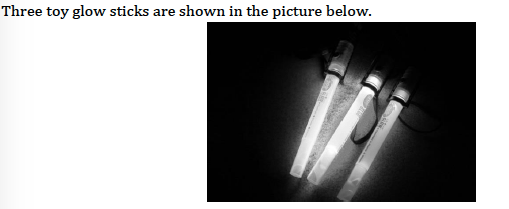
Which of these might spin a generator at a power plant to produce electricity?
wind
water
steam from burning coal
all of these

Identify the energy transfer
chemical to light
thermal to electrical
chemical to heat
electrical to thermal

What type of energy transformation happens in hydro-electric power?
kinetic to potential
sound to mechanical
chemical to electrical
mechanical to electrical
The process in which one kind of energy changes into another kind.
law of conservation of energy
energy
energy conversion
kinetic energy
What states that energy cannot be created or destroyed?
gravitational potential energy
elastic potential energy
law of conservation of energy
energy conversion

What was the function of the lunar modules (LM) attached to Apollo spacecraft?
They provided the thrust and power needed to escape the Earth's gravity.
They delivered astronauts from the main Apollo capsules to the moon's surface.
They enabled the Apollo capsules to land safely on Earth at the ends of their missions.
They contained the computers and radios the astronauts needed to maintain contact with Mission Control.
What decade saw the height of the "Space Race" between the United States and the Soviet Union?
the 1950's
the 1960's
the 1970's
the 1980's

What has left tons of "space junk" in orbit around the earth?
robots sent on space missions
years of space exploration
lack of recycling
missiles in outer space
Many telescopes have been launched into orbit around Earth or sent out into deep space. What is an advantage of using these telescopes rather than an Earth-bound telescope to gather images?
Telescopes launched into space are usually smaller than ones found on Earth
The images are usually clearer because they do not have to look through our atmosphere
It is easier for scientists to make adjustments to an orbiting telescope than a fixed telescope
Orbiting telescopes usually last longer because it is cold in deep space

The two sleds shown below are about to collide. If they stick together in the collision, what will happen after the collision? (In this collision, there is no friction between the sleds and the snow.)
The two sleds will move to the left.
The two sleds will move to the right.
There is not enough information to know which sled will be pushed backward.
The two sleds will be motionless in the middle.
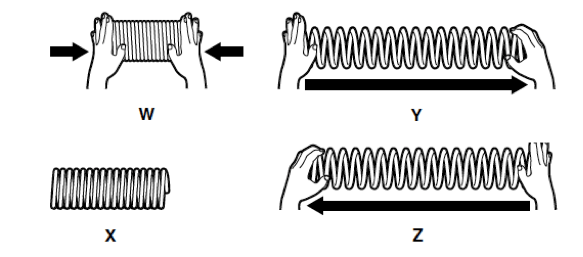
Elastic potential energy is energy stored in an object, such as a spring, due to the object being stretched or compressed. In which position is it most likely that the spring has lost its elastic potential energy?
W
Y
X
Z
SELECT ALL POSTITIONS where the spring has STORED ELASTIC ENERGY
W
Y
X
Z
What is efficiency?
The percentage of energy that is lost to the environment as heat
The percentage of energy that is used to perform work
The percentage of energy that is conserved when work is done
The percentage of energy that is wasted when electronics are left on
Benchmark Practice: Humans can impact the Earth in both positive and negative ways. Cutting down forests, mining for resources, and creating factories that produce toxic gases are several of the negative ways that humans can affect the environment.
Which of the following is an example of a positive way for humans to impact the Earth?
Humans can build several dams in a river to stop the natural flow of water or change its route.
Humans can plant trees in areas where trees have been removed by loggers.
Humans can remove rocks and soil and cut down trees in the process of constructing buildings.
Humans can burn fossil fuels instead of using wind or solar power.
Kinetic energy depends on _____________ & _____________.
mass, speed
mass, position
mass, weight
speed, distance
When energy changes from one form to another, we call it a _______________.
transformation
creation
expiration
compilation
when the results of an experiment are repeated and the results are the same
testable
valid
consistent
conclusion
A force applied to a body to propel it in a desired direction. The force which moves an aircraft or rocket.
Lift
Weight
Drag
Thrust
Resistance of air against the forward movement of an airplane or rocket.
Lift
Weight
Thrust
Drag
To drive, or cause to move, forward.
Thrust
Propels
Payload
Weight
The means by which aircraft and spacecraft are pushed forward.
Lift
Thrust
Propulsion
Payload
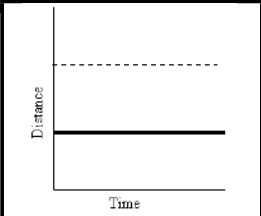

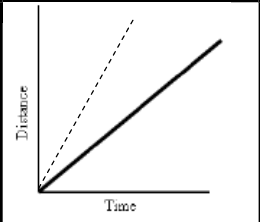

What is happening at C?
Stationary
Accelerating
Constant motion
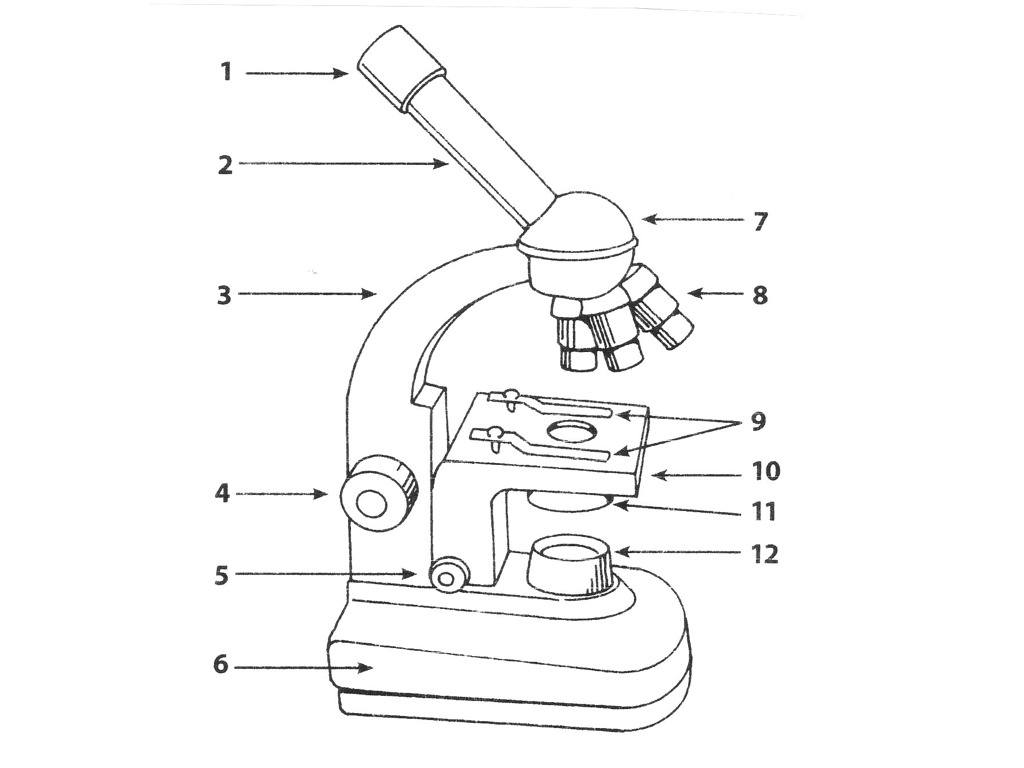

Which statement was NOT included in cell theory?
All living things are composed of cells.
Living cells come only from other living cells.
Each cell contains a cell membrane, cytoplasm, nucleus, mitochondria, and endoplasmic reticulum.
Cells are the smallest structure of living things that can perform the functions necessary for life.
What is the basic structural and functional unit of all living things?
atom
cell
bacteria
animalcules

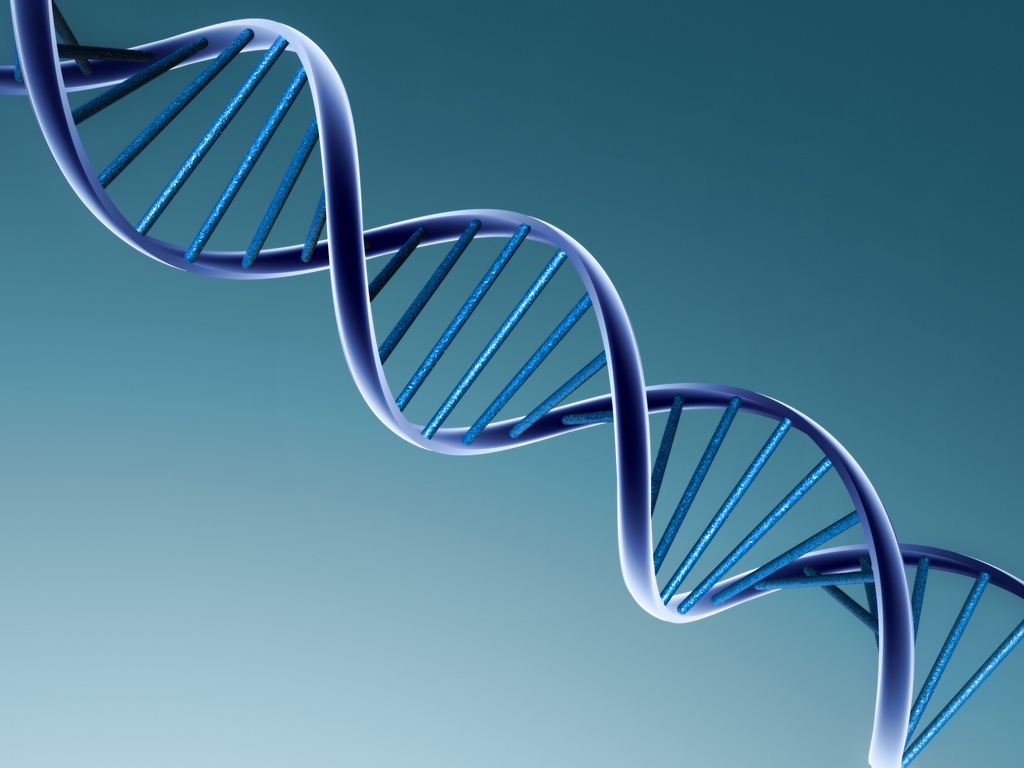
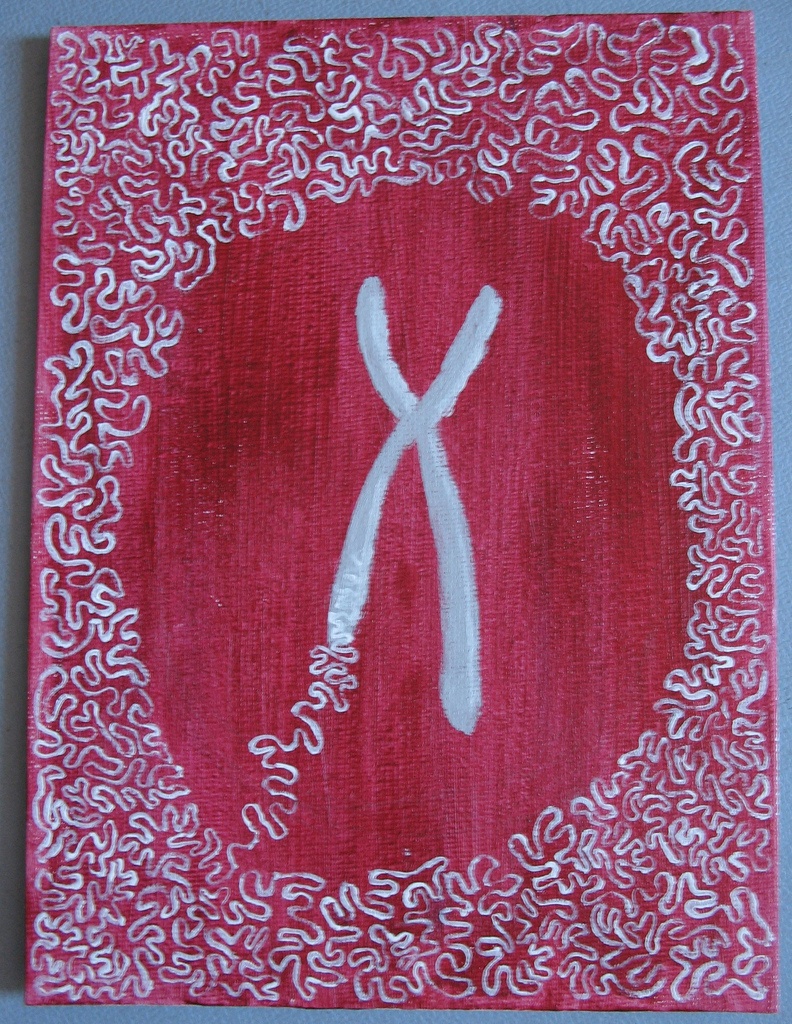

The ability to burn is known as---
Flammability
Combustion
Density
Exploding
The ability to shine is known as----
Luster
Brightness
Flammability
Combustion
Acidity is a ---- property.
Physical
Chemical
Solubility, the ability to dissolve, is a --- property.
Chemical
Physical
Reactivity (bubbling, fizzing) is a --- property.
Chemical
Physical
Ductility, the ability to be stretched into thin wires, is a --- property.
Chemical
Physical
When metal comes in contact with oxygen and water, it creates ---- through a chemical reaction.
Rust (tarnish)
Mold
Decomposition
Copper
Malleability, the ability to be flattened into thin sheets, is a ---property.
Physical
Chemical


Copper is a common metal. Which of the following properties does this metal most likely have?
High conductivity, high malleability, and low luster
Low conductivity, low malleability, and low luster
High conductivity, high malleability, and high luster
Low conductivity, high malleability, and high luster
Metals (select all that apply)
are found on the right side of the periodic table.
are found on the left side of the periodic table.
are good conductors of heat and electricity.
are brittle.
are malleable and ductile.
Nonmetals (select all that apply)
are found on the right side of the periodic table.
are found on the left side of the periodic table.
are good conductors of heat and electricity.
are brittle.
can be solid, liquids, or gases at room temperature.
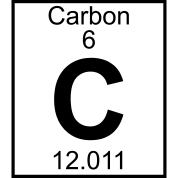


A rock deep within the Earth experiences extreme temperature and pressure. After a long period of time it becomes which rock?
Magma
Igneous
Metamorphic
Sedimentary
What must happen to a metamorphic rock before it becomes a sedimentary rock?
It must be broken down into sediment
It must be melted into magma
Its minerals must dissolve in water
It must be exposed to high temperature and pressure

This rock formed when bits of other rocks became pressed into a solid. What type of rock is it?
Sedimentary Rock
Metamorphic Rock
Igneous Rock
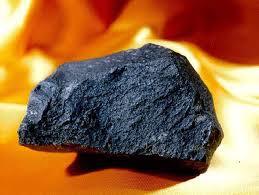
This rock was found near the mouth of a volcano. What type of rock is this?
Sedimentary
Igneous
Metamorphic
The process in which sediment are fused or glued together.
compaction
deposition
organic rock
cementation


How do extrusive igneous rocks differ from intrusive igneous rocks?
Extrusive rocks are larger in size.
Intrusive rocks break down quicker.
Extrusive rocks are arranged in layers.
Intrusive rocks have larger crystals.

How are rocks classified?
Based on the way they are formed
Based on their colors
Based on their temperature
Based on their size

Look at the image. These are .... rocks.
Igneous
Sedimentary
Metamorphic

Look at the image. These rocks are ...
Igneous
Sedimentary
Metamorphic

