wayground logo

Free Printable Worksheets

Font size

S
M
L
XL
Worksheets

EOC Final Practice

Total questions: 140

Worksheet time: 2hrs 9mins

Name
Class
Date
1.

What is the state of matter in a container?

a)

gas

b)

solid

c)

liquid

d)

super-cooling

2.

What is the state of matter in a container?

a)

gas

b)

solid

c)

liquid

d)

rock

3.

a push or pull exerted on an object that brings about acceleration

a)

force

b)

inertia

c)

shove

4.

stored energy that results from the position or shape of an object

a)

kinetic energy

b)

potential energy

5.

what does a metric ruler measure?

a)

length

b)

volume

c)

height

d)

mass

6.

When matter is heated it:

a)

expands and becomes less dense

b)

expands and becomes more dense

c)

contracts and becomes less dense

7.

What tool is shown to the right?

a)

triple beam balance

b)

graduated cylinder

c)

centrifuge

d)

balance beam

8.

Which of the following types of energy depend on objects mass and height above the earth?

a)

nuclear

b)

potential

c)

kinetic

d)

thermal

9.

Which type of energy is carried by light?

a)

potential

b)

kinetic

c)

nuclear

d)

radient

10.

What type of thermal energy is transfer of heat through direct contact

a)

conduction

b)

radiation

c)

convection

d)

nuclear

11.

What type of thermal energy is transferred by electronic waves like the suns heat

a)

conduction

b)

radiation

c)

convection

d)

plasma

12.

What type of thermal energy is a transformation of energy by movement of molecules (hot air balloon)

a)

conduction

b)

radiation

c)

convection

d)

visosity

13.
How many different elements are in this chemical formula: C2H2ClK3
a)
6
b)
8
c)
2
d)
4
14.
Which of the following atomic symbols is written correctly?
a)
ee
b)
hE
c)
C
d)
CL
15.
Which of the following chemical formulas represents a compound? 
a)
C3
b)
O2
c)
CH3CHO
d)
H2
16.
What is water?
a)
element
b)
compound
c)
mixture
17.
This picture represents which of the following?
a)
element
b)
compound
c)
mixture
18.
This picture represents which of the following?
a)
element
b)
compound
c)
mixture
19.

Which of the following examples shows that a chemical reaction has occurred?

a)

A rock breaks into smaller pieces when it is struck with a hammer.

b)

Rust forms on a hammer that has been left outside to long.

c)

A cup of water turns pink when a few drops of red food coloring are added.

d)

A solid is formed when heat is removed from a sample of water.
20.
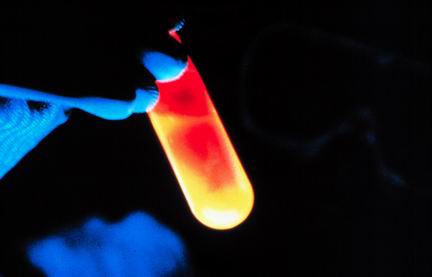
A student places a piece of a potato into a container of hydrogen peroxide. One observation the student makes is that bubbles form around the potato. The presence of bubbles might indicate the formation of a new substance because bubbles - 
a)
could show that a gas is forming
b)
always rise to the top of a liquid. 
c)
are almost always perfectly spherical.
d)
usually burst after a few minutes.
21.
A clear liquid from a flask is poured into another clear liquid in a beaker. Which of the following results of this procedure would indicate a new substance was formed?
a)
The level of the substance in the beaker is higher after the other liquid is added.
b)
A yellow solid forms and then settles to the bottom of the beaker.
c)
Small white crystals are left behind in the flask that held the first liquid.
22.
Which of the following is an example that includes evidence of a chemical reaction?
a)
A sample of zinc is placed in water and it settles to the bottom
b)
A solid block of ice is heated and it completely melts into a liquid. 
c)
Sugar that is burned gives off an odor and turns brown and then black.
d)
A tomato is placed into a blender and chopped up into smaller pieces.
23.
Evidence of a chemical reactions is anything that shows - 
a)
a new substance has formed
b)
a solid dissolved in a liquid
c)
interaction between 2 gases
d)
a change in the state of matter
24.
Which of the following is NOT evidence that that a chemical reaction has occurred?
a)
produces light/heat
b)
production of a gas
c)
formation of a precipitate
d)
melting
25.
Coal contains carbon and other elements. Carbon dioxide forms when coal burns in the presence of oxygen. Which of these is the best evidence that a chemical reaction occurs when coal burns?
a)
The shape of the coal changes
b)
Oxygen is present
c)
A new substance is produced
d)
Coal is made up of more than one element
26.

In a ___________change, a substance changes into a different substance.

a)

Physical

b)

Chemical

27.
Which of the following is a physical characteristic of a metal?
a)
texture
b)
malleable
c)
brittle
d)
semi-conductor
28.
Which of the following is a physical characteristic of a nonmetal?
a)
texture
b)
malleable
c)
brittle
d)
semi-conductor
29.
Which of the following is a physical characteristic of a metalloid?
a)
texture
b)
malleable
c)
brittle
d)
semi-conductor
30.
A student is examining the physical properties of a sample. The sample is malleable, but does not conduct electricity nor have luster. This sample would be a...
a)
metal 
b)
nonmetal 
c)
metalloid
31.
An element has properties of BOTH metals and nonmetals. WHERE would it be found in the periodic table? 
a)
To the right 
b)
To the left 
c)
on the zig zag line
32.
If a student observes a silvery solid that is malleable, good conductor, and ductile it is a...
a)
nonmetal 
b)
metal 
c)
metalloid
33.
What does luster mean?
a)
Breaks into pieces
b)
can be hammered into thin sheets
c)
No shine
d)
reflects light, shiny 
34.
What does brittle mean?
a)
Breaks into pieces
b)
can be hammered into thin sheets
c)
No shine
d)
reflects light shiny 
35.
Elements in the DARK gray area can best be described as -
a)
Malleable
b)
Brittle
c)
Dull
d)
Poor conductors
36.
Look at the periodic table that is provided. Where would metals be located? 
a)
to the left of the table in blue
b)
to the right of the table in pink
c)
in the zigzag line in yellow
37.
Look at the periodic table that is provided. Where would nonmetals be located? 
a)
to the left of the table in blue
b)
to the right of the table in pink
c)
in the zigzag line in yellow
38.
Which of these grouping of elements could have the characteristic of luster (shiny)?
a)
Metal
b)
Nonmetal
c)
metalloids
d)
Both metals and metalloids
39.
At which point is potential energy greatest?
a)
W
b)
X
c)
Y
d)
Z
40.
__________ is stored energy. 
a)
Potential
b)
Kinetic
c)
None of the above 
d)
All of the above 
41.
The faster an object moves, the ________ kinetic energy it has. 
a)
more
b)
less
c)
none of the above
d)
same
42.
What kind of energy is in a rock at the edge of a cliff?
a)
Potential
b)
Kinetic
c)
Both potential and kinetic energy
d)
none of the above
43.
Gravitational potential energy depends on the ________ and ________ of the object. 
a)
Height and mass
b)
Friction and movement
c)
Mass and Movement
d)
Height and Friction 
44.
What kind of energy is in a battery?
a)
Potential
b)
Kinetic
45.
What kind of energy is in a stretched rubber band?
a)
Potential
b)
Kinetic
46.
Click to look at the picture. 
The picture is an example of _____ .
a)
gravity
b)
potential energy
c)
kinetic energy
d)
friction
47.
How will this object move? 
a)
It won't move. 
b)
It will move to the right. 
c)
It will move to the left. 
d)
It will move up. 
48.
How will this object move? 
a)
It won't move. 
b)
It will move to the right. 
c)
It will move to the left. 
d)
It will move in both directions. 
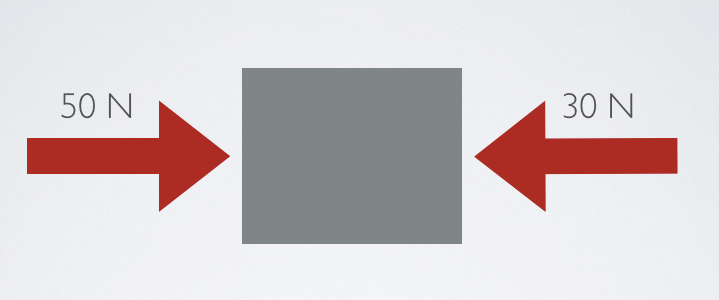
49.
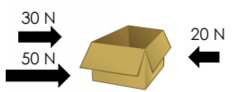
What is the net force?
a)
30 N left
b)
25 N right
c)
5 N left
d)
55 N right
50.
What is the net force?
a)
40 N left
b)
0 N Balalnced
c)
400 N right
d)
40 N right
51.
Calculate the Net Force. 
a)
60N, Left 
b)
40N, Right 
c)
0N
d)
60N, Right
52.
Calculate the Net Force. 
a)
40N, Left
b)
40N, Right
c)
0N, Balanced
d)
75N, Right
53.
You and your dad are moving the couch from one side to another. Your dad pushes with a force of 35 N to the right and you push with a force of 25 N right. What is the net force on the couch?
a)
60 N right
b)
10 N left
c)
60 n right
d)
50 N left
54.
What is the speed of a car that travels 400 m in 20 minutes?
a)
20 miles/hr
b)
20 m/min
c)
800 m/min
d)
200 miles/hr
55.
What is the speed of a man who runs 10 miles in 1 hr?
a)
20 miles
b)
10 m/min
c)
10 miles/hr
d)
20 hrs
56.
A train travels 25 km in .5 hrs. How fast is the train going?
a)
25 miles/hr
b)
5 miles/hr
c)
125 km/hr
d)
50 km/hr
57.
What is the equation to calculate speed?
a)
speed = distance/time
b)
speed = time/distance
c)
speed = time x distance 
d)
speed = speed/time 
58.
A car travels 30 miles/hr for 3 hours, calculate the distance it will travel
a)
90 miles
b)
10 miles
c)
600 miles
d)
90 km
59.
Mr. Rudman speed walked 2 miles in 10 minutes, what is his speed?
a)
0.2 miles/min
b)
2 miles/min
c)
20 miles/min
d)
40 miles/min
60.
Car #1 that traveled 160 kilometers in 5 hours, and Car #2 traveled 140 kilometers in the same time. Which car traveled faster?
a)
Car #1
b)
Car #2
c)
Their speeds are equal.
61.
A unusually fast zombie was chasing after Carl to eat him. What was the zombie’s speed at 6 seconds if he traveled 36 meters?
a)
6 meters/seconds
b)
6 seconds/meters
c)
.17 meters/second
d)
None of the above
62.
Soccer ball A goes 15 feet in 3 seconds, and Ball B goes 12 feet in 2 seconds. Which ball moved the fastest?
a)
Soccer Ball A
b)
Soccer Ball B
c)
Their speeds are equal.
63.
What is the difference between soccer ball A's speed of 5 feet/second and soccer ball B's speed of 6 feet/second?
a)
0.5 feet/second
b)
1 feet/second
c)
5 feet/second
d)
6 feet/second
64.
A dog can run 50 km in 5 days and a cat can run 15 km in 3 days. What is the difference in the two speeds? (Hint: You need to subtract!)
a)
10 km/day
b)
5 km/day
c)
15 km/day
d)
50 km/day
65.
A ladybug moves from 2 cm to 7 cm in 25 seconds. What is the speed of the ladybug? (Hint: To find the total distance, you have to subtract!)
a)
5 cm/second
b)
0.2 cm/second
c)
12 cm/second
d)
3.57 cm/second
66.
What is the average speed of the ball if it falls 20 meters 40 seconds?
a)
A.  20 m/s
b)
B.  10 m/s
c)
C.  0.5 m/s
d)
D.  2 m/s 
67.
To score the winning goal, the players must move the ball down the field 80 meters to the goal during the 5 seconds left in the game.  How fast (at what speed) must the ball travel to reach the goal in time?
a)
0.0625 meters/second
b)
16 meters/second
c)
16 miles/second
d)
13 meters/second
68.
Marlon decided to visit Dallas, which is 210 miles away from Houston. His trip took him 3 hours to complete. Calculate his average speed. 
a)
60 mph
b)
64 mph
c)
70 mph
d)
3 mph
69.
A runner's times  for each section of a 400-meter race are shown below: 
Results from  400-meter Race
Section           Time  
1st 100  m      11 seconds
2nd 100 m      13 seconds
3rd 100 m       14 seconds
4th  100 m       14.5 seconds
Which best  describes the runner's motion over the course of  the 400-meter race? 
a)
The runner's speed increased. 
b)
The runner's speed decreased.  
c)
The runner's speed stayed the same.  
d)
The runner's direction stayed the same.  
70.
What is speed?
a)
how far you go
b)
how much distance is covered over a period of time
c)
how fast you accelerate
d)
the change in the location of a object
71.
Allen travels 100 km in 5hrs. Find his average speed in km/h
a)
5km/hr
b)
10km/hr
c)
50km/hr
d)
20km/hr
72.
A runner races in the 100 meter dash.  It takes her 10 seconds to finish.  What is her average speed?
a)
10 m/s
b)
1000 m/s
c)
100 seconds
d)
10 seconds
73.
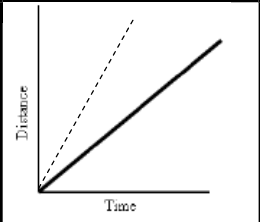
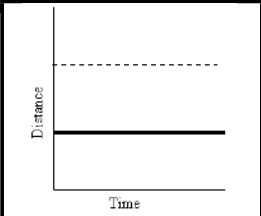
What does this graph represent?
a)
Constant Speed
b)
Acceleration
c)
Not moving
74.
What does this graph represent?
a)
Constant speed
b)
Acceleration
c)
Not moving
75.
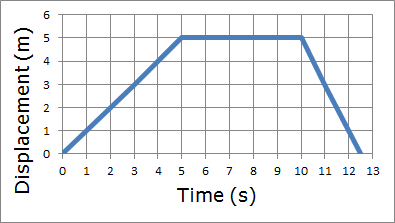
According to the graph how fast does the person travel in the first 5 seconds?
a)
2 m/s
b)
10 m/s
c)
12.5 m/s
d)
1 m/s
76.
What is the speed this motion?
a)
constant speed
b)
not moving
c)
speed increasing
d)
speed increasing at a constant rate
77.
How long did one of the runner's rest?
a)
8 seconds
b)
13 seconds
c)
5 seconds
d)
50 seconds
78.
Which runner stopped for a rest?
a)
Albert
b)
Bob
c)
Charlie
79.
What is happening at E?
a)
No motion
b)
Accelerating
c)
Fast constant; moving away from the starting position
d)
Constant speed; returning to start position
80.
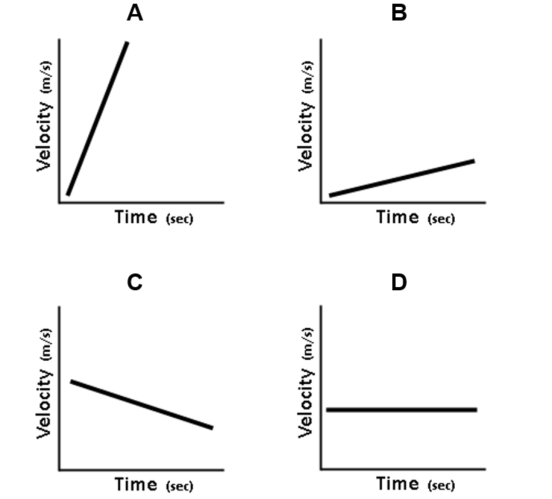
Which graph represents the greatest constant speed?
a)
A
b)
B
c)
C
d)
D
81.
What is the definition of CONDUCTION?
a)
When heat is transferred from objects like rays of light or electromagnetically.
b)
a  hot liquid or air that  expands, becomes less dense, and rises or becomes more dense, and sinks.
c)
When heat transfers from objects that are touching.
d)
When heat transfers through the heater or AC in your house.
82.
What is the definition of CONVECTION
a)
When heat transfers through waves.
b)
When heat transfers from objects that are touching.
c)
a  hot liquid or air that  expands, becomes less dense, and rises or becomes more dense, and sinks.
d)
Heat traveling from the sun
83.
What kind of heat transfer happens when the sun is heating your body?
a)
Conduction
b)
Radiation
c)
Convection
d)
Density
84.
Which of the following is an example of convection?
a)
A hair dryer is drying up your hair.
b)
When the AC or heater changes the temperature.
c)
When a car engine turns hot after being turned on.
d)
When you are making soup and the water is rising and lowering.
85.
What heat transfer happens when you burn your hand by touching a fire?
a)
Radiation
b)
Conduction
c)
Convectio
d)
I don't know!!!!!!!!!!!
86.
Which of the following is needed for convection to happen?
a)
Fluid/s
b)
Light in the form or rays
c)
Electromagnetic waves
d)
Fire
87.
A group of friends gather around a fire to stay warm.
a)
conduction
b)
convection
c)
radiation
88.
Transfer of thermal energy through "space"
a)
conduction
b)
convection
c)
radiation
89.
Near the ceiling of a room the air is warmer.  The warm air rises because of
a)
conduction
b)
convection
c)
radiation
90.
This layer of the Earth is found between the core and the crust.
a)
mantle
b)
outer core
c)
inner core
d)
crust
91.
Is a layer of week of soft mantle that is made of rock that flows slowly.  Tectonic plates move on top of this layer. 
a)
Inner Core
b)
Asthensophere
c)
Lithosphere
d)
Outer Core
92.
This is the outermost, rigid layer of the Earth, made up of two parts, is divided into pieces call tectonic plates.
a)
Inner Core
b)
Asthensophere
c)
Lithosphere
d)
Outer Core
93.
The solid, dense center of our planet that extends from the bottom of the outer core to the center of the Earth.. 
a)
mantle
b)
outer core
c)
inner core
d)
crust
94.
Identify the letter in the diagram.  Identify letter A
a)
Lithosphere
b)
Asthenosphere
c)
Mantle
d)
Outer Core
95.
Identify the letter in the diagram.  Identify letter E
a)
Lithosphere
b)
Asthenosphere
c)
Mantle
d)
Outer Core
96.
Identify the letter in the diagram.  Identify letter F
a)
Lithosphere
b)
Asthenosphere
c)
Mantle
d)
Outer Core
97.
Identify the letter in the diagram.  Identify letter G
a)
Crust
b)
Convection Current
c)
Inner Core
d)
Outer Core 
98.
Identify the letter in the diagram.  Identify letter B
a)
Crust
b)
Convection Current
c)
Inner Core
d)
Outer Core 
99.
Identify the letter in the diagram.  Identify letter D
a)
Lithosphere
b)
Asthenosphere
c)
Mantle
d)
Outer Core
100.
The thinnest layer of the Earth is the ___________.
a)
mantle
b)
crust
c)
core
101.
Tectonic plates are made up of continental crust and ________ crust.
a)
continental
b)
oceanic
c)
plates
d)
mantle
102.
What is the core made of?
a)
steel
b)
iron 
c)
aluminum
d)
iron and nickel
103.
What describes the outer core?
a)
solid
b)
liquid
c)
viscous
d)
gas
104.
Why is the inner core solid?
a)
its unknown
b)
what it's made of
c)
the pressure
d)
it is colder than the outer core
105.
The oceanic floor is made of?
a)
Granite
b)
Basalt
c)
Cookies
d)
Water
106.
The continental floor is made up of?
a)
Flowers and grass
b)
Basalt
c)
Granite
d)
Crust
107.
What happens to pressure as we move from the crust to the inner core?
a)
Pressure Decreases
b)
Pressure Increases
c)
Nothing
108.
Less dense materials rise to the top.
a)
True
b)
False
109.
Which layer of Earth has the GREATEST density?
a)
crust
b)
mantle
c)
outer core
d)
inner core
110.
Which layer of Earth is made up of tectonic plates?
a)
outer core
b)
inner core
c)
asthenosphere
d)
lithosphere
111.
Which of the following energy transformations occur when a lamp that is plugged into a wall socket is functioning correctly?
a)
Chemical to light
b)
Electrical to chemical
c)
Electrical to light
d)
Chemical to electrical
112.

Which of the following best describes the energy transformations that occur when a flashlight that runs on batteries is turned on?

a)

chemical to mechanical to electrical to radiant

b)

radiant to electrical to sound

c)

chemical to radiant to mechanical to electrical

d)

electric to radiant to chemical

113.
Which of the following converts chemical energy to electrical energy?
a)
Battery
b)
Person eating food
c)
Automobile
d)
Camp Fire
114.
Which of the following converts chemical energy to electrical energy?
a)
candle
b)
light bulb
c)
coal power plant
d)
nuclear power plant
115.
Which of the following converts electrical energy to radiant energy?
a)
candle
b)
light bulb
c)
coal power plant
d)
nuclear power plant
116.
Which of the following converts chemical energy to radiant energy?
a)
candle
b)
light bulb
c)
coal power plant
d)
nuclear power plant
117.
A battery converts what type of energy to another?
a)
sound to kinetic
b)
light to heat
c)
mechanical to electrical
d)
chemical to electrical
118.
The diagram shows a complete circuit with a battery and a buzzer making noise. This circuit works by transforming -
a)
chemical energy to electrical to sound.
b)
electrical energy to thermal to light.
c)
sound energy to electrical to chemical.
d)
mechanical energy to electrical to sound.
119.
Which type of rock results from melting and cooling of magma?
a)
Igneous
b)
Metamorphic
c)
Sedimentary
d)
Extrusive
120.
Which type of rock forms from extreme heat and pressure?
a)
Igneous
b)
Sedimentary
c)
Organic
d)
Metamorphic
121.
Wind, water, and ice breaking down rock is called
a)
Erosion
b)
Deposition
c)
Compaction
d)
Weathering
122.
The process in which dissolved minerals crystallize and glue sediment together.
a)
compaction
b)
deposition
c)
organic rock
d)
cementation
123.
When sediments are pressed together tightly, this is called ____________.
a)
Compaction
b)
Cementation
c)
Weathering
d)
Erosion
124.
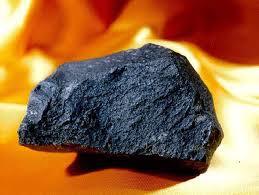
This rock was found near the mouth of a volcano. What type of rock is this?
a)
Sedimentary
b)
Igneous
c)
Metamorphic
125.
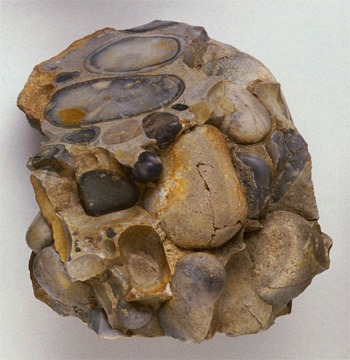
This rock was formed by smaller pieces of rock that settled at the bottom of a lake millions of years ago. What type of rock is this?
a)
Sedimentary
b)
Igneous
c)
Metamorphic
126.
What are the 3 major types of rocks?
a)
Igneous, Metamorphic, Sedimentary
b)
Metamorphic, Igneous, Cementation
c)
Brown, Red, Gray
d)
Streak, Hardness, Breakage
127.
This rock started as lava that cooled and then was heated and put under pressure over time. What type of rock is this?
a)
Sedimentar
b)
Igneous
c)
Metamorphic
128.
This rock is made from tiny pieces of other rocks that settled to the bottom of a valley millions of years ago. What type of rock is this?
a)
Sedimentary
b)
Igneous
c)
Metamorphic
129.
This rock was molten magma that slowly cooled under the ground. What type of rock is this?
a)
Sedimentar
b)
Igneous
c)
Metamorphic
130.
After lots of time, pressure, and heat, you get this kind of rock. What type of rock is this?
a)
Sedimentary
b)
Igneous
c)
Metamorphic
131.
This rock was formed by lots of fossils that settled on top of each other over time. What type of rock is this?
a)
Sedimentary
b)
Igneous
c)
Metamorphic
132.
Which of the following causes Earth's tectonic plates to move?
a)
Energy from the Sun
b)
Magnetic Pole Reversal
c)
Convection currents in the mantle
d)
Faults in Mountain Ranges
133.
What type of event will occur at this boundary?
a)
Earthquake
b)
Volcano Eruption
c)
Tornado
d)
Mountain Building
134.
A divergent boundary occurs when plates ....
a)
Pull apart
b)
Come together
c)
Slide past each other
d)
subducting
135.
Oceanic Trenches are formed by _______ plate boundaries
a)
Convergent
b)
Transform
c)
Plate
d)
Divergent
136.
A fault is formed by the movement of a __________ plate boundary
a)
Transform
b)
Convergent
c)
Divergent
137.
Mountains are created when....
a)
Two continental plates collide
b)
Two oceanic plates pull apart
c)
An Oceanic plate subducts under a Continental Plate
d)
Two continental plates pull apart
138.
When an oceanic plate and a continental plate collide, which one will subduct?
a)
oceanic
b)
continental
c)
neither
139.
What is the order of the layers? 
a)
inner core, lithosphere, mesosphere, outer core, asthenosphere
b)
asthenosphere, lithosphere, mesosphere, outer core, inner core
c)
lithosphere, asthenosphere, mesosphere, outer core, inner core
d)
crust, core, mantle
140.
Which liquid is the least dense?
a)
oil
b)
water
c)
syrup 
d)
plastic bottle