wayground logo

Free Printable Worksheets

Font size

S
M
L
XL
Worksheets

6th grade Showcase

Total questions: 149

Worksheet time: 2hrs 21mins

Name
Class
Date
1.
Which is NOT a step in the scientific method?
a)
Make observation
b)
Form a theory
c)
Collect data
d)
Form a hypothesis
2.
A testable explanation to a problem that has not yet been tested. 
a)
data
b)
theory
c)
hypothesis
d)
fact
3.
The name of the information that you get from your experiment (you organize it into charts and graphs).
a)
observations
conclusion
b)
data
c)
variables
d)
hypothesis
4.
Dependent variable means
a)
the scientist controls what to test
b)
educated guess
c)
ask a question
d)
what is being measured
5.
If you increase the amount of spinach you eat, then you will increase the iron in your blood. 
What's the dependent variable?
a)
increase the amount of iron in your blood
b)
spinach you eat
6.
What is the first step in the scientific method?
a)
Ask a question
b)
Conclusion
c)
No Horse Play
d)
Observe
7.
Explaining the color of a chemical would be what kind of observation?
a)
Qualitative 
b)
Quanitative
8.
What is the part of the experiment that is left alone or “natural", and is used to compare back to?
a)
Independent Variable
b)
Dependent Variable
c)
Control Group
d)
Experimental Group 
9.
What is a factor that the experimenter has full control over and changes to see what happens?
a)
Dependent Variable
b)
Independent Variable
c)
Control group 
d)
Hypothesis
10.
What is a factor that changes because of what the experimenter does?
a)
Dependent Variable
b)
Independent Variable
c)
Control Group
d)
Hypothesis
11.

Which picture represent eye safety?

a)
b)
c)
d)
12.

What does this picture represent?

a)

Fume Warning

b)

Disposal

c)

Chemical Warning

d)

Open Flame

13.

Which picture represents clothing protection?

a)
b)
c)
d)
14.

Which picture below represents "Toxic?"

a)
b)
c)
d)
15.

What does this picture represent?

a)

Chemical Warning

b)

Irritant

c)

Clothing Protection

d)

Sharp Object

16.
a)

eye safety

b)

biological

c)

fume

17.
a)

fume

b)

flammable

c)

biological

18.
What is this safety symbol?
a)
Radioactivity
b)
Biological
c)
Irritant
d)
Toxic
19.

Chunks of frozen matter that travels in very long orbits around the sun are called what?

a)

Comets

b)

Meterors

c)

Meteroites

d)

Asteroids

20.

What kind of space rock is a lump of rock that is pulled down by Earth’s gravity?

a)

meteror

b)

meteorite

c)

meteroid

d)

asteriod

21.
The belt between Mars and Jupiter
a)
Comets
b)
Asteroids
c)
Meteors
d)
Stars
22.
I am a rock entering a planet's atmosphere.
a)
meteor
b)
meteorite
c)
asteroid
d)
comet
23.
When a meteor hits Earth, what is it called?
a)
meteorite
b)
meteroid
c)
meteor
24.
What is a meteor called when it's in space?
a)
meteroid
b)
meteor
c)
meteorite
25.
The tail of a comet usually faces
a)
toward the sun
b)
toward the Earth
c)
away from the Sun
d)
away from the Earth
26.
Where is the Oort Cloud?
a)
Between Mars and Jupiter
b)
Between Uranus and Neptune.
c)
Beyond the Kuiper Belt.  It is believed to be at the boundary of the solar system.
d)
Between Neptune and the Kuiper Belt.
27.
Which moon is affected by tidal forces causing volcanos?
a)
Io
b)
Europa
c)
Callisto
d)
Ganymede
28.
The largest moon of Jupiter is...
a)
Ganymede
b)
Io
c)
Callisto
d)
Europa
29.

Occurs when the Moon passes directly between the Sun & Earth and casts a shadow over part of the Earth.

a)

Lunar eclipse

b)

Solar eclipse

c)

Sunspots

d)

Lunar landing

30.

When the Sun is directly over the equator, number of daylight and nighttime hours are equal.

a)

Solstice

b)

Equilateral

c)

Equinox

d)

Daylight savings time

31.

Occurs when Earth's shadow falls on the Moon.

a)

Solstice

b)

Solar eclipse

c)

Lunar eclipse

d)

Equinox

32.
Any object that revolves around another object
a)
orbiter
b)
satellite
c)
moon
d)
stalker
33.
First artificial satellite launched into space
a)
Laika
b)
Sergei
c)
Sigmund
d)
Sputnik
34.
First space probe launched into space by the US and survived a trip through the asteroid belt
a)
Sputnik
b)
Pioneer 10
c)
Voyager 1
d)
Apollo
35.
Space probes launched in 1977 on Interstellar Mission to explore the outer planets and beyond
a)
Voyager 1 & 2
b)
Spirit & Opportunity
c)
Sputnik & Pioneer 10
d)
Viking & Magellan
36.
Phase 1 of USA’s goal to get to the Moon. Sent the first piloted spacecraft around Earth
a)
Project Gemini
b)
Project Apollo
c)
Project X
d)
Project Mercury
37.
Phase 2 of getting to the Moon. Orbited teams of 2 astronauts
a)
Project Gemini
b)
Project Moon
c)
Project Apollo
d)
Project Mercury
38.
Final stage of USA’s goal to get to the Moon. This program landed a spacecraft on the Moon.
a)
Project Moon
b)
Project Apollo
c)
Project Mercury
d)
Project Gemini
39.

When the Sun reaches its greatest distance north or south of the equator.

a)

Equinox

b)

Solstice

c)

Eclipse

d)

Maria

40.
Who was the first human to orbit the Earth?
a)
Yuri Gagarin
b)
Neil Armstrong
c)
Buzz Aldrin
d)
John Glenn
41.
The first woman in space was
a)
Valentina Tereshkova
b)
Christmas Tereshkova
c)
Sally Ride
d)
unknown
42.

Which of the following currently explores Saturn's moon Titan?

a)

Apollo

b)

Mariner 10

c)

Viking 1

d)

Cassini

43.

Which of the following gathered information about Uranus and Neptune during the 1980s?

a)

Magellan

b)

Hubble Space Telescope

c)

Mariner 10

d)

Voyager 2

44.

Which of the following gathered information about Mercury and Venus during the 1970s?

a)

Apollo

b)

Cassini

c)

Mariner 10

d)

Voyager 1

45.

What country launched the first artificial satellite into space?

a)

The Soviet Union

b)

The United States

c)

Germany

d)

China

46.

What does NASA stand for?

a)

National Aquatic Sea Animals

b)

Nice Astronauts Stay Awake

c)

National Aeronautics and Space Administration

d)

North American Space Assembly

47.

What are black holes?

a)

A Black Hole is a region of spacetime exhibiting a very strong gravitational pull

b)

A Black Hole is like a vacuum that sucks everything in and never lets it go.

c)

A Black mass that has a very weak gravitational pull

d)

A magnetic field on a dying star

48.
If you happen to get cross the event horizon into a black hole, your body gets stretched out in a process called________________.
a)
stretch armstrong
b)
singularification
c)
string theory
d)
spaghettification
49.
Rockets are launched into space using jet propulsion where exhaust accelerates out from the rocket and the rocket accelerates in an opposite direction.
a)
The Law of Inertia
b)
The Law of Acceleration
c)
The Law of Conservation of Momentum
50.
A magician pulls a tablecloth out from under dishes and glasses on a table without disturbing them.
a)
Newton's 1st Law
b)
Newton's 2nd Law
c)
Newton's 3rd Law
51.
A person not paying attention while skateboarding hits a rock. The skateboard stops...they don't.
a)
The Law of Inertia
b)
The Law of Acceleration
c)
The Law of Conservation of Momentum
52.
Pushing a child on a swing is easier than pushing an adult on the same swing, because the adult has more mass and requires more force to accelerate.
a)
Newton's 1st Law
b)
Newton's 2nd Law
c)
Newton's 3rd Law
53.
A soccer ball accelerates more than a bowling ball when thrown with the same force.
a)
Law of Inertia
b)
Law of Acceleration
c)
Law of Conservation of Momentum
54.
When you step on a Lego. You push on the Lego and the Lego pushes back on you.
a)
Newton's 1st Law
b)
Newton's 2nd Law
c)
Newton's 3rd Law
55.

Momentum is the product of mass and velocity

a)

TRUE

b)

FALSE

56.

Why don't we need to worry about the sun becoming a supernova?

a)

The sun already became a supernova.

b)

It is spinning too slowly.

c)

It doesn't have the right elements.

d)

It is not big enough.

57.
What is the Heliocentric Theory?
a)
The theory that the sun is the center of the universe.
b)
The procedure of gathering and testing ideas.
c)
A new way of thinking about the natural world.
d)
The theory that the earth is the center of the universe.
58.
What is Geocentric theory?
a)
The theory that the Sun is the center of the universe.
b)
The theory that the Earth is the center of the universe.
59.
Who discovered the laws of planetary motion and supported Copernicus?
a)
Isaac Newton
b)
Galileo
c)
Voltaire
d)
Johanes Kepler
60.

________ led the charge to reclassify as a dwarf planet and made astronomy interesting for common people.

a)

Simon Newcomb

b)

Tycho Brahe

c)

Isaac Newton

d)

Neil Degrasse Tyson

61.

_______ created a system for classifying stars.

a)

Annie Jump Cannon

b)

Henrietta Swan Leavitt

c)

Albert Einstein

d)

Edwin Hubble

62.

____________ published three laws of planetary motion using Tycho Brahe's data.

a)

Isaac Newton

b)

Edwin Hubble

c)

Galileo Galilei

d)

Johannes Kepler

63.

______ discovered a band of comets that orbit outside our Solar System and studied the way the Milky Way rotates.

a)

Edwin Hubble

b)

Annie Jump Cannon

c)

Jan Oort

d)

Johannes Kepler

64.

_______ held a geocentric view of the Solar System and his data was used by Copernicus.

a)

Galileo Galilei

b)

Tycho Brahe

c)

Isaac Newton

d)

Annie Jump Cannon

65.
Which layer of the atmosphere contains the greatest amount of water vapor?
a)
Thermosphere
b)
Troposphere
c)
Mesosphere
d)
Stratosphere
66.
What is the second lowest main layer of Earth's atmosphere?
a)
Thermosphere
b)
Troposphere
c)
Stratosphere
d)
Mesosphere
67.
What is the outer most main layer of Earth's atmosphere?
a)
Thermosphere
b)
Troposphere
c)
Stratosphere
d)
Mesosphere
68.
What is the lowest main layer of Earth's atmosphere?
a)
Thermosphere
b)
Troposphere
c)
Stratosphere
d)
Mesosphere
69.
Which of the following is the correct order of the atmosphere layers from Earth to space?
a)
troposphere, stratosphere, mesosphere, thermosphere, exosphere
b)
troposphere, mesosphere, thermosphere, exosphere, stratosphere
c)
thermosphere, stratosphere, mesosphere, troposphere, exosphere
d)
troposphere, stratosphere, mesosphere, exosphere, thermosphere
70.
Which order is correct from the earth to space?
a)
thermosphere
 troposphere
 exosphere
mesosphere
stratosphere
 ionosphere
b)
thermosphere
 troposphere
 stratosphere
 exosphere
mesosphere
 ionosphere
c)
exosphere
ionosphere
thermosphere
mesosphere
 stratosphere
troposphere
d)
troposphere
thermosphere
 troposphere
 stratosphere
 exosphere
mesosphere
71.
Describe how the ozone layer protects the earth.
a)
Absorbs solar radiation, Protects Earth from UV Rays,  and emits heat
b)
Ozone in the lower atmosphere is a pollutant
72.
Where is the asteroid belt found?
a)
between earth and mars
b)
Between Uranus and Neptune
c)
Between Mercury and Venus
d)
Between Mars and Jupiter
73.
In what form does the Sun's energy travel to Earth?
a)
Heat
b)
Electrical energy
c)
Electromagnetic radiation
d)
Mechanical energy
74.
What is the definition of CONDUCTION?
a)
When heat is transferred from objects like rays of light or electromagnetically.
b)
a  hot liquid or air that  expands, becomes less dense, and rises or becomes more dense, and sinks.
c)
When heat transfers from objects that are touching.
d)
When heat transfers through the heater or AC in your house.
75.
What is the definition of CONVECTION
a)
When heat transfers through the heater or AC in your house.
b)
When heat transfers from objects that are touching.
c)
a  hot liquid or air that  expands, becomes less dense, and rises or becomes more dense, and sinks.
d)
Holding hands
76.
What is the definition of RADIATION
a)
 hot liquid or air that  expands, becomes less dense, and rises or becomes more dense, and sinks.
b)
When heat is transferred from objects like rays of light or electromagnetically.
c)
When heat transfers from objects that are touching.
d)
When heat transfers through the heater or AC in your house.
77.
What am I?
a)
endotherm
b)
ectotherm
78.
What am I?
a)
endotherm
b)
ectotherm
79.
What am I?
a)
endotherm
b)
ectotherm
80.
What am I?
a)
endotherm
b)
ectotherm
81.
Has to eat more often to maintain constant body temperature.
a)
endotherm
b)
ectotherm
82.
Shivers to keep warm.
a)
endotherm
b)
ectotherm
83.
Has to find heat to get warm and shade to keep cool.
a)
endotherm
b)
ectotherm
84.
Body temperature changes with the environment.
a)
endotherm
b)
ectotherm
85.
All invertebrates are ________________.
a)
endotherm
b)
ectotherm
86.

A cow is a HERBIVORE, which means it only eats

a)

Meat or other animals

b)

Plants

c)

Plants and animals

87.

A bear is an OMNIVORE, which means it eats:

a)

Plants

b)

Meat

c)

Meat and Plants

88.

__________________ are consumers that eat ONLY MEAT (other animals)?

a)

Omnivores

b)

Carnivores

c)

Producers

d)

Herbivores

89.
Which terms best describe heterotrophs?
a)
Plants; producers
b)
Animals; producers
c)
Plants; consumers
d)
Animals; consumers
90.
Which terms best describe autotrophs?
a)
Plants; producers
b)
Animals; producers
c)
Plants; consumers
d)
Animals; consumers
91.
Another term for consumer
a)
Heterotroph
b)
Autotroph
92.
Oxygen from the air enters the blood stream at what location?
a)
Cardiac Notch
b)
Pulmonary Vein
c)
Alveoli
d)
Paranasal Sinuses
93.
What surrounds the alveoli?
a)
oxygen
b)
carbon dioxide
c)
capillaries
d)
bronchioles
94.

What is "1"?

a)

alveoli

b)

trachea

c)

bronchus

d)

bronchioles

95.

What is "3"?

a)

alveoli

b)

trachea

c)

bronchus

d)

bronchioles

96.
A tick and a dog have this type of relationship.
a)
mutualism
b)
commensalism
c)
neutralism
d)
parasitism
97.
Cattle egrets are birds that forage in fields among cattle. The egrets get easy access to food and the cattle don't care if they are there or not.
a)
mutualism
b)
commensalism
c)
competition
d)
parasitism
98.
Red-billed oxpeckers are birds that feed on parasites found on an impala. The impala gets rid of parasites and the red-billed oxpeckers get a yummy dinner. This is an example of _______.
a)
commensalism
b)
mutualism
c)
neutralism
d)
competition
99.
Mistletoe extracts water and nutrients from the spruce tree to the tree's detriment (harm). 
a)
Mutualsim 
b)
Parasitism 
c)
Commensalism 
100.
A wrasse fish feeds on the parasites found on the black sea bass's body. Both species benefit. 
a)
Mutualism 
b)
Parasitism 
c)
Commensalism 
101.
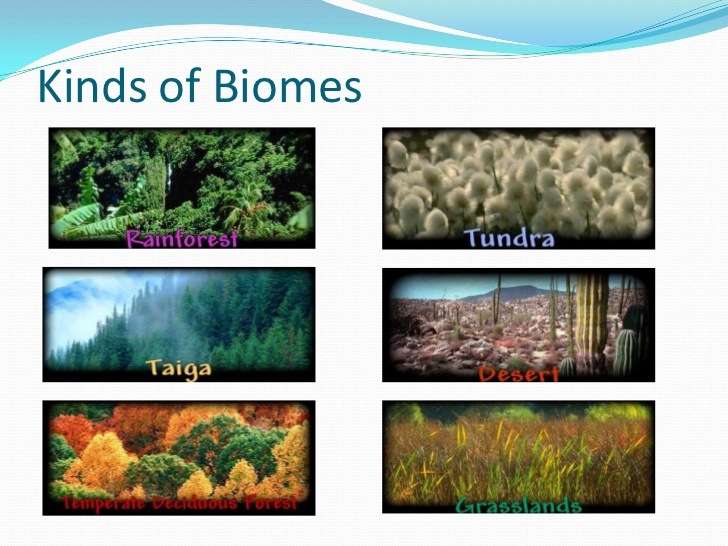
What is the main factor that separates the biomes?
a)
Land
b)
Water
c)
Climate
d)
Longitude
102.
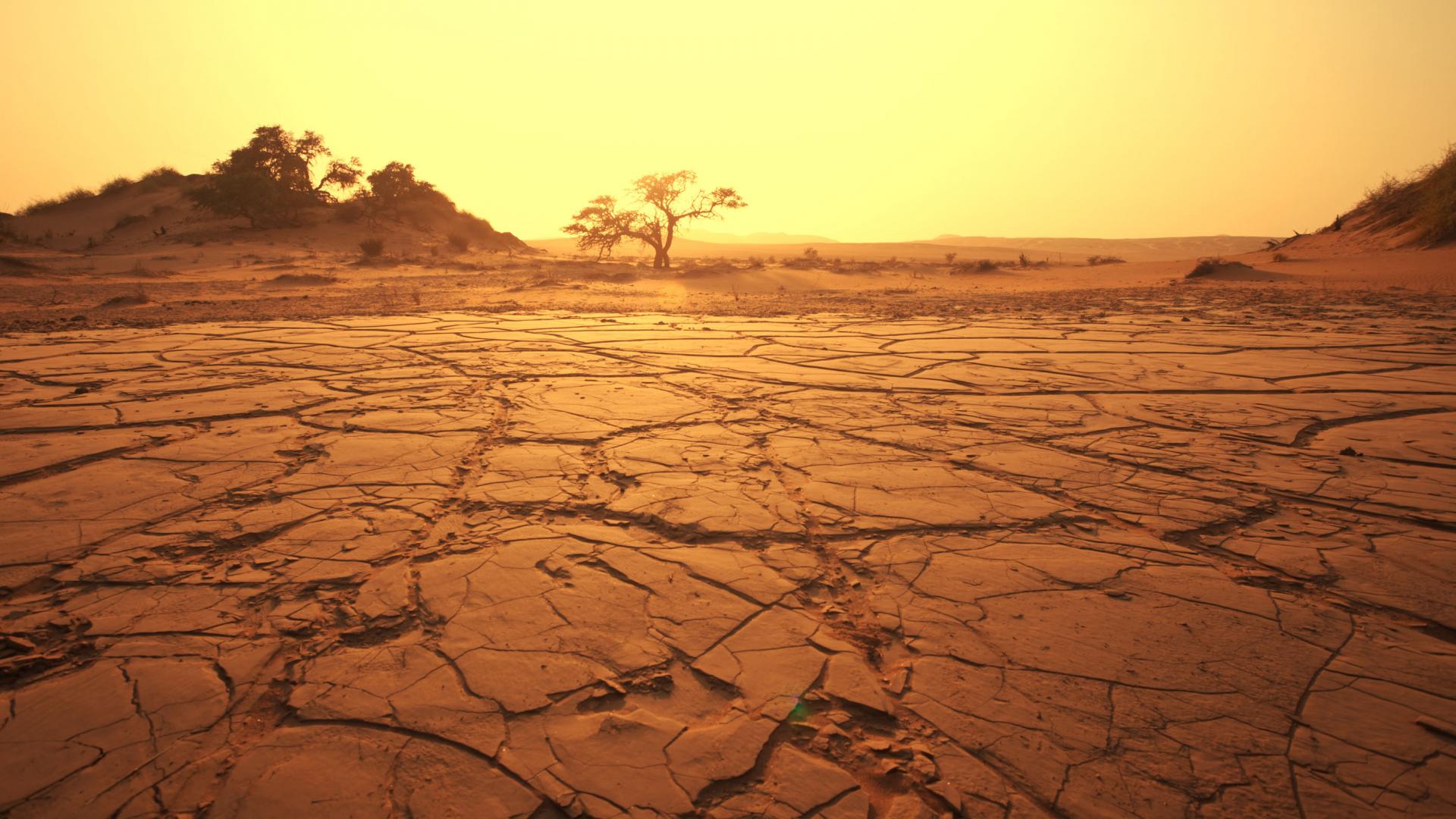
Which biome is the driest?
a)
Desert
b)
Tundra
c)
Taiga
d)
Rainforest
103.
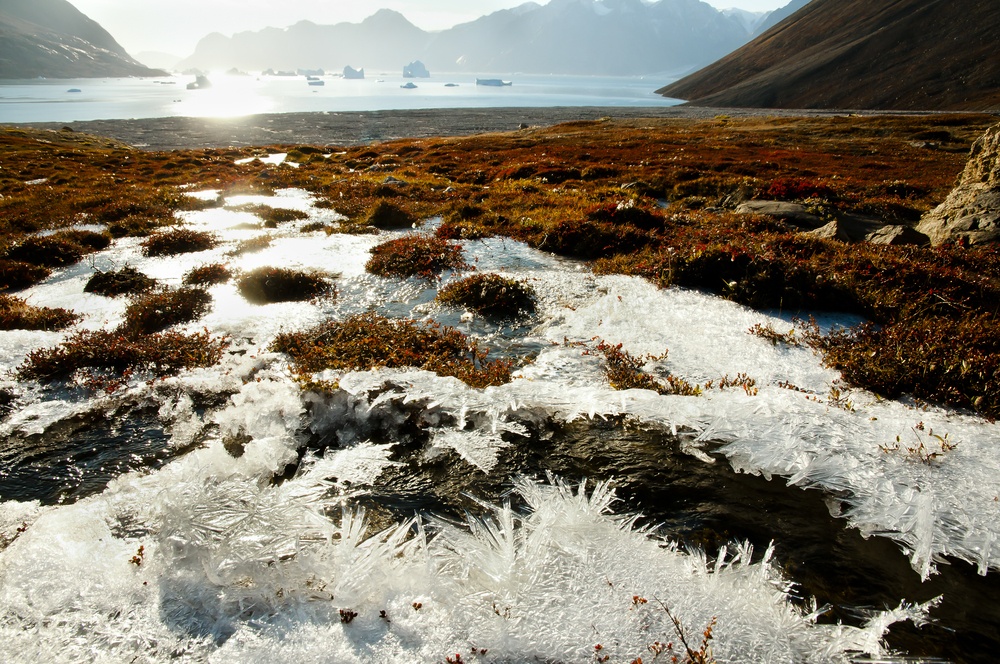
Which Biome has permafrost?
a)
Temperate Forest
b)
Rainforest
c)
Taiga
d)
Tundra
104.
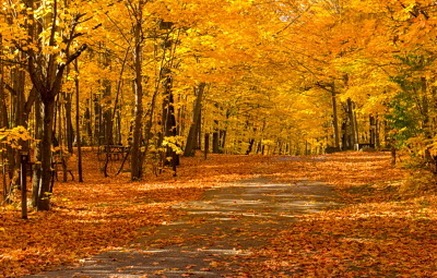
Which biome has deciduous trees (which lose their leaves)?
a)
Temperate Forest
b)
Rainforest
c)
Grasslands
d)
Taiga
105.
Which biome has coniferous trees (which don't lose their leaves)?
a)
Taiga
b)
Temperate Forest
c)
Tundra
d)
Grasslands
106.
Which biome has wide-open fields of grass?
a)
Taiga
b)
Grasslands
c)
Temperate Forest
d)
Rainforest
107.
Which biome has the most variety of plants and animals?
a)
Temperate Forest
b)
Rainforest
c)
Tundra
d)
Grasslands
108.
Which biome has 4 seasons?
a)
Taiga
b)
Tundra
c)
Grasslands
d)
Temperate Forest
109.
In which 2 biomes can only plants/animals with adaptations survive?
a)
Taiga/Temperate Forest
b)
Grasslands/Desert
c)
Tundra/Desert
d)
Rainforest/Tundra
110.
A living or once-living organisms in an ecosystem is a
a)
population
b)
biotic factor
c)
abiotic factor
d)
community
111.
A nonliving element in an ecosystem is an 
a)
animal
b)
abiotic factor
c)
biotic factor
d)
organism
112.
This weather instrument is a...
a)
anemometer
b)
barometer
c)
wind vane
d)
thermometer
113.
The weather forecast tomorrow says there will be a 15 mph northeast wind and a high temperature of 52 degrees. What three instruments will a meteorologist use to make this prediction?
a)
anemometer, wind vane, thermometer
b)
barometer, hygrometer, wind vane
c)
thermometer, satellite image, hygrometer
d)
wind vane, satellite image, barometer
114.
An instrument tha measures air pressure without using a liquid. 
a)
Aneroid barometer
b)
Mercury barometer
c)
Aneroid gauge
d)
Mercury thermometer
115.
A device that is used to measure atmospheric pressure is a ___________.
a)
barometer
b)
thermometer
c)
kilometer
d)
micrometer
116.
Which is true for insulin?
a)
created in the beta cells of the islets of Langerhans
b)
increases blood sugar
c)
controlled by a positive feedback loop
d)
needed for adult onset diabetes
117.
Which gland secretes insulin?
a)
Pancreas
b)
Ovaries
c)
Parathyroid
d)
Thymus
118.
A chemical product of an endocrine gland is called a(n)
a)
chromosome
b)
hormone
c)
target cell
d)
hypothalamus
119.
Which is another name for adrenaline?
a)
insulin
b)
epinephrine
c)
thymus
d)
amylase
120.

Where is Pancreas

a)

next to your heart

b)

behind the stomach

c)

Under your nose

d)

inside of your brain

121.
Pituitary Gland is the size of
a)
Pea
b)
Green Beans
c)
Kidney Beans
d)
Bottle Cap
122.
What produces growth hormones?
a)
Esophagus
b)
Lymph Nodes
c)
Pituitary Gland
d)
Hypothalamus
123.

Pituitary Gland regulates

a)

Temperature, Water, and Sugar

b)

Temperature, Oil, and Salt, and Blood Pressure

c)

Temperature, Water, and Salt, and Blood Pressure

d)

Temperature, Water, Oxygen, and Blood Pressure

124.
The master gland of the body, secreting a large number of hormones that affect other glands, growth and development. Housed within a bony cradle deep within the skull. 
a)
Thymus
b)
Pineal
c)
Thyroid
d)
Pituitary
125.
 What is the greenhouse effect?
a)
The warming of a planet due to trapped radiation.
b)
The cooling of Earth due to air pollution.
c)
The heating of a solid, such as a rock.
126.
What gas from the list below is a cause for global warming?
a)
Nitrogen
b)
Oxygen
c)
Carbon Dioxide
127.
Water vapor is a greenhouse gas
a)
True
b)
False
128.
Which of the following is not a greenhouse gas?
a)
Carbon dioxide
b)
Methane
c)
Water vapour
d)
Nitrogen
129.
What does CFC stand for?
a)
Calciumfluorinecarbon
b)
Calcfluorocarbon
c)
Chlorofluorocarbon
d)
Chlorinefleroviumcarbon
130.
Which type of rock results from melting and cooling of magma?
a)
Igneous
b)
Metamorphic
c)
Sedimentary
d)
Extrusive
131.
Which type of rock forms from extreme heat and pressure?
a)
Igneous
b)
Sedimentary
c)
Organic
d)
Metamorphic
132.
Wind, water, and ice breaking down rock is called
a)
Erosion
b)
Deposition
c)
Compaction
d)
Weathering
133.
When sediments are pressed together tightly, this is called ____________.
a)
Compaction
b)
Cementation
c)
Weathering
d)
Erosion
134.
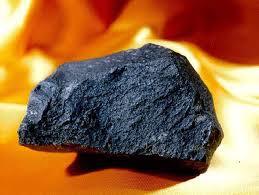
This rock was found near the mouth of a volcano. What type of rock is this?
a)
Sedimentary
b)
Igneous
c)
Metamorphic
135.
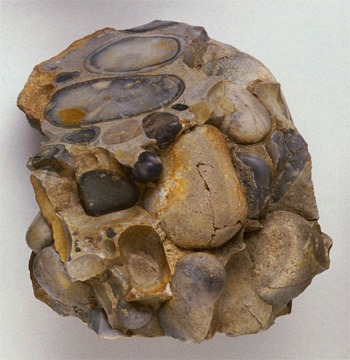
This rock was formed by smaller pieces of rock that settled at the bottom of a lake millions of years ago. What type of rock is this?
a)
Sedimentary
b)
Igneous
c)
Metamorphic
136.
What kind of rocks make up most of the igneous rock? 
a)
Basalt
b)
Granite
c)
Rhyolite
d)
Pegmatite
137.
Rock that forms when sediment from older rocks get pressed and cemented together.
a)
Sedimentary Rock
b)
Metamorphic Rock
c)
Igneous Rock
138.
Is Gneiss a type of metamorphic rock?
a)
Yes 
b)
No
139.
Metamorphic means...
a)
Changed shape 
b)
Changes Form
140.
Metamorphic rocks that have grains arranged in parallel layers or bands are called...
a)
Foliated
b)
Nonfoliated
141.
Which texture best describes the rock above?
a)
porphyritic 
b)
nonfoliated
c)
foliated
d)
clastic
142.
Which of the following is a metamorphic rock?
a)
conglomerate
b)
pumice
c)
obsidian
d)
marble
143.
Which of the following is a metamorphic rock?
a)
schist
b)
basalt
c)
limestone
d)
shale
144.

In 1942, Jonas Salk and another doctor created a __________ vaccine.

a)

cholera

b)

flu

c)

chicken pox

d)

rabies

145.

Louis Pasteur created a process of heating food to kill germs that was called...

a)

sanitation

b)

chemistry

c)

germ theory

d)

pasteurization

146.

Louis Pasteur created a vaccine for...

a)

polio

b)

diabetes

c)

rabies

147.
American Doctor who invented the Polio vaccine in 1953. 
a)
Jonas Salk
b)
Lucille Salk
c)
Transistor 
d)
NASA
148.
Who discover penicillin?
a)
Gregor Mendel
b)
Alexander Fleming
c)
Rosalind Franklin
d)
Charles Darwin
149.
In what direction do hurricanes rotate in the Northern Hemisphere?
a)
Clockwise
b)
Counterclockwise
c)
Up
d)
Down