
 Worksheets
Grade 6 Science
Total questions: 145
Worksheet time: 1hrs 22mins

A lamp that plugs into a wall socket draws energy, which flows through a thin wire in the bulb, causing it to heat up until it glows. What energy transformations are taking place?
Chemical → light → electrical
Mechanical → sound → light
Thermal → solar → electrical
Electrical → thermal → light
An electric pencil sharpener uses electricity to make its motor spin. The pencil sharpener also makes noise and heats up. Which observation of the pencil sharpener demonstrates the law of conservation of energy?
The amount of electrical energy used equals the total amount of mechanical, sound, and thermal energy produced.
The amount of energy used by the electric pencil sharpener is greater than an electric lamp.
The electric pencil sharpener only uses energy when it is being used to sharpen a pencil.
The electric pencil sharpener is easier to use than the older version that was cranked by hand.

Turning the handle makes a current that causes the light bulb to glow. What are the energy transformations that happen in this hand generator?
Thermal → solar → light
Mechanical → electrical → light
Electrical → mechanical → light
Solar → light → electrical
When energy enters a system and then comes out of the system later, the law of conservation of energy states that–
some of the energy that entered the system will remain in the system.
the energy will always create a change in the properties of the parts of the system.
the form of energy that comes out of the system must be the same form that entered.
the amount of energy coming out of the system must equal the energy that entered the system.
In which of the following scenarios would this energy transformation be observed?
chemical → light → heat
Plucking a guitar string
Lighting a match
Turning on a fan
Starting a car
Which of the following is a form of potential energy?
sound energy
chemical energy
mechanical energy
thermal (heat) energy
The law of conservation of energy states ___.
electrical energy can be transformed into other forms
energy can be created and destroyed
energy is never created nor destroyed
what goes up must come down

What type of energy is stored in a battery?
electrical
thermal
radiant
chemical
Which energy transformation occurs in a toaster?
electrical → thermal
chemical → thermal
nuclear → electrical
thermal → electrical
A battery converts what type of energy to another?
electrical → thermal
chemical → electrical
kinetic → nuclear
light → heat
Energy transformations occur when ___.
a chemical reaction takes place
energy changes from one form to another
energy is created through conduction
two forces slide together that are touching
Which items would have this energy transformation: chemical → mechanical
a candle burning
eating a big breakfast before a race
a ball bouncing
using a hairdryer


What is the correct energy chain from the sun to grass to cow?
light and thermal => chemical => chemical
light => heat => mechanical => chemical
light => thermal => mechanical
nuclear => chemical => potential

What energy transformation occurs in the chameleon as it quickly launches its tongue to catch an insect?
Radiant --> Chemical
Thermal --> Chemical
Chemical --> Mechanical
Mechanical --> Chemical
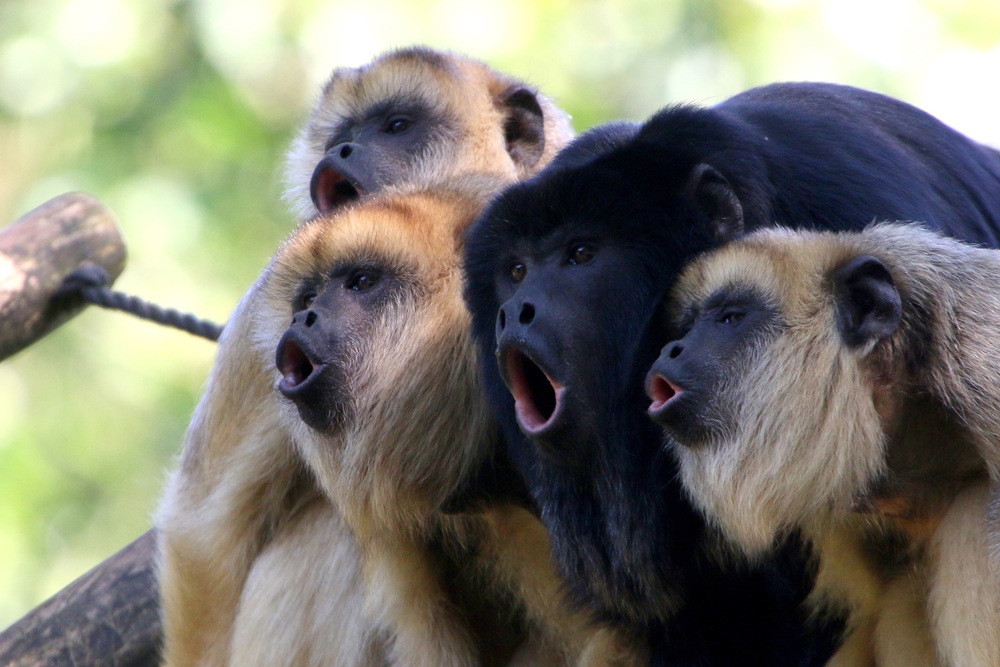
What energy transformation occurs as howler monkeys loudly call to each other in the forest?
Chemical --> Mechanical --> Sound
Chemical --> Sound --> Thermal
Sound --> Chemical --> Radiant
Mechanical --> Chemical --> Sound


Identify the type of energy
Thermal energy
Sound energy
Mechanical energy
Electrical energy

Identify the type of energy
Electrical Energy
Mechanical energy
Sound energy
Thermal energy

Identify the type of energy
Sound energy
Thermal energy
Mechanical energy
Electrical energy

Identify the type of energy
Thermal energy
Mechanical energy
Sound energy
Electrical energy

The food we eat has _______________ potential energy because as our body digests it, it provides us with energy for basic metabolism.
gravitational
elastic
nuclear
chemical
The thinnest layer of Earth.
Inner Core
Outer Core
Crust
Mantle
Least dense layer of Earth's geosphere.
crust
Outer core
inner core
mantle
Liquid Layer of Earth
Crust
Mantle
Outer Core
Inner Core
Solid layer of Earth made up of iron and nickel
Lithosphere
Asthenosphere
Outer Core
Inner Core
Thickest layer of Earth, have convection currents
Crust
Mantle
Outer Core
Inner Core
Liquid layer of Earth made up of iron and nickel
Lithosphere
Asthenosphere
Outer Core
Inner Core

The arrow pointing to the white layer of the Earth is
Crust
Mantle
Outer core
Inner Core

The arrow pointing to the yellow layer is
Crust
Mantle
Outer Core
Inner Core

The arrow pointing to the orange layer is
Crust
Mantle
Outer Core
Inner Core

The arrow pointing to the brown layer is
Crust
Mantle
Outer Core
Inner Core
the outermost and the thinnest layer of Earth ranging from 5 to 100 km thick.
crust
mantle
inner core
outer core
It is where people and other living things live. It is divided into continental and oceanic
crust
mantle
inner core
outer core
It extends to a depth of about 2900 km. It is the largest layer of the Earth that covers 67% of Earth’s mass.
crust
mantle
inner core
outer core
made of thick liquid containing the elements silicon, oxygen, iron, and magnesium that flow like plastic materials.
crust
mantle
inner core
outer core
made up of iron and nickel. The great pressure in the inner core pushes the particles of iron and nickel so tightly together that the elements remain solid.
crust
mantle
inner core
outer core
result from erupting volcanoes
tectonic earthquakes
volcanic earthquakes
a linear feature that exists between two tectonic plates that are moving away from each other.
divergent
convergent
transform
One plate eventually slides beneath the other, a process known as subduction.
divergent
convergent
transform
places where plates slide sideways past each other.
divergent
convergent
transform
waves that transmit the energy released by an earthquake
(a)
the point at the surface of the Earth above the focus
(a)

What type of boundary is the image?
transform
divergent
convergent
deform

What type of boundary is the image?
transform
divergent
convergent
deform

What type of boundary is the image?
transform
divergent
convergent
deform
Which boundary will forma ridge or rift?
transform
divergent
convergent
deform
Epicenter is where the earthquakes originates.
True
False
The measure of how heavily damaged an area is called _____
intensity
magnitude
seismic wave
It is possible that a high magnitude earthquake may cause a lower intensity
True
False
The focus is the ground above the epicenter.
true
false
It describes the severity of an earthquake in terms of its effects on the earth's surface and on humans and their structures.
Magnitude
Intensity
It is measured using a seismograph.
Magnitude
Intensity
It uses the Richter Scale.
Magnitude
Intensity
It uses the Mercalli Scale.
Magnitude
Intensity
It is the measure of energy released by the earthquake.
Magnitude
Intensity
An opening on the surface of a planet or moon that allows lava, hot vapor, and gas to escape from the pool of magma below.
(a)
Which of the following is NOT true?
When pressure builds up inside Earth, volcanic eruptions occur.
Volcanoes contains molten liquid rocks.
Volcanoes can be classified according to activity.
Volcanic eruption is impossible under the ocean.
Molten and liquified rocks inside the earth's crust.
Magma
Lava
Pyroclastic
Molten and liquified rocks that flows on the surface of earth.
Magma
Lava
Pyroclastic
An ______________ is one that has erupted in the last 10 000 years and there is a possibility that it may erupt soon.
active volcano
dormant volcano
extinct volcano
cinder volcano
composite volcano
A __________________ is one that has not erupted in the last 10 000 years but may still erupt in the future.
active volcano
dormant volcano
extinct volcano
cinder volcano
composite volcano
An __________________ is one that is not expected to erupt again.
active volcano
dormant volcano
extinct volcano
cinder volcano
composite volcano
The simplest type of volcano.
CINDER CONES
COMPOSITE VOLCANOES
SHIELD VOLCANOES
LAVA DOMES
They have bowl-shaped summits and steep sides.
CINDER CONES
COMPOSITE VOLCANOES
SHIELD VOLCANOES
LAVA DOMES
They are made up of small fragments of cooled lava from a single opening.
CINDER CONES
COMPOSITE VOLCANOES
SHIELD VOLCANOES
They only grow to about 1000 feet.
CINDER CONES
COMPOSITE VOLCANOES
SHIELD VOLCANOES
LAVA DOMES
Paricutin in Mexico and Mount Taal in the Philippines.
CINDER CONES
COMPOSITE VOLCANOES
SHIELD VOLCANOES
LAVA DOMES
Also called stratovolcanoes, steep-sided and cone-shaped volcanoes.
CINDER CONES
COMPOSITE VOLCANOES
SHIELD VOLCANOES
LAVA DOMES
Some of them rise up to 10 000 feet high. They are composed of many layers of volcanic rocks, usually made from lava, ashes and rock debris.
CINDER CONES
COMPOSITE VOLCANOES
SHIELD VOLCANOES
LAVA DOMES
Mount Fuji in Japan and Mount Mayon in the Philippines
CINDER CONES
COMPOSITE VOLCANOES
SHIELD VOLCANOES
LAVA DOMES
Broad and usually less steep volcanoes
CINDER CONES
COMPOSITE VOLCANOES
SHIELD VOLCANOES
LAVA DOMES
Kilauea in Hawaii and Olympic Mons in Mars.
CINDER CONES
COMPOSITE VOLCANOES
SHIELD VOLCANOES
LAVA DOMES
Volcanoes that formed from bulbous masses of lava.
CINDER CONES
COMPOSITE VOLCANOES
SHIELD VOLCANOES
LAVA DOMES
They mostly occur within the crater or near large composite volcanoes.
CINDER CONES
COMPOSITE VOLCANOES
SHIELD VOLCANOES
LAVA DOMES
Which of the following is NOT an effect of volcanic eruptions?
formation of islands
fertilizes soil
earthquakes
hail storm
Which of the following is NOT a direct effect of volcanic eruptions?
formation of islands
liquefication of land
earth fissures
lahar flow
As soon as the ashfall diminishes, scrape off the ash on the roofs.
BEFORE
DURING
AFTER
Stay indoors, cover mouth and nose with damp cloth or dust mask.
BEFORE
DURING
AFTER
Know the location of evacuation area.
BEFORE
DURING
AFTER

What type of volcano is in the picture?
CINDER CONE
COMPOSITE
SHIELD
LAVA DOME

What type of volcano is in the picture?
CINDER CONE
COMPOSITE
SHIELD
LAVA DOME

What type of volcano is in the picture?
CINDER CONE
COMPOSITE
SHIELD
LAVA DOME

What type of volcano is in the picture?
CINDER CONE
COMPOSITE
SHIELD
LAVA DOME
A volcanic eruption may build a bigger or destroy a part of the volcano.
True
False
It is made up of concrete-like mixtures of volcanic debris from melted snow or rainfall.
Pyroclastic Flow
Lava Flow
Lahar Flow
It is a mixture of ash, rock fragments, and gas with a temperature up to 850 degrees Celsius that may flow at a very fast rate.
Lahar Flow
Lava Flow
Pyroclastic Flow
An effusive eruption is a more violent type of eruption.
True
False
Volcanoes are found only on land.
True
False
It is the outpouring of lava from a volcano from an effusive eruption.
Pyroclastic Flow
Lava Flow
Lahar Flow
These are volcanoes that have not erupted in the last 10 000 years, but may still erupt.
Dormant
Extinct
Active
These are volcanoes that are not expected to erupt again.
Dormant
Extinct
Active
These are volcanoes that have erupted in the last 10 000 years and may still erupt.
Dormant
Extinct
Active

The sun doesn't go anywhere. It seems to leave because the Earth is rotating/spinning and sometimes we face the sun and sometimes we don't
true
false

The sun is in the middle of our solar system.
true
false

The Earth sits straight up and down (NO TILT).
true
false
Where does the sun go when we can't see it?
Mars
Starbucks
nowhere
What is the invisible line between the North Pole and South Pole?
rotation
orbit
axis
gravity
The spinning movement on it axis is called __________.
summer
Earth's rotation
seasons

The Earth's rotation is what gives us day and night everyday, all year.
true
false
If you are on the side of the Earth facing TO THE SUN it is _____.
day
night
At the same time that the Earth spins on its axis it also orbits or revolves around the Sun. This movement is called its _____________.
rotation
axis
revolution
The Earth is rotating on its axis, creating day and night, at the same time it's revolving all the way around the Sun.
True
False

The Earth is rotating AND revolving.
True
False
If the Earth was NOT tilted we would have sunlight all the time.
true
false
One full orbit all the way around the Sun is one revolution and it takes the Earth _______ days to complete a revolution.
42
18
398
365
The sun doesn't go anywhere. It seems to leave because the Earth is rotating/spinning and sometimes we face the sun and sometimes we don't.
true
false

What is the invisible line that the Earth spins on?
North Pole
South Pole
Axis
Equator

What do we call the movement of the Earth around the Sun?
Rotation
Revolution

How long does it take for the Earth to complete one full revolution around the sun?
24 hours
1 week
4 months
1 year

The path that the Earth takes as it revolves around the sun is called its ______________.
Orbit
Axis

What pattern is formed because of the tilt of the Earth?
Day and Night
Seasons
The moon phases
What is the largest planet?
Jupiter
Saturn
Uranus
Neptune
What takes up 99.8% of the mass in the solar system?
The moon
The sun
Jupiter
Saturn
This marks the boundary of our solar system.
Asteroid Belt
Kuiper Belt
Comet Belt
Oort Cloud
What belt separates the Rocky Planets and the Gas Giants ?
Kuiper Belt
Asteroid Belt
Comet Belt
Joivian Belt
Which planet's average temperature make it the hottest planet in the solar system?
Mercury
Venus
Earth
Mars
The spinning of a planet on it's axis in known as ____.
orbiting
revolving
rotating
turning
The Moon takes about ____ to revolve around the Earth.
19 days
1 day
12 hours
29 days
Planets closer to the sun...
Why is mars red?
food dye
the soil
mother nature
rocket fuel
Uranus is blue/green because of traces of ___________ in its atmosphere.
oxygen
methane
helium
hydrogen
The great red spot on Jupiter is
A storm
A red dot
Lightning
rusty dirt
This planet rotates on its side.
Jupiter
Saturn
Uranus
Neptune


Which planet has the shortest year?
Mars
Mercury
Earth
Venus

Which terrestrial planet has liquid water on its surface?
Mars
Earth
Mercury
Venus


