
 Worksheets
8.6BE Law of Conservation of Mass
Total questions: 150
Worksheet time: 3hrs 28mins
H2SO4
What elements are represented in this chemical formula? Fe2O3
Iron, Oxygen
Francium, Europium, Oxygen
Ferrium, Oxygen
Berylium, Oxygen
What is the total number of atoms in this formula? H2O2
2
4
3
How many more atoms of Oxygen than than Magnesium are in this formula? (subtraction) MgSO4
4
3
2
6
Is this an element or a compound? CaSO4
Element
Compound
Which chemical formula correctly displays 1 atom of nickel and 2 atoms of Fluorine?
niF2
NIF2
Ni1F2
NiF2
What is the total number of atoms in this chemical formula? C8H3NaBr12
18
12
25
24
2 CH2CO3OH
Number of C: (a)
Number of H: (b)
Number of O: (c)
Match the element to the number of atoms it has.
2 Al(C2H3O4)2
aluminum
2
carbon
8
hydrogen
12
oxygen
16
Coefficients in chemical formulas...
are found at the beginning of a formula and multiply just the first atom
are found at the end of a formula and multiply EVERYTHING!
are found at the end of a formula and multiply only elements inside the parentheses.
are found at the beginning of a formula and multiply EVERYTHING!

How man atoms of carbon are there?
1
2
3
4

How many atoms of Iron are in this compound?
1
2
3
4
How many atoms of hydrogen are in
C6H12O6
6
12
18
2
A substance made up of atoms of two or more different elements joined by chemical bonds
Molecule
compound
polar covalent bond
nonpolar covalent bond
How many different elements are present in H2COCH2
5
4
3
2
Calculate the number of Oxygen atoms in Al(OH)3
1
2
3
4

How many total POTASSIUM atoms are in this formula?
8
2
4
12
How many elements are in this chemical formula? NaHCO3
1
2
3
4
Coefficients in chemical formulas...
Multiply just the first atom
Add to the subscripts at the end of the molecule
Multiply elements without subscripts
Multiply EVERYTHING!
C3H5(NO3)3
C = 3, H = 5, N = 3, O = 9
C = 3, H = 5, N = 1, O = 9
C = 9, H = 15, N = 3, O = 9
C = 9, H = 15, N = 1, O = 3
Are there any compounds on the periodic table?
yes there are many
no because only elements are on the periodic table
I think they are?
there is no way to tell
How many Hydrogen atoms are in 4H2O?
6
8
2
4
How many Oxygen atoms are in H2O?
1
2
0
4
How many Magnesium atoms are in 10MgCl2?
10
5
20
How many Sodium atoms are in 6NaCl?
1
12
6
What is C2H8O ?
Element
Letters
Numbers
Compound
How many Aluminum atoms are in Al2O3?
3
2
5
1
A subscript is the small number below the element symbol that tells the number of _______ of that element.
atoms
valence electrons
protons
elements
How many atoms are there TOTAL in H2SO4 ?
6
5
7
3
How many Nitrogen atoms are in (NH₄)₂CrO₄?
1
2
8
16
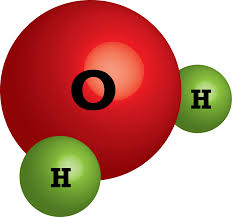
How many atoms of Hydrogen are in this compound?
1
2
3
4
How many Oxygen atoms are in Al₂(SO₄)₃?
4
12
7
24
How many Hydrogen atoms in 3(NH₄)₂CrO₄?
4
2
8
24
How many Nitrogen atoms are in the in H2C3O4N5?
2
3
4
5
How many elements are present in this compound? (Careful!)
Mg2As3COHNi2
2
4
6
10
How many atoms are present if there is no subscript following the element symbol?
0
2
only 1
1 million
If a reaction starts with a total 54g of reactants it should produce
a total of 54g of products
O + H2 → H2O
32 g of Oxygen completely reacts with 8 g of Hydrogen to produce _____ g of water.
8
12
24
40
Mg + F → MgF
24 g of magnesium reacts with 38 g of fluorine to produce _____ g magnesium fluoride.
How many elements does PbNO7 have?
Hint: Every capital letter😉
Substances present at the start of a chemical reaction are called ____.
Substances that form as the result, or at the end, of a chemical reaction are called ____.
How many iron (Fe) atoms are in
Fe(NO3)2
How many nitrogen (N) atoms are in
Fe(NO3)2
How many oxygen (O) atoms are in
Fe(NO3)2
Transformed, rearranged
Label the reactants and products of the chemical reaction shown.
Reactants
Products
Label the reactants and products in the chemical equation shown.
Reactants
Products

What are the reactants in this chemical equation?
6 CO2 + 6 H2O
H2O
C6H12O6
C6H12O6 + O2
What are the products in this chemical equation?
CO2 + H2O
H2O
C6H12O6
C6H12O6 + O2

Select the chemical formula for this molecule?
B1F3
BF
BF3
FB
How many atoms of hydrogen are in
C6H12O6
6
12
18
2

Examine the experiment shown, then fill in the blanks.
The experiment shows a (a) system.
The mass at the end of the experiment will be (b) the initial mass.

How many grams of Zn(NO3)2 was produced?
3 g
4 g
0 g
5 g

If AB is 18 grams and reacts in a closed system, which of the following could be the grams of A and B?
A is 13 grams and B is 2 grams
A is 18 grams and B is 5 grams
A is 9 grams and B is 11 grams
40 grams of calcium reacts with 71 grams of chlorine to produce _______ g of calcium chloride.
31
101
100
111
______ g of potassium reacts with 16 g of oxygen to produce 94 g of potassium oxide.
88
110
50
78
14 g of lithium reacts with _____ g of sulfur to produce 46 g of lithium sulfide.
32
60
25
10
24 g of magnesium reacts with 38 g of fluorine to produce ______ g of magnesium fluoride.
10
24
14
62
88 g of strontium reacts with 160 g of bromine to produce _______ g of strontium bromide.
72
240
248
80
______ g of hydrogen reacts with 32 g of oxygen to produce 34 g of hydrogen peroxide.
2
3
66
64
Is the chemical equation following the Law of Conservation of Mass?
3 H2 + N2 → 2 NH3
Yes, it is following the Law
No, it is not following the Law
Is the chemical equation following the Law of Conservation of Mass?
Na2O + 2 CO2 → 2 Na2CO3
Yes, it is following the Law
No, it is not following the Law
How many atoms in TOTAL make up the chemical equation below?
6 CO2 + 6 H2O → C6H12O6 + 6 O2
18 atoms total
72 atoms total
36 atoms total
12 atoms total
How many oxygen atoms in TOTAL make up the chemical equation below?
6 CO2 + 6 H2O → C6H12O6 + 6 O2
18 atoms total
6 atoms total
36 atoms total
2 atoms total
In the chemical formula C12H22O11 , how many elements are there?
1
2
3
4
In the chemical formula C12H22O11 , how many C atoms are there?
12
22
11
45
In the chemical formula C12H22O11 , how many O atoms are there?
12
22
11
45
In the chemical formula C12H22O11 , how many H atoms are there?
12
22
11
45
What is the TOTAL number of atoms in the chemical formula C12H22O11 ?
12
22
11
45
Which of the following substances CANNOT be broken down into simpler substance? ?
Na
H2O
C6H12O6
CO
How does a balanced chemical equation satisfy the Law of Conservation of Mass?
During a chemical reaction, matter is destroyed.
During a chemical reaction, the total number of atoms increases.
During a chemical reaction, one or more new substances are formed.
During a chemical reaction, the total amount of matter stays the same.
What happens to the total mass of the substances after a chemical reaction?
It decreases.
It increases.
It remains the same.
It increases then decreases.
In a chemical reaction, the number of atoms in the products will always equal which amount?
the number of atoms in the reactants
half of the number of atoms in the reactants
twice the number of the atoms in the reactants
thrice the number of the atoms in the reactants
Jin bought a heat pack that weighs 15 g. He shook it so it would release heat to warm his hands. The release of heat indicates a chemical reaction took place in a closed system. What would be the mass of the heat pack after the chemical reaction?
5 g
10 g
12 g
15 g
The chemical formula for baking soda is NaHCO3 . How many O atoms does it have?
1
2
3
4
How many atoms do you have in the compound 2MgCl2?
2 atoms
4 atoms
6 atoms
8 atoms
How many Ca (Calcium) atoms are found in Ca(OH)2?
5 atoms
3 atoms
2 atoms
1 atom


2Mg + O2 ---> 2MgO
How many atoms do you have in the compound 2MgCl2?
2 atoms
4 atoms
6 atoms
8 atoms
How many Ca (Calcium) atoms are found in Ca(OH)2?
5 atoms
3 atoms
2 atoms
1 atom
How many atoms do you have in the chemical formula 3H2O2?
7 atoms
12 atoms
4 atoms
6 atoms
How many atoms do you have in the chemical formula 2Mg(ClO3)2?
2 atoms
7 atoms
9 atoms
18 atoms
Law of conservation of mass states the amounts of atoms in the reactants and the products...
Increase
Decrease
Stay the same
No correct answer
Does the equation H2+O2 →H2O follow the Law of Conservation of Mass?
Yes, because the atoms are equal.
No, because more info is needed.
No, because there are more atoms in the product.
No, because there are more atoms in the reactant.
The Law of Conservation of Mass means that...
The Mass of the reactants & products are equal.
The Atoms of the reactants & products are equal.
No mass or atoms is gained or lost during a chemical reaction.
All the states are correct.

In this reaction, how much CO2 is produced?
42 g
24 g
23 g
No grams produced

In this reaction, how much O2 is produced?
12 g
22 g
42 g
No grams are produced
In a reaction A + B → C, reactant A has 5 g and product C has 9 g. How many grams does reactant B should have?
4 g
5 g
9 g
14 g
Does this equation follow the Law of Conservation of Mass?
2Fe2O3 + 3C → 4Fe + 3 CO2
No, because there are more reactants than products.
No, because there are more products than reactants.
Yes, because the reactants equal the products.
Yes, because the reactants do not equal the products.
If a reaction starts with a total 75 g of reactants it should produce
a total of 40 g of products
a total of 75 g of products
a total of 180 g of products
No correct answer
If there are 4 Hydrogen atoms on the reactant side, how many Hydrogen atoms will be on the product side?
More information is needed to answer
6 atoms
4 atoms
2 atoms
What is the part of the chemical equation in green called?
Fe + S → FeS
Reactants
Products
Yield
Chemical equation
What is the right part of a chemical equation called...
2H2 + O2 → 2H2O
Reactants
Products
Yield
Chemical Equation
A student mixes 125 grams of sugar, 250 grams of water and 5 grams of flavoring. The solution weighs...
250 grams
380 grams
375 grams
400 grams
What do we call the chemicals that result from a chemical reaction?
reactants
products
subscripts
coefficients
________ are the starting substances in a chemical equation.
Reactants
Producer
Reaction
Products
The law of conservation of mass states that ________
the total mass of reactants is more than the total mass of products
the mass of a chemical reaction is not constant
the mass of a chemical reaction remains constant
the total mass of reactants is less than the total mass of products

Copper (Cu) and sulfur (S) were heated in a covered container. After the reaction was complete, the unreacted sulfur was removed. The table contains the results of the investigation. How much sulfur in grams failed to react with the copper?
1.32 g
4.54 g
5.02 g
10.88 g
How many of each substance are present after the coefficient has been added in 3Pb(SO4)2
3 Pb and 3 SO4
3 Pb and 6 SO4
6 Pb and 24 SO4
6 Pb and 6 SO4

Which of the following equations is balanced?
Equation (a)
Equation (b)
Equation (c)
Equation (d)
CH4 + 2O2--> CO2+ 2H2O
2Fe2O3 + 3C --> 4Fe + 3 CO2
2FeCl2+ Cl2--> 2FeCl3
How many grams of FeCl3 are produced?

The Coefficient (3) in the Chemical Formula, 3H2O, tells you how many _____________ there are.
Atoms of Hydrogen
Atoms of Oxygen
Atoms of Water
Molecules of Water

