wayground logo

Free Printable Worksheets

Font size

S
M
L
XL
Worksheets

1/2se review march 2019

Total questions: 151

Worksheet time: 2hrs 29mins

Name
Class
Date
1.
What is the unit of measurement for work?
a)
Newtons
b)
Joules 
c)
Watts
d)
Meters
2.

What is the equation for work?

a)

W = mass x acceleration

b)

W = force x distance

c)

W = force/distance

d)

W = speed/time

3.
Which of the following IS NOT an example of work being done?
a)
Pushing a cart in a store
b)
Shooting a basketball
c)
A stand off in tug of war
d)
Running a mile
4.
If a student uses 10 Newtons of Force to push a chair 5 meters, how much is work is being done?
a)
2 Joules
b)
.5 Joules
c)
50 Joules
d)
20 Newtons
5.
If a boulder is lifted by a forklift a distance of 10 meters with a force of 30 Newtons. How much work is being done?
a)
.333 Joules
b)
3 Joules
c)
300 Joules
d)
60 Joules
6.
Unit of Power
a)
joule
b)
watt
c)
meter
d)
newton
7.

What is the unit for force?

a)

N/kg

b)

Nm

c)

N

d)

J

8.
45,000 Joules of work done in 90 seconds results in how much power?
a)
500 joules
b)
500 watts
c)
5000 watts
d)
4,050,000 joules
9.

power

a)

the rate of doing work

b)

a device that changes force

c)

the force exerted on a machine

10.

work

a)

the product of distance and the force

in the direction an object moves

b)

the SI unit or work, equal to

1 newton-meter

c)

the force exerted by the machine

11.
work is a measurement of how much force is applied over a certain
a)
distance
b)
velocity
c)
shape
d)
size
12.
A person applies a force to a wall. 
a)
  Work is done because the person uses energy when applying the force  
b)
Work is done because the wall heats up at the place where the force is applied  
c)
No work is done
13.

If a machine uses 100 J of work to lift a heavy object in 10 seconds, how much power does it generate?

a)

1000 W

b)

10 W

c)

90 W

d)

0.1 W

14.
____________ is the ability to cause change. 
a)
Energy 
b)
Force 
c)
Friction
d)
Motion
15.
Energy due to motion is ____________ energy. 
a)
Potential 
b)
Energy
c)
Kinetic
d)
Friction
16.
The faster an object moves, the ________ kinetic energy it has. 
a)
more
b)
less
c)
none of the above
d)
all of the above 
17.
__________ is stored energy. 
a)
Potential
b)
Kinetic
c)
None of the above 
d)
All of the above 
18.
Gravitational potential energy depends on the ________ and ________ of the object. 
a)
Height and mass
b)
Friction and movement
c)
Mass and Movement
d)
Height and Friction 
19.
The gravitational potential energy stored between an object and Earth depends on 
a)
The object's speed and height. 
b)
The object's mass and speed. 
c)
the object's size and weight. 
d)
The object's height and weight. 
20.
What kind of energy is in a rock at the edge of a cliff?
a)
Potential
b)
Kinetic
21.
What kind of energy is in a person climbing a ladder?
a)
Potential
b)
Kinetic
c)
Both
22.
What kind of energy is in a stretched rubber band?
a)
Potential
b)
Kinetic
23.
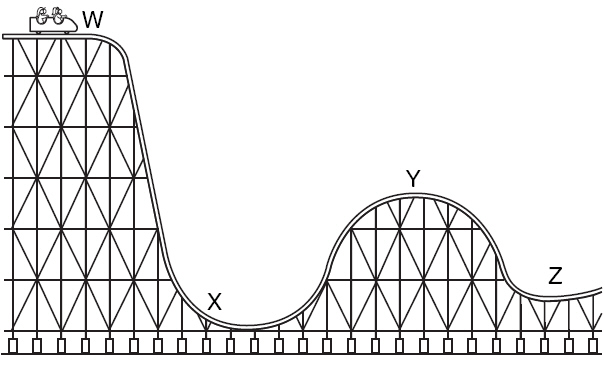
At which point is potential energy greatest?
a)
W
b)
X
c)
Y
d)
Z
24.
At which point is kinetic energy greatest? 
a)
W
b)
X
c)
Y
d)
Z
25.
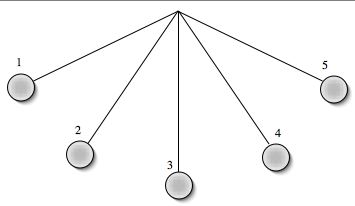
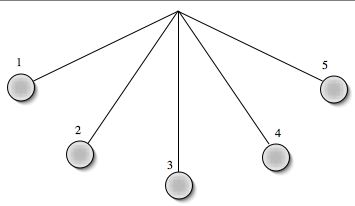
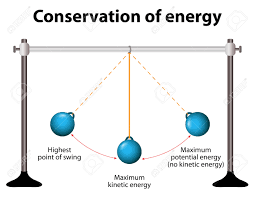
When a pendulum swings, at which point is kinetic energy highest?
a)
1
b)
2
c)
3
d)
4
26.
When a pendulum swings, at which point is potential energy at its greatest?
a)
1
b)
2
c)
3
d)
4
27.
Energy can be _____________ or changed from one type to another.
a)
destroyed
b)
transferred
c)
created
d)
ignored
28.
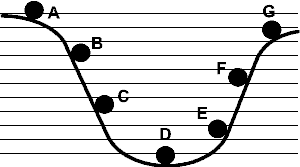
Which point has the most potential energy?
a)
G
b)
f
c)
b
d)
a
29.

You would use the formula "1/2(m)(v2) to find....

a)

Kinetic Energy

b)

Potential Energy

c)

Volume

30.
Conservation of energy states that energy cannot be ________ or ________, but can be altered from one form to another.
a)
created, destryoed
b)
gravity, force
c)
heat, created
31.
A ball is released from rest at position 1.  The diagram shows the ball in four positions as it rolls along a track from left to right. In which position does the ball have its minimum gravitational potential energy and maximum kinetic energy?
a)
1
b)
2
c)
3
d)
4
32.
What is the definition of CONDUCTION?
a)
When heat is transferred from objects like rays of light or electromagnetically.
b)
a  hot liquid or air that  expands, becomes less dense, and rises or becomes more dense, and sinks.
c)
When heat transfers from objects that are touching.
d)
When heat transfers through the heater or AC in your house.
33.
What kind of heat transfer happens when the sun is heating your body?
a)
Conduction
b)
Radiation
c)
Convection
d)
Density
34.
What heat transfer happens when you burn your hand by touching a fire?
a)
Radiation
b)
Conduction
c)
Convectio
d)
I don't know!!!!!!!!!!!
35.
Warm air rises and the cool air sinks demonstrates this type of heat transfer. 
a)
conduction
b)
convection
c)
radiation
d)
Insolation 
36.
Johnny accidentally grabbed the handle of the hot pot.
a)
conduction
b)
convection
c)
radiation
37.
The way the heat is moving from the hot coffee is called...
a)
convection
b)
radiation
c)
insulation
d)
conduction
38.
Why does food wrapped in aluminum foil keep warm for a long time?
a)
Aluminum foil is an insulator and prevents heat loss by conduction.
b)
Aluminum foil forms an air-tight seal and prevents heat loss by convection.
c)
The silver surface of the foil reflects heat in and prevents heat loss by radiation.
d)
The silver surface of the foil absorbs heat from the surroundings and keeps the food warm.
39.
What happens when ice cubes melt in a glass?
a)
Heat travels from the ice to the warmer water.
b)
No energy is transferred.
c)
Heat is transferred from the warmer water to the ice cubes.
d)
The water warms up due to the humidity
40.
Why do we wear sweaters in cold weather?
a)
To keep cold out.
b)
To generate heat.
c)
To reduce heat loss.
d)
All of the above.
41.

The amount of energy required to raise the temperature 1ºC for every gram is called____?

a)

Thermal Energy

b)

Specific Heat

c)

Temperature

d)

Kinetic Energy

42.
Heat always moves from an object of __________ temperature to an object of _________ temperature.
a)
moderate, high
b)
higher, lower
c)
lower, higher
d)
zero, high
43.
Which of the following substances is the best conductor of transferring energy as heat?
a)
Carbon dioxide gas
b)
Water
c)
Iron
d)
Rubber
44.
There are four cups of hot cocoa. The cup sizes are shown. The temperature of the cocoa in each cup is 25 degrees celsius. Which cup has the MOST thermal energy?
a)
Large cup (Trenta)
b)
Small cup (Tall)
c)
Venti
d)
All three are the same temperature so they have same thermal energy
45.
What would be the effect on the particles if more heat is supplied to the system?
a)
They would slow down
b)
They would stop moving
c)
They would speed up
d)
There would be no effect
46.
A high specific heat means...
a)
It heats up quickly with energy added
b)
It requires more energy to change temperature
47.
What has particularly high specific heat? 
a)
Water
b)
Gases 
c)
Metals 
d)
Poptarts
48.
The spinning of the Earth on its axis that causes night and day.
a)
Rotate
b)
Revolve
49.
The imaginary line running through the center of Earth.
a)
axis
b)
moon
c)
constellation
d)
orbit
50.
The moon appears to change shape because of _____.
a)
the Moon's revolution around Earth
b)
the seasons of the year
c)
the movement of stars in they sky
d)
Earth's rotation on its axis
51.
What causes Earth's seasons?
a)
the tilt of Earth's axis
b)
Earth's rotation
c)
the revolution of the Moon
d)
Earth's distance from the Sun
52.
How are stars DIFFERENT from planets?
a)
Stars are solid and rocky.
b)
Stars are made of frozen gases.
c)
Stars do not move.
d)
Stars revolve around the Sun.
53.
To decrease or get smaller
a)
waning
b)
waxing
54.

It can take months and even years to reach some of the planets in our solar system?

a)

True

b)

False

55.

What is important about the Asteroid Belt with regard to the planets?

a)

It divides the inner and outer planets

b)

It keeps the planets from floating away

c)

It protects the outer planets from the heat of the sun

d)

It's not important at all

56.

Which describes the inner planets?

a)

the inner planets are small, gaseous and have rings

b)

the inner planets are large, solid and have many moons

c)

the inner planets are solid, rocky, and smaller

d)

the inner planets are solid, have many moons and rings

57.

What do we call meteors that hit the Earth?

a)

Meteorites

b)

Meteoroids

c)

Meteors

d)

Comets

58.

There are many little chunks of rock present in space. Their sizes range from a particle the size of a speck of dust to the size of a golf ball. When the Earth collides with these chunks of rock, they heat up and begin to glow. We sometimes call these meteors "shooting stars". What causes the meteors to burn and glow in the sky?

a)

gravity between the Earth and Sun

b)

the friction between the rocks and Earth's atmosphere

c)

comets

d)

force of the inertia in space

59.

Objects with greater mass have less gravity than those with lesser mass

a)

True

b)

False

60.

What is the difference between an elliptical orbit and a circular orbit?

a)

A circular orbit is more like a circle and an elliptical orbit is more like an oval.

b)

An elliptical orbit brings the planet closer to the sun at some points and far away from it at other points, while a circular orbit keeps the planet evenly spaced from the sun throughout its orbit.

c)

Besides Pluto, Mars has the most elliptical orbit around the sun

d)

All of the above

61.

Gravity is greatest when two objects are larger and closer together.

a)

True

b)

False

62.

Gravity is necessary in the formation of -

a)

asteroids

b)

planets

c)

galaxies

d)

all of the above

63.
Light Years are a measure of:
a)
time
b)
speed
c)
distance
d)
light
64.
A light year is...
a)
The speed light travels
b)
How long it takes light to get to you from the sun
c)
The distance light can travel in a year
d)
How many years it takes light to be emitted
65.
Scientist use Light years to measure objects in space rather than units such as Miles or Kilometers because of how massive the Galaxy and Universe is.
a)
True
b)
False
66.
To express the distance between the Milky Way galaxy and the Andromeda galaxy, the most appropriate unit of measure is the -
a)
meter
b)
kilometer
c)
light year
d)
astronomical unit
67.
The average distance between the earth and the sun is the 
a)
astronomical unit 
b)
Light year
68.
What do we use astronomical units to measure?
a)
distances in our solar system
b)
How far our solar system is from others in our galaxy.
c)
The distances between galaxies. 
d)
The distance from one side of the universe to the other. 
69.
______ is a force that causes dust particles to stick together in a nebula.
a)
nuclear fusion
b)
gravity
c)
hydrogen
d)
iron
70.
All stars begin as a __________?
a)
giant
b)
black hole
c)
white dwarf
d)
nebula
71.
Stars are formed in a large cloud of gas and dust called a
a)
cumulonimbus cloud
b)
nebula
c)
neutron star
d)
black hole
72.
Complete the sentence: The force of gravity depends on...
a)
Gravity
b)
Inertia
c)
Distance
d)
a force
73.
The path that Earth takes around the sun is called its
a)
Rotation
b)
Revolution
c)
Axis
d)
Orbit
74.
Why do planets orbit the sun?
a)
Gravitational attraction
b)
Magnetic pull
c)
Attached by strings
d)
They don't orbit the sun
75.

A planet moves __________ when it is farthest from the sun.

a)

faster

b)

slower

76.
the tendency of an object to resist a change in its motion
a)
acceleration
b)
inertia
c)
mass
d)
frame of reference
77.
The tides on our planet are caused primarily by the.....
a)
sun
b)
core
c)
moon
d)
planets rotation
78.
Stars produce energy through the process known as 
a)
fission
b)
hydrogen depletion
c)
fusion
d)
nuclear radiation
79.
Kepler's first law states that the orbits of the planets around the sun are 
a)
Circles
b)
Ellipses
c)
Spheres
d)
irregular shapes
80.
If centripetal force stopped acting on all satellites they would continue traveling in space in a constant direction and constant speed.
a)
True
b)
False
81.
A planet moves __________ when it is farthest from the sun.
a)
faster
b)
slower
82.
At position A, which hemisphere would have summer?
a)
Northern hemisphere
b)
Southern hemisphere
83.
What happens when the area in which you live tilts away from the sun?
a)
It is summer.
b)
It is spring.
c)
It is winter.
d)
It is fall.
84.
The term equinox means....
a)
equal amount of day light and equal amount of night
b)
Equal amount of winter and summer
c)
Equal amounts of hot dogs for everyone
d)
The longest day of the year
85.
What do June 21 and December 21 have in common?
a)
equinox dates
b)
the moon is full
c)
solstice dates
d)
the cold fronts blow in
86.
What is the longest day of the year?
a)
winter solstice
b)
summer solstice
c)
fall equinox
d)
spring equinox
87.
Which season is taking place in the Northern Hemisphere in Position 4?
a)
Winter
b)
Spring
c)
Summer
d)
Fall
88.
What part of the moon do we see from Earth?
a)
all of it
b)
the same side
c)
none of it
d)
only one quarter
89.
Which moon phase is shown in this diagram?
a)
new moon
b)
first quarter
c)
full moon
d)
last quarter/3rd quarter
90.
Which moon phase is shown in this diagram?
a)
new moon
b)
1st quarter
c)
full moon
d)
last quarter/3rd quarter
91.
How long after a new moon will it take to see another new moon?
a)
12 days
b)
29.5 days
c)
27.3 days
d)
365 days
92.
Tides are caused by ___________
a)
wind
b)
gravitational pull of moon
c)
waves gravitation toward land
d)
rain
93.
What phase is this?
a)
First Quarter Moon
b)
Last Quarter Moon
c)
Waxing Gibbous Moon
d)
Waning Gibbous Moon
94.
What would be the result if the Earth's axis was not tilted but straight up and down?
a)
Nothing would change
b)
There would be no seasons
c)
Days would get longer
d)
The Equator would burn up and the poles would freeze
95.
Name the phase of the moon for letter a
a)
First Quarter
b)
Last Quarter
c)
Waxing Gibbous
d)
Waning Gibbous
96.
CHALLENGE
When the moon is lined up exactly between the sun and Earth, it is called a ______ ______. 
a)
Solar Eclipse
b)
Lunar Eclipse
97.
During what phase of the moon can a lunar eclipse occur?
a)
3rd Quarter
b)
1st Quarter
c)
New Moon
d)
Full Moon
98.
If the Sun, Earth, and Moon are in perfect alignment, the Earth would have a _______ tide.
a)
Spring
b)
Neap
c)
Normal
99.
What type of tide occurs during the first or third quarter moon?
a)
Neap tides
b)
Spring tides
c)
Normal tides
100.

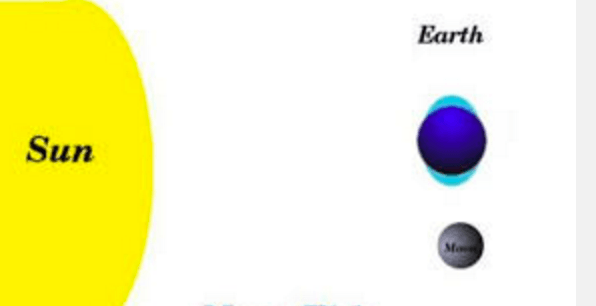
Wha type of tide would this arrangement of earth-moon-sun create?

a)

full moon tide

b)

new moon tide

c)

neap tide

d)

spring tide

101.
The belt between Mars and Jupiter
a)
Comets
b)
Asteroids
c)
Meteors
d)
Stars
102.
They are sometimes called shooting stars
a)
interplanetary dust
b)
asteroids
c)
comets
d)
meteors
103.
Select the pair of bodies which are LEAST alike in composition and size
a)
asteroid and meteor
b)
moon and comet
c)
earth and venus
d)
uranus and neptune
104.
A meteorite is DIFFERENT from a comet mainly because
a)
has a tail of ice and gas
b)
is found in orbit between Jupiter and Mars
c)
enters the Earth's atmoshere
d)
has a nucleus mad of rock and snow.
105.
Sometimes I am called a "dirty snowball". I have a hydrogen cloud, coma, and a nucleus. I am invisible except when near the sun. What am I?
a)
Asteroid
b)
Star
c)
Meteor
d)
Comet
106.

Rocky bodies of irregular shape and of different sizes.

a)

nebula

b)

asteroids

c)

comets

107.

Which of these is the smallest?

a)

Asteroids

b)

Comets

c)

Meteroids

d)

Planets

108.

Forms when a meteoroid hits the Earth's atmosphere.

a)

meteor

b)

meteoroids

c)

meteorites

109.

A piece of meteor that lands on Earth.

a)

asteroid

b)

meteor

c)

meteorite

d)

meteoroid

110.
In the diagram given, what happens as we move to the left?
a)
Stars Get Larger
b)
Stars get Colder
c)
Stars get hotter
111.
Which of these stars is hottest?
a)
Red Star
b)
Yellow Star
c)
Orange Star
d)
Blue Star
112.
Which star is the coldest?
a)
Yellow Star
b)
Red Star
c)
Orange Star
d)
Blue Star
113.
Compared to the rest of the stars, our sun is considered...
a)
Extremely Large and Cold
b)
Small with a medium temperature
c)
Medium size with medium temperature
114.
Which category is our Sun located in?
a)
White Dwarfs
b)
Supergiants
c)
Main Sequence
d)
Giants
115.
The category that contains the most stars is...
a)
Main Sequence
b)
Supergiants
c)
Giants
116.
As a whole, Giants are considered hotter than White Dwarfs.
a)
True
b)
False
117.
Red stars are the _____________.
a)
hottest
b)
coolest
c)
biggest
d)
brightest
118.
Blue stars are the _____________.
a)
hottest
b)
coolest
c)
smallest
119.
Which measurement allows scientist to compare the brightness of stars?
a)
parallax
b)
absolute magnitude
c)
red shift
d)
corona
120.
What color is the hottest color of star?
a)
Blue
b)
red
c)
purple
d)
Black
121.
Which of these stars is hottest?
a)
Red Star
b)
Yellow Star
c)
Orange Star
d)
Blue Star
122.
Put the stars in order from hottest to coolest.
a)
Blue, Red, White, Yellow, Orange, 
b)
Red, White, Yellow, Orange, Blue
c)
Blue, White, Yellow, Red, Orange
d)
Blue, White, Yellow, Orange, Red
123.

The brightness of a star as seen from earth

a)

Apparent magnitude

b)

Awesome magnitude

c)

Absolute magnitude

d)

Amazing magnitude

124.

Brightness determined by DISTANCE from the earth

a)

Amazing magnitude

b)

Absolute magnitude

c)

Apparent magnitude

d)

Awesome magnitude

125.

Why can the apparent magnitude be inaccurate?

a)

It doesn't exist

b)

It may not be brighter compared to another star but instead just closer

c)

It only shows the brightness of stars too far away for humans to detect

d)

the scale is messed up

126.

A police speed trap calculates the speed of a car by using the Doppler shift produced when an electromagnetic wave is reflected off a moving car. To beat the trap the car could send a different frequency wave back to the policeman, the wave should be

a)

the same frequency as received.

b)

a higher frequency than received.

c)

a lower frequency than received.

d)

it's not possible to beat the trap.

127.

A drone is circling a distant house. It has greatest frequency when...

a)

it is closest to us

b)

it is moving away from us

c)

it is stationary

d)

it is heading towards us

128.
Select the correct order of waves on the EMS 
a)
Radio, Micro, Infra, Visible, Ultra, X-ray, Gamma
b)
Gamma, X-ray, Ultra, Vis, Infra, Micro, Radio
c)
Vis, Micro, Infra, Ultra, X-ray, Gamma, Radio
d)
Micro, Radio, Vis, Infra, Ultra, X-ray, Gamma
129.
Which has the LONGEST wavelength and, therefore, the lowest frequency/energy
a)
Gamma Rays
b)
Radio Waves
c)
Visible Light
d)
Infrared rays
130.
Which of the following electromagnetic waves is given off as heat? 
a)
Radio Waves
b)
Infrared Rays
c)
Visible Light
d)
Gamma Rays
131.
How are electromagnetic waves different from other waves? 
a)
They have very short wavelengths 
b)
They transmit energy instead of matter 
c)
They can travel through a vacuum 
d)
They can change direction by reflection 
132.
Which of the following electromagnetic waves has the lowest energy?
a)
gamma ray
b)
infrared wave
c)
visible light wave
d)
microwave
133.
Wavelength and Frequency are related in that...
a)
they are always the same
b)
when one increases, the other decreases (inversely proportional)
c)
no correlation
d)
they are both confusing
134.
The number of wave cycles to pass a given point per time unit
a)
Gamma Waves
b)
Meters
c)
Frequency
d)
Radio Waves
135.
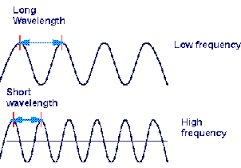
The orange line is measuring the _________________________.
a)
wavelength
b)
amplitude
c)
crest
d)
trough
136.
Electromagnetic waves vary in ____________.
a)
the speed they travel in a vacuum
b)
the way the reflect
c)
wavelength and frequency
137.
Infrared rays have a shorter wavelength than _____________.
a)
ultraviolet rays
b)
x-rays
c)
radio waves
d)
gamma rays
138.
What medium does sound travel through slowest?
a)
gas
b)
solid
c)
liquid
d)
trees
139.
Sound does not travel in space because
a)
Space is too far away.
b)
There is no matter in space.
c)
Space is the final frontier
d)
Space has planets.
140.
Sound travels FASTEST through which of these materials?
a)
Air
b)
Empty space
c)
Metal
d)
Water
141.

What elements are found most in the universe

a)

Helium, Hydrogen

b)

MATH

c)

Iron, helium

d)

UNSAFE NAME

142.

Evidence suggests that the whole Universe is expanding and that it might have started billions of years ago from one place with the big bang.

a)
True
b)
False
143.
The existence of the cosmic background radiation implies that
a)
the big bang model is wrong.
b)
the universe began in a hot, dense state.
c)
the universe did not have a moment of creation.
d)
the universe began in a cold, low-density state. 
144.
If an object is moving toward us, its spectrum will experience
a)
no shift
b)
red shift
c)
black spectrum
d)
blue shift
145.

Hubble observed that galaxies are

a)
expanding
b)
moving away from us
c)
moving towards us
d)
standing still
146.
What do the initial moments after the Big Bang have in common with the universe as it exists now? 
a)
all the stars, galaxies, and planets that exist today were formed just a few moments after the Big Bang
b)
The universe back then could not sustain life, and it cannot sustain life now
c)
the universe was extremely hot then, and it is still extremely hot not
d)
the universe began expanding then, and it is still expanding today
147.
A student placed a pencil in a cup of water.  The pencil appears broken because light-
a)
always travels in a straight line
b)
bends when it passes through water
c)
makes the water in the glass evaporate
d)
reflects the pencil on the water's surface
148.
The bouncing off of light rays from the surface of an object such as a mirror or other shiny surface is called:
a)
mirror
b)
laser
c)
reflection
d)
refraction
149.
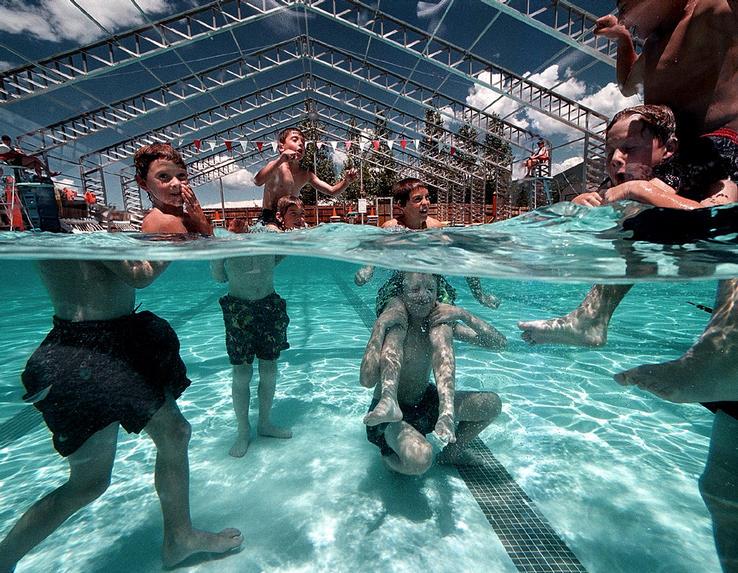
Why does the lower part of the child appear so much different in size from the upper part?
a)
The light rays that travel through water and then into air are refracted.
b)
The light rays that travel through water and then into air are enlarged.
c)
The light rays that travel through air and then into water are reflected.
d)
The light rays that travel through air and then into water are reduced.
150.
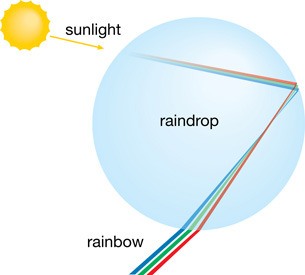
Light bending as it passes through a rain drop is an example of...
a)
Refraction
b)
Reflection
151.
Refraction occurs when _____________
a)
the wave's speed changes by entering a new medium
b)
a wave bounces off of a boundary
c)
waves parts meet each other
d)
waves bend around a barrier