
 Worksheets
CA1 REview
Total questions: 155
Worksheet time: 8hrs 45mins
Which of the following results in a substance not transforming into a completely new substance?
Physical change
Physical property
Chemical change
Chemical property
Which of the following is an example of a chemical property?
The basketball is orange.
The gasoline is flammable.
The bike is made of metal.
The slice of cheese is a solid.
What is the main difference between a physical change and a chemical change?
Physical changes alter the composition whereas chemical changes alter the appearance of a substance
Physical changes describe the appearance of a substance whereas chemical changes describe qualities only observed with a reaction.
Physical changes describe qualities only observed with a reaction whereas chemical changes describe the appearance of a substance.
Physical changes alter the appearance whereas chemical changes alter the composition of a substance.
Which of the following statements about elements and compounds is accurate?
Elements are many different types of atoms together but compounds are just one type of atom.
Elements are pure substances that cannot be broken down physically but compounds are pure substances that can be broken down physically.
Elements are not found on the Periodic Table but compounds are found on the Periodic Table.
Elements are pure substances that cannot be broken down chemically but compounds are pure substances that can be broken down chemically.
Which of the following could be the chemical formula for a compound?
Na
CO2
H2 + O2
Au
Which of the following could be the chemical formula for an element?
Si2
H2O
C + O2
C6H12O6
A student noticed a yellow, solid substance was formed when mixing two clear liquids during a lab. What term describes this yellow, solid substance?
Physical change
Physical property
Endothermic and exothermic reaction
Precipitate
What is the number of molecules in 7H2O2 ?
4
7
2
1
How many atom of Carbon are in C9H8O4
1
8
12
9
How many elements are in 6NaOH ?
4
6
3
1
In which of these compounds are there twice as many oxygen atoms as hydrogen atoms?
H3PO4
H2SO4
H2O2
H2O
What is the chemical formula for water?
H2O
CO2
NaCl
O2
Which of the following is a physical property of matter?
Color
Reactivity with acid
Flammability
Ability to rust
How many hydrogen atoms are in C6H12O6?
6
12
18
24
Why is water classified as a compound?
Because it is an element, which consists of only one type of atom.
Because it is a substance, which can easily be separated.
Because it is a substance composed of two or more kinds of atoms bonded together.
Because it is an unevenly mixed solution, or a heterogeneous mixture.
The mass of the products in a chemical reaction is the same as the mass of the reactants in the reaction. Which law best describes this statement?
The Law of Conservation of Angular Momentum
The Law of Superposition
The Law of Conservation of Matter
The Law of Entropy
Which is an example of a chemical reaction?
a pot of water boiling
an iron nail rusting
a piece of ice melting
a sugar cube dissolving in tea
Chemical X has a mass of 5 grams, and chemical Y has a mass of 10 grams. If the two chemicals are mixed and a complete chemical reaction takes place, what is MOST LIKELY the mass of the product?
5 grams
15 grams
10 grams
50 grams
Which is an example of a physical change?
boiling
burning
rotting
rusting
What characteristic of aluminum allows it to be made into aluminum foil?
It is dense.
It is soluble.
It is magnetic.
It is malleable.
Which substance is composed of more than one element?
water
carbon
gold
sodium

element
compound
mixture of elements
mixture of compounds
mixture of elements and compounds

element
compound
mixture of elements
mixture of compounds
mixture of elements and compounds

element
compound
mixture of elements
mixture of compounds
mixture of elements and compounds

element
compound
mixture of elements
mixture of compounds
mixture of elements and compounds

element
compound
mixture of elements
mixture of compounds
mixture of elements and compounds

element
compound
mixture of elements
mixture of compounds
mixture of elements and compounds

element
compound
mixture of elements
mixture of compounds
mixture of elements and compounds

element
compound
mixture of elements
mixture of compounds
mixture of elements and compounds
element
compound
mixture of elements
mixture of compounds
mixture of elements and compounds

element
compound
mixture of elements
mixture of compounds
mixture of elements and compounds

element
compound
mixture of elements
mixture of compounds
mixture of elements and compounds

What type of substance is pictured?
element
compound
mixture
solution
Matter that contains 2 or more substances that differ in physical and chemical properties.
an element
a compound
a mixture
jello
Matter that has definite chemical and physical properties.
an element
a compound
a molecule
a mixture
a pure substance
Substances are evenly mixed; you cannot see the different substances that it is made of.
Homogeneous mixture
Heterogeneous mixture
Substances are not evenly mixed; you can see all the different substances that it is made of.
Homogeneous mixture
Heterogeneous mixture
Fruit Loops, pizza, and Skittles are examples of ____________________ mixtures.
heterogeneous
homogeneous
pure
Coffee, mouthwash, and vinegar are examples of __________________ mixtures.
heterogeneous
homogeneous
pure
Which of these is a mixture?
Laundry Detergent
Salt (NaCl)
Oxygen (O)
Fluorine (Fl)
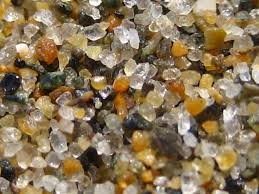
Which of the following is classified as a pure substance?
Lemonade
Fruit punch
Ketchup
Milk
Classify the following substance: Orange juice (With Pulp)
Heterogeneous Mixture
Homogeneous Mixture
Elemental Pure Substance
Substance
True or False: elements AND compounds are pure substances.
True
False
According to the EMCE Lesson 2 Lab Substances D was classified as _____________.
homogeneous
heterogeneous
According to the EMCE Lesson 2 Lab Substances A was classified as _____________.
mixture
pure substance
Shampoo is classified as what type of mixture?
homogeneous
heterogeneous
Ketchup is classified as what type of mixture?
homogeneous
heterogeneous
Categorize each in the correct space.


Both elements and compounds are pure substances.
Agree
Disagree
Two or more different elements chemically combine to form compounds.
Agree
Disagree
Compounds have properties different from the elements that make it up.
Agree
Disagree
Represented by an unique chemical symbol
Elements
Compounds
Both
Can be broken down into a simpler substance
Elements
Compounds
Both
Located on the Periodic Table
Elements
Compounds
Both
Composed of at least two different elements
Elements
Compounds
Both
Cannot be broken down into a simpler substance
Elements
Compounds
Both

This picture represents which of the following?
element
compound

This picture represents which of the following?
element
compound

This picture represents which of the following?
element
compound

This picture represents which of the following?
element
compound

This picture represents which of the following?
element
compound

This picture represents which of the following?
element
compound

This picture represents which of the following?
element
compound
Carbon is considered an element, while carbon dioxide is considered a compound. This is because carbon dioxide is ---
a gas at room temperature.
made of two different elements.
given off by green plants.
useful to human beings
Compounds are different than elements because compounds are ---
combinations of two or more elements.
not able to be broken down into parts.
made from the same type of atoms.
a pure substance; elements are not.

Metal
Nonmetal
Metalloid

Metal
Nonmetal
Metalloid

Metal
Nonmetal
Metalloid
Copper is a common metal. Which of the following properties does this metal most likely have?
High conductivity, high malleability, and low luster
Low conductivity, low malleability, and low luster
High conductivity, high malleability, and high luster
Low conductivity, high malleability, and high luster
_______________ is the first element at the top of the stair step.
hydrogen
boron
silicon
carbon
This group of elements sit along a stair step line on the periodic table and have properties of both metals and nonmetals. _________________________
luster
metals
nonmetals
metalloids
This group of elements have properties that are opposite those of metals. ______________________
luster
nonmetals
metalloids
metals
Most metals are ____________ at room temperature.
gas
liquid
solid
left
Metals are found on the ______________ side of the periodic table.
nonmetals
left
right
metals
______________ refers to the way a metal can be hammered or rolled into thin sheets.
Luster
Malleable
Metalloids
Solid
The way a metal’s surface reflects light is called ________________.
dull
luster
solids
metal
______________ refers to the way most metals can be stretched into wires.
Luster
Ductile
Malleable
Metal
_____________ ______________ are things you can observe and describe about matter without it changing chemically.
Chemical properties
Luster
Physical properites
Ductile
Which one shows that a chemical reaction has occurred?
dissolving
melting
formation of a gas
bending
A substance that is formed as the result of a chemical reaction is a __________________
Product
Reactant
Starters
Enders
In a chemical reaction, no new atoms are created, and no atoms are destroyed.
what is the biggest group on the table
metals
nonmetals
metaloids
halogens
symbols must have at least
1 cap. letter
2 cap. letters
2 lower case letters
any letter you want
the basic structural unit of matter
atom
matter
element
nucleus
a collection of atoms of one type that cannot be broken down into simpler substances by ordinary chemical or physical means
element
subatomic particle
electron
matter
an arrangement of the elements according to their atomic numbers so that elements with similar properties are in the same column and properties repeat from row to row
Periodic Table of Elements
Atomic Theory
Isotopes
Subatomic Particles
one or two letters that represent the name of an element
element name
element symbol
atomic number
atomic mass
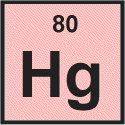


Approved goggles are worn in the laboratory -
to avoid eye strain
just to improve your vision
only if you don’t wear glasses
any time chemicals, heat or glassware are used
You should wear googles to -
to look cool
to block out sunlight
protect your eyes from chemicals
protect your ears from loud sounds

What does this symbol represent?
donate blood
beware of sharp objects
grab with bare hands
watch out for hot glass

If your teacher instructs you to smell a chemical, you should do so carefully in a wafting motion.
True
False

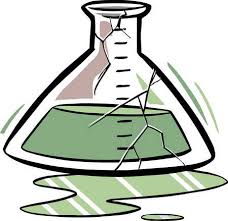
If you break glassware in the lab, you should...
Tell the teacher
Clean it up quickly before the teacher notices
Scream at the top of your lungs
Scoop it under the lab table
In a laboratory, the following should NOT be worn
gloves
open toed shoes
apron
goggles
In the classroom you should stack your bags and books in the aisles.
True
False
If you do not understand a direction or part of a lab procedure, you should
figure it out on your own as you go
ask your teacher
guess
write a pros and cons list
A student can pick up any broken glass as long as they throw it in the trash.
True
False
If electrical equipment is damaged,
try to fix it.
report it to the teacher.
use it anyway.
When removing the plug from a socket,
after washing your hands, unplug the cord.
grab the cord and jerk it out of the wall
grasp the plug
If you do not understand how to use a piece of equipment,
try to figure it out.
ask your lab partner and then do it.
ask the instructor.
Which of the following are types of personal protective equipment (PPE)? Check all that apply.
gloves
goggles
apron or lab coat
face shield
What does the materials safety data sheet (MSDS) for a chemical tell you? Check all that apply.
how to handle the chemical
how to store the chemical
the properties of a chemical (flammability, toxicology, etc.)
how much of the chemical is left in the container

