
 Worksheets
sound wave form 2
Total questions: 150
Worksheet time: 2hrs 48mins
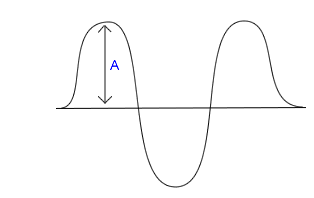



A transverse wave is traveling through an unknown medium as shown in the diagram. How are the particles of the medium vibrating?
parallel to the y-axis
parallel to region R
Parallel to the x-axis
Parallel to Region Q

Examine the wave.
Which region on this wave would correspond to rarefaction?
W
X
Y
Z

A student listed some properties of waves.
Which properties did the student list incorrectly?
3 and 2
4 and 1
2 and 4
1 and 3

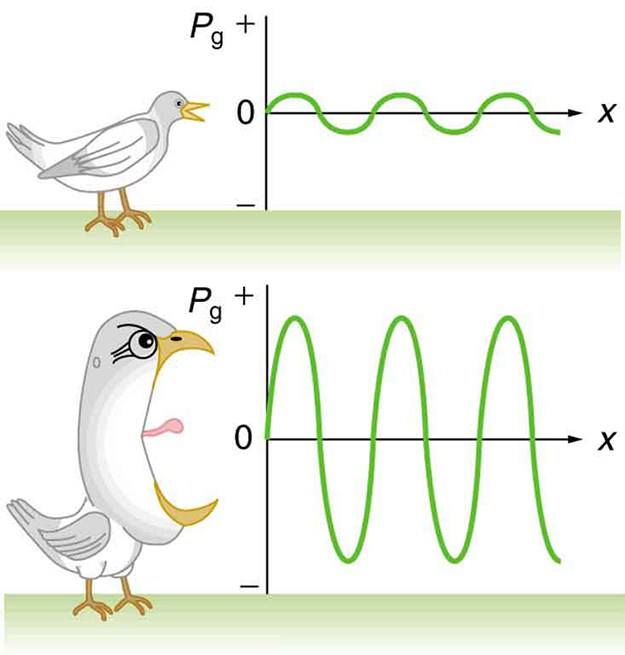
The diagram shows a cartoon of a sound wave produced while a student is speaking.
What happens to the sound wave when the student speaks louder?
The amplitude increases
the wavelength will double
the speed will increase
the amplitude will decrease
What type of waves might experience rarefaction?
rope rays
x-rays
Sound Waves
infrared rays
Through which medium is it impossible to transmit sound waves?
space
rock
air
water
What caused the sound to be produced?
Vibrations
Light
Liquid
What is the type of sound wave?
Longitudinal wave
Transverse wave
Do sound wave required medium to transfer?
Yes
No
What is three states of matter?
Light, wave, solid
Solid, liquid, gas
Force, resistance, pressure
Sound wave is transferred very rapidly in.....
Liquids
Gases
Solids
Why solids transfer sound very rapidly?
Particle arranged very close, vibration caused nearby particles also vibrate
Particles arranged loose
Particles arranged far apart
When sound reflected what will produced...
Rainbow
Echo
Frequency
characteristics of good sound reflectors (choose 2)
Rough
Smooth
Hard
Soft
Characteristics of good sound absorbers
Soft
Hard
Rough
Smooth
What will happened when amplitude is increasing?
Louder sound produced
Higher pitch produced
What will happened when frequency is increasing?
Louder sound produced
Higher pitch produced
What is doppler effect?
Apparent change in frequency, caused by the relative movement of sound sources
Apparent change in amplitude, caused by the relative movement of sound sources
The diagram shows a cartoon of a sound wave produced while a student is speaking.
What happens to the sound wave when the student speaks louder?
The amplitude increases
the wavelength will double
the speed will increase
the amplitude will decrease
Through which medium is it impossible to transmit sound waves?
space
rock
air
water
An echo is an example of sound ________________ by a barrier.
transmitted
absorbed
reflected
amplitude
Sound can travel through solid, liquid and gas.
True
False
A rough surface reflects sound better than a smooth surface.
True
False
Why is there no sound in space?
There is no material (medium) for the energy to travel through.
The molecules in space are too small.
Sound needs the correct temperature to travel through.
Sound only travels through solid material.




(Hint: Think about our sound song.)


STATE 1 LIMITATION OF HUMAN HEARING
STATE 1 WAY TO OVERCOME HUMAN LIMITATION OF HEARING

You can't hear sounds in outer space because there is no
medium
light
energy
heat

Sonar and echolocation use ----- to detect objects under water.
Refraction
Reflection
The diagram shows a cartoon of a sound wave produced while a student is speaking.
What happens to the sound wave when the student speaks louder?
The amplitude increases
the wavelength will double
the speed will increase
the amplitude will decrease
Sound can travel through solid, liquid and gas.
True
False
Why is there no sound in space?
There is no material (medium) for the energy to travel through.
The molecules in space are too small.
Sound needs the correct temperature to travel through.
Sound only travels through solid material.
Sound waves are faster than light.
False
True
As the fire truck approached Amalia, the pitch of the siren got higher. Once the fire truck passed and moved away, the siren's pitch got lower. This change in pitch is because of a change in the sound wave's
concussion.
amplitude.
reflection.
frequency.
Do sound wave required medium to transfer?
Yes
No
Sound wave is transferred very rapidly in.....
Liquids
Gases
Solids
Why solids transfer sound very rapidly?
Particle arranged very close, vibration caused nearby particles also vibrate
Particles arranged loose
Particles arranged far apart
characteristics of good sound reflectors (choose 2)
Rough
Smooth
Hard
Soft
Characteristics of good sound absorbers
Soft
Hard
Rough
Smooth
What will happened when amplitude is increasing?
Louder sound produced
Higher pitch produced
What will happened when frequency is increasing?
Louder sound produced
Higher pitch produced
What is doppler effect?
Apparent change in frequency, caused by the relative movement of sound sources
Apparent change in amplitude, caused by the relative movement of sound sources
Which of the following does not allow sound waves to propagate?
vacuum
liquid
solid
gas
Which of the following is a good sound absorber?
Concrete wall
Marble tile
Aluminium sheet
Softboard
Choose the correct arrangement of the speed at which mediums transmit sound in ascending order.
Solid, gas, liquid
Solid, liquid, gas
Gas, liquid, solid
Liquid, gas, solid
Which of the following is the hearing range of humans?
16 Hz to 12 000 Hz
55 Hz to 33 500 Hz
20 Hz to 20 000 Hz
2 000 Hz to 110 000
unit of sound energy?
Frequency
Joule
Hertz
unit of sound frequency?
Hertz
Joule
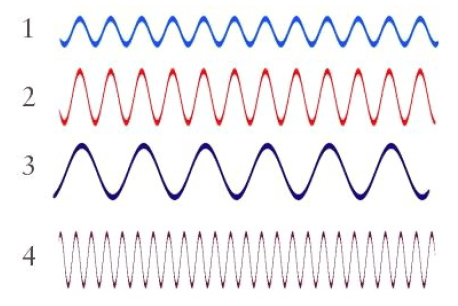
Which wave in the diagram has the loudest sound?
1
2
3
4
Which tool is used to overcome the limitation of hearing in humans?
ultrasound
Microscope
Stethoscope
Periscope
Which of the following fields does use sonar?
Medicine
Education
Shipping
Fisheries
Aidid and his father inspect an empty house with the hopes of buying it. He walk through the rooms talking to one another, and he notice that his voices and footsteps are echoing in the big, empty house. What causes the echo?
sound waves reflecting off hard and smooth surfaces throughout the house
sound waves reflecting off rough and soft surfaces throughout the house
sound waves moving slowly through air
sound waves refracting around corners in the empty rooms
Which wave in the diagram has the loudest sound?
1
2
3
4
The vibrations of the adjacent solid particles transfer the sound quickly.
true
false

________ describes how LOUD a sound is.
Amplitude
Frequency
To make a sound from a stringed instrument louder you must
hit it
pluck it harder
hold it higher
pluck it softer
Which device measures sound waves?
Oscilloscope
Stethoscope
Radioscope
Telescope
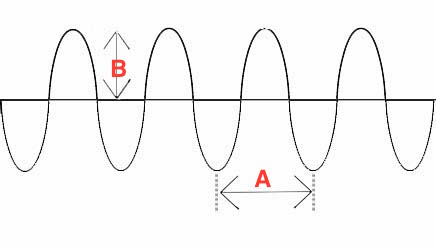
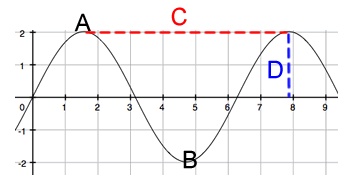
What property of the wave is represented by the letter "B"?
amplitude
crest
trough
wavelength
Qhalish bin Khalishan is playing guitar. How to increase the pitch of guitar's sound?
tighten the guitar strings
plays the guitar strings stronger
Qhalish bin Khalishan is playing guitar. How to increase the loudness of guitar's sound?
tighten the guitar strings
plays the guitar strings stronger

Choose two correct statements about this tool?
hearing aid
stethoscope
sound energy to electrical energy to loud sound wave
electrical energy to sound energy to electrical energy
Bats emit sound waves while flying. What happen after that? your answer can be more than one.
When the sound hits object that are close, it is reflected back to the bat.
When the sound hits object that are close, it is asorbed back to the bat.
The reflected sound is in a form of echo.
Bats used the echo to navigate and to hunt insects.

A wave with a large wavelength will have a ______ frequency and _____ energy
high, low
high, high
low, high
low, low
Izz bin Dzikri found that his studio room was not soundproof. Suggest modificatios that Izz can do to solve the problem?
install a glass mirror
add a carpet
put a few cushion chair
put a few plastic stool chair


Sound waves travel as ________ waves.
Transverse
Longitudinal
Surface
Sound waves CANNOT travel through which of these:
Paper
Milk
Outer space
Loudness of waves is measured in
Hertz
Decibels
Watts
High frequency sounds have _______ pitch
HIgh
Low

Way in which sound waves are used by animals such as dolphins and bats.
Echolocation
Transverse
Doppler Effect
Longitudinal
A reflected sound wave is called a(n) ______.
frequency
pitch
echo
rarefaction
Sound is made when a source of energy forces the matter around it to __________.
Vibrate
Amplitude
Stay still
Pitch

Which wave produced the loudest sound?
high Amplitude
low Amplitude
The highest point on a wave
wavelength
crest
trough
amplitude
The horizontal distance between crests
amplitude
frequency
crest
wavelength
The distance from the resting position to the crest of a wave.
amplitude
wavelength
frequency
pitch
What might happen to an object sitting on top of a speaker if loud music is played through the speaker?
Absolutely nothing would happen to the object.
The object could move due to the vibrations of the sound.
The object could appear a different color because the sound is absorbed.
The object could stop the sound from being transmitted out of the speaker because sound cannot travel through a solid.
How does sound travel?
in waves
only through the air
through magnets
as thermal energy
Which TWO of the following statements about sound are NOT true?
Sound is produced through vibrations.
Sound travels in waves.
Sound can travel through outer space
Sound waves can bounce off of objects to create an echo.
Sound waves can only travel through the air.
Sound waves can travel through all three states of matter. Which of the following best explains why sound travels most quickly through a solid?
Solids always produce an echo, which makes the sound seem louder to the human ear.
Only solids allow the vibrations to travel from one atom (particle) to another.
In solids, the atoms (particles) are closest together, which allows the vibrations to travel rapidly from one to another through the object.
Sound does not travel quickly through a solid. It travels most rapidly through a gas.
Why can't sound travel through outer space?
There is almost no matter in outer space, so the vibrations have no way to travel through the atmosphere. There is nothing to carry the sound waves through space.
Sound actually travels very quickly through outer space because there is no matter to slow down the sound waves.
There are too many planets and stars in outer space that absorb all of the sound waves, so they cannot travel to the human ear.
Because outer space is a "vacuum," the vibrations are irregular and travel in too many directions for us to detect the sound.
If you pluck a guitar string, it vibrates and creates a sound. In order to stop the sound, you could...
blow on the string.
pluck a different string.
place your hand on the string to stop the vibration.
pluck the same string again.

Which of these waves would produce a high pitch sound?
Low frequency wave
High frequency wave
The speed of a sound wave
Amplitude
Wavelength
Volume
Frequency
What determines the pitch of a sound?
The amount of energy used to create the vibration
The wavelength of the sound wave.
The volume of the sound.
The frequency of the vibrations.
If you pull a guitar string tighter, what will happen to the sound it creates?
The pitch will become higher because the string will vibrate more quickly.
The pitch will become lower because the string will vibrate more slowly.
The sound will get louder because more energy will be in the string.
The sound will get quieter because less energy will be in the string.
Which of the following best explains why vibrations from a thick rubber band make a lower-pitched sound than vibrations from a thin rubber band?
The thick rubber band is shorter.
The thick rubber band is longer.
The thick rubber band moves faster.
The thick rubber band moves slower.
A sound wave with low amplitude produces which type of sound?
High
Low
Loud
Soft
The lowest point on a wave
crest
frequency
wavelength
trough

