
 Worksheets
Unit 4-DNA, RNA and Proteins
Total questions: 68
Worksheet time: 2hrs 40mins
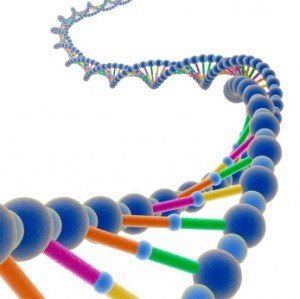
Which of the following best describes a DNA molecule?
double helix
contains ribose
made of amino acids
contains Uracil

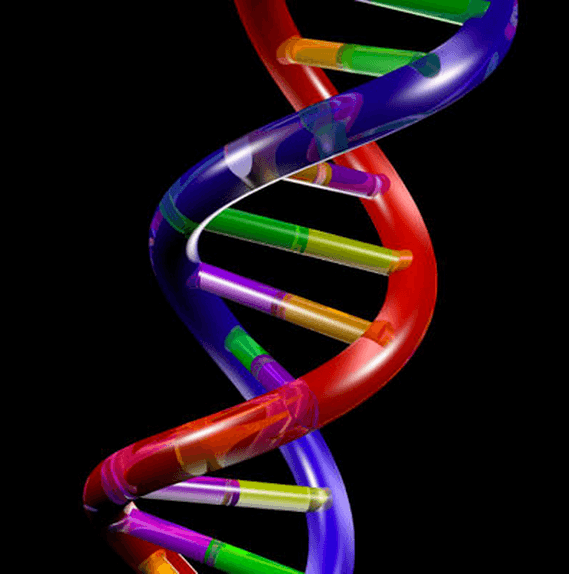
Which TWO molecules form the sides (backbone) of the DNA ladder?
deoxyribose sugar and adenine
deoxyribose sugar and a hydrogen bond
deoxyribose sugar and the nucleus
deoxyribose sugar and phosphate
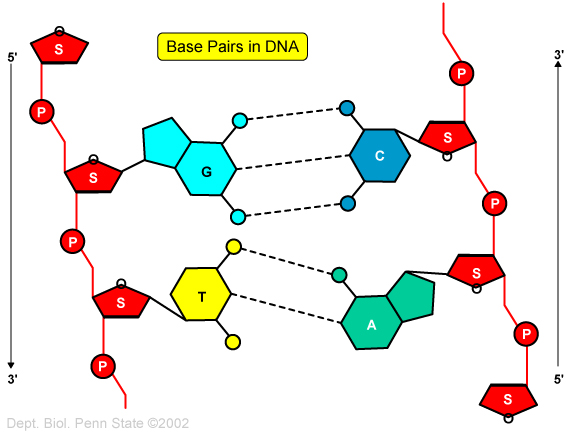

AATCATGGA
Given this sequence of DNA, determine the complementary bases. ATG TGA CAG
ATG TGA CAG
TAC ACT GTC
GTA AGT GAC
CAT TCA CTG
Why is DNA important?
it is very small and very complicated
it's in everything
it serves as the instructions to build proteins.
because we eat it every day for energy
During DNA replication, what is the name of the enzyme that unzips the double helix?
helicase
replicase
polymerase
synthase

These pictures show the process of DNA replication. Put the pictures in the correct order of replication.
3, 2, 1, 4
2, 1, 4, 3
2, 3, 1, 4
3, 4, 1, 2
What are the three components of a nucleotide?
sugar, hydrogen, nitrogen base
sugar, oxygen, nitrogen base
sugar, phosphate, nitrogen base
sugar, phosphate, protein
What are the 4 nitrogen bases found in DNA?
adenine, thymine, cytoplasm, and guanine
adenine, thymine cytosine, and guanine
adenine, thymine, cytosine, and gylcerol
adenine, thymine, cytosine, and glucose
During DNA replication, which enzyme is responsible for adding new DNA nucleotides?
Topoisomerase
DNA Polymerase
Ligase
Primase
Which of the following is a nitrogen base that is NOT found in DNA?
Adenine
Thymine
Uracil
Guanine
In eukaryotic (nucleus) cells, I travel out of the nucleus to a ribosome.
Both DNA and RNA
DNA
RNA
The process of mRNA to a sequence of amino acids is called
Transcription
Translation
Replication
Activation
What combines together to make a protein?
Amino Acid
RNA
Ribosome
DNA
What is the name of the organelle where translation occurs?
Nucleus
Ribosome
Mitochondria
Chloroplast
What is the order for Protein Synthesis?
Transcription -> Translation -> Protein
Translation - > Transcription -> Protein
Protein -> Transcription -> Translation
Translation -> Protein -> Transcription
RNA contains a nitrogenous base that is different from DNA. What is the name of the nitrogenous base?
Thymine
Uracil
Adenine
Cytosine
Guanine
What is the process called when DNA is made into mRNA.
translation
transcription
transcribe
translate
What makes up a codon?
2 amino acids
3 amino acids
2 nucleotides
3 nucleotides
Which RNA bases would pair with TAC GAA in transcription?
AUG CUU
ATG CTT
GCA TCC
GCA UCC
Where does transcription take place?
nucleus
cytoplasm
ribosome
mitochondria
Which RNA bases would pair with GGG CCC in transcription?
CCC GGG
GGG CCC
AAA UUU
UUU AAA
ATG GGA ACT CCA
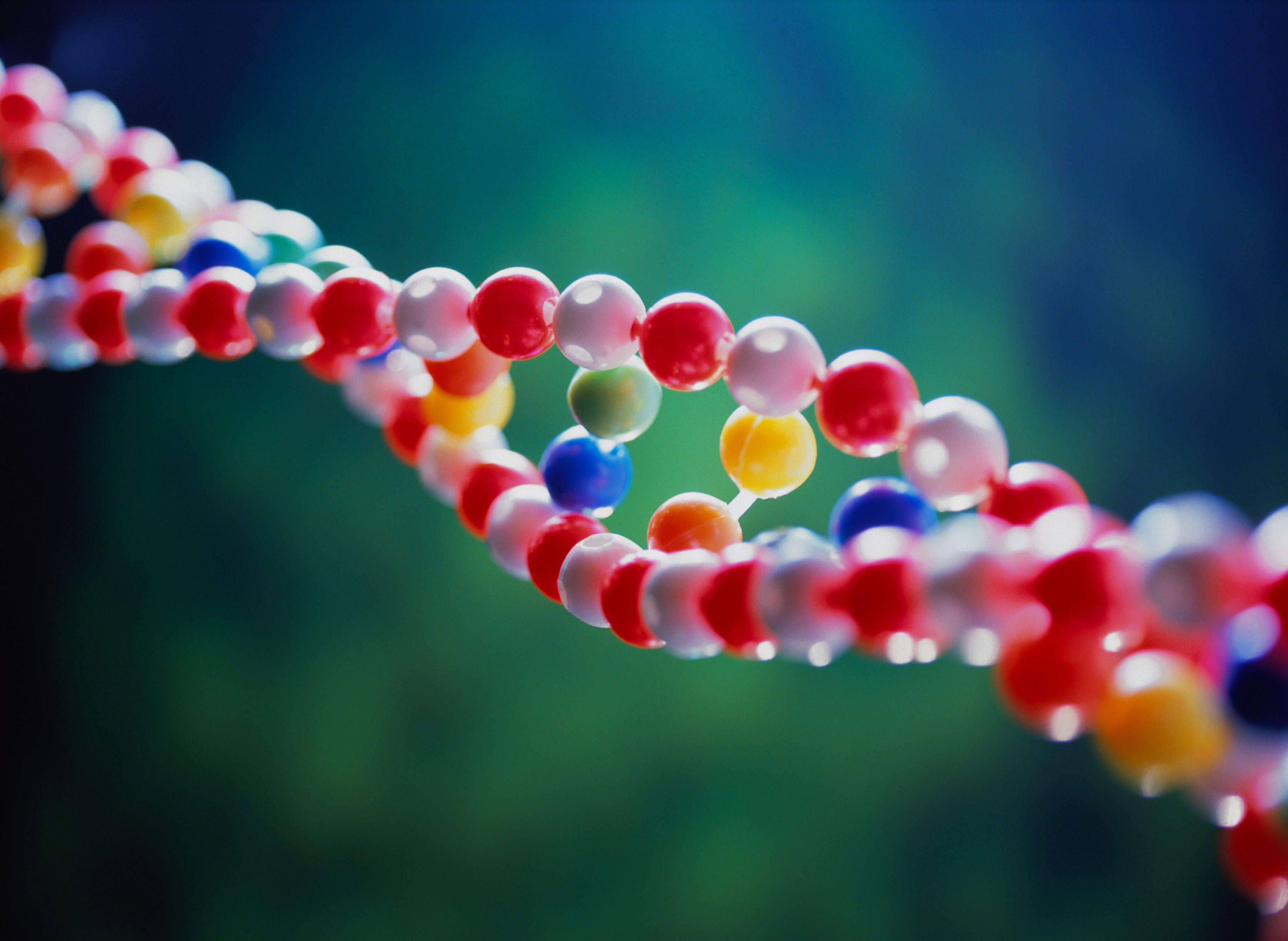
What does DNA provide instructions for?
Glucose creation
mRNA and tRNA strands
Proteins made of amino acids
Building legos
Which of the following is the sugar found in RNA?
Ribose
Maltose
Deoxyribose
Amylose
Which of the following is a correct difference between RNA and DNA?
RNA is single stranded and DNA is double stranded
RNA is double stranded and DNA is single stranded
DNA uses Uracil and RNA uses Thymine
RNA has deoxyribose and DNA has ribose
What process involves making an identical copy of DNA?
Replication
Transcription
Translation
Activation
Transcribe the following sequence of DNA into mRNA:
AAG CTT TGC
TTC GAA ACG
UUC GAA ACG
TTC GUU UCG
UUC GUU UCG
What is the monomer (building blocks) of DNA and RNA?
amino acids
nucleotides
fatty acids
monosaccharide
GAT-TAC-AGA-TTA-CAT?

What is the correct order for DNA replication?
1 DNA helicase opens the double helix,
2 DNA polymerase adds complementary nucleotides,
3 Two identical strands made of one old and one new DNA strand are left.
1 DNA helicase add nucleotides,
2 DNA polymerase opens the strands,
3 You are left with two new strands, one that is completely new and one old.
1 Two strands are made,
2 DNA helicase opens them
3 DNA polymerase adds on nucleotides to both.
mRNA
Which phrase best describes translation?
converts mRNA into a amino acids that build proteins
catalyzes bonds between amino acids
produces RNA from DNA molecules
recycles tRNA molecules for reuse

What is the correct amino acid sequence for the mRNA code AUGCCAGUAUGA
Met-Pro-Ala-Val
Met-Pro-Val
Tyr-Gly-His
Tyr-Gly-Arg-His

What amino acid is represented by the codon CAG?
Aspartic Acid
Histidine
Glutamine
Methionine
If you have a DNA sequence of GTG, what mRNA would be made and what amino acid?
CAC, Aspartic Acid
CAC, Histidine
GAG, Glutamine
AUG, Methionine
If you have a DNA sequence of GTG, what mRNA would be made and what amino acid?
CAC, Aspartic Acid
CAC, Histidine
GAG, Glutamine
AUG, Methionine

If you analyze 100% of a DNA strand you find that there is 30% G, what would you expect the percentage to be of the other letters?
G=30% T=30% A=20% C=20%
G=30% T=20% A=20% C=30%
G=40% T=10% A=10% C=40%
I'll give it 110%
If I wanted to make 10 amino acids, how many nucleotides (letters) would I need?
10
5
30
20

What would the structure order of DNA be from large to small?
Genome, Chromosome, Gene, nucleotide, nitrogenous base
Nitrogenous base, nucleotide, chromosome, genome
Gene, chromosome, nitrogenous base, nucleotide
Nucleotide, gene, nitrogenous base, genome, chromosome
The mutated DNA segment is TTACGCAAC. This is an example of ___ mutation.
T-G-A-C-C-A
T-G-A-G-C-A
The mutated DNA segment is TTCGCAAG. This is an example of ___ mutation.
What mutation has occurred here?
T-G-A-C-C-A
T-G-A-G-C-C-A
Substitution
Deletion
Insertion
Frameshift

What is X pointing to?
Phosphate
Sugar
Base
Hydrogen Bond
What is Y pointing to?
Phosphate
Sugar
Base
Hydrogen Bond
What is X connected to?
Phosphate
Sugar
Base
Hydrogen Bond
1 base pair change which creates 1 different amino acid
nonsense mutation
missense mutation
frame shift mutation
silent mutation
In a molecule of double-stranded DNA, the amount of Guanine present is always equal to the amount of
cytosine
guanine
thymine
uracil
During DNA replication, which enzyme is responsible for proofreading and fixing copying mistakes?
lactase
helicase
DNA polymerase
lactose

