
 Worksheets
Body systems review
Total questions: 53
Worksheet time: 29mins
Which part of the heart pumps deoxygenated (oxygen-poor) blood?
Left side
Right side
Right and Left atrium
Right and Left ventricle
What is the largest artery in the human body?
Aorta
Pulmonary
Hepatic
Renal
What term do scientists use to describe the chemical process in which oxygen and glucose react to release energy inside body cells?
respiration
exhaling
breathing
inhaling
What prevents food from entering the trachea?
Subglottis
Throat
Glottis
Epiglottis
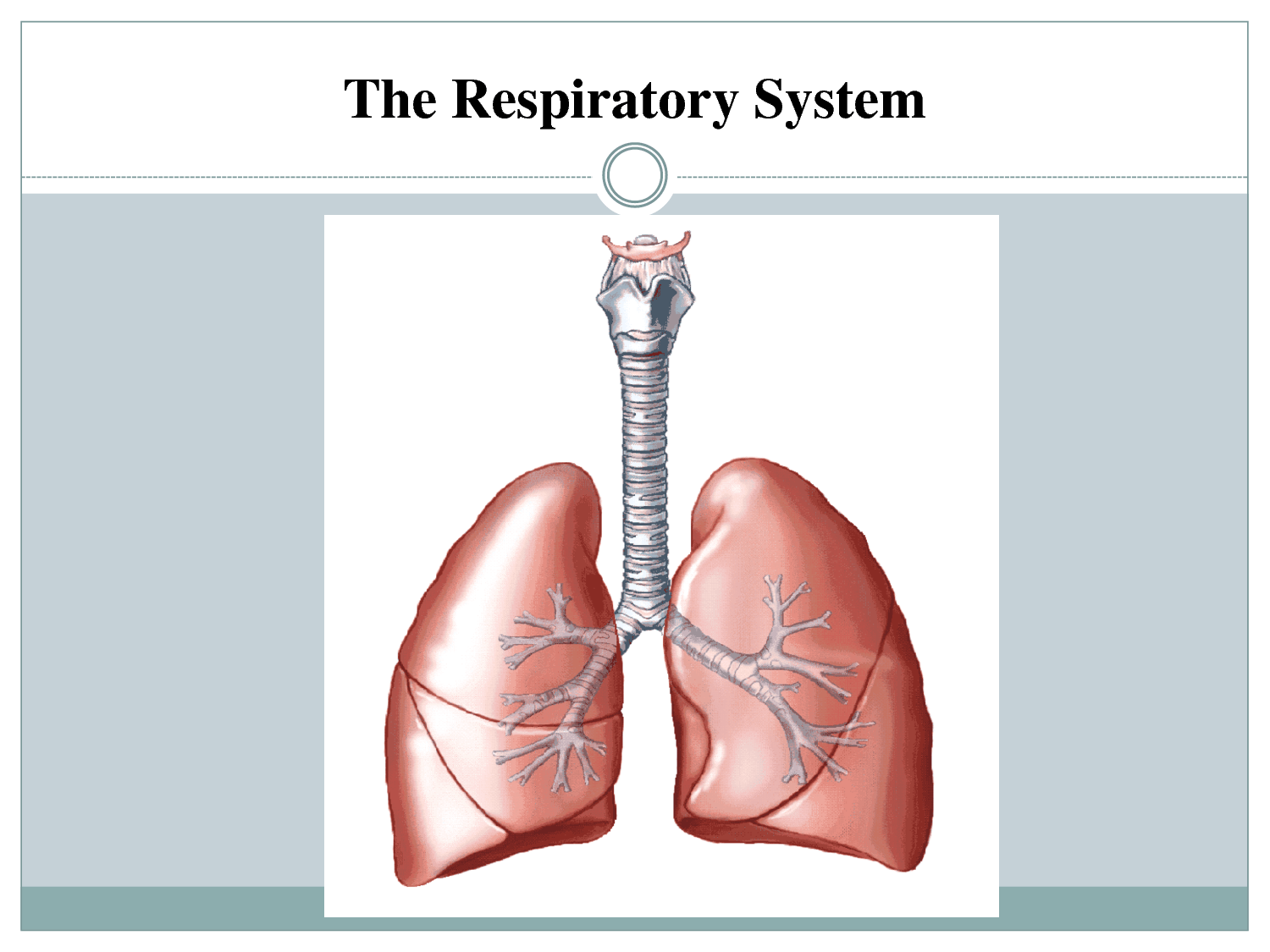
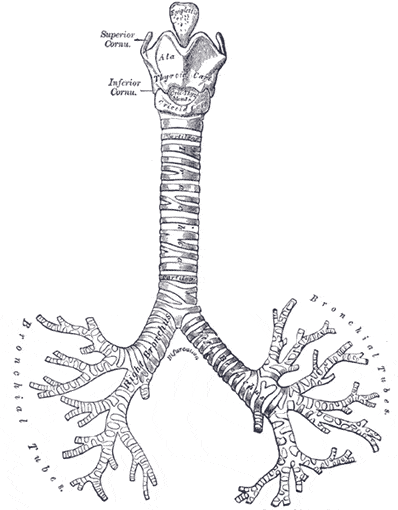
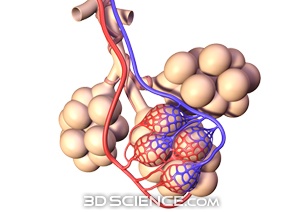
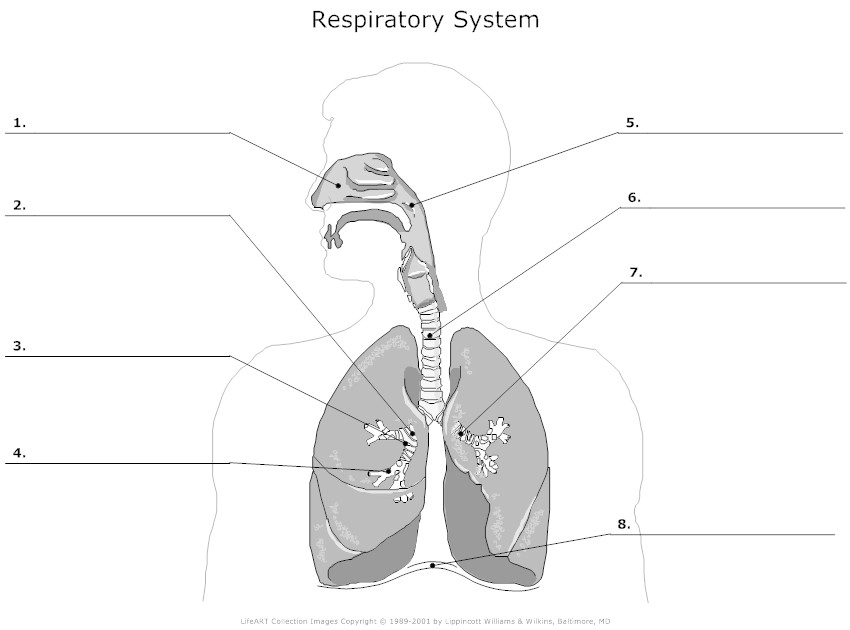
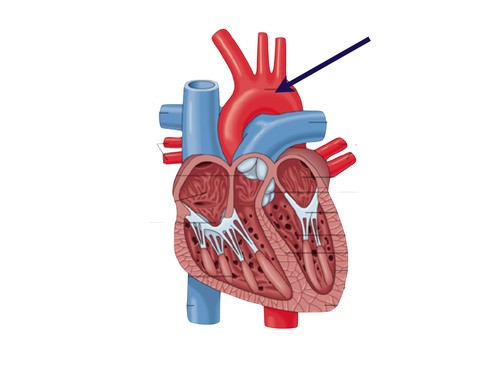
Identify
Pulmonary veins
Pulmonary artery
Aorta
Vena cava

Identify number 9
Right Atrium
Right Ventricle
Left Atrium
Left Ventricle

What is the function of the nasal cavity?
To filter the air using cilia
To warn the air
To moisten the air
To warm the air
Arteries carry oxygen rich blood away from the heart.
True
False
The job of the heart is to . . .
pump blood around the body.
send food to the small intestines.
break down food.
give energy to the body.
Blood carry ________ and _______ to your body cells
Nitrogen and Oxygen
Nutrients and Plasma
Oxygen and Nutrients
Iron and antibodies
Blood carries ____________ AWAY from your body cells.
Oxygen
Nutrients
Waste
Water
Carry blood towards the heart
Aorta
Veins
Arteries
Capillaries
White Blood Cells ________________ infection
Cause
Fight
Develop
Create
When exercising your body needs more ______________.
Oxygen
Carbon dioxide
Water
Lymph nodes
My lungs are __________________ air.
Your lungs are ___________ air

What is blood made of?
oxygen and plasma
red blood cells and white blood cells
plasma, red blood cells, white blood cells, and platelets.
plasma and platelets

What is plasma?
only white blood cells
only red blood cells
fluid part of blood
hemoglobin

Why do platelets clump together?
to produce oxygen
to reduce oxygen
to produce blood loss
to reduce blood loss
To what organ does blood carry waste?
Kidney
liver
Heart
stomach
Things in the human body that need to stay the same
Glucose
Temperature
Blood Pressure
All of the above
What makes up around 55% of the blood?
Plasma
Red Blood Cells
White Blood Cells
Platelets
What causes the blood to be the distinct red colour?
Haemoglobin
Glucose
Hormones
Oxygen
Which of the following is NOT a type of blood vessel?
Artery
Capillary
Vein
Ventricle
What is the function (job) of the plasma?
To release antibodies to fight infections.
To transport oxygen around the body.
To carry dissolved nutrients and sugars.
To transport oxygen around the body.
Which blood vessels take blood TO the heart?
Veins
Arteries
Capillaries
Which blood vessels take blood AWAY from the heart?
Veins
Arteries
Capillaries
Which is the smallest of the 3 blood vessels?
Veins
Arteries
Capillaries
What type of blood do the arteries usually carry?
Oxygenated Blood
Deoxygenated Blood
Which blood vessel has valves to prevent the back-flow of blood?
Veins
Arteries
Capillaries
Which one of the following is NOT part of the circulatory system?
Stomach
Heart
Arteries
Capillaries
Which of the following does NOT describe the veins?
Thin walls
Thick walls
Large lumen
Presence of valves
Which artery takes blood from the heart to the lungs?
Pulmonary Artery
Coronary Artery
Renal Artery
Hepatic Artery
How many chambers does the heart have?
1
2
3
4

Name the part of the heart labelled 5?
Right atrium
Left Atrium
Right Ventricle
Left Ventricle
Which structure of the respiratory system contains cartilage
Mouth
Alveoli
Trachea
Air
There are roughly......... alveoli
800
350 million
600
600 million
During inhalation there is...
An increase in the volume and reduction in pressure.
An increase in volume and redcution in pressure.
A decrease in volume and decrease in pressure.
Which 2 muslces are responsible for our breathing?
Bicep and tricep
Diaphragm and stomach
Intercostal muscles and alveoli
Diaphragm and intercostal muscles
The process of carbon dioxide and oxyegn moving into and from the alveoli is called.....
breathing
gaseous exchange
aerobic respiration
double circulatory system
During exhilation there is...
An increase in the volume and reduction in pressure.
A reduction in the volume and increase in pressure.
A reduction in the volume and reduction in teh pressure.
What are the main organs of the respiratory system that allow us to breathe and for gas exchange to happen?
diapragm
lungs
trachea

