
NEW
Font size
S
M
L
XL
 Worksheets
Planetary Science Review
Total questions: 61
Worksheet time: 49mins
Name
Class
Date
1.

Name the moon phase
a)
waning crescent
b)
waxing crescent
c)
waning gibbous
d)
waxing gibbous
2.
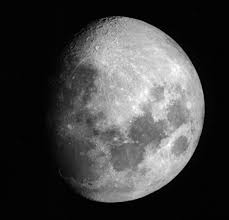
Name the moon phase
a)
waning crescent
b)
waxing crescent
c)
waning gibbous
d)
waxing gibbous
3.
Name the moon phase
a)
waning crescent
b)
waxing crescent
c)
waning gibbous
d)
waxing gibbous
4.
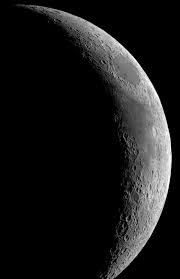
Name the moon phase
a)
waning crescent
b)
waxing crescent
c)
waning gibbous
d)
waxing gibbous
5.
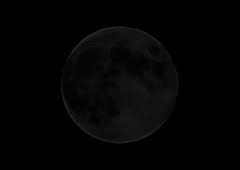
Name the moon phase
a)
First Quarter
b)
Last Quarter
c)
New Moon
d)
Full Moon
6.
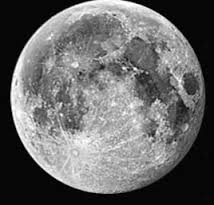
Name the moon phase
a)
First Quarter
b)
Last Quarter
c)
New Moon
d)
Full Moon
7.
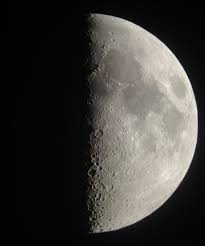
Name the moon phase
a)
First Quarter
b)
Last Quarter
c)
New Moon
d)
Full Moon
8.
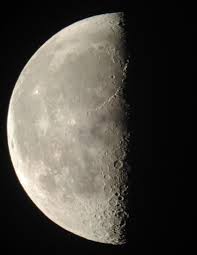
Name the moon phase
a)
First Quarter
b)
Last Quarter
c)
New Moon
d)
Full Moon
9.

Name the moon phase that would come AFTER this moon.
a)
waning crescent
b)
waxing crescent
c)
waning gibbous
d)
waxing gibbous
10.
The four parts of a year
a)
space
b)
season
c)
time
d)
tide
11.
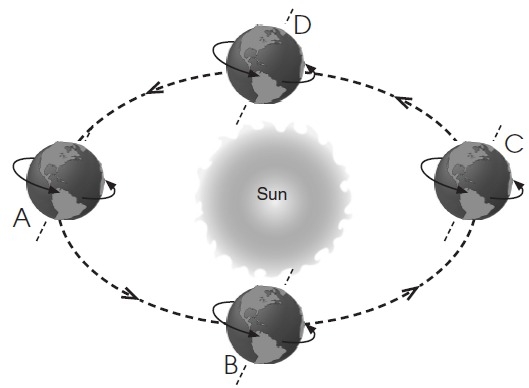
What season is letter A?
a)
Winter
b)
Summer
c)
Spring
d)
Fall
12.
What are the reasons for the seasons?
a)
Earth's tilt and rotation.
b)
Earth's rotation and revolution.
c)
Earth's tilt and revolution.
d)
Earth's tilt and resolution
13.
When the Northern Hemisphere is pointing towards the sun, what season is the Southern Hemisphere?
a)
Winter
b)
Spring
c)
Fall
d)
Summer
14.
Tides are caused by ___________
a)
wind
b)
gravitational pull of moon
c)
waves gravitation toward land
d)
rain
15.
Which way does the moon revolve?
a)
clockwise
b)
counter clockwise
c)
some times it changes direction
d)
it doesn't revolve
16.
When the moon is in between the earth and the sun it is a
a)
New Moon
b)
Full Moon
c)
First Quarter
d)
Third Quarter
17.
Waxing means...
a)
Growing
b)
Dying
c)
Losing light
d)
Moving
18.
Which of the following statements is most accurate about the Movement of Earth and the Sun?
a)
The Sun revolves around the Earth
b)
The Earth rotates around the Sun
c)
The Earth revolves around the Sun
d)
The Earth rotates and revolves around the Sun
19.

What would be the result if the Earth's axis was not tilted but straight up and down?
a)
Nothing would change
b)
There would be no seasons
c)
Days would get longer
d)
The Equator would burn up and the poles would freeze
20.

Name the phase of the moon for letter a
a)
First Quarter
b)
Last Quarter
c)
Waxing Gibbous
d)
Waning Gibbous
21.

Name the phase of the moon for letter f
a)
Waning Gibbous
b)
Waxing Gibbous
c)
Waning Crescent
d)
Waxing Crescent
22.
What is illuminating the Moon?
a)
Nuclear Fusion
b)
Sunlight
c)
Mirrors
d)
Flood Lights
23.

What is a high tide?
a)
Sea pulled TOWARD the moon where Earth is CLOSEST to the moon
b)
Sea pulled AWAY from the moon where Earth is FARTHEST to the moon
c)
Sea pulled AWAY from the moon where Earth is CLOSEST to the moon
24.
A[n] ______________ tide occurs when the sun is at right angles to the line between Earth and the moon.
a)
high
b)
neap
c)
low
d)
spring
25.
Differences in the moon's and sun's pull on different sides of the Earth cause _________.
a)
gravity
b)
lunar phases
c)
tides
d)
dabbing
26.
A[n] ___________ tide occurs when the sun, Earth, and the moon are nearly in a line.
a)
spring
b)
high
c)
low
d)
neap
27.
The bulge of water on the side of the Earth closest to the moon produces ___________.
a)
high tide
b)
low tide
c)
neap tide
d)
spring tide
28.
Water flows toward the high tides, halfway between them causing ____________.
a)
neap tide
b)
high tide
c)
spring tide
d)
low tides
29.
Tides are the cycle of rising and falling ocean water that repeats automatically every
a)
24 hours
b)
12.5 hours
c)
25 hours
d)
6.25 hours
30.
A neap tide is a tide with the greatest difference between low and high tides
a)
true
b)
false
31.
Neap tides occur once a month.
a)
True
b)
False
32.
Tides are caused mainly by the differences in how much gravity from the moon and the sun pulls on different parts of the Earth.
a)
True
b)
False
33.
Changes in the positions of Earth, the moon, and the sun affect the height of high tides during a month.
a)
True
b)
False
34.
In order to have an eclipse, the Moon, Sun and Earth have to be?
a)
Below each other
b)
Above each other
c)
In alignment
35.
A lunar eclipse can occur only during the _________________.
a)
Full moon
b)
New moon
c)
Waxing moon
36.
A solar eclipse can occur only during the _________________.
a)
Full moon
b)
New moon
c)
Quarter moon
37.
Which type of eclipse occurs when the Moon comes directly between Earth and the Sun?
a)
Lunar eclipse
b)
Solar eclipse
38.
Which type of eclipse occurs when the Moon comes directly between Earth and the Sun?
a)
Lunar eclipse
b)
Solar eclipse
39.
Which type of eclipse occurs when the Earth comes directly between the Sun and Moon?
a)
Lunar eclipse
b)
Solar eclipse
40.
During what phase of the moon can a lunar eclipse occur?
a)
3rd Quarter
b)
1st Quarter
c)
New Moon
d)
Full Moon
41.
For a solar eclipse to occur, what has to happen?
a)
The sun must be directly between Earth and the moon.
b)
The moon must be directly between Earth and the Sun.
c)
Earth must be directly between the Sun and the moon.
42.
When the Earth's shadow falls on the moon, the shadow causes what to happen?
a)
Lunar eclipse
b)
Solar eclipse
c)
Partial eclipse
43.
This type of eclipse occurs when the moon blocks the sunlight from reaching Earth?
a)
Solar eclipse
b)
Lunar eclipse
c)
Total eclipse
44.
Tides are caused mainly by what?
a)
Moon’s gravitational pull
b)
Sun’s gravitational pull
c)
Earth’s gravitational pull
45.
Most places on Earth experience about how many high and low tides in 24 hours?
a)
2 high and 2 low tides
b)
4 high and 4 low tides
c)
1 high and 1 low tides
46.
What type of tide occurs during a new and full moon?
a)
Neap tides
b)
Spring tides
c)
Normal tides
47.
What type of tide occurs during the first or third quarter moon?
a)
Neap tides
b)
Spring tides
c)
Normal tides
48.
If the Sun, Earth, and Moon are in perfect alignment, the Earth would have a _______ tide.
a)
Spring
b)
Neap
c)
Normal
49.
If the Sun, Earth, and Moon create a 90 degree angle, the Earth would have __________.
a)
Spring tides
b)
Neap tides
c)
Normal tides
50.
The order of the planets is:
a)
Mars,Venus,Earth,
Mercury,Saturn
Jupiter, Uranus, Neptune
Mercury,Saturn
Jupiter, Uranus, Neptune
b)
Earth,Venus,Mars
Jupiter, Neptune,
Mercury,Saturn,
Uranus
Jupiter, Neptune,
Mercury,Saturn,
Uranus
c)
Mercury,Venus,Earth
Mars,Jupiter,
Saturn,Uranus
Neptune
Mars,Jupiter,
Saturn,Uranus
Neptune
51.
Which planet is fifth from the sun?
a)
Saturn
b)
Jupiter
c)
Mars
d)
Earth
52.
Which planet is seventh from the sun?
a)
Saturn
b)
Earth
c)
Venus
d)
Uranus
53.
which planet is the third from the sun?
a)
Mercury
b)
Neptune
c)
Pluto
d)
Earth
54.
Which Planet comes after Earth in the solar system?
a)
Mercury
b)
Mars
c)
Venus
d)
Eros
55.
The spinning of an object on its axis is called______
a)
orbit
b)
rotation
c)
revolution
d)
tide
56.
Day and night is caused by the _____________ of earth on its axis.
a)
revolution
b)
orbit
c)
rotation
57.
The earth orbits around...
a)
the sun.
b)
the moon
c)
other planets
d)
the Milky Way
58.
What are the reasons for the seasons?
a)
Earth's tilt and rotation.
b)
Earth's rotation and revolution.
c)
Earth's tilt and revolution.
d)
Earth's tilt and resolution
59.

When the Northern Hemisphere of Earth is Leaning away from the Sun, What season is the Southern Hemisphere experiencing?
a)
Summer
b)
Winter
c)
Spring
d)
Fall
60.
How long does it take the Earth to make one REVOLUTION around the Sun?
a)
12 hours
b)
24 hours
c)
365 days
d)
29.5 days
61.
How long does it take for Earth to complete on full rotation?
a)
365 days
b)
23 hours
c)
24 hours
d)
1 month
Reset

