
 Worksheets
#3 7-week assessment
Total questions: 118
Worksheet time: 2hrs 59mins
Name
Class
Date
1.

What is happening at C?
a)
Stationary
b)
Accelerating
c)
Fast steady speed; moving away from the starting position
d)
Slower steady speed; moving away from the starting position
2.

What is happening at D?
a)
Stationary
b)
Accelerating
c)
Fast steady speed; moving away from the starting position
d)
Slower steady speed; moving away from the starting position
3.

What is happening at A?
a)
Stationary
b)
Accelerating
c)
Slower steady speed; moving away from the starting position
d)
Steady speed; returning to start position
4.

What is happening at B?
a)
Stationary
b)
Accelerating
c)
Slower steady speed; moving away from the starting position
d)
Steady speed; returning to start position
5.

What does this graph represent?
a)
Constant speed
b)
Acceleration
c)
Not moving
6.
What is speed?
a)
how far you go
b)
how much distance is covered over a period of time
c)
how fast you accelerate
d)
the change in the location of a object
7.
What is the formula to calculate speed?
a)
Speed = time/distance
b)
Speed = distance/time
c)
Speed = distance x time
d)
Speed = time x distance
8.
What is velocity?
a)
the quickness of an object
b)
the location of an object
c)
acceleration
d)
speed in a specific direction
9.
A place or object used for comparison to determine if another object is in motion is called a
a)
comparison point
b)
reference point
c)
point of view
d)
motion detector
10.
The change of position over time is called
a)
position
b)
motion
c)
speed
d)
location
11.
Acceleration is defined as the CHANGE in
a)
time it takes for one place to move to another place.
b)
velocity of an object.
c)
distance divided by the time interval
d)
velocity divided by the time interval
12.
What does friction produce?
a)
light
b)
sound
c)
heat
d)
gravity
13.
Which of the following answers is the most scientific answer for the question:
What is friction?
a)
The random force between two solids, liquids, or gases.
b)
The contact force between two solids, liquids, or gases that slide past one another.
c)
The thing that creates static electricity
d)
A force that is random
14.
Rougher surfaces have ...
a)
greater friction
b)
less friction
c)
the same level of friction
15.
On which surface will a toy sledge travel the least distance?
a)
Carpet
b)
Polished Wood
c)
Ice
16.

How will this object move?
a)
It won't move.
b)
It will move to the right.
c)
It will move to the left.
d)
It will move in both directions.
17.
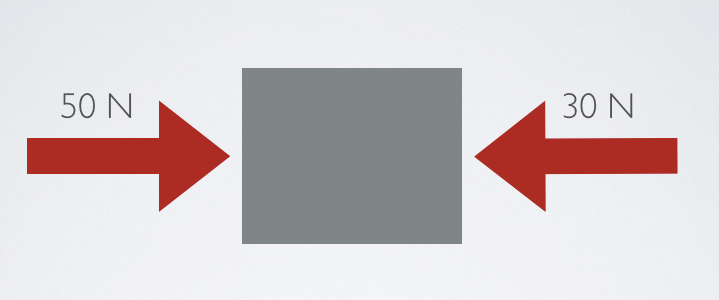
How will this object move?
a)
It won't move.
b)
It will move to the right.
c)
It will move to the left.
d)
It will move up.
18.
What is the unit to MEASURE force?
a)
Kilogram
b)
Meter
c)
Pascal
d)
Newton
19.

A ____________ is a push or a pull on an object.
a)
friction
b)
force
c)
magnet
d)
gravity
20.

What is the net force?
a)
10 N
b)
0 N
c)
25 N
d)
1 N
21.
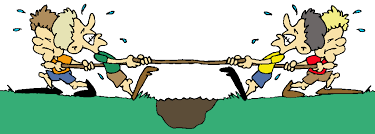
If these teams are pulling with the same amount of force what will happen?
a)
The boy in blue will win.
b)
They will not move at all.
c)
The boy in red will win.
d)
Both will fall down.
22.
Objects will accelerate towards Earth at a rate of
a)
-1.6 m/s2
b)
9.8 m/s2
c)
-9.8 N
d)
1.6 N
23.
A flat sloping surface that connects lower and higher elevations. It makes raising objects easier.
a)
wedge
b)
screw
c)
lever
d)
inclined plane
24.
An inclined plane wrapped around a rod forms this simple machine
a)
lever
b)
pulley
c)
screw
d)
wedge
25.
An axe is an example of a
a)
pulley
b)
inclined plane
c)
screw
d)
wedge
26.
A seesaw is an example of a
a)
wedge
b)
lever
c)
inclined plane
d)
pulley
27.

Stairs
a)
wedge
b)
pulley
c)
inclined plane
d)
wheel and axle
28.

Lightbulb
a)
wedge
b)
pulley
c)
incline plane
d)
screw
29.
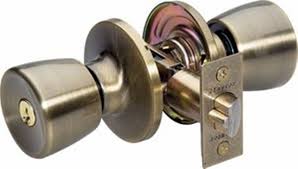
What type of simple machine is this?
a)
wheel and axle
b)
gear
c)
lever
d)
inclined plane
30.
Energy due to motion is ____________ energy.
a)
Potential
b)
Energy
c)
Kinetic
d)
Friction
31.
The faster an object moves, the ________ kinetic energy it has.
a)
more
b)
less
c)
none of the above
d)
all of the above
32.
__________ is stored energy.
a)
Potential
b)
Kinetic
c)
None of the above
d)
All of the above
33.
Gravitational potential energy depends on the ________ and ________ of the object.
a)
Height and mass
b)
Friction and movement
c)
Mass and Movement
d)
Height and Friction
34.

What kind of energy is in a rock at the edge of a cliff?
a)
Potential
b)
Kinetic
35.

What kind of energy is in a moving skateboard?
a)
Potential
b)
Kinetic
36.

What kind of energy is in a waving hand?
a)
Potential
b)
Kinetic
37.

What kind of energy is in a stretched rubber band?
a)
Potential
b)
Kinetic
38.

At which point is kinetic energy greatest?
a)
W
b)
X
c)
Y
d)
Z
39.
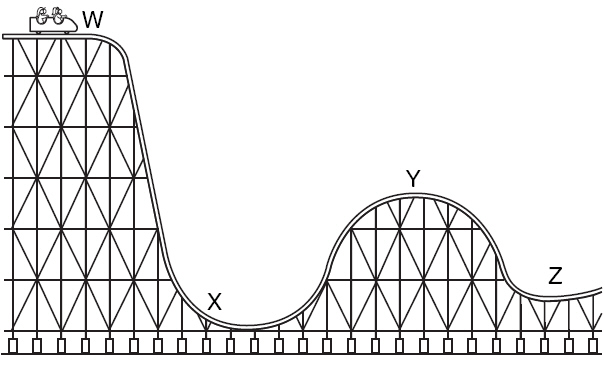
At which point is potential energy greatest?
a)
W
b)
X
c)
Y
d)
Z
40.
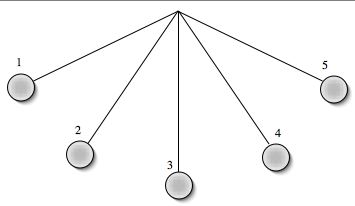
When a pendulum swings, at which point is kinetic energy highest?
a)
1
b)
2
c)
3
d)
4
41.
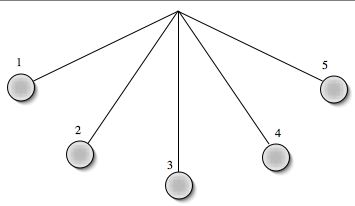
When a pendulum swings, at which point is potential energy at its greatest?
a)
1
b)
2
c)
3
d)
4
42.
Something electricity can't move through is called a(n) ______.
a)
conductor
b)
wire
c)
shoe
d)
insulator
43.
What is a example of a conductor?
a)
wood
b)
metal
c)
rubber
d)
rock
44.
What is a example of a insulator?
a)
metal
b)
rubber
c)
water
45.
Which is NOT an insulator.
a)
Wool
b)
Plastic
c)
Copper
d)
Glass
46.
Which one is an insulator?
a)
Silver
b)
Copper
c)
Mechanical pencil
d)
plastic
47.
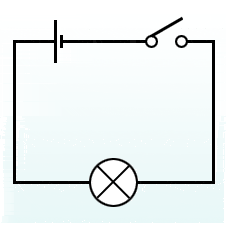
This circuit is .....?
a)
open
b)
parallel
c)
closed
d)
shows the flow of electricity
48.

What kind of circuit is this?
a)
series
b)
parallel
49.

What type of circuit is this?
a)
series
b)
parallel
50.

Would would best complete this circuit?
a)
A wire
b)
A switch
c)
A battery
d)
A light bulb
51.
Which organelle belongs in plant cells only?
a)
Cell Membrane
b)
Mitochondrion
c)
Chloroplast
d)
Nucleus
52.
Which organelle belongs in plant cells only?
a)
Cytoplasm
b)
Mitochondrion
c)
Cell Wall
d)
Nucleus
53.
Which organelle belongs in plant cells only?
a)
Cytoplasm
b)
Mitochondrion
c)
Large Central Vacuole
d)
Cell Membrane
54.
Which organelle belongs in both plant and animal cells?
a)
Cytoplasm
b)
Chloroplast
c)
Large Central Vacuole
d)
Cell Wall
55.
Which organelle belongs in both plant and animal cells?
a)
Chloroplast
b)
Cell Wall
c)
Large Central Vacuole
d)
Nucleus
56.
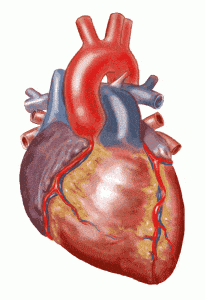
This is a example of ........
a)
cell
b)
organ system
c)
organ
d)
tissue
57.
A group of cells that have similar functions? Examples are nervous, epithelial, muscle and connective
a)
cells
b)
tissues
c)
organs
d)
atoms
58.
What organelle is called the "powerhouse" of a cell?
a)
Endoplasmic Reticulum
b)
Nucleus
c)
Mitochondria
d)
Nucleolus
59.
The ___________ is the basic unit of life
a)
organ
b)
cell
c)
atom
d)
tissue
60.
What type of cell has a defined nucleus and membrane bound organelles.
a)
Bacteria
b)
Prokaryote
c)
Eukaryote
d)
Archaeabacteria
61.
What type of cell does not have a defined nucleus or membrane bound organelles.
a)
Animal Cell
b)
Prokaryote
c)
Eukaryote
d)
Plant Cell
62.
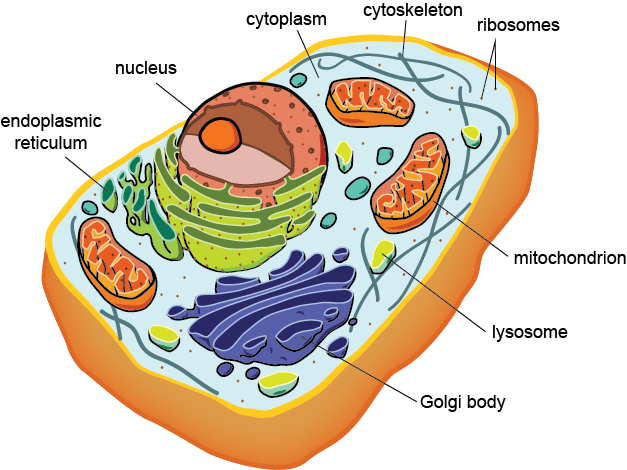
Which of the following statements is not part of the cell theory?
a)
Cells are the basic unit of structure and function in all living things.
b)
All cells are produced from other cells.
c)
Only animal cells are composed of cells.
d)
All living things are composed of cells.
63.
What is the correct order of organization
a)
tissues-cells-organs-organ systems-organism
b)
cell-tissue-organs-organ systems-organism
c)
organism-cells-tissues-organ systems-organism
d)
tissues-cells-organs-organ sytems-organism
64.
In order for a hurricane to form, the water must be ________.
a)
Cool
b)
Warm
c)
Cold
d)
Hot
65.
The center of a hurricane is called the ______.
a)
center
b)
brain
c)
eye
d)
circle
66.

What is a hurricane's energy source?
a)
warm water
b)
cold water
c)
wind
d)
warm air
67.
Where do most hurricanes develop?
a)
Middle of the United States
b)
Near the Equator
c)
Near Canada and Alaska
d)
Antarctica
68.
Where is Tornado Alley located?
a)
Near the equator of the Earth
b)
Near the North Pole
c)
South Central Los Angeles
d)
Middle states of United States
69.

What is a tornado?
a)
Rotating funnel shaped cloud with strong winds
b)
A high winds storm with snow and ice
c)
Heavy rains with thunder and lightning
70.
The amount of water vapor in the atmosphere compared to how much it could hold.
a)
Saturation
b)
Vaporicity
c)
Humidity
d)
Relative Humidity
71.
_____________ is the temperature to which air must be cooled to reach saturation.
a)
Humid point
b)
Temperature index
c)
Relative Humidity
d)
Dew Point
72.
The amount of water vapor in the atmosphere.
a)
Saturation
b)
Vaporicity
c)
Humidity
d)
Relative Humidity
73.
In the modern day atmosphere, what is the approximate percentage of nitrogen?
a)
0.04%
b)
21%
c)
78%
74.
What percentage of our atmosphere is made up of other gases such as argon, water vapor, and carbon dioxide?
a)
1%
b)
21%
c)
78%
d)
90%
75.
What is the percentage of oxygen in Earth's atmosphere?
a)
1%
b)
21%
c)
78%
d)
90%
76.
stormy weather
a)
High Pressure System
b)
Low Pressure System
77.
fair weather
a)
High Pressure
b)
Low Pressure
78.
clear skies
a)
High Pressure
b)
Low Pressure
79.
cloudy skies
a)
High Pressure System
b)
Low Pressure System
80.
What instrument measures air pressure?
a)
barometer
b)
hydrometer
c)
rain gauge
d)
anemometer
81.
What instrument measures temperature?
a)
rain gauge
b)
hydrometer
c)
thermometer
d)
wind vane
82.
What instrument measures wind speed?
a)
thermometer
b)
wind vane
c)
barometer
d)
anemometer
83.
This is a gas produced from breathing, volcanic eruptions, and burning of fossil fuels
a)
Water Vapor
b)
Methane
c)
Ozone
d)
Carbon Dioxide
84.
This gas is "in" the troposphere and acts like a blanket trapping heat and UV rays
a)
Ozone
b)
Water Vapor
c)
Carbon Dioxide
d)
Nitrous Oxide
85.

Name this protist?
a)
Euglena
b)
Amoeba
c)
Paramecium
d)
Volvox
86.

Name this protist?
a)
Volvox
b)
Euglena
c)
Amoeba
d)
Paramecium
87.

Name this protist?
a)
Paramecium
b)
Amoeba
c)
Volvox
d)
Euglena
88.

Name this protist?
a)
Amoeba
b)
Euglena
c)
Paramecium
d)
Volvox
89.
Reproduction without the use of sex cells is called what?
a)
Sexual Repoduction
b)
Asexual Reporduction
90.

Fission, budding, and regeneration are all examples of what kind of reproduction?
a)
Asexual Reproduction
b)
Sexual Reproduction
91.

How does this protist move?
a)
Pseudopods
b)
Cilia
c)
Flagellum
92.

How does this protist move?
a)
Flagellum
b)
Cilia
c)
Pseudopods
93.

How does this protist move?
a)
Cilia
b)
Pseudopods
c)
Flagellum
94.

A protist that can make its own food is called what?
a)
Heterotroph
b)
Autotroph
95.

A protist that can not make its own food is called what?
a)
Autotroph
b)
Heterotroph
96.
Which protists are autotrophic?
a)
Euglena and Volvox
b)
Amoeba and Euglena
c)
Volvox and Amoeba
d)
Paramecium Only
97.
Heterozygous is when...
a)
the alleles are the same
b)
the alleles are different
c)
the alleles are absent
d)
the alleles are present
98.
In a heterozygous genotype, the ___________ allele takes over in the phenotype.
a)
recessive
b)
dominant
c)
lower case letter
d)
both
99.
G = green, g = yellow
The genotype for a yellow plant is...
The genotype for a yellow plant is...
a)
GG
b)
Gg
c)
gg
d)
all of the choices result in yellow
100.
Which of the following is NOT a genotype?
a)
heterozygous
b)
a trait
c)
Bb
d)
homozygous recessive
101.
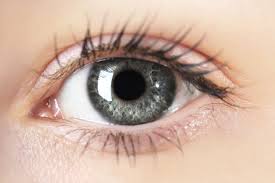
What you see, or the physical appearance.
a)
Genotype
b)
Phenotype
c)
Homozygous
d)
Heterozygous
102.
How is the number of chromosomes in a human sex cell different from the number in a human body cell?
a)
A sex cell has 23 chromosomes and a body cell has 46.
b)
A sex cell has 46 chromosomes and a body cell has 23.
c)
A sex cell has chromosomes that are half
d)
A sex cell has chromosomes that are twice as long as those in a body cell.
103.
The process of cell division that creates identical body cells with a full set of DNA
a)
mitosis
b)
meiosis
c)
transcription
d)
translation
104.
The type of cell division that makes gamete cells for sexual reproduction that only contain half a set of DNA.
a)
mitosis
b)
meiosis
c)
transcription
d)
translation
105.
Mitosis creates...
a)
1 cell
b)
2 cells
c)
3 cells
d)
4 cells
106.
Meiosis creates...
a)
1 cell
b)
2 cells
c)
3 cells
d)
4 cells
107.

What does a filled in square represent?
a)
Not affected Female
b)
Not affected Male
c)
Affected Male
d)
Affected Female
108.

How many kids did the mother and father from the first generation have?
a)
2
b)
4
c)
5
d)
6
109.

What does an open circle represent?
a)
Not Affected Male
b)
Not Affected Female
c)
Affected Male
d)
Affected Female
110.
A human has 46 chromosomes in their body cells. What is the haploid number?
a)
46
b)
92
c)
23
d)
12
111.
Mitosis produces cells with haploid or diploid number of chromosomes?
a)
Haploid
b)
Diploid
112.
Meiosis produces cells with a haploid or diploid number of chromosomes?
a)
Haploid
b)
Diploid
113.
Body cells have diploid or haploid number of chromosomes?
a)
Haploid
b)
Diploid
114.
The uniting of sperm and an egg
a)
reproduction
b)
regeneration
c)
fertilization
d)
germination
115.
What percentage of chromosomes are handed down by a sperm cell?
a)
75%
b)
25%
c)
50%
d)
100%
116.
Sexual reproduction requires _____ parents and asexual reproduction requires ___ parents
a)
1,1
b)
2,2
c)
2,1
d)
1,2
117.
What is an advantage of sexual reproduction?
a)
Allows genetic variation
b)
Only needs one parent
c)
Happens very quickly
d)
Offspring are exact copies of parent
118.
Which is a type of Asexual Reproduction
a)
Sexual
b)
Binary fission
c)
Cells
d)
organism
100 %

