wayground logo

Free Printable Worksheets

Font size

S
M
L
XL
Worksheets

test review

Total questions: 91

Worksheet time: 1hrs 8mins

Name
Class
Date
1.
How many valence electrons does Hydrogen have?
a)
1
b)
2
c)
3
d)
4
2.
How many valence electrons does magnesium have?
a)
1
b)
2
c)
12
d)
24
3.
How many valence electrons does Carbon have?
a)
4
b)
12
c)
6
d)
14
4.
How many valence electrons does Phosphorus have?
a)
31
b)
5
c)
15
d)
4
5.
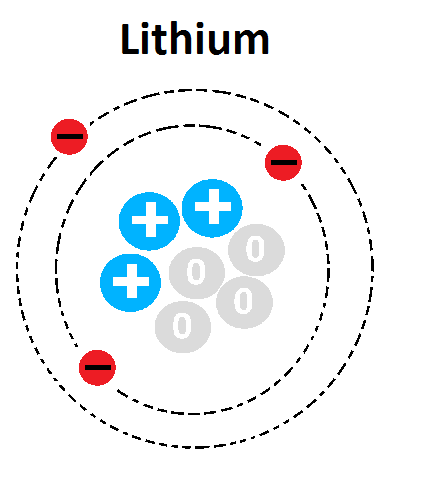
What is the name of this element?
a)
Lithium
b)
Boron
c)
Carbon
d)
Neon
6.
What is the mass number of this atom?
a)
1
b)
3
c)
4
d)
7
7.
What group does this element belong to?
a)
Group 1: Alkali metals
b)
Group 18: Noble Gases
c)
Group 2: Alkaline-Earth Metals
d)
Group 17: Halogens
8.
What type of reaction occurs between an element and a compound?
Zn + 2HCl --> ZnCl2 + H2
a)
Synthesis
b)
Decomposition
c)
Single Replacement
d)
Double Replacement
9.
What kind of reaction is this:
2H2 + O2 --> 2H2O
a)
Synthesis
b)
Decomposition
c)
Single Replacement
d)
Double Replacement
10.
What kind of reaction is this:
2H2O2 →2 H2+ O2
a)
Synthesis
b)
Decomposition
c)
Single Replacement 
d)
Combustion
11.
What kind of reaction is this:
Fe + CuSO4 -> Cu + FeSO4
a)
Double Replacement
b)
Decompostion
c)
Single Replacement
d)
Combustion
12.
What kind of reaction is this:
 CaCO3 + Ag2SO4 → CaSO4 + Ag2CO3 
a)
Decomposition
b)
Single Replacement
c)
Double Replacement
d)
Combustion
13.

What is a cation's charge?

a)

positive

b)

negative

c)

neutral

d)

depends on the element

14.

What is an anion's charge?

a)

positive

b)

negative

c)

neutral

d)

depends on the element's charge

15.

Is potassium a cation or an anion?

a)

cation

b)

anion

16.
If an atom of oxygen has a charge of -2, how many electrons does the atom have?
a)
18
b)
6
c)
8
d)
10
17.
A(n) _________ is an ion with a positive (+) charge.
a)
anion
b)
cation
c)
ion
d)
solute
18.
An atom becomes _______ when it loses electrons.
a)
Positive
b)
Negative
c)
Neutral
d)
Invinsible
19.
An atom becomes _________ when it gains electrons.
a)
Positive
b)
Negative
c)
Neutral
d)
Invinsible
20.
Which has the greater EN: 
N or C?
a)
C
b)
N
21.
Put these in increasing order:
F, N, B
a)
B < N < F
b)
B < F < N
c)
N < F < B
d)
F < N < B
22.
Choose the set that goes from lowest to highest electronegativity?
a)
Cu, Mg, Sr, Ca
b)
F, Cl, Br, Si
c)
Cs, Rb, Ca, Mg
d)
Zn, Cd, Ag, Cu
23.
What is Left of the zig zag line on the periodic table
a)
Non-Metals
b)
Metals
c)
Metalloids
d)
anions
24.
Families all have similar 
a)
Names
b)
atomic numbers
c)
atomic masses
d)
properties
25.
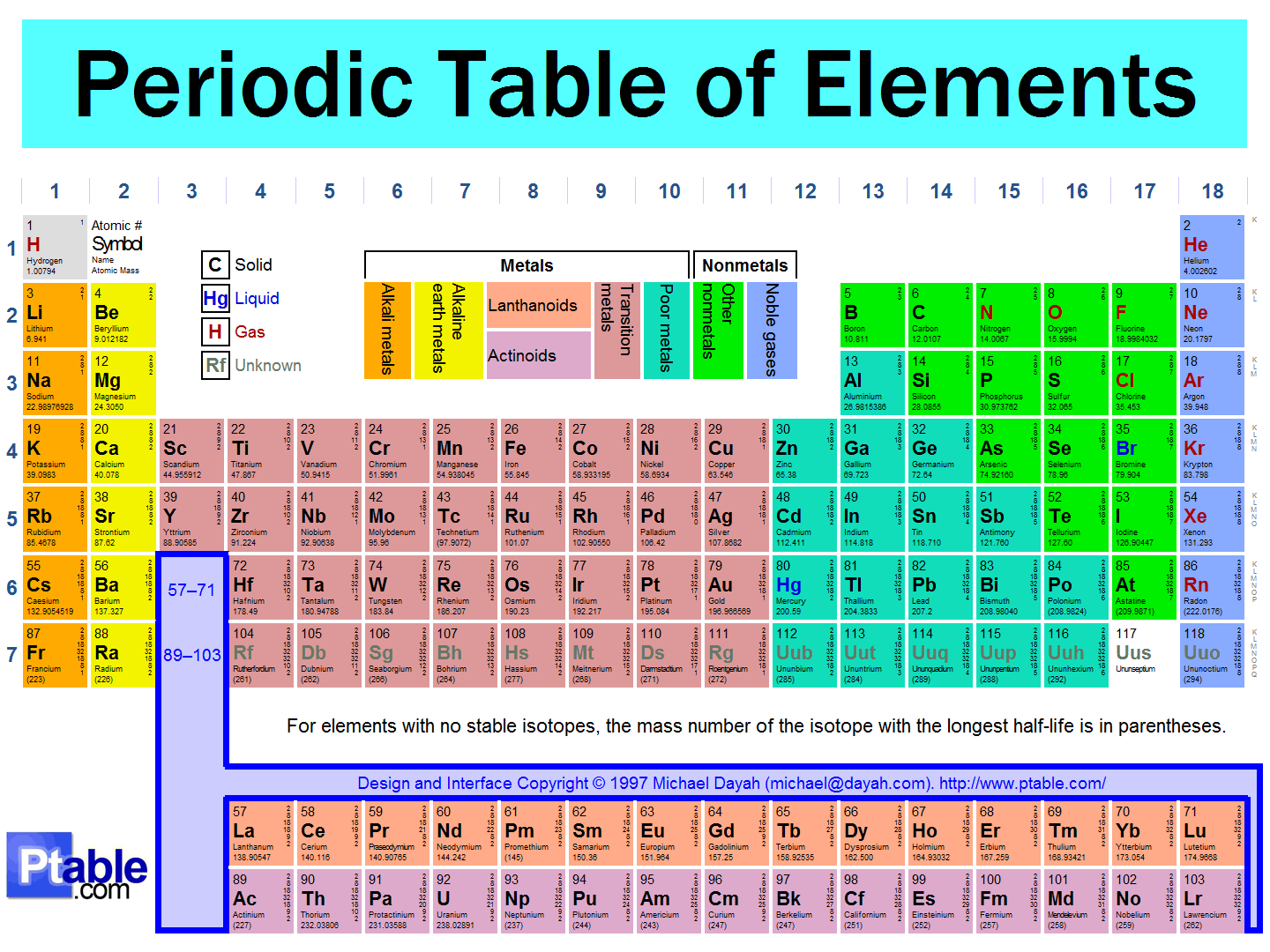
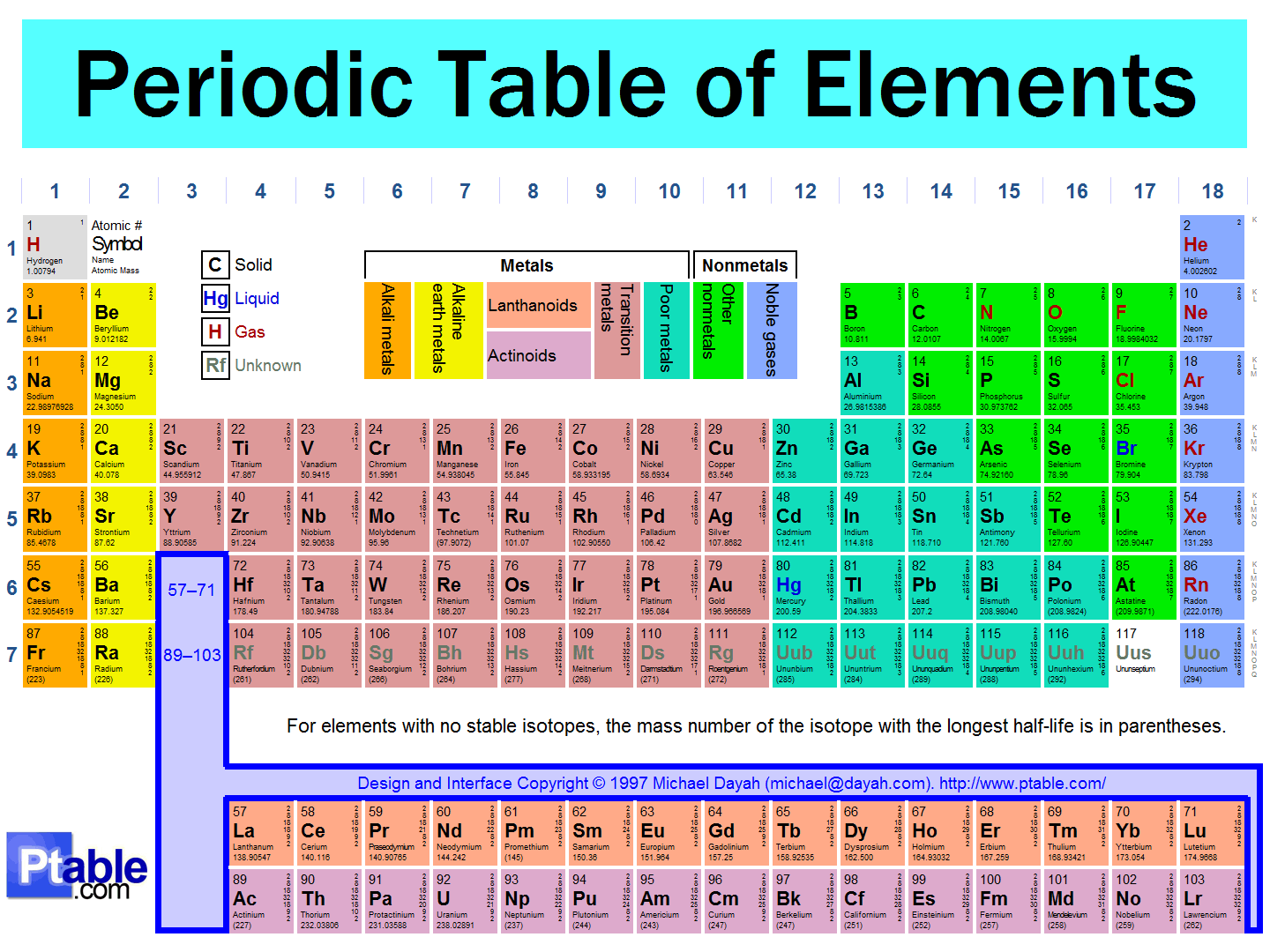
What is the name of family I
a)
Alkaline Earth Metals
b)
Boron Family
c)
Alkali Metals
d)
Halogen Family
26.
The picture shows what trend?
a)
Electronegativity
b)
Atomic Number
c)
Atomic Radius
d)
Ionization
27.
In this picture you can see that Noble gases are not included, following the trend which one is represented?
a)
Electronegativity
b)
Atomic Number
c)
Atomic Radius
d)
Ionization
28.
The energy required to remove electrons is the definition of: 
a)
Electronegativity
b)
Atomic Number
c)
Atomic Radius
d)
Ionization
29.

Which of the following is the negatively charged particle of an atom?

a)

electron

b)

neutron

c)

proton

30.

What is the atomic number of Nickel?

a)

~30

b)

30

c)

28

d)

58.693

31.

Which of the following is an example of a noble gas?

a)

Argon

b)

Hydrogen

c)

Beryllium

d)

Carbon

32.

Which of the following describes a metal?

a)

Hard, lustrous, malleable, ductile and readily conduct electricity and heat.

b)

Easily break, cannot be hammered and molded without breaking

c)

Insulators

33.

___________________ + oxygen ---> aluminum oxide

a)

aluminum

b)

copper

c)

iron

34.

Which of the following is a non-metal?

a)

Cobalt

b)

Nitrogen

c)

Silver

d)

Rubidium

35.

Helium, Neon and Argon are ______

a)

Alkali metals

b)

Alkaline metals

c)

Halogens

d)

Noble gases

36.

potassium + iodine --->

a)

potassium iodine

b)

potassium iodide

37.
K20 - name?
a)
potassium dioxide
b)
potassium oxide
c)
potassium oxygen
d)
dipotassium dioxide
38.
H2SO- name?
a)
hydrogen sulfide
b)
hydrosulfuric acid
c)
hydrogen sulfide
d)
sulfuric acid
39.
Al(NO3)3 - name?
a)
aluminum oxide
b)
aluminum nitrate
c)
nitrogen aluminum oxide
d)
aluminum nitroxide
40.
LiOH - name?
a)
hydrolithic acid
b)
lithium oxide
c)
lithium hydroxide
d)
lithium oxyhydride
41.
PCl4 - name?
a)
monophosphorus tetrachloride
b)
tetraphosphorus chloride
c)
phisphorus chloride
d)
phosphorus tetrachloride
42.
Which has a pH above 7?
a)
Acid
b)
Base
43.
Turns litmus red
a)
Acids
b)
Bases
c)
All
44.
Which is the stronger acid?
a)
pH 1
b)
pH 4
c)
pH 8
d)
pH 13
45.
If an acid is combined with a base of equal strength, the result will most likely be
a)
a neutral solution.
b)
a stronger acid.
c)
impossible to tell without testing the pH.
d)
a stronger base
46.
Which property of matter is determined by dividing its mass by its volume?
a)
elasticity
b)
buoyancy
c)
density
d)
viscosity
47.
A piece of copper has a mass of 89g and a volume of 10 cm3.  What would be the density of the copper?
a)
0.89 g/cm3
b)
89 g/cm3
c)
8.9 g/cm3
d)
890 g/cm3
48.
Which units of measurement are used for volume?
a)
grams
b)
centimeters
c)
grams/milliliter
d)
milliliter
49.
Which lab tool might you use to measure the volume of a liquid?
a)
electric scale
b)
bunsen burner
c)
test tube
d)
graduated cylinder
50.
Define the term "mass".
a)
Mass/Volume
b)
Anything that has mass and takes up space 
c)
The amount of space an object occupies.
d)
The amount of matter in an object.
51.
Which units of measurement are used for volume?
a)
grams
b)
centimeters
c)
grams/milliliter
d)
milliliter
52.
What is the volume of Object X?
a)
10.0 cm3
b)
15.0 cm3
c)
20.0 cm3
d)
25.0 cm3
53.
The horizontal row on the periodic table is called a
a)
group
b)
family
c)
period
d)
atomic number
54.
A vertical column is called...
a)
group
b)
tower
c)
period
d)
crew
55.
Which of the following is the most metallic element in period 3?
a)
Boron (B)
b)
Sodium (Na)
c)
Argon (Ar)
d)
Silicon (Si)
56.
Which of these element is the least metallic?
a)
Potassium (K)
b)
Carbon (C)
c)
Sulfur (S)
d)
Neon (Ne)
57.
The limiting reactant
a)
slows the reaction down
b)
is used up first
c)
is the reactant that is left over
d)
controls the speed of the reaction
58.
What is the potential energy of the reactants?
a)
10 kJ
b)
45 kJ
c)
103 kJ
d)
58 kJ
59.
What is the activation energy?
a)
The energy of the products
b)
The energy of the reactants
c)
The minimum energy needed by the reactants to form the products.
d)
The energy lost in the reaction
60.
What is the potential energy of the products?
a)
10 kJ
b)
45 kJ
c)
103 kJ
d)
58 kJ
61.
Which letter corresponds to the activation energy of the forward reaction?
a)
A
b)
B
c)
C
d)
D
62.
Which letter corresponds to the energy of the products?
a)
A
b)
B
c)
C
d)
D
63.
Which letter corresponds to the energy of the activated complex?
a)
A
b)
B
c)
C
d)
D
64.
An exothermic reaction...
a)
Absorbs heat
b)
Releases heat
c)
Both absorbs and releases heat
d)
Does nothing
65.

In an endothermic reaction, heat is...

a)

Absorbed

b)

Released

66.

Is a melting snowman endothermic or exothermic?

a)

Endothermic

b)

Exothermic

67.
Sugar dissolves in water.  This is an example of....
a)
Physical Change
b)
Chemical Change
68.
After you mix two substances together, a new substance forms.  This is an example of:
 
a)
 Physical Change
b)
 Chemical Change
69.

Which of the following has the largest atomic radius?

a)

Cs

b)

Al

c)

As

d)

Ta

70.

Which of the following has the smallest atomic radius?

a)

F

b)

Al

c)

Ag

d)

Ta

71.

Group 18 elements are

a)

noble gases

b)

halogens

c)

alkali metals

d)

alkaline earth metals

72.

Group 2 elements are

a)

noble gases

b)

halogens

c)

alkali metals

d)

alkaline earth metals

73.

Group 17 elements are

a)

noble gases

b)

halogens

c)

alkali metals

d)

alkaline earth metals

74.

Formulas for acids usually start with

a)

H

b)

OH

c)

CH

d)

CO

75.

Formulas for bases usually end with

a)

H

b)

OH

c)

CH

d)

CO

76.

OH-

a)

hydroxide

b)

hydrogen oxide

c)

_____me____my

d)

0.5 of a Santa Claus laugh

77.

SO42-

a)

sulfate

b)

sulfite

c)

nitrate

d)

nitrite

78.

SO32-

a)

sulfate

b)

sulfite

c)

nitrate

d)

nitrite

79.

ClO4-

a)

perchlorate

b)

chlorate

c)

chlorite

d)

hypochlorite

80.

ClO2-

a)

perchlorate

b)

chlorate

c)

chlorite

d)

hypochlorite

81.

acetate

a)

CH3COO-

b)

CH3COOH

c)

CH3CO-

d)

HCH3COO-.

82.

acetic acid

a)

CH3COO-

b)

CH3COOH

c)

CH3CO-

d)

HCH3COO-.

83.

Oxygen is a nonmetal in group 16 and has 6 valence electrons. But when oxygen reacts, it gains 2 electrons and becomes

a)

O2-

b)

O2

c)

2O

d)

O2-

84.

The correct formula for aluminum sulfate is

a)

Al2(SO4)3

b)

AlSO4

c)

Al2SO4

d)

Al2SO3

85.

Substance that increases the rate of a reaction by lowering activation energy

a)

catalyst

b)

inhibitor

c)

solvent

d)

solute

86.

In the formula PV = nRT , R stands for

a)

.0821

b)

273 K

c)

1 atm

d)

number of moles

87.

At STP, pressure is always

a)

.0821

b)

273 K

c)

1 atm

d)

number of moles

88.

At STP, temperature is always

a)

.0821

b)

273 K

c)

1 atm

d)

number of moles

89.

At STP, one mole of an ideal gas occupies

a)

22.4 L

b)

44.8 L

c)

11.2 L

d)

16.0 L

90.

The limiting reactant

a)

runs out first

b)

is left over

c)

last forever

d)

is in the product

91.

The excess reactant

a)

runs out first

b)

is left over

c)

last forever

d)

is in the product