Wayground logo

Free Printable Worksheets

Font size

S
M
L
XL
Worksheets

Ecology Review

Total questions: 100

Worksheet time: 1hrs 15mins

Name
Class
Date
1.
The diagram below shows the cycling of nutrients in an ecosystem.
The removal of which of the following groups would cause an immediate decrease in the amount of energy flowing through the system?
a)
Producers
b)
Consumers
c)
Decomposers
d)
Inorganic nutrients
2.
Green plants are
a)
producers
b)
consumers
c)
herbivores
d)
omnivores
3.
What is the original source of almost all energy in most ecosystems?
a)
carbohydrates
b)
sunlight
c)
water
d)
carbon
4.
An organism that produces its own food supply from inorganic compounds is called a(an)
a)
heterotroph
b)
consumer
c)
detritivore
d)
autotroph
5.
What is an ecological model of the relationships that form a network of complex interactions among organisms in a community from producers to decomposers?
a)
food web
b)
an ecosystem
c)
food chain
d)
a population
6.
What is the term for each step in the transfer of energy and matter within a biological community?
a)
energy path
b)
food web
c)
trophic level
d)
food pyramid
7.
which symbiosis is this 
a)
parasitism 
b)
mutualism
c)
commensalism
d)
nonalism 
8.
symbiotic relationship in which both organisms benefit
a)
competition
b)
Mutualism
c)
nitrogen fixation
d)
energy pyramid
9.
The energy at each trophic level in the pryamid of energy decreases by a factor of ____.
a)
10
b)
1
c)
100
d)
2
10.
What does a food web represent?
a)
All connections of energy flow throughout all organisms in a habitat.
b)
The specific ways that mutualism is carried out.
c)
A single pathway or energy flow between organisms. 
d)
How carnivores get their food. 
11.
diagram that shows the energy available to each trophic level in an ecosystem; 10% is passed on to upper levels, the rest is lost as heat
a)
succession 
b)
cellular respiration
c)
energy pyramid
d)
biochemical cycle
12.
a relationship between two in which one species, the predator, feeds on the other species, the prey
a)
chemosynthesis
b)
predation
c)
cellular respiration 
d)
commensalism
13.
symbiotic relationship in which one organisms benefits and the other organism is not affected
a)
invasive (non-native) species
b)
mutualism 
c)
nitrogen fixation
d)
commensalism
14.
Study of interactions between organisms and their environment 
a)
niche
b)
community 
c)
ecology
d)
ecosystem
15.
Members of a species in a defined area
a)
Ecosystem
b)
community
c)
biodiversity
d)
population
16.
Where an organism lives
a)
habitat
b)
niche 
c)
heterotrogh
d)
biosphere
17.
Non-living factor that affects an ecosystem
a)
biotic factor
b)
abiotic factor
c)
food chain 
d)
biome
18.
Organisms that breaks down and absorbs nutrients from dead organisms 
a)
consumer
b)
trophic level
c)
decomposer
d)
species
19.
A food chain is illustrated below:
The arrows represented most likely indicate
a)
A. Energy released from metabolism into the environment as heat.
b)
B. Oxygen released from metabolism produced by cellular respiration.
c)
C. The absorption of energy from the environment that has been created.
d)
D. The transport of glucose away from the organism through photosynthesis.
20.
A pond ecosystem is shown in the diagram below. Which statement describes an interaction that helps maintain the dynamic equilibrium of this ecosystem?
Which statement describes an interaction that helps maintain the dynamic equilibrium of this ecosystem?
a)
The frogs make energy available to this ecosystem through the process of photosynthesis.
b)
The algae directly provide food for both the rotifers and the catfish.
c)
The green-backed heron provides energy for the mosquito larvae.
d)
The catfish population helps control the populations of water boatman and waterfleas.
21.
Which one is NOT an example of a decomposer?
a)
mushroom
b)
leaves
c)
mold
d)
worm
22.
Examples of a producer
a)
frog
b)
algae
c)
worm
d)
mouse
23.
Example of a decomposer
a)
fungus
b)
mouse
c)
plants
d)
frogs
24.
A tree is a ....
a)
composer
b)
decomposer
c)
producer
25.
What is a producer?
a)
an organism that gets energy from eating other organisms
b)
an organisms that uses sunlight to make its own food
c)
an organism that gets energy from eating dead organisms, non-living material or waste
d)
an organism that uses chemical energy to make its own food
26.
What is a herbivore?
a)
an animal that gets energy from eating other animals
b)
an organism that gets energy from eating only plants
c)
an animal that gets energy by eating both plants and other animals
d)
an animal that eats only herbs
27.
What is a carnivore?
a)
an animal that gets energy by eating other animals
b)
An animal that gets energy by eating only plants
c)
an animal that gets energy by eating both plants and animals
d)
an animal that makes its own energy through photosynthesis
28.
An animal that gets energy from eating both plants and animals is a 
a)
herbivore
b)
carnivore
c)
omnivore
d)
autotroph
29.
The shrew provides energy for the _______?
a)
cricket
b)
grasshopper
c)
frog
d)
snake
30.
Which of the following is a herbivore?
a)
cricket
b)
frog
c)
hawk
d)
shrew
31.
Where do all life forms get their energy?
a)
Earth's Core
b)
Water
c)
Plants
d)
The Sun
32.
What is this called?
a)
Food Web
b)
Food Chain
c)
Abiotic Factors
33.
What is this called?
a)
Food Web
b)
Food Chain
c)
Abiotic Factors
34.
A producer is a (n) ______________.
a)
heterotroph
b)
omnitroph
c)
autotroph
d)
oscartroph
35.
All food chains begin with a ____________.
a)
primary consumer
b)
secondary consumer
c)
producers
d)
scavengers
36.
An animal that eats other animals is a....
a)
carnivore
b)
omnivore
c)
herbivore
d)
decomposer
37.
Which best describes what a food chain shows you?
a)
Energy flow through an ecosystem
b)
Food flowing through an ecosystem
c)
Consumers going into other consumers
d)
Who eats who
38.
Another name for a consumer is a
a)
heterotroph
b)
autotroph
c)
producer
d)
plant
39.
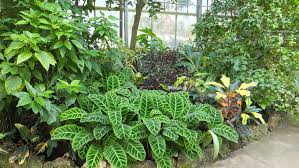
The image provided is an example of a:
a)
Producer
b)
Heterotroph
c)
Consumer
d)
Decomposer
40.
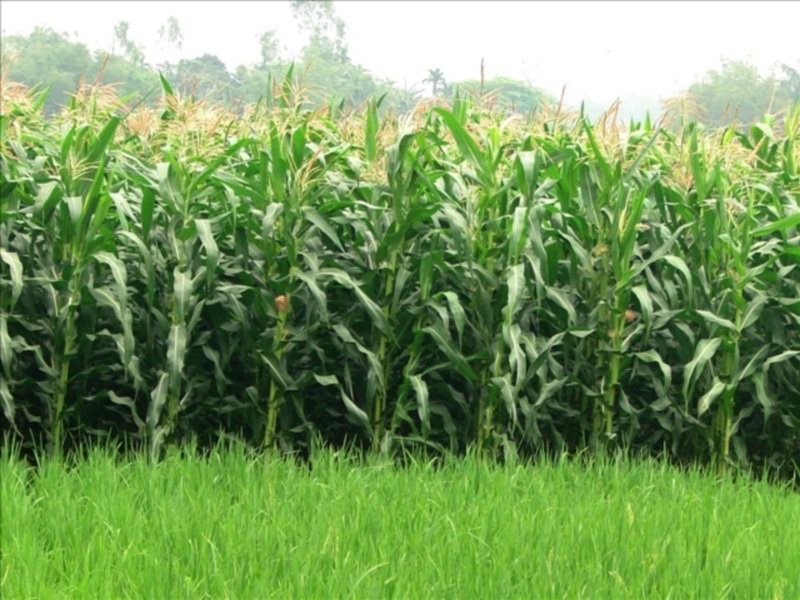
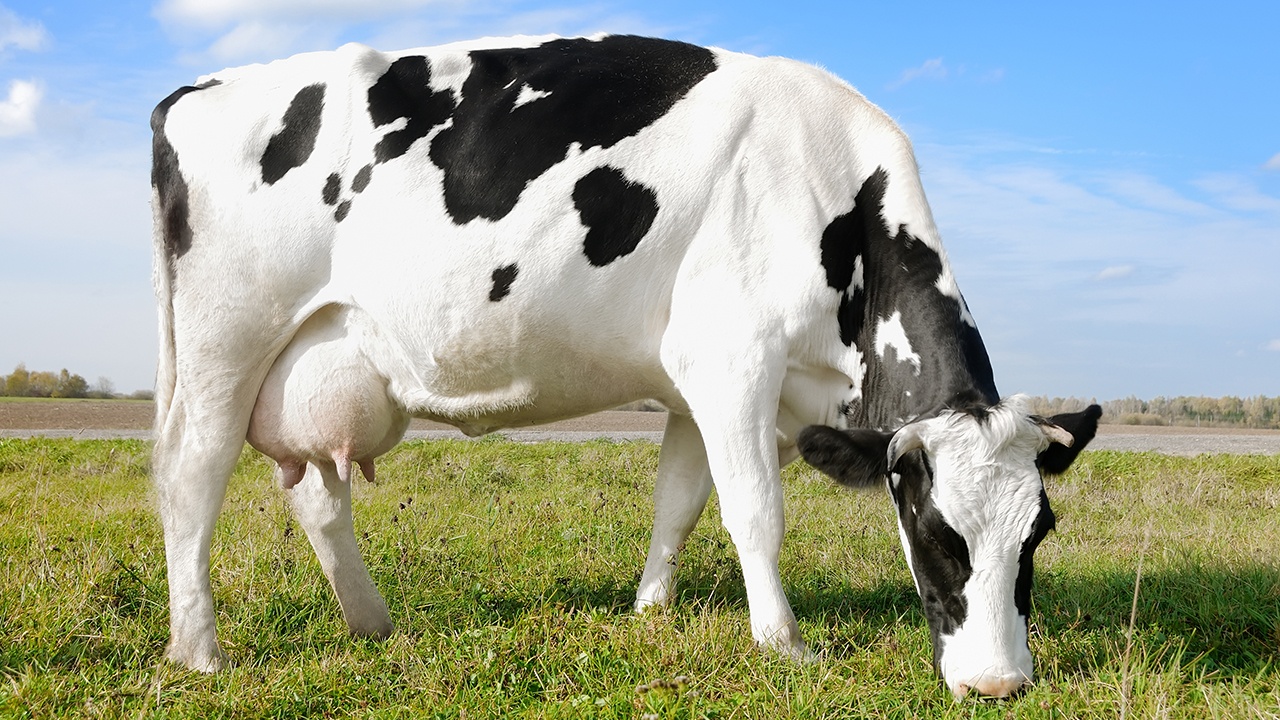
The image provided is an example of a(n):
a)
Autotroph
b)
Carnivore
c)
Herbivore
d)
Decomposer
41.
Members of a species in a defined area
a)
Ecosystem
b)
community
c)
biodiversity
d)
population
42.
Series of steps in which organisms transfer energy by eating and being eaten
a)
foodweb
b)
consumer
c)
food chain
d)
omnivore
43.
All the organisms in a particular location, including their nonliving environment
a)
ecosystem
b)
carnivore
c)
niche
d)
population
44.
What does fungi do to dead plants and animals?
a)
Leave them there
b)
Decompose them
c)
Wait for other animals to eat them
d)
Move away
45.
What may happen if the snowshoe hare was removed from the food web pictured?
a)
The insects in the habitat would increase.
b)
The shrew population would decrease due to being only hawk food source.
c)
The willow tree population would decrease.
d)
Foxes would dies due to no food source. 
46.
In the energy pyramid here, how much of the energy in the producers gets passed to the herbivores?
a)
10%
b)
20%
c)
80%
d)
90%
47.
Which of the following leads to a decrease in biodiversity?
a)
protection of ecosystems
b)
pollution control
c)
selective cutting
d)
introduction of exotic or invasive species
48.
A carbon "sink" is best described as:
a)
a reservoir that readily releases carbon to another reservoir
b)
a carbon reservoir that stores more carbon that it is releasing
c)
something that causes carbon to leak out to the atmosphere
d)
a carbon reservoir that is releasing more carbon than it is taking in
49.
Nitrogen fixation processes nitrogen from which of the following sources?
a)
lightning
b)
fertilizers
c)
dead plants
d)
atmosphere
50.
What is it called when water is changed from a liquid to a gas?
a)
EVAPORATION
b)
PRECIPITATION
c)
TRANSPIRATION
51.
In the food web shown, the snail would be considered...
a)
primary consumer
b)
secondary consumer
c)
tertiary consumer
d)
producer
52.
Which of the following best describes an ecosystem?
a)
all the living organisms in an area and their physical surroundings
b)
a region with a distinct climate
c)
all the living organisms of the same species throughout the world
d)
all the living organisms in an area
53.
A pod of dolphins hunting and feeding on a school of fish is an example of
a)
an ecosystem interaction.
b)
a population interaction.
c)
a community interaction.
d)
a biome interaction.
54.
The energy pyramid below shows a possible amount of energy, in kilocalories, available in the organisms at each trophic level in an ecosystem.  According to the law of conservation of energy, energy can neither be created nor destroyed.  If this is true, why is there less energy in the top of the energy pyramid than there is in the bottom of the energy pyramid?
a)
Energy is lost between each trophic level as heat.
b)
The law of conservation of energy does not apply to ecosystems.
c)
Organisms in the top of the energy pyramid use up energy the fastest.
d)
The extra energy in the bottom is slower to reach the top.
55.
Which of the following interactions is an example of symbiosis?
a)
an insect acts as a pollinator for a plant species
b)
a population of hummingbirds migrates during the summer
c)
a tropical bird performs a courtship dance for a mate
d)
a mother bear feeds and protects her cubs
56.
A farmer plants two species of grass with similar nutrient needs on the same small plot of land.  What kind of interaction will most likely occur between the two species?
a)
parasitism
b)
competition
c)
commensalism
d)
mutualism
57.
The diagram below depicts the water cycle.  Which process is represented by the number 2?
a)
precipitation
b)
evaporation
c)
surface runoff
d)
condensation
58.
The bodies of all living things are based on carbon.  Which of the following is the primary source of carbon in living things?
a)
carbon compounds stored in fossil fuels
b)
carbon compounds in the soil
c)
dissolved carbon dioxide in the biosphere
d)
carbon dioxide in the atmosphere
59.
An increase in the atmospheric levels of carbon dioxide (CO2) is the biggest contributor to which of the following?
a)
El Nino
b)
global warming
c)
wind storms
d)
ozone depletion
60.
Which human activity has had the greatest impact on climate change?
a)
building skyscrapers
b)
deforestation
c)
burning fossil fuels
d)
production of nuclear waste
61.
A __________ is a group of organisms that can reproduce fertile offspring.  Failure to reproduce fertile offspring will cause __________ of the group.
a)
genus, evolution
b)
species, extinction
c)
phylum, extinction
d)
species, evolution
62.
The graph below shows population data for two species.  What can be said about the relationship between species 1 and species 2?
a)
When the population of species 1 increases, the population of species 2 decreases.
b)
The population of species 1 and species 2 stay the same over the time period shown.
c)
The population of species 1 is not influenced by the population of species 2.
d)
When the population of species 1 increases, the population of species 2 increases.
63.
Overpopulation occurs when a population exceeds its carrying capacity.  White-tailed deer are considered to be an overpopulated species in the central United States.  What is one consequence of white-tailed deer exceeding their carrying capacity?
a)
People don't see deer as often in urban areas.
b)
The deer are less healthy and more prone to disease.
c)
There are more predators to eat the deer.
d)
The deer have stopped breeding.
64.
What two factors have been the GREATEST contributors to the exponential growth of the human population during the last two centuries?
a)
plentiful food and a mild climate
b)
the industrial revolution and peace
c)
agricultural developments and peace
d)
good sanitation and medical advances
65.
After a natural disaster such as a hurricane or tornado, what will happen in the damaged ecosystem?
a)
Nothing; it will remain uninhabited.
b)
A new, different ecosystem will evolve.
c)
An ecosystem like the previous one will be re-established.
d)
No one really knows what to expect after a natural disaster.
66.
78% of Earth's atmosphere is nitrogen gas. All living things need nitrogen as a part of DNA and RNA. Yet you and I, and other living things, cannot use the nitrogen in our atmosphere directly. One type of organism is responsible for "fixing" nitrogen or helping to put it in a form so other living things can use it. That organism is
a)
bacteria.
b)
fungi.
c)
plants.
d)
viruses.
67.
Grazing cows disturb the grass and cause insects to fly around the cows as they eat. In turn, birds swoop in and eat the insects. This type of feeding relationship is an example of
a)
commensalism.
b)
mutualism.
c)
parasitism.
d)
predation.
68.
In a simple food chain, small fish eat algae; bigger fish eat the smaller fish; bears eat the bigger fish. 
Using the above scenario, which of these would have the largest amount of energy?
a)
algae
b)
bears
c)
big fish
d)
small fish
69.
In the organization of living things, a ______________ would include the largest number of individuals.
a)
community
b)
population
c)
ecosystem
d)
species
70.
Anything that can decrease the size of a population including living (biotic) and non living (abiotic) features of an ecosystem such as predators and drought.
a)
limiting factor
b)
habitat
c)
ecosystem
d)
carrying capacity
71.
grass->rabbit  -> fox
a)
food chain
b)
food web
c)
energy pyramid
72.
Abiotic means____________.
a)
Nonliving
b)
Living
73.
Biotic means ____________. 
a)
Nonliving
b)
Living
74.
Population is____________________.
a)
Same species living in the same place.
b)
Different species living in different places. 
75.
What are the Biotic factors in this image?
a)
There are none
b)
Sunlight, water, air
c)
Elephants, plants, trees 
76.
The deer, grasshopper, and bird are all examples of which type of consumers on this food pyramid?
a)
decomposers
b)
omnivores
c)
carnivore
d)
herbivore
77.
Limiting factors are sometimes helpful because they can keep the population from getting too large.
a)
True
b)
False
78.
Any thing or organism that regulates the size of a population of another organism is known as __________.
a)
a limiting measure
b)
a limiting factor
c)
factorization
d)
materialization of precipitation
79.

If a disease destroying barley plants swept through an ecosystem, what would happen to the bird population that eat barley plants?

a)

The bird population would stay the same

b)

The bird population would infinitely increase

c)

The bird population would decrease

80.
What is a producer?
a)
Organism that makes its own energy
b)
Organism that breaks down dead organisms
c)
Organism that eats other organisms for food & energy
81.
What happens when an environment reaches its carrying capacity?
a)
Populations will decrease
b)
Resources such as food, water, and space will be unlimited
c)
Populations will increase
d)
Nothing, everything will stay the same.
82.
What will happen if all of the frogs in a population die?
a)
The frogs' predators will decrease and the frogs' prey will increase
b)
The frogs' predators will increase and the frogs' prey will decrease
c)
The frogs' predators will increase and they frogs' prey in increase.
d)
We better all pray because there isn't anymore frogs.
83.
All members of one species in a certain area.
a)
Population
b)
Limiting Factors
c)
Immigration
d)
Birth Rate
84.
The largest number of organisms in a population that the environment can support. 
a)
Carrying Capacity
b)
Limiting Factor
c)
Reproductive Potential
85.

What are some abiotic factors that could be limiting factors in the Iowa River ecosystem?

a)

Temperature, fertilizer runoff from fields, drought or flood

b)

Invasive species, floods

c)

Temperature, predators, droughts, floods, over fishing
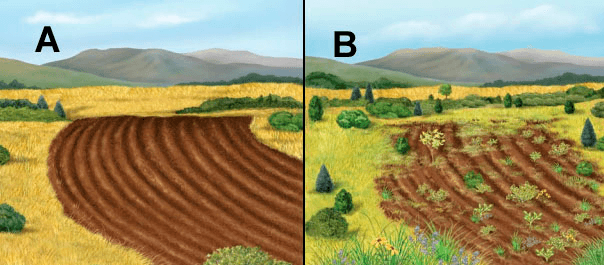
86.

What type of succession is shown going from figure A to figure B?

a)

primary succession

b)

ecological succession

c)

secondary succession

d)

intermediate species

87.

What is the role of the pioneer species in Primary Succession?

a)

To kill any remaining organisms from before the disturbance

b)

To break down rock and rebuild soil

c)

To provide food for large animals

d)

To put fresh oxygen into the air

88.

The picture shows what type of succession?

a)

primary

b)

secondary

c)

tertiary

d)

quadanary

89.
What is the name given to lichen or algae after a primary succession?
a)
pioneer species
b)
volunteer species
c)
founder species
d)
conqueror species
90.

What are examples of pioneer species in a primary succession?

a)

Bushes and Shrubs

b)

Oak trees

c)

Mossess and Lichens

d)

A rose Bush

91.

After a volcanic eruption, lava covers the land. What is the order that plants grow to repopulate the area?

a)

Lichens → Shrubs → Grasses → Trees

b)

Lichens → tree → shrubs→Grasses

c)

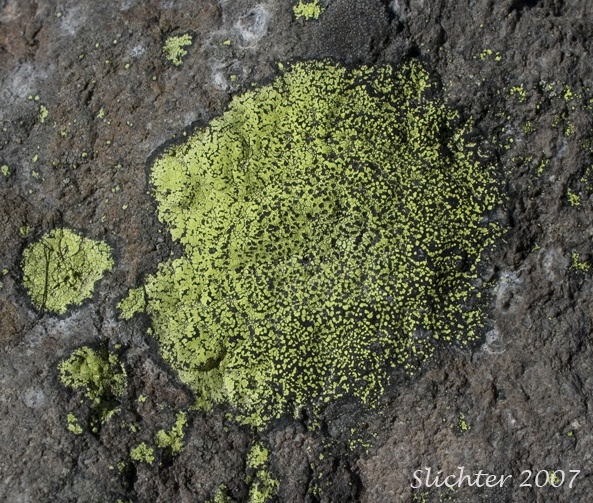
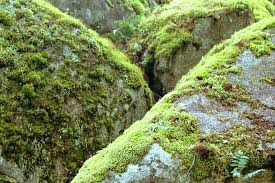
Grasses → Lichens → Shrubs → Trees

d)

Lichens → Grasses → Shrubs → Trees

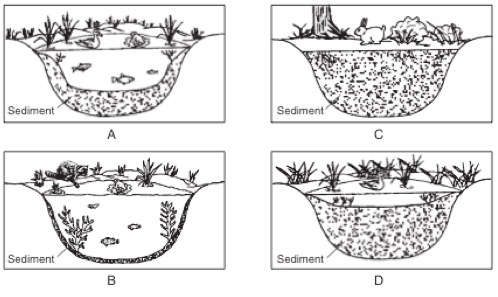
92.

What is the correct order in this pond succession? (YOUNGEST to OLDEST)

a)

A, B, C, D

b)

D, C, B, A

c)

B, A, D, C

d)

C, D, A, B

93.

The forest in panel #8 is a...

a)

pioneer species

b)

climax community

c)

tertiary community

d)

intermediate species

94.

Succession type?

a)

primary succession

b)

secondary succession

c)

tertiary succession

d)

variable succession

95.

Succession type?

a)

primary succession

b)

secondary succession

c)

tertiary succession

d)

variable succession

96.

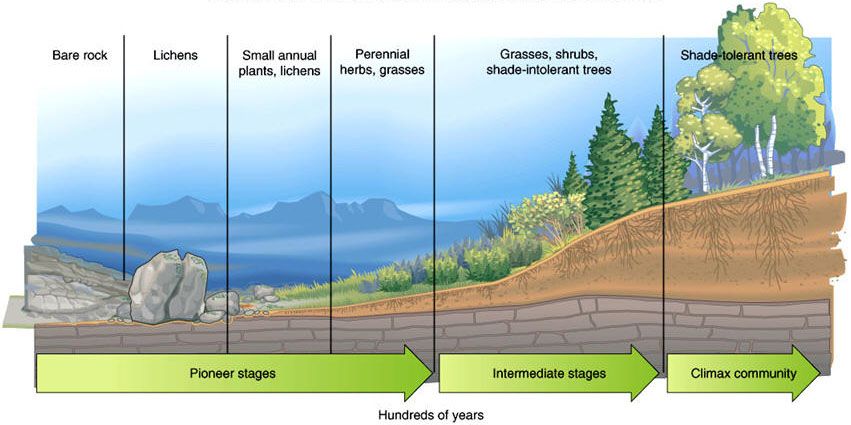
Starts with BARE ROCK followed by lichen

a)

primary succession

b)

secondary succession

c)

both types of succession

97.

What type of species/community is a redwood forest?

a)

Climax Community

b)

Pioneer Species

c)

Intermediate Species

d)

Tertiary Community

98.

Which is an example of a climax community in this image?

a)

The empty pond

b)

The shallow pond/marsh

c)

The meadow/field

d)

The forest with the deer

99.

What does "organic matter" refer to in biology?

a)

Living and/or dead organisms

b)

Crops that don't use pesticides

c)

Carbon based chemicals

d)

Food that isn't genetically modified

100.

Which of these is an example of a climax community?

a)
b)
c)
d)