wayground logo

Free Printable Worksheets

Font size

S
M
L
XL
Worksheets

Cells

Total questions: 100

Worksheet time: 2hrs 58mins
Name
Class
Date
1.
Which of the following scientists concluded that all animals are made of cells?
a)
Rudolf Virchow
b)
Matthais Schleiden
c)
Robert Hooke
d)
Theodor Schwann
2.
What is one way in which all living things on Earth are alike?
a)
All living things have hair.
b)
All living things are made of cells and come from other cells.
c)
The cells of all living things have chloroplast.
d)
All living things can move. 
3.
Who looked at cork and named the cell?
a)
Robert Hooke
b)
Van Leeuwenhoek
c)
Robert Brown
d)
Francesco Redi
4.
Robert Hooke, Anton van Leeuwenhoek, Theodor Schwann, Rudolf Virchow, and Matthias Schliden were all responsible for what theory?
a)
The Theory of Gravity
b)
The Theory of Relativity
c)
The Cell Theory
d)
The Theory of Continental Drift
5.
What tool do you use to view the cells?
a)
metric ruler
b)
centrifuge
c)
microscope
d)
pipette
6.
The smallest unit that can perform the basic activities of life is
a)
a cell 
b)
a tissue
c)
an organ
d)
an organism
7.
Which of the following statements is not part of the cell theory?
a)
Cells are the basic unit of structure and function in all living things.
b)
All cells are produced from other cells.
c)
Only animal cells are composed of cells.
d)
All living things are composed of cells.
8.
Which scientist did NOT contribute to the cell theory?
a)
Anton Van Leeuwenhoek
b)

Robert Hooke
c)
Albert Einstein 
d)

Matthias Schleiden
9.
A plant and an animal are both living things. According to the Cell Theory, what can you conclude about these two very different organisms?
a)
Plants have cells but animals do not.
b)
They are both made of one or more cells. 
c)
They both come from the same kind of cell.
d)
They both come from a non-living organism.
10.
DNA is a single strand and circular in shape
a)
Prokaryote
b)
Eukaryote
11.
DNA is free floating, not in a nucleus
a)
Prokaryote
b)
Eukaryote
12.
Typically are multicellular
a)
Eukaryote
b)
Prokaryote
13.
Include kingdoms: Protist, Animal, Fungi, and Plant
a)
Prokaryote
b)
Eukaryote
14.
No membrane-bound organelles
a)
Prokaryote
b)
Eukaryote
15.
Only contain structures like ribosomes, cytoplasm, cell wall, flagella, and DNA
a)
Prokaryote
b)
Eukaryote
16.
Include kingdoms: Bacteria and Archaea
a)
Prokaryote
b)
Eukaryote
17.
Contain membrane-bound organelles such as mitochondria, endoplasmic reticulum, and vacuoles
a)
Prokaryote
b)
Eukaryote
18.
DNA is found in the nucleus
a)
Prokaryote
b)
Eukaryote
19.
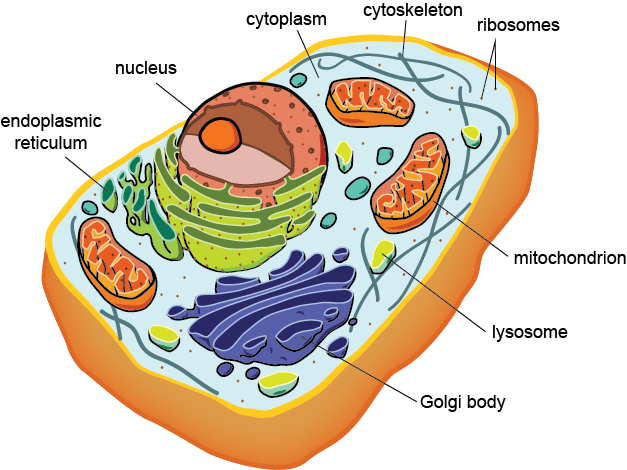
This is a picture of:
a)
Prokaryote
b)
Eukaryote
20.
Has membrane bound organelles
a)
Prokaryote
b)
Eukaryote
c)
both
21.
Smaller
a)
Prokaryote
b)
Eukaryote
c)
both
22.

Has cell membrane

a)

Prokaryote

b)

Eukaryote

c)

both

23.
Has cytoplasm
a)
Prokaryote
b)
Eukaryote
c)
both
24.
Has nucleus
a)
Prokaryote
b)
Eukaryote
c)
both
25.
Bacteria
a)
Prokaryote
b)
Eukaryote
c)
both
26.
more complex
a)
Prokaryote
b)
Eukaryote
c)
both
d)
both
27.
Which type of cell?
a)
Prokaryote
b)
Eukaryote
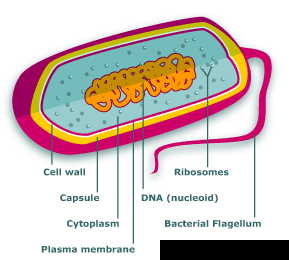
28.
Which type of cell?
a)
Prokaryote
b)
Eukaryote
29.
A single-celled organism that lacks a membrane-bound nucleus, mitochondria, or any other membrane -bound organelle .
a)
Prokaryote
b)
Eukaryote
c)
Nucleus
d)
Single-celled organism
30.

Which organelle contains DNA and controls the cell?

a)

Cell membrane

b)

nucleus

c)

nucleolus

d)

lysosme

31.

Which organelle controls what goes in and out of the cell?

a)

nucleus

b)

nucleolus

c)

cell membrane

d)

nuclear membrane

32.

This organelle digests dead cell parts and contains enzymes

a)

lysosome

b)

golgi body

c)

smooth ER

d)

Rough ER

33.

Proteins are produced at this organelle.

a)

golgi body

b)

ribosome

c)

cytoskeleton

d)

cilia

34.

this organelle makes ATP.

a)

chloroplast

b)

mitochondria

c)

ribosome

d)

nucleolus

35.

The genetic material inside a cell

a)

DNA

b)

chromatin

c)

chromosomes

d)

gene

36.

Ribosomes are produced here

a)

nucleus

b)

nuclear membrane

c)

nucleolus

d)

chromosomes

37.

long whip like structures used for movement

a)

hair

b)

cilia

c)

flagella

d)

cytoskeleton

38.

This structure is found in plants and is made of cellulose.

a)

chloroplast

b)

cell membrane

c)

cell wall

d)

cytoplasm

39.
This organelle takes food and turns it into ENERGY for plant and animal cells.
a)
Chloroplast
b)
Mitochondria
c)
Lysosome
d)
Ribosome
40.
What organelle is called the "powerhouse" of a cell?

a)
Endoplasmic Reticulum
b)
Nucleus
c)
Mitochondria
d)
Nucleolus
41.
I am only found in a plant cell. What am I?
a)
cell wall
b)
mitochondria
c)
cytoplasm
d)
chloroplast
42.
Which organelle uses energy from sunlight to make sugar?
a)
mitochondria
b)
nucleus
c)
chloroplasts
d)
vacuoles
43.
hold/store water, mainly found in plant cells
a)
nuclolus
b)
ribosomes
c)
golgi bodies
d)
vacuoles
44.
jello-like material, fills the space between cell organelles, is where many chemical reactions occur
a)
cytoplasm
b)
chromatin
c)
chloroplast
d)
cell membrane
45.
What are tiny organelles that convert glucose into ATP?
a)
Ribosomes
b)
Vesicles
c)
Cytoskeleton
d)
Mitochondria
46.

detroys worn-out or damaged organelles

gets rid of waste materials and protects the cell from foreign invaders

found mostly in animal cells

a)

lysosome

b)

vacuole

c)

cell wall

d)

golgi body

47.

gel-like substance where all other organelles are found

it is constantly moving and some cellular reactions can occur here

a)

cytoplasm

b)

vacuole

c)

chloroplast

d)

golgi body

48.
The Golgi apparatus _____.
a)
packages cell products for export
b)
eliminates waste
c)
stores DNA
d)
makes energy
49.
Which of these is NOT a part of the Cell Theory?
a)
All cells are independent.
b)
Cells are the basic unit of living things. 
c)
All living things are one or more cells.
d)
Cells come from cells.
50.
Plant and animal cells are identical. 
a)
True
b)
False
51.
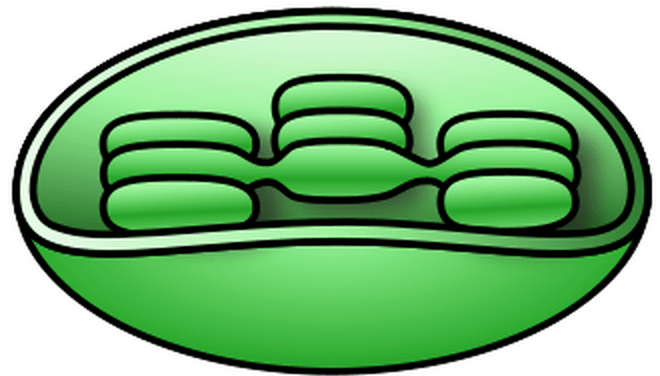
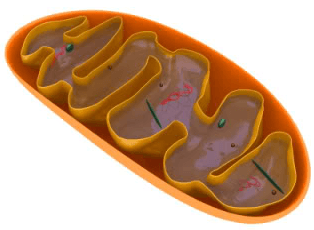
What is the name and function of the organelle displayed above?
a)
Mitochondria: breakdown glucose and produce ATP
b)
Chloroplast: converts solar energy into chemical energy
c)
Vacuole: Stores H2O, salt, food
d)
Nucleus: stores genetic information
52.
In what type of cells would you expect to find many mitochondria ?
a)
muscle cells
b)
nerve cells
c)
skin cells
d)
sperm cells
53.
Rough endoplasmic reticulum has ________________ attached to it. 
a)
ribosomes 
b)
chromosomes 
c)
Golgi apparatus 
d)
nucleolus 
54.
He discovered that all plants are made of cells:
a)
Anton van Leeuwenhoek
b)
Theordor Schwann
c)
Robert Hooke
d)
Mattias Schleiden
55.
Who was the first  person to see cells under the microscope and give them their name?
a)
Mattias Schleiden
b)
Robert Hooke
c)
Theordor Schwann
d)
Anton van Leeuwenhoek
56.

a long, whip-like structure that helps a cell to move.

a)

pasteurization

b)

bacteria

c)

flagellum

d)

endospore

57.
Bacteria cells share which of the following organelles in common with plant and animal cells?
a)
cell membrane, RER
b)
cell wall, mitochondria
c)
nucleus, ribosomes
d)
ribosomes, cytoplasm
58.
Bacteria have a cell membrane
a)
True
b)
False
c)
Some do, some don't
d)
Only in certain temperature conditions
59.
It is the processing, packages and secretes proteins; proteins are transported in vesicles  .
a)
Ribosomes
b)
Lysosomes
c)
Golgi apparatus
d)
Mitochondria
60.
What is the difference between rough and smooth ER?
a)
There is no difference.
b)
Plants have rough ER, animals have smooth ER.
c)
What type of injuries the Doctors treat.
d)
Rough has ribosomes, smooth does not.
61.
This organelle makes the lipids that make the cell membrane
a)
Smooth ER
b)
Cell Wall
c)
Vacuole
d)
Mitochondria
62.

This organelle takes proteins and moves them to the Golgi apparatus

a)

Ribosome

b)

Cell Membrane

c)

Nucleus

d)

Rough ER

63.
Which of the following is a circular DNA from bacteria that can hold a foreign gene?
a)
plasmid
b)
restriction enzyme
c)
ligase
d)
protein expression
64.

How does an amoeba move?

a)

It uses cilia.

b)

It uses a flagellum.

c)

It uses pseudopods.

d)

It cannot move.

65.
The word "pseudopodia" means
a)
small cell
b)
fake eye
c)
false foot
d)
first animal
66.
Identify the organism pictured.
a)
Amoeba
b)
Paramecium
c)
Euglena
d)
Plasmodium
67.

Which organelle functions to remove excess water in many protists?

a)

micronucleus

b)

contractile vacuole

c)

food vacuole

d)

oral groove

68.

What is chemotaxis?

a)

An organism's negative or positive response to a chemical

b)

An organism's positive or negative response to light

c)

An organism's positive response to a liquid

d)

A type of toxic chemical

69.

The long, whip-like structure which helps some protists move is called the ______________.

a)

cilia

b)

flagellum

c)

tail

d)

pseudopod

70.
Protist?
a)
Euglena
b)
Paramecium
c)
Amoeba
d)
Volvox
71.
Protist?
a)
Euglena
b)
Paramecium
c)
Amoeba
d)
Stentor
72.
What type of protists exhibit positive phototaxis?
a)
autotrophic
b)
heterotrophic
c)
decomposers
d)
parasites
73.
Which of the following is true of ALL protists?
a)
unicellular
b)
eukaryotic
c)
prokaryotic
d)
heterotrophic
74.

Identify the contractile vacuole.

a)

Structure 1

b)

Structure 3

c)

Structure 4

d)

Structure 5

e)

Structure 6

75.

Identify the eyespot.

a)

Structure A

b)

Structure B

c)

Structure C

d)

Structure D

e)

Structure E

76.

Which organelle helps this protist maintain homeostasis?

a)

Organelle 1

b)

Organelle 4

c)

Organelle 5

d)

Organelle 6

77.

Which structure is an adaptation for detecting light in this protist?

a)

Structure A

b)

Structure B

c)

Structure C

d)

Structure F

78.
What is the total magnification of a microscope with two lenses when one lens has a magnification of 10x, and the other lens has a magnification of 30x?
a)
15x
b)
30x
c)
40x
d)
300x
79.
If the eyepiece of your scope has a power of 10, and the selected objective lens has a power of 20,what is the total magnification?
a)
20x
b)
30x
c)
200x
d)
2000x
80.
When should the fine adjustment knob always be used?
a)
with the low power objective only
b)
with the medium power objective only
c)
with the high power objective only
d)
with both the medium and high power objectives
81.
If your teacher asks you to move a microscope to table, how do you carry it?
a)
by the body tube and the eyepiece
b)
with one hand
c)
one hand on the arm and the other under the base
d)
with one hand on the base and the other on the eyepiece.
82.
Which part of the microscope controls the amount of light available?
a)
coarse adjustment knob
b)
diaphragm
c)
objective lens
d)
revolving nosepiece
83.
What is part 11?
a)
coarse adjustment
b)
fine adjustment
c)
diaphragm
d)
stage
84.
What part is 5?
a)
coarse adjustment
b)
fine adjustment
c)
diaphragm
d)
stage
85.
Stem cells are
a)
cells that grow uncontrollably
b)
undifferentiated and can be any type of cell
c)
never go through cell division
d)
only found in embryos
86.
Stem cells can be obtained from
a)
embryos
b)
some adult tissues
c)
umbilical cord blood
d)
all of the above
87.
What does "pluripotent" mean?
a)
able to divide and make many different types of cells
b)
not able to divide
c)
can only divide and make one cell type 
d)
if it divides, it will make a cancerous tumor
88.
What process best explains how muscle cells and nerve cells can develop from the same fertilized egg?
a)
genetic engineering
b)
survival of the fittest
c)
differentiation
d)
selective breeding
89.
Which best explains why muscle cells are different from blood cells?
a)
Muscle cells are produced by the brain, but blood cells are produced by the heart. 
b)
Different genes are activated in muscle cells than in blood cells. 
c)
Muscles cells experience different environmental influences than blood cells. 
d)
A mutation occurs during the development of muscle cells but not in blood cells. 
90.
What is the difference between embryonic stem cells and adult stem cells?
a)
Embryonic stem cells can differentiate into more cell types than adult stem cells
b)
Adult stem cells are pluripotent, just like embryonic stem cells
c)
Adult stem cells can differentiate into more cell types than embryonic stem cells
d)
Adult stem cells grow bigger than embryonic stem cells
91.
This type of cell sends messages throughout the body in the form of electrical impulse.
a)
nerve cell
b)
sperm cell
c)
muscle cell
d)
skin cell
92.
This type of cell carries oxygen throughout the body.
a)
gamete
b)
platelet
c)
white blood cell
d)
red blood cell
93.
Which is true about embryonic stem cells?
a)
They no longer divide, their cell type is set and cannot change.
b)
They can develop into only one type of cell.
c)
They can become any cell type in the body.
d)
They are found in adults.
94.
How do stem cells know what type of cells to differentiate into?
a)
The nucleus has instructions to turn some genes on and some genes off.
b)
Signals from chemicals in the organism or from the environment determine which genes will be turned on and off.
c)
Genes turn on and off randomly.
d)
The cell has unique DNA that determines what the cell will become.
95.
Which type of cell is unspecialized?
a)
skin cell
b)
stem cell
c)
liver cell
d)
muscle cell
96.
This type of cell is found in males and is responsible for reproduction.
a)
sperm cell
b)
egg cell
c)
muscle cell
d)
nerve cell
97.

This type of cell sends messages throughout the body in the form of electrical impuses.

a)

nerves

b)

muscles

c)

cardiac cells

d)

epithelial cells

98.

This type of cell carries oxygen throughout the body.

a)

white blood cells

b)

cardiac muscle tissue

c)

smooth muscle tissue

d)

red blood cells

99.

What is the function of the STOMATA in plants?

a)

Allows water to enter the plant

b)

Provides food to enter the plant

c)

Allows for gas exchange

d)

Site of photosynthesis

100.

What does cell differentiation mean?

a)

Process by which a cell absorbs nutrients.

b)

Process by which a less specialized cell becomes a more specialized cell.

c)

Process by which a specialized cell becomes a less specialized cell.

d)

Process by which cells enter the cell cycle.