wayground logo

Free Printable Worksheets

Font size

S
M
L
XL
Worksheets

A&P Fall Semester Exam Review

Total questions: 100

Worksheet time: 59mins
Name
Class
Date
1.
The maintenance of an organism’s internal environment is called:
a)
compensating
b)
homeostasis
c)
balancing
d)
routine
2.
Divides body into top and bottom portions (superior-head; inferior-feat)
a)
Medial Plane
b)
Sagittal
c)
Proximal 
d)
Transverse Plane
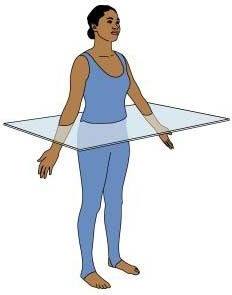
3.
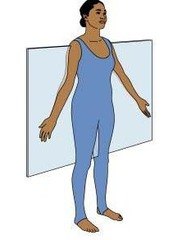
Which plane is this?
a)
sagittal
b)
transverse
c)
coronal / frontal
4.
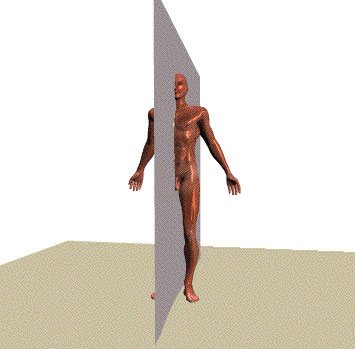
What is this plane?
a)
sagittal
b)
transverse
c)
coronal / frontal
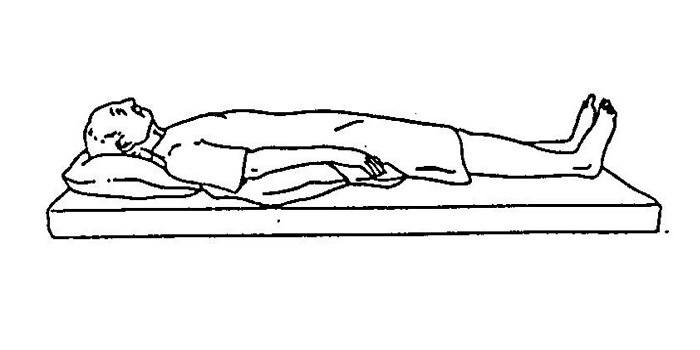
5.

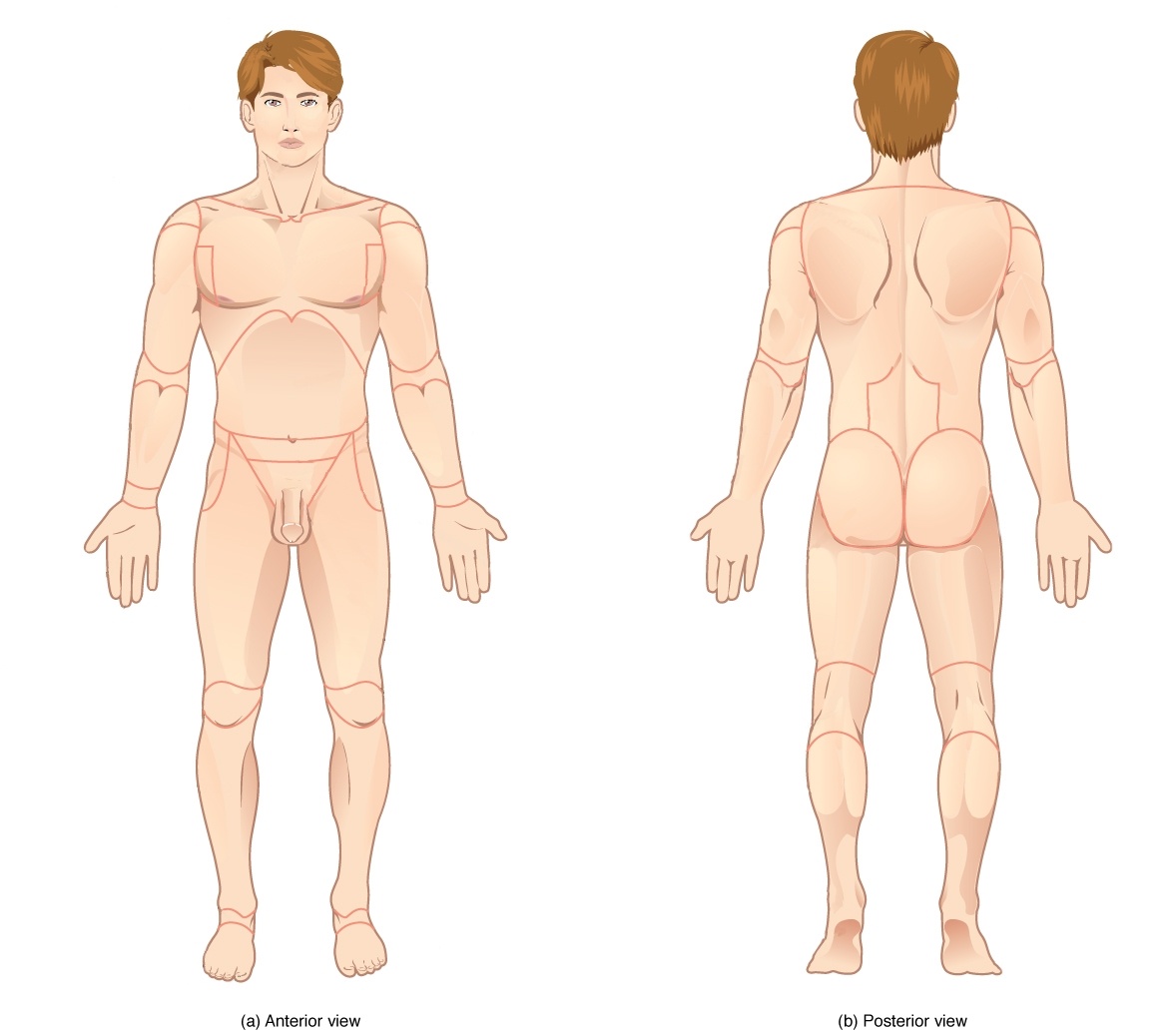
What is anatomical position?

a)
b)
c)
d)
6.

The shoulder is _____ to the elbow.

a)

proximal

b)

dorsal

c)

distal

d)

ventral

7.

The cranial cavity is _____ to the thoracic cavity.

a)

inferior

b)

anterior

c)

peripheral

d)

superior

8.

The pinky finger is ______ to the thumb in anatomical position.

a)

posterior

b)

superior

c)

lateral

d)

medial

9.

Movement of the arm/leg away from the midline

a)

adduction

b)

eversion

c)

inversion

d)

abduction

10.

Movement of the forearm/hand so the palm faces up

a)

pronation

b)

supination

c)

extension

d)

flexion

11.

Movement of arm/leg toward the midline

a)

flexion

b)

extension

c)

adduction

d)

abduction

12.

Movement to bend a joint

a)

extension

b)

circumduction

c)

eversion

d)

flexion

13.

Movement to straighten a joint

a)

extension

b)

flexion

c)

dorsiflexion

d)

pronation

14.

Movement of the forearm/hand so palm faces downward or backwards

a)

supination

b)

pronation

c)

palmar

d)

flexion

15.

This term refers to the shoulder region

a)

brachial

b)

deltoid

c)

unilateral

d)

carpal

16.
Head Region
a)
Acrominal
b)
Cephalic
c)
Cervical
d)
Occipital
17.
Area behind the knee
a)
Patellar
b)
Popiteal
c)
Cephalic
d)
Cervical
18.
Neck Area
a)
Cephalic
b)
Calcaneal
c)
Cervical
d)
Popiteal
19.
a)
Antecubital
b)
Antebrachial
c)
Deltoid
d)
Brachial
20.

Front of the knee

a)

Popiteal

b)

Genicular

c)

Plantar

d)

Cervical

21.
The body region that contains the bellybutton is the:
a)
carpal region
b)
umbilical region
c)
inguinal region
d)
orbital region
22.

lower leg (shin)

a)

carpal

b)

crural

c)

inguinal

d)

digital

23.

lateral part of lower leg

a)

tarsal

b)

fibular

c)

femoral

d)

crural

24.

Which is part of the lymphatic system?

a)

bladder

b)

lungs

c)

lymph nodes

d)

cartilege

25.

What are the three types of muscles?

a)

cardiac, smooth, and skeletal

b)

heart, neck, and abdomen

c)

respiratory, digestive, and eyes

26.
The main function of the excretory system is....
a)
To filter waste from the blood stream and carry it outside of the body.
b)
To transport nutrients to the body.
c)
To break down nutrients for absorption.
d)
To provide structure and support for the body.
27.

The shoulder is _____ to the elbow.

a)

proximal

b)

dorsal

c)

distal

d)

ventral

28.

The cranial cavity is _____ to the thoracic cavity.

a)

inferior

b)

anterior

c)

peripheral

d)

superior

29.

The pinky finger is ______ to the thumb in anatomical position.

a)

posterior

b)

superior

c)

lateral

d)

medial

30.

_______ means towards the side of the body.

a)

distal

b)

proximal

c)

medial

d)

lateral

31.

The diaphragm seperates which two body cavities?

a)

pelvic

b)

abdominal

c)

thoracic

d)

cranial

32.
What organelle of the cell produces energy?
a)
Mitochondria 
b)
Golgi Body 
c)
Vesicle 
d)
Vacuole 
33.
What macromolecules help to make the cell membrane? 
a)
Proteins 
b)
Carbohydrates 
c)
Phospholipids 
d)
All of the above 
34.

Fat is stored in vesicles within cells that compose __________ tissue.

a)

bone

b)

loose connective

c)

adipose

d)

reticular connective tissue

35.

Positive or Negative Feedback: Blood clotting.

a)

Positive

b)

Negative

36.

Positive or Negative Feedback: Involved in thermoregulation

a)

Positive

b)

Negative

37.

Positive or Negative Feedback: Feedback mechanism that regulates.

a)

Positive

b)

Negative

38.

Positive or Negative Feedback: Osmoregulation

a)

Positive

b)

Negative

39.

Positive or Negative Feedback: Regulates blood glucose levels.

a)

Positive

b)

Negative

40.

Positive or Negative Feedback: Keeps a variable within normal range.

a)

Positive

b)

Negative

41.

Positive or Negative Feedback: Reduces an excessive response.

a)

Positive

b)

Negative

42.
Which of the following is the correct order of elements in a homeostatic feedback mechanism?
a)
receptor, stimulus, afferent pathway, control center, efferent pathway, effector, response
b)
stimulus, receptor, afferent pathway, control center, efferent pathway, effector, response
c)
receptor, stimulus, efferent pathway, control center, afferent pathway, effector, response
d)
effector, stimulus, efferent pathway, control center,  afferent pathway, receptor, response
43.
This type of muscle tissue is found in the walls of hollow organs such as the stomach, and blood vessels 
a)
Skeletal
b)
Cardiac
c)
Smooth
d)
All of the above
44.

____ epithelia makes up the esophagus

a)

Stratified squamous

b)

Simple columnar

c)

Transitional

d)

Simple squamous

45.

____ are vesicles containing enzymes that break down old worn out organelles and other unneeded material in the cell.

a)

Ribosomes

b)

Lysosomes

c)

Mitochondria

d)

Centrioles

46.

White blood cells attack pathogens through the _________ and ___________ systems.

a)

nervous, circulatory

b)

muscular, circulatory

c)

skeletal, circulatory

d)

immune, circulatory

47.
The "cause" for something to happen is the
a)
response
b)
effect
c)
stimulus
d)
homeostasis
48.

detects change and sends a message to the control center

a)

receptor

b)

control center

c)

effector

d)

regulation

49.

receives the message and coordinates a response

a)

control center

b)

effector

c)

glucagon

d)

homeostasis

50.

receives the message and coordinates a response

a)

control center

b)

effector

c)

glucagon

d)

homeostasis

51.

responds to the output from the control center

a)

control center

b)

receptor

c)

thermoregulation

d)

effector

52.

____ is the carbohydrate made by liver and muscle cells which stores glucose.

a)

Glucose

b)

Sucrose

c)

Lactate

d)

Glycogen

53.
The coloring in the skin; found in the epidermis.
a)
Melanin
b)
Oil
c)
Perspiration
d)
Pores
54.
What are the three main layers of the skin?
a)
The epidermis, the dermis, and the subcutaneous
b)
The epidermis, the dermis, and the sebaceous
c)
The dermis, the sebaceous, and the sudoriferous
d)
The sudoriferous, the dermis, and the epidermis
55.
What layer of epidermis does mitotic division occur?
a)
stratum lucidum
b)
stratum basale
c)
stratum granulosum
d)
stratum corneum
56.
What layer of the epidermis is 1 pointing to?
a)
Stratum Basale
b)
Stratum Spinosum
c)
Stratum Granulosum
d)
Stratum Corneum
57.

Stratum Granulosum

a)

B

b)

C

c)

D

d)

E

e)

F

58.

Stratum Corneum

a)

B

b)

C

c)

D

d)

E

e)

F

59.

Fatty acids are only produced by what kind of sweat gland?

a)

eccrine

b)

apocrine

c)

corpuscles

d)

sebum

60.
The deepest layer of the epidermis, the basal cell layer, is also known as the: 
a)
stratum germinativum
b)
stratum corneum
c)
stratum spinosum
d)
keratin dermis
61.
The dermis layer is made up of two layers, which are the:
a)
papillary and reticular
b)
Cortex
c)
dermal and tactile
d)
tactile and reticular
62.

The clear layer only present in thick skin is

a)

Stratum granulosum

b)

Stratum spinosum

c)

Stratum corneum

d)

Stratum lucidum

63.

ABCD rule for determining the presence of melanoma stands for

a)

Asymmetry

b)

Border irregularity

c)

Color

d)

Diameter

64.

Herpes simplex virus causes

a)

cold sores

b)

impetigo

c)

HIV

d)

athletes foot

65.
First cervical vertebra.
a)
Axis
b)
Body
c)
Vertebra prominens
d)
Atlas
66.
Second cervical vertebra.
a)
Axis
b)
Body
c)
Vertebra prominens
d)
Atlas
67.
What are functions of the skeleton?
a)
Protection
b)
Blood cell production
c)
Movement
d)
All of these
68.

Covering on the end of the epiphysis as represented in structure D. Also on the end of B. Provides protection

a)

red bone marrow

b)

yellow bone marrow

c)

articular cartilage

d)

medullary cavity

69.
This lines the medullary cavity
a)
Periosteum 
b)
Endosteum 
c)
Diaphysis 
d)
Osteoblasts 
70.
This type of bone is solid throughout except for the central canals and lacunae.
a)
Compact Bone
b)
Spongy or Cancellous Bone
71.
This type of bone is porous, allowing blood vessels to move through it and containing bone marrow.
a)
Compact Bone
b)
Spongy or Cancellous Bone
72.
How many true ribs are there?
a)
2
b)
3
c)
7
73.

Select which bones are carpal bones

a)

scaphoid

b)

lunate

c)

pisiform

d)

navicular

e)

trapezium

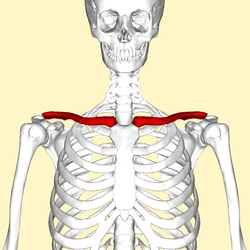
74.
What bones are these?
a)
Sternums
b)
Scapulae
c)
Clavicles
d)
Hyoids
75.

Which muscle in involuntary?

a)

skeletal

b)

cardiac

c)

smooth

76.
Very small muscle tears that cause soreness from overuse
a)
Strain
b)
Sprain
c)
Cramp
d)
Pulled Muscle
77.
These joints all have a fibrous capsule lined with synovial membrane surrounding a joint cavity
a)
fibrous
b)
cartilaginous
c)
synovial
78.

The condition in which a calcium mass forms within a muscle is called ____.

a)

myositis ossificans

b)

calcium deposition

c)

muscle cramp

d)

muscular dystrophy

79.

Which of the following muscles is attached to the Achilles tendon?

a)

gastrocnemius

b)

sartorius

c)

adductor muscle

d)

tibialis anterior

80.

The _____ muscle causes extension of the forearm.

a)

triceps brachii

b)

brachialis

c)

brachioradialis

d)

biceps brachii

81.

The muscle that encircles the eye is the ____.

a)

nasalis

b)

zygomaticus

c)

frontalis

d)

orbicularis oris

82.

The release of ____ ions with the arrival of the action potential enables the attachment of myosin heads to actin filaments.

a)

Na+

b)

Cl

c)

Ca++

d)

K+

83.

Skeletal muscle fibers contain ____ nuclei (nucleus).

a)

0

b)

1

c)

2

d)

multiple

84.

The upper portion of the sternum is called the ____.

a)

xiphoid process

b)

manubrium

c)

patella

d)

hyoid

85.

The ____ joints are the most freely movable joints in the body.

a)

saddle

b)

pivot

c)

hinge

d)

ball and socket

86.
Identify the muscle.
a)
Pectorals
b)
Tricep
c)
Bicep
d)
Quadriceps
87.
Identify the muscle.
a)
Quadriceps
b)
Bicep
c)
Pectorals
d)
Gastrocnemius
88.
Identify the muscle.
a)
Hamstring
b)
Pectorals
c)
Abdominals
d)
Quadriceps
89.
Identify the muscle.
a)
Hamstring
b)
Gastrocnemius
c)
Deltoid
d)
Latissimus Dorsi
90.
Identify the muscle.
a)
Bicep
b)
Tricep
c)
Deltoid
d)
Trapezius
91.
Identify the muscle.
a)
Gluteus Maximus
b)
Quadriceps
c)
Hamstrings
d)
Deltoids
92.
Identify the muscle.
a)
Obliques
b)
Trapezius
c)
Gluteus Maximus
d)
Latissimus Dorsi
93.
Identify the muscle.
a)
Biceps
b)
Triceps
c)
Abdominals
d)
Obliques
94.
Identify the muscle.
a)
Deltoids
b)
Quadriceps
c)
Triceps
d)
Trapezius
95.

Muscles that oppose one another are

a)

synergist

b)

hateful

c)

prime movers

d)

antagonists

96.
How do pairs of skeletal muscles work together?
a)
while one contracts, the other returns to original length
b)
both muscles contract at the same time
c)
both muscles relax at the same time
d)
1 muscle pulls on the bone and the other pulls on the first muscle
97.
Which muscle type is found in your stomach, bladder, and intestines?
a)
Skeletal
b)
Smooth
c)
Cardiac
d)
Straight
98.
Involuntary muscle is 
a)
muscle found in the heart
b)
muscle found in the organs
c)
muscle that works automatically
d)
all of these are true
99.

The _______________ covers bundles of cells (fascicles) within the muscle.

a)

endomysium

b)

perimysium

c)

sarcoplasm

d)

tendon

100.

The functional contractile unit within a muscle fiber is called the

a)

sarcomere

b)

fascia

c)

sarcoplasm

d)

tendon