wayground logo

Free Printable Worksheets

Font size

S
M
L
XL
Worksheets

Review 3

Total questions: 105

Worksheet time: 2hrs 46mins

Name
Class
Date
1.
Which of the following is not a nitrogen base found in DNA?
a)
Thymine
b)
Uracil 
c)
Guanine
d)
Adenine
2.
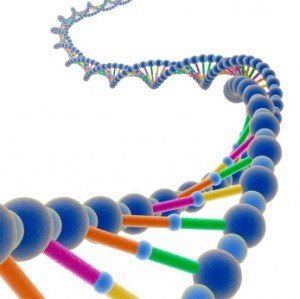
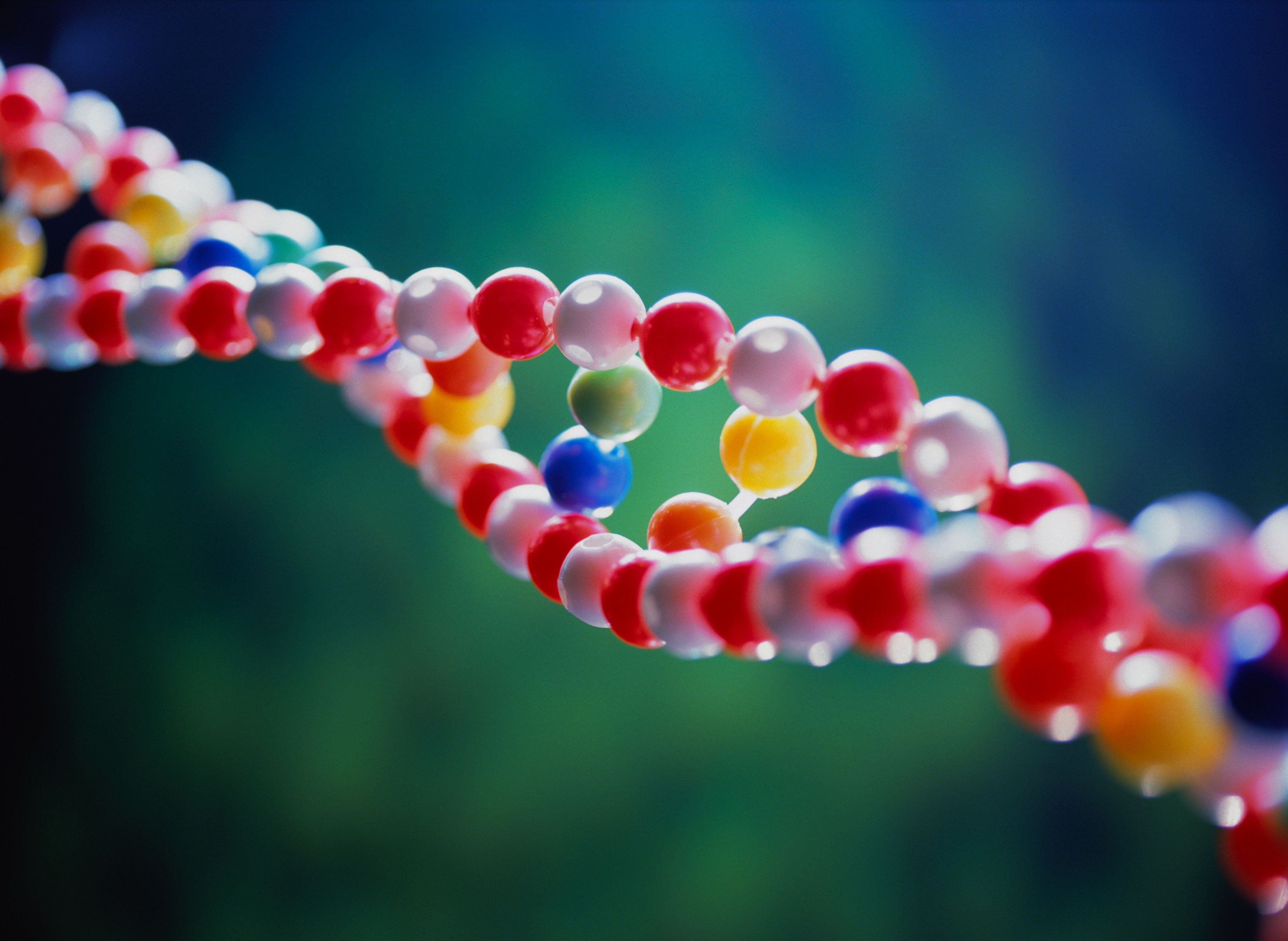
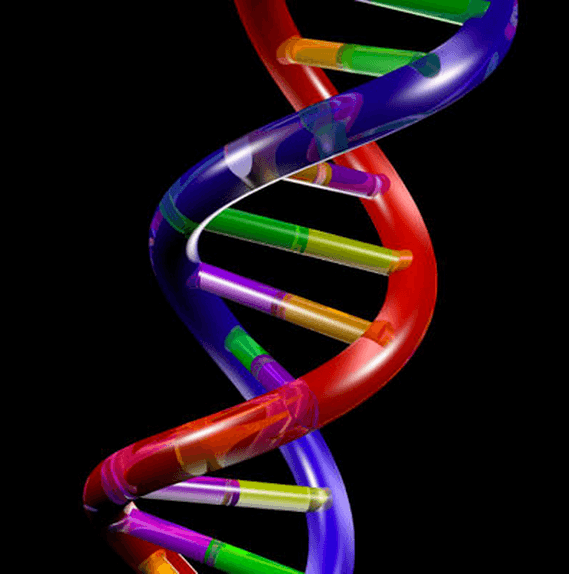
The twisted ladder shape of DNA is known as a
a)
Double Helix
b)
Triple Helix
c)
Single Helix
d)
Triple Helix
3.
Assume that you have straight hair and your sibling has curly hair. What accounts for this difference?
a)
You have DNA and your sibling does not.
b)
The your sequence of nitrogen bases is different than your sibling.
c)
Your sibling has a weave. 
d)
Your sibling has a genetic mutation. 
4.

What are the monomers of DNA called?

a)

Amino Acids

b)

Monosaccahrides

c)

Fatty Acids

d)

Nucleotides

5.

Which of the following is NOT a part of a DNA nucleotide?

a)

Deoxyribose

b)

Fatty Acid

c)

Nitrogen Base

d)

Phosphate group

6.

What is the shape of a DNA molecule?

a)

Carbon ring

b)

Pentagon

c)

Double helix

d)

Single helix

7.

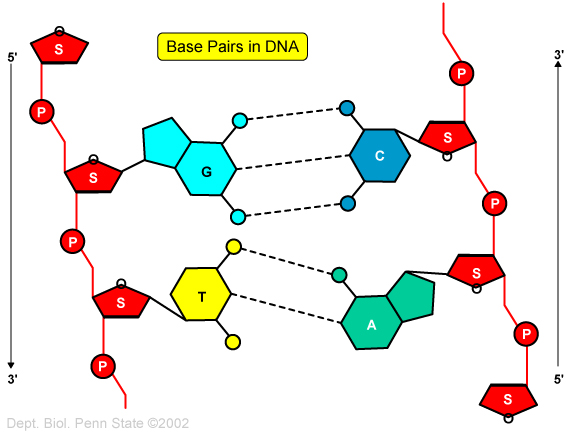
Which of the following base pairs would be found in DNA?

a)

Adenine - Thymine

b)

Adenine - Cytosine

c)

Guanine - Thymine

d)

Cytosine - Thymine

8.

The two parallel strands of DNA are kept together by:

a)

Ionic bonds

b)

Covalent Bonds

c)

Phosphodiester bonds

d)

Hydrogen Bonds

9.

The structure boxed in red is called a:

a)

Phospholipid

b)

Sugar

c)

Nucleotide

d)

Amino Acid

10.

The presence of DNA is important for cellular metabolic activities because DNA:

a)

Is the major component of the cytoplasm

b)

Directly increases the solubility of nutrients

c)

Directs the production of proteins

d)

Is a structural component of cell membranes

11.
Which 2 molecules forms the sides (backbone) of the DNA ladder?
a)
ribose (sugar) and nitrogen bases
b)
ribose (sugar) and phosphate
c)
deoxyribose (sugar) and nitrogen bases
d)
deoxyribose (sugar) and phosphate
12.
Which organelle is DNA usually found in?
a)
mitochondrian
b)
cell membrane
c)
chloroplast
d)
nucleus
13.

In DNA, Adenine always pairs with Thymine A-T (Like Apples-Trees), while Cytosine always pairs with Guanine C-G (Like Cars-Garage).

a)

RNA

b)

DNA

c)

Nucleotides

d)

Base Pairing

14.
The sugar in DNA is ?
a)
sucrose
b)
glucose
c)
deoxyribose
d)
fructose
15.

DNA is an acronym for _____

a)

Diphosphorus Nucleic Acid

b)

Ribose Nucleic Acid

c)

Deoxyribonucleic Acid

d)

Deoxyribonucleic Acetate

16.

Which of the following is a base pair?

a)

Adenine - Cytosine

b)

Cytosine - Thymine

c)

Deoxyribose - Cytosine

d)

Cytosine - Guanine

17.

DNA is called the "blueprint of life" because

a)

it is like a fingerprint

b)

it has a blue color

c)

it contains the plans for building an organism

d)

it can relay messages to other molecules

18.

What is your favourite subject?

a)

Swimming

b)

Biology

c)

Algebra

d)

Geometry

19.
What is a phenotype?
a)
The expression of a trait; what you see.
b)
refers to the genetic makeup of an individual
c)
An organism that has the same genes for a trait (ex. TT or tt)
d)
the passing of traits from parent to offspring
20.
What does heterozygous mean?
a)
An organism that has the same genes for a trait (TT or tt)
b)
An organism that has different genes for a trait (Tt)
c)
When neither gene is fully dominant; offspring is a mixture of both
d)
the different forms of a trait (hair color--> brown, blonde, red
21.
If T=Tall & t=short, what is the genotypic ratio?
a)
1:3
b)
3:1
c)
1:2:1
d)
2:2
22.
Genotype refers to the ...
a)
physical expression of the genes
b)
the possible combination of alleles in a gene
c)
whether an allele is dominant or recessive
d)
how an organism will appear
23.
An offspring will receive how many alleles from each parent to determine a specific trait?
a)
one
b)
two
c)
three
d)
five
24.
having two of the same genes for the trait (sometimes called purebred).
a)
homozygous
b)
hetrozygous
c)
protein
d)
chromosome
25.
having two different genes for a trait (sometimes called hybrid).
a)
protein
b)
homozygous
c)
heterozygous
d)
genotype
26.
If green is dominant over purple, then what is the genotype for this individual?
a)
Purple
b)
Green
c)
GG
d)
gg
27.
The male part of the flower is known as the _____.
a)
stamen
b)
pistil
c)
ovary
d)
petal
28.
The female part of the flower is known as the ____.
a)
stamen
b)
anther
c)
filament
d)
pistil
29.
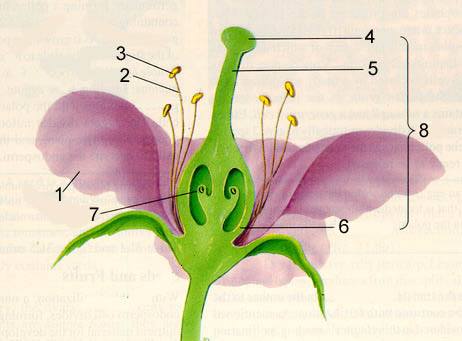
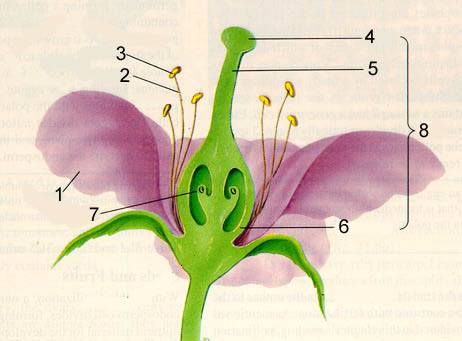
What is #4 pointing to?
a)
anther
b)
style
c)
stigma
d)
ovary
30.
What is #1 pointing to?
a)
ovary
b)
petal
c)
stigma
d)
stamen
31.
What is #2 pointing to?
a)
anther
b)
filament
c)
ovary
d)
style
32.
What is #3 pointing to?
a)
stigma
b)
filament
c)
ovary
d)
anther
33.
What is #4 pointing to?
a)
anther
b)
style
c)
stigma
d)
ovary
34.
What is #6 pointing to?
a)
stigma
b)
style
c)
ovary
d)
petal
35.
What is #7 pointing to?
a)
anther
b)
ovary
c)
ovule
d)
petal
36.
Where is pollen made?
a)
ovary
b)
petal
c)
pistil
d)
anther
37.
What is the sticky part of the flower that catches pollen?
a)
style
b)
stigma
c)
ovary
d)
petal
38.
What part of the flower will turn into a fruit?
a)
petal
b)
ovary
c)
ovule
d)
stamen
39.
What part of the flower will turn into a seed?
a)
ovary
b)
anther
c)
ovule
d)
filament
40.

What is the name of flower part #5 ?

a)

anther

b)

style

c)

stigma

d)

filament

41.

What is the name of flower part #7 ?

a)

stigma

b)

stamen

c)

ovule

d)

pollen tube

42.

What is the name of flower part #10 ?

a)

sepal

b)

pollen tube

c)

filament

d)

stigma

43.

This is the stalk of the stamen?

a)

anther

b)

filament

c)

peduncle

d)

sepal

44.
Why are flowers very colorful (and why do they produce odor?)
a)
So people buy them
b)
To make gardens look good
c)
To attract pollinators
d)
To attract sunlight
45.
What is a pollinator?
a)
Animal that moves pollen from plant to plant
b)
Animal that eats pollen
c)
A plant that makes pollen
d)
A plant that does not make pollen
46.
Male reproductive parts of a plant....
a)
Petals and ovary
b)
Ovary and ovule
c)
Anther and filament
d)
Stigma and style
47.
How else can pollen be moved besides pollinators?
a)
Sunlight
b)
Wind
c)
Snow
d)
Hail
48.
Fertilization is....
a)
Egg and Sperm cells join
b)
Sperm Cells
c)
Egg Cells
d)
Pollination
49.
Why do fruits taste sweet?
a)
So people buy them
b)
So animals eat them and disperse the seeds inside
c)
Insects are attracted to them
d)
So they will grow better
50.

What is letter "C" in the image?

a)

Pistil

b)

Stamen

c)

Sepal

d)

Petal

51.
What did Gregor Mendel use to discover the principles that rule heredity?
a)
Pea Plant
b)
Pigeons
c)
Pear trees
d)
Photosynthesis
52.
What did Mendel call the two kinds of traits exhibited by the pea plants (one coming from the father, one from the mother)?
a)
Genesis
b)
Elective traits
c)
Alleles
d)
Quadrants
53.
What do we call the result of the genotype (for example, the color of the peas)?
a)
Visible traits
b)
Physiotrait
c)
Genotype 2
d)
Phenotype
54.
What do we call the table used to calculate the probability of an offspring's genotype?
a)
Punnett square
b)
Venn diagram
c)
Golden ratio
d)
Fibonacci sequence
55.
This phenotype is more likely to be prominent in offspring
a)
Genotype
b)
Dominant genotyp
c)
Recessive Phenotype
d)
monotypes
56.
This type of phenotype is less likely to be prominent in offspring
a)
Dominant genotype
b)
Recessive genotype
c)
Dominant phenotype
d)
Recessive phenotype
57.
Other forms of genes are called
a)
Alleles
b)
chromosomes
c)
gene1
d)
gene2
58.
Alleles that are the same are called
a)
homozygous
b)
heterozygous
c)
dominant
d)
recessive
59.
Alleles that are different are called
a)
heterozygous
b)
homozygous
c)
dominant
d)
recessive
60.
If 2 black guinea pigs have a white guinea pig and black is dominant to white, the parents must have been...
a)
Bb x Bb
b)
BB x bb
c)
BB x BB
d)
bb x bb
61.
An offspring will receive how many alleles from each parent to determine a specific trait?
a)
one
b)
two
c)
three
d)
five
62.
If green is dominant over purple, then what is the genotype for this individual?
a)
Purple
b)
Green
c)
GG
d)
gg
63.
A heterozygous long-tusked elephant is crossed with a homozygous recessive short-tusked elephant. What is the probability of the offspring having short tusks?
a)
0%
b)
25%
c)
50%
d)
75%
64.

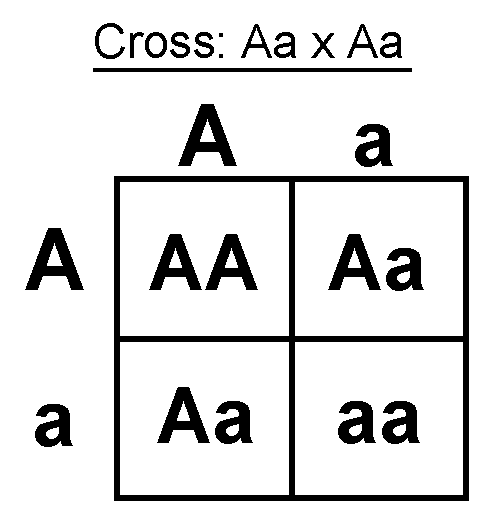
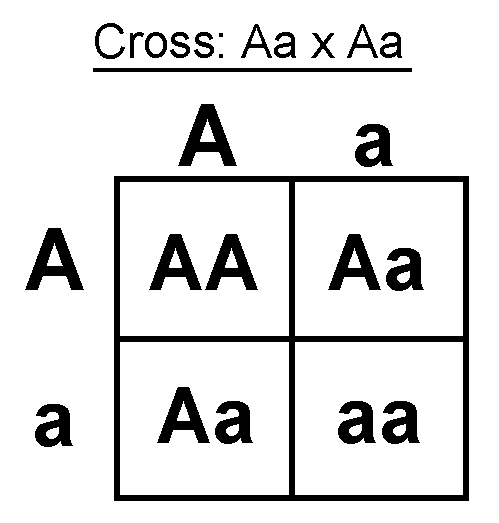
What is the genotypic ratio of the offspring?

a)

3:1

b)

1:3

c)

1:2:1

d)

2:2

65.

What are the phenotype percentages of the offspring?

(A-Brown fur color; a-white fur color)

a)

50 % Brown fur and 50% White fur

b)

25 % Brown fur and 75% White fur

c)

75 % Brown fur and 25% White fur

d)

0% Brown fur and 100% White fur

66.
What are the possible genotypes for this cross?
(Click the picture to see it without the text)
a)
TT = 25% Tt= 50% tt=25%
b)
all tall
c)
TT= 75% tt = 25%
d)
Tt = 100%
67.

The passing of traits from parent to offspring

a)

heredity

b)

genotype

c)

gene

d)

genetics

68.

Known as the "Father of Genetics". He discovered the principles of heredity.

a)

Einstein

b)

Chase

c)

Mendel

d)

Franklin

69.

Specific colors or features (ex: BLUE eyes)

a)

charactertistic

b)

trait

c)

genes

d)

alleles

70.

Another name for homozygous

a)

purebred

b)

hybrid

71.

Another name for heterozygous

a)

purebred

b)

hybrid

72.

the form of a trait that masks another trait

a)

recessive

b)

dominant

73.

the form of a trait that is masked by another

a)

recessive

b)

dominant

74.

a tool used to predict the possibility of offspring

a)

Gene Circle

b)

Gene Square

c)

Punnett Circle

d)

Punnett Square

75.

the study of heredity

a)

Biology

b)

Heredity

c)

Genetics

d)

Genotype

76.

refers to how an organism will look based on its genes

a)

genotype

b)

phenotype

77.
The dominant trait is
a)
yellow pea seeds
b)
green pea seeds
c)
there is no dominant seed
d)
Jolly green giant
78.

Chromosomes are found in the ____________ of the cell

a)

Chloroplast

b)

Nucleus

c)

Cytoplasm

d)

Mitochondria

e)

Vacuole

79.

Which organelle is DNA usually found in?

a)

cell membrane

b)

vacuole

c)

chloroplast

d)

nucleus

e)

cytoplasm

80.

Which of the following is the best definition for heredity?

a)

Heredity is the passing of particles from high concentration to low concentration.

b)

Heredity explains how DNA copies itself.

c)

Heredity is the passing of traits from parent to offspring.

d)

Heredity is the forming of clones.

81.

Y= yellow pod

y= green pod


What is the percentage of yellow pod when you cross a hybrid pod plant with a purebred green pod plant?

a)

25%

b)

50%

c)

75%

d)

100%

82.
Two brown eyed parents (Bb) have a baby. What is the chance the baby is blue eyed?
a)
0 %
b)
25%
c)
50%
d)
75%
83.
Which sequence of DNA bases would pair with this partial strand
ATG TGA CAG
a)
ATG TGA CAG
b)
TAC ACT GTC
c)
GTA AGT GAC
d)
CAT TCA CTG
84.
Which of the following best describes a DNA molecule?
a)
double helix
b)
contains ribose
c)
made of amino acids
d)
contains Uracil
85.
Which of the following units are repeatedly joined together to form a strand of DNA?
a)
amino acids
b)
nucleotides
c)
fatty acids
d)
polysaccharides
86.
In a molecule of double-stranded DNA, the amount of Adenine present is always equal to the amount of
a)
cytosine
b)
guanine
c)
thymine
d)
uracil
87.
Why is DNA important?
a)
it is very small and very complicated
b)
it's in everything
c)
it serves as the blueprint for traits of all living things
d)
because we eat it every day for energy
88.
What determines the code, or information, of a DNA molecule?
a)
the shape (structure) of the nitrogen bases
b)
the order (sequence) of the nitrogen bases
c)
the color of the nitrogen bases
d)
the frequency (number) of nitrogen bases
89.
Which 2 molecules form the sides (backbone) of the DNA ladder?
a)
deoxyribose sugar and adenine
b)
deoxyribose sugar and a hydrogen bond
c)
deoxyribose sugar and the nucleus
d)
deoxyribose sugar and phosphate
90.
Nitrogenous bases are joined by which type of bond?
a)
polar bonds
b)
ionic bonds
c)
covalent bonds
d)
hydrogen bonds
91.
Replicate the following strand of DNA: 
AATCATGGA
a)
AATCATGGA
b)
TTAGTACCT
c)
UUAGUACCU
d)
GGATAUCUA
92.
There is a segment of DNA that codes for every trait that a person has. These segments of DNA are found on
chromosomes and are called ________.
a)
Deoxyribonucleic acid
b)
Genes
c)
Heredity
d)
Recessive Traits
93.
What is the relationship between DNA and chromosomes?
a)
Chromosomes are made of DNA
b)
DNA is made of chromosomes
c)
DNA and chromosomes are the same thing.
d)
All of the above are correct
94.
The principle Watson and Crick created that said adenine pairs with thymine and guanine pairs with cytosine is called
a)
base pairing
b)
super coiling
c)
replication
d)
substitution
95.
Genetic variation can arise from a random change in the DNA of a gene.  The change is called a(n)
a)
mutation
b)
gene flow
c)
gene pool
d)
allele
96.
Individuals that are well adapted to their environment will survive and produce
a)
better traits
b)
stronger genes
c)
more offspring
d)
fewer mutations
97.

What type of evidence is shown in this picture?

a)

Fossils

b)

Homologous Structures

c)

Vestigial Structures

d)

DNA

98.
The diagram shows fossils in different rock layers. Which of these statements about the age of these fossils is most likely correct?
a)
Fossil A and C are the same age
b)
Fossil B is older than fossil C
c)
Fossils A is older than fossil B
d)
Fossil D is older than fossil C
99.
The table shows the survival rate of two types of beetles in the same environment over a period of three years.  

Which statement about the beetles in this environment is best supported by the data?
a)
Brown beetles have a shorter life cycle than green beetles have
b)
Green beetles are more fit for their environment than brown beetles
c)
 brown beetles are undergo more unfavorable mutations than green beetles
100.
How would you describe this evolution?
a)
Homologous structure
b)
Analogous structure
c)
Structural adaption
d)
Functional adaption
101.

Which letter represents the most recent common ancestor of sponges and mushrooms?

a)

A

b)

B

c)

C

d)

D

e)

E

102.

According to the cladogram, which organism is most distantly related to the chimpanzee?

a)

salmon

b)

salamander

c)

lizard

d)

hamster

103.
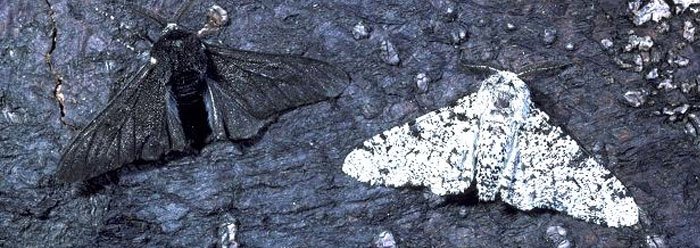
The trees these moths used to live on were white, but have been covered in soot from coal factories. Which moth will be more successful in this environment?
a)
Dark moth
b)
Light moth
c)
Both will be equally successful
d)
Neither will be successful
104.
These moths are all the same species. The differences between their wings is an example of ________________
a)
Natural Selection
b)
Variation
c)
Homeostasis
d)
Extinction
105.

Biologist who created the theory of natural selection

a)

Eric Friberg

b)

Gregor Mendel

c)

Charles Darwin

d)

Albert Einstein