Wayground logo

Free Printable Worksheets

Font size

S
M
L
XL
Worksheets

Test #2 Review (18/19)

Total questions: 175

Worksheet time: 2hrs 3mins

Name
Class
Date
1.
What is a prism?
a)
a transparent object that separates white light
b)
an opaque object that appears black
c)
a translucent object
2.
Why do we see objects as white?
a)
They absorb all light
b)
They reflect all light
c)
They absorb some light and reflect some light
3.
Why does white light look like a rainbow when it exits a prism?
a)
The prism adds more kinds of light.
b)
The prism changes some white light into electricity.
c)
The prism is filled with many different colors.
d)
The prism separates white light into its component colors.
4.
The color you see is the color that is ___.
a)
reflected
b)
absorbed
5.
Transparent
a)
A material that allows some light to pass through it
b)
a material that allows light to pass through it
6.
Opaque
a)
to bend light waves
b)
 A material that does not allow light to pass through it
7.

A yellow shirt

a)

reflects yellow light

b)

absorbs yellow light

c)

absorbs red and green light

d)

reflects red and green light

8.
What happens to blue light when it hits a shirt that appears blue?
a)
The light is reflected.
b)
The light is absorbed.
c)
The light is refracted.
d)
The light is blocked.
9.
Which is true of a green grape?
a)
It absorbs green light.
b)
It absorbs white light.
c)
It reflects green light.
d)
It reflects white light.
10.
What is the absence of color?
a)
black
b)
white
c)
yellow
d)
blue
11.
Absorb or Reflect all colors?
a)
Absorb
b)
Reflect
12.
Absorb or Reflect all colors?
a)
Absorb
b)
Reflect
13.
Which of the following is not a secondary color of light?
a)
blue
b)
cyan
c)
yellow
d)
magenta
14.
Which color has the longest wavelength?
a)
Blue
b)
Green
c)
Red
d)
Yellow
15.
Magenta light is really a mixture of 
a)
red and yellow light.
b)
red and cyan light.
c)
yellow and green light
d)
red and blue light.
16.
The order of the colors are: red, orange, yellow, green, ____, ____, and ____.
a)
blue, indigo, and violet
b)
blue, indigo, and purple
c)
purple, indigo, and violet
d)
indigo, blue, and violet
17.
Which color of light has the highest frequency?
a)
Violet
b)
Red
c)
Yellow
d)
Blue
18.
Which color of light has the lowest frequency?
a)
Violet
b)
Red
c)
Green
d)
Blue
19.
The source of all electromagnetic waves is 
a)
magnetic fields.
b)
heat.
c)
electric fields.
d)
vibrating charges.
20.
A sheet of red paper will look black when illuminated with 
a)
cyan light.
b)
yellow light.
c)
red light.
d)
magenta light.
21.
The color of an opaque object is determined by the light that is 
a)
absorbed
b)
reflected
c)
transmitted
d)
all 
22.
Magenta light is really a mixture of 
a)
red and yellow light.
b)
red and cyan light.
c)
yellow and green light
d)
red and blue light.
23.
The three paint colors that are useful for color subtraction are 
a)
magenta, cyan, and red.
b)
red, blue, and yellow.
c)
red, green, and blue.
d)
magenta, cyan, and yellow.
24.
When blue and yellow paints are mixed together, the result is green. The reason for this is that 
a)
blue and yellow are complementary colors.
b)
yellow pigments absorb green light and reflect all the others.
c)
blue reflects only blue light, and yellow reflects almost all colors of light.
d)
between blue and yellow pigments, all colors are absorbed except green.
25.
Complementary colors are two colors that 
a)
are next to each other on the color chart.
b)
produce white light when added together.
c)
look good together.
d)
are primary colors.
26.
Different colors of light correspond to different light 
a)
frequencies
b)
polarities
c)
intensities
d)
velocities
27.

Humans are most sensitive to light that is

a)

red

b)

white

c)

yellow-green

d)

green-blue

28.
Light sometimes acts as a wave and sometimes as a particle.
a)
True
b)
False
29.
Two colors of light that add together to form black light are called complementary colors.
a)
True
b)
False
30.
Mixing red and blue light gives you...
a)
Cyan
b)
Magenta
c)
Yellow
d)
Purple
31.
What are the three secondary colors of light (primary pigments)?
a)
Cyan, Yellow, Magenta
b)
Red, Blue, Green
c)
Violet, Orange, Turquiose
d)
White, Black, Grey
32.
What are the three primary colors of light?
a)
Red, Blue, Yellow
b)
Green, Blue, Yellow
c)
Red, Blue, Green
d)
Cyan, Yellow, Magenta
33.
As a light ray travels away from an object, the light ray travels
a)
in a straight line.
b)
on a curved path.
c)
up and down.
d)
in a circle.
34.
Colors we can see are called
a)
radio waves 
b)
ultraviolet light 
c)
infrared light 
d)
visible light 
35.
Which color has the least amount of energy?
a)
red
b)
orange
c)
green
d)
blue
36.
If Earth had no atmosphere at all, what would the sky mostly look like? 
a)
red, with a very bright star
b)
violet, with a very bright star
c)
blue, with a very bright star
d)
dark, with a very bright star
37.

Green glass transmits only energy of the frequency of

a)

green light.

b)

all light.

c)

yellow and blue light.

38.

Colored glass transmits only the energy of the frequency of its specific color, energy of the other frequencies is absorbed and warms the glass.

a)

True

b)

False

39.

When green light shines on a green grape,

a)

the green grape will get warmer because it absorbs the energy.

b)

the green grape will stay the same because it reflects all the energy.

c)

the green grape will get warmer because it reflects all the energy.

d)

the green grape will stay the same because it absorbs the energy.

40.

Light is a form of

a)

energy

b)

wave

c)

ray

d)

prism

41.

Light travels in a

a)

zig zag

b)

straight line

c)

it doesn't travel

d)

straight down

42.

_____ is when a wave strikes an object and bounces off it.

a)

Reflection

b)

Refraction

c)

Diffraction

d)

Interference

43.

What are materials that allows light to travel through?

a)

Transparent

b)

Translucent

c)

Opaque

44.

What are materials that do not allow light through?

a)

Opaque

b)

Transparent

c)

Translucent

45.

When light does not pass or reflect from a material, the energy from that light must have been

a)

Reflected

b)

Absorbed

c)

Refracted

46.
Light travels in a straight line
a)
True
b)
False
47.

High frequency equals

a)

high energy

b)

low energy

c)

no change in energy

d)

none of the above

48.

The number of waves that pass in a given amount of time.

a)

wavelength

b)

wave speed

c)

amplitude

d)

frequency

49.
When a wave moves parallel to the direction that the wave travels, it is a
a)
longitudinal
b)
transverse
50.

Which electromagnetic wave has the shortest wavelength?

a)

radio

b)

gamma

c)

visible light

51.
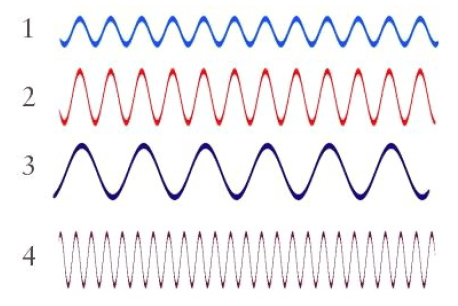
Which wave in the diagram has the greatest frequency?
a)
1
b)
2
c)
3
d)
4
52.

What type of wave is in the MIDDLE of the electromagnetic spectrum?

a)

gamma

b)

radio

c)

visible light

d)

x rays

53.

The longer the wavelength, the more energy light carries.

a)

True

b)

False

54.

Which is NOT part of the electromagnetic spectrum?

a)

visible light

b)

gamma rays

c)

magnetic field

d)

x-rays

55.

Which electromagnetic waves have the shortest wavelength and the highest frequencies?

a)

gamma rays

b)

x-rays

c)

radio waves

d)

ultraviolet rays

56.

Electromagnetic waves that you can see are called ___________.

a)

infrared rays

b)

x-rays

c)

microwaves

d)

visible light rays

57.

Which of the following has the shortest wavelength?

a)

radio

b)

infrared

c)

ultraviolet

d)

x-rays

58.

The laser beam used in eye surgery to repair detached retinas has a frequency of 4.688 x 10¹⁴ Hz. What is the wavelength of this electromagnetic radiation?

(c = 3.00 x 10⁸ m/s)

a)

7.88 x 1034 m

b)

6.40 x 10⁻⁷ m

c)

2.89 x 10³ m

d)

1.90 x 10⁻¹⁸ m

59.

Select the correct order of the waves on the EMS (Electromagnetic Spectrum) from lowest to highest frequency.

a)

Radio, Micro, Infra, Visible, UV, X-ray, Gamma

b)

Visible, Micro, Infra, UV, X-ray, Gamma, Radio

c)

Gamma, X-ray, UV, Visible, Infra, Micro, Radio

d)

Micro, Radio, Visible, Infra, UV, X-ray, Gamma

60.

Put the visible light colors in order from longest wavelength to shortest wavelength.

a)

V, I, B, G, Y, O, R

b)

R, O, Y, G, B, I, V

c)

R, Y, G, O, V, B, I

d)

O, R, Y, B, G, I, V

61.
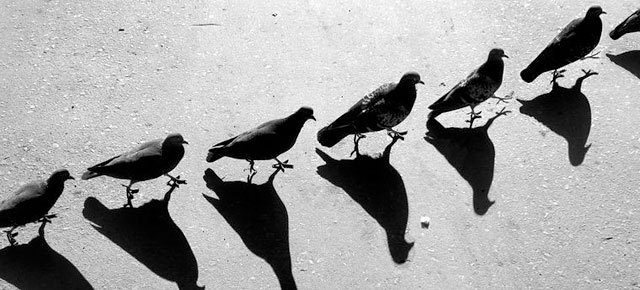
What causes shadows? 
a)
An object blocking the light source
b)
The water cycle
c)
An object letting the light source through
d)
The moon
62.
darkest, innermost part of the shadow
a)
penumbra
b)
umbra
63.
What type of eclipse occurs when the moon blocks the sun's light and cast a shadow on earth?
a)
solar
b)
lunar
64.
What type of eclipse occurs when the earth's shadow is cast on a full moon?
a)
solar
b)
lunar
65.
What is in the middle of a lunar eclipse?
a)
moon
b)
sun
c)
earth
66.
What part of the shadow must I be in to see a total solar eclipse?
a)
umbra
b)
penumbra
67.
What must happen in order for there to be an eclipse?
a)
the sun, earth, and moon must perfectly align
b)
A full moon occurs
c)
The earth must be higher than the sun and moon
d)
The moon must be beside the earth
68.
What type of eclipse is this?
a)
Solar eclipse
b)
Lunar eclipse
69.
What type of eclipse is this?
a)
Solar Eclipse
b)
Lunar Eclipse
70.
During a lunar eclipse, what color does the moon appear?
a)
Black
b)
Red-orange
c)
Yellow-green
d)
White
71.
Where must you be to see a total solar eclipse?
a)
a corona
b)
an orbit
c)
the moon's shadow
d)
the earth's shadow
72.
What is the darkest inner part of the shadow cone called, where a total eclipse can be viewed.
a)
Total
b)
Umbra
c)
Penumbra
73.
the lighter outer portion of the shadow or partial shadow of the earth.
a)
Umbra
b)
Penumbra
c)
Solar Eclipse
d)
Lunar Eclipse
74.
The dark inner portion of the shadow cone or full shadow of the earth.
a)
Umbra
b)
Penumbra
c)
Solar Eclipse
d)
Lunar Eclipse
75.
When light travels through water it ______.
a)
speeds up
b)
gets wet
c)
slows down
d)
makes it boil
76.
Visible light is ...
a)
a light bulb
b)
the sun
c)
light that we can see with our natural eye
d)
fire
77.
How does light travel?
a)
longitudinal wave
b)
transverse wave
78.
What type of light causes sunburn?
a)
A. visible light
b)
B. ultraviolet light
c)
C. infrared wave
d)
D. gamma ray
79.
Electromagnetic waves are transverse waves that transfer
a)
sound energy.
b)
photons.
c)
electrical and magnetic energy.
d)
the particles of a medium.
80.
What is the energy of an EM wave related to?
a)
frequency
b)
speed
c)
absorption rate
d)
transmission rate
81.
As the wavelength of an EM wave increases, 
a)
frequency and energy decrease
b)
frequency and energy increase
c)
frequency increases, but energy decreases
d)
frequency decreases, but energy increases
82.
Gamma rays travel faster than visible light.
a)
True
b)
False
83.
All electromagnetic waves travel at the same speed in a vacuum.
a)
True
b)
False
84.
Which of the following has the highest frequency?
a)
Ultraviolet
b)
Microwaves
c)
X-rays
d)
Radiowaves
85.
The speed of light in a vacuum is---
a)
3 x 10(-1) m/s
b)
300 m/s
c)
300,000,000 m/s
d)
Infinite
86.
Which of the following has the highest frequency?
a)
Visible light
b)
Microwaves
c)
Infrared
d)
Radio waves
87.
Which of the following has the shortest wavelength?
a)
Gamma rays
b)
Visible light
c)
Ultraviolet
d)
Radio waves
88.
Which of the following has the lowest frequency?
a)
Ultraviolet
b)
Microwaves
c)
Radio waves
d)
X-rays
89.
Any warm object emits this wave. Night vision cameras are able to detect this type of wave.
a)
Gamma rays
b)
Visible light
c)
Microwaves
d)
Infrared
90.
Sound waves are part of the electromagnetic spectrum.
a)
True
b)
False
91.
Electromagnetic waves can travel through a vacuum.
a)
True
b)
False
92.
Which colour has the lowest frequency?
a)
Red
b)
Green
c)
Yellow
d)
Indigo
93.
Which colour has the highest frequency?
a)
Violet
b)
Indigo
c)
Orange
d)
Green
94.
What does light do when it hits an object that it cannot pass through?
a)
It creates a shadow
b)
It passes through anyway
95.
Light waves cannot bend around objects. These objects block the rays and cause......
a)
Shadows
b)
Natural Light
c)
Artificial Light
d)
Color
96.
Which images are opaque?
a)
A & C
b)
A,C,E, & F
c)
D, E, & F
d)
A & E
97.

The most famous experiment measuring the speed of light was performed by the American physicist, ___________.

a)

Albert Michelson

b)

Albert Einstein

c)

Aristotle

d)

Alexander Graham Bell

98.
Emission of light from an atom occurs when an electron
a)
drops from a higher to a lower energy level.
b)
   jumps from a lower to a higher energy level.   
c)
   moves within its atomic orbital.
d)
falls into the nucleus.
99.

Metals are shiny because they

a)

absorb light.

b)

transfer light.

c)

reflect light.

d)

block light.

100.

When light shines on metal and sets these free electrons into vibration, their energy does not “spring” from atom to atom because their outer electrons are not bound to any particular atom.

a)

true

b)

false

101.

Opaque materials absorb light without reemission and do not allow light through because

a)

any vibrations from light are turned into random kinetic energy (internal energy).

b)

any vibrations from light are turned into random potential energy (internal energy)

c)

any vibrations from light are transferred.

102.
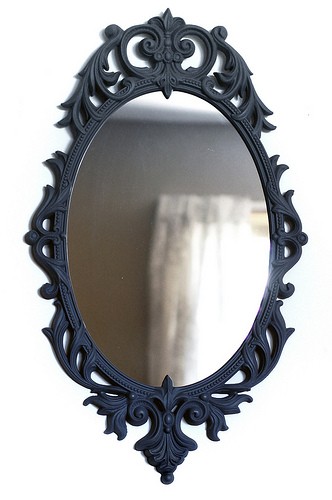
The following is a picture of what type of mirror? 
a)
Convex Mirror
b)
Concave Mirror
c)
Plane Mirror
d)
Flat Mirror
103.
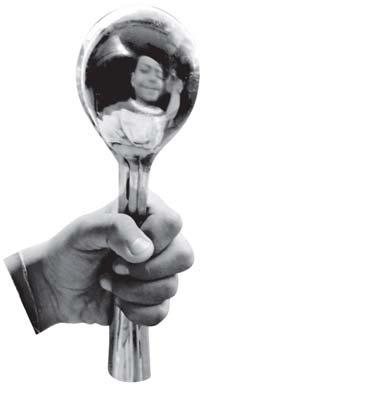
The following is a picture of what type of mirror? 
a)
Convex Mirror
b)
Concave Mirror
c)
Plane Mirror
d)
Flat Mirror
104.
An image that you can see , but does not really exist is called which of the following?
a)
Real Image
b)
Fake Image
c)
Virtual Image
d)
Digital Image
105.
An incident ray that is parallel to the principal axis...
a)
will reflect parallel to the principal axis
b)
will refract through the focal point
c)
will reflect through the center of curvature
d)
will continue along the same path through the lens
106.
a real image...
a)
is produced by virtual rays and can be projected on a screen
b)
is produced by real rays and cannot be projected on a screen
c)
is produced by virtual images and cannot be projected on a screen
d)
is produced by real rays and can be projected on a screen
107.
A light ray that bounces off of the mirror is known as
a)
Incident ray
b)
Reflected ray
c)
Normal line
d)
Source ray
108.
Where is the angle of incidence located?
a)
Between the mirror and the incident ray
b)
Between the mirror and the reflected ray
c)
Between the normal line and incident ray
d)
Between the normal line and reflected ray
109.
Where is the angle of reflection located?
a)
Between the mirror and the incident ray
b)
Between the mirror and the reflected ray
c)
Between the normal line and incident ray
d)
Between the normal line and reflected ray
110.
An incident light ray strikes a flat mirror at an angle of 30° from the normal. The reflected light ray reflects off the mirror
a)
at an angle of 30° from the mirror edge
b)
at an angle of 60° from the normal
c)
at an angle of 30° from the normal
d)
at an angle of 90° from the mirror edge
111.
As an object moves towards a flat mirror, its image
a)
moves closer to the mirror
b)
moves further from the mirror
c)
flips upside down
112.
Which of the following letters will look the same in the mirror?
a)
A
b)
B
c)
C
d)
D
113.
If the angle of incidence is 60 degrees from the normal line, what is the angle of reflection and the total angle between the incident and reflected ray?
a)
Angle of reflection = 30
Total angle = 90
b)
Angle of reflection = 60
Total angle = 90
c)
Angle of reflection = 30
Total angle = 120
d)
Angle of reflection = 60
Total angle = 120
114.
What is the name of the perpendicular line that we use to measure angles?
a)
Incident ray
b)
Reflected ray
c)
Normal line
d)
Source ray
115.
What type of image is produced by a flat mirror?
a)
Real and upright
b)
Real and inverted
c)
Virtual and upright
d)
Virtual and inverted
116.
What do we call light rays that are drawn behind a mirror
a)
Real
b)
Virtual
c)
Made up
d)
Does not exist
117.
A light ray that goes into the mirror is known as
a)
Incident ray
b)
Reflected ray
c)
Normal line
d)
Source ray
118.
Which of the following applications is not an application of total internal reflection of light?
a)
Brilliance of diamond
b)
Formation of rainbow
c)
Working of optical fiber
d)
Working of stethoscope
119.
Why is light refracted?
a)
Light speeds up
b)
Light slows down
c)
Light speed stays the same
d)
Light can either slow down or speed up
120.
______ is a lens that is thicker on its edges and makes an object appear smaller?
a)
mirror
b)
convex lens
c)
concave lens
d)
prism
121.
_____ is a lens that is thicker in the middle and makes an object appear bigger.
a)
prism
b)
convex lens
c)
concave lens
d)
mirror
122.
If a candle is placed at 2f in front of a converging lens, the image
a)
will appear at f on the opposite side of the lens
b)
the image will appear at 2f on the opposite side of the lens
c)
the image will appear between f and 2f on the opposite side of the lens
d)
the image will not appear
123.
This image is...
a)
Inverted and smaller
b)
inverted and bigger
c)
not inverted and smaller
d)
not inverted and bigger
124.
Convex lenses can produce...
a)
Real, erect images
b)
Virtual, inverted images
c)
Real, inverted images
d)
no images form
125.
An object of height 4 cm is placed 10 cm away from a concave lens of focal length 6 cm as shown below.Image is 
a)
virtual.inverted
b)
virtual,upright
c)
real,inverted
d)
real,upright
126.
If the focal length is negative a _________ lens is being used
a)
concave (diverging)
b)
convex (converging)
127.
A candle is placed on the principal axis of a convex lens at a distance of 30 cm from the lens. The focal length of the lens is 10 cm. The image formed will be
a)
Real, inverted, and reduced
b)
Real, inverted, and enlarged
c)
Real, upright, and enlarged
d)
Virtual, upright, and enlarged
128.
According to the Law of reflection, a light ray striking a mirror
a)
continues moving through the mirror in the same direction
b)
moves into the mirror at a slightly different angle
c)
bounces off the mirror toward the direction it came from
d)
bounces off the mirror at the same angle it hits.
129.
What does it mean to reflect?
a)
bounce off
b)
bend
c)
refract
d)
energy
130.
Why do you not see an image when light reflects off a rough surface?
a)
because not enough light is not reflected
b)
because the reflection is regular
c)
because the reflection is diffuse
d)
because the law of reflection does not apply
131.
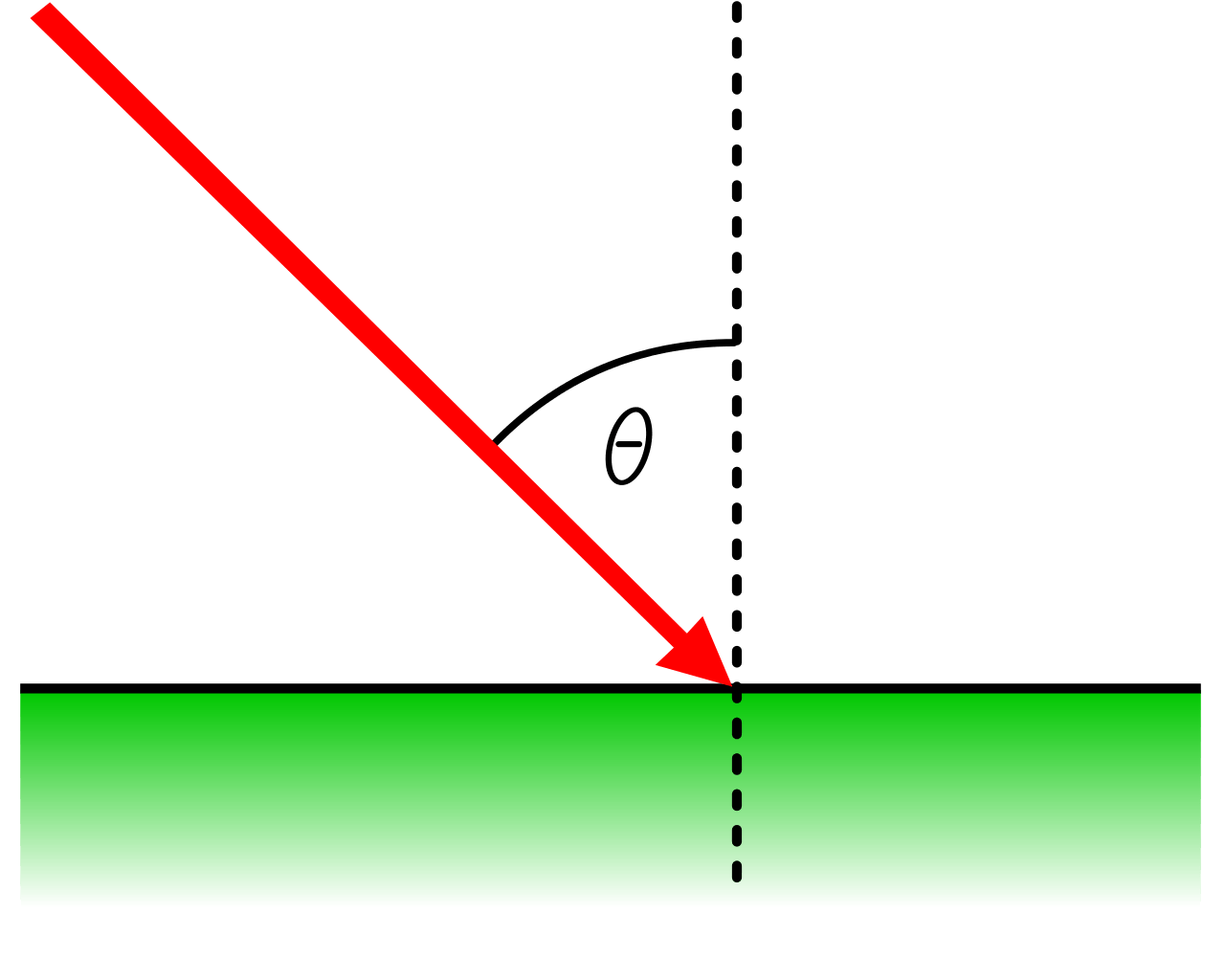
Which is the angle of incident?
a)
Angle 1
b)
Angle 2
132.
An image that you can see when you look into a mirror, but does not really exist is called which of the following?
a)
Real Image
b)
Fake Image
c)
Virtual Image
d)
Digital Image
133.
a real image...
a)
is produced by virtual rays and can be projected on a screen
b)
is produced by real rays and cannot be projected on a screen
c)
is produced by virtual images and cannot be projected on a screen
d)
is produced by real rays and can be projected on a screen
134.
The fact the two angles are the same is an example of....
a)
Refraction
b)
Angle of Incidence
c)
Law of reflection
d)
Magnification
135.
Which mirror(s) have a focal point?
a)
plane only
b)
concave only
c)
plane, convex and concave
d)
concave and convex, but not plane
136.
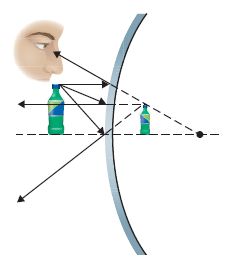
What kind of mirror is shown here?
a)
plane
b)
concave
c)
convex
d)
diffuse
137.
Convex mirrors can create virtual and real images.
a)
True
b)
False
138.
Concave mirrors can create virtual and real images.
a)
True
b)
False
139.
Convex mirrors can produce...
a)
Real, erect images
b)
Virtual, erect images
c)
Real, inverted images
d)
no images form
140.
What does it mean to refract?
a)
bounce off
b)
to bend
c)
curve outward
d)
reflect
141.
What property of light waves can be observed as light waves pass from one medium to another and change speed?
a)
Diffraction
b)
Refraction
c)
Reflection
d)
Separation
142.
Which is the angle of refraction?
a)
Angle 1
b)
Angle 2
143.
When does the angle of refraction increase?
a)
when a wave's speed increases
b)
when a wave's speed decreases
c)
when a wave's speed is constant
d)
when a light wave stops
144.
Which of the following in the diagram is the incident ray?
a)
A
b)
B
c)
C
d)
D
145.

Which of the following in the diagram is the refracted ray?

a)
A
b)
B
c)
C
d)
D
146.
Glass has a _____________ index of refraction than air.
a)
Equal
b)
Greater
c)
Less
d)
Impossible to say
147.
This shows the phenomenon known as....
a)
reflection
b)
refraction
c)
mirrors
d)
focal point
148.
A converging lens has a focal length of 30 cm. A 5 cm tall candle is placed at a distance of 10 cm in front of the lens. Determine the image distance.
a)
- 45 cm
b)
-30 cm
c)
-15 cm
d)
6 cm
149.
The point where the rays meet is known as....
a)
Fire
b)
the focal point
c)
refraction
d)
Plane of the lens
150.
What are 2 types of lenses? 
a)
Concave Lens & Convex Lens 
b)
Concave Lens & Magnifying Lens 
c)
Convex Lens & Magnifying Lens 
151.
Is a concave lens thicker or thinner in the middle? 
a)
Thicker 
b)
Thinner 
152.
Is a convex lens thicker or thinner in the middle?
a)
Thicker 
b)
Thinner 
153.
What kind of lens is a magnifying glass?
a)
Convex Lens
b)
Concave Lens
154.
Complete this sentence: Concave lenses bend light ___________ from each other. 
a)
Away 
b)
Towards
155.
Complete this sentence: Convex lenses bend light __________ from each other. 
a)
Towards 
b)
Away 
156.
A material or substance that a matter wave travels through is  ________
a)
a block
b)
a wall
c)
a medium
d)
an electromagnetic spectrum
157.
Which term describes lenses that are thinner at the edges than at the center?
a)
converging lenses
b)
diverging lenses
c)
concave lenses
158.
Glass has a _____________ index of refraction than air.
a)
Equal
b)
Greater
c)
Less
d)
Impossible to say
159.
An object is located 15 m from a converging lens with focal length 10 m.If the object is 2 cm tall, find the image height if the image is located at 30 m.
a)
4 m
b)
-4m
c)
1m
d)
-1m
160.
Light travels in ....
a)
Longitudinal Waves
b)
Transverse Waves
161.
Whats happens when nonpolarized light goes through a vertical polarized lenses?
a)
No Light Comes Out
b)
Only horizontal polarized lights comes out
c)
Only vertical polarized lights comes out
d)
Nonpolarized light comes out
162.
What type polarization light comes of glare from horizontal surface?
a)
Horizontal
b)
Vertical
c)
None
d)
All
163.
If the Di is 30 cm and the Do is 45, what is the magnification of the object?
a)
18 
b)
-0.6667
c)
-18
d)
0.6667
164.
If the Di is 30 cm and the Do is 45, what is the focal length?
a)
18 cm
b)
.055556 cm
c)
75 cm
d)
15 cm
165.
If the lens is located at 50 cm and the source is located at 28 cm, what is the Do?
a)
28 cm
b)
22 cm
c)
50 cm
d)
78 cm
166.
The source in the picture is located at 18 cm, the lens is located at 50 cm, and the screen is located at 90 cm.  What is the Di?
a)
18 cm
b)
32 cm
c)
40 cm
d)
72 cm
167.
A ray of light traveling from air into crown glass strikes the surface at an angle of 30 degrees. What is the angle of refraction? (air n=1, crown glass n=1.532)
a)
39.7 degrees
b)
19.2 degrees
c)
59.1 degrees
d)
12.3 degrees
168.
The fact the two angles are the same is an example of....
a)
Refraction
b)
Angle of Incidence
c)
Law of reflection
d)
Magnification
169.
What is the index of refraction of a refractive medium if the angle of incidence in the air is 40 degrees and the angle of refraction is 29 degrees?
a)
1.32
b)
2.06
c)
1.523
d)
1.586
170.
What is the index of refraction of a refractive liquid if the angle of incidence in the air is 35 degrees and the angle of refraction is 14 degrees?
a)
1.33
b)
2.21
c)
2.37
d)
1.72
171.
If the angle of incidence of light traveling through air, and then striking water is 30 degrees what is the angle of refraction? (n=1 air, n=1.33 water)
a)
15 degrees
b)
22 degrees
c)
43 degrees
d)
17 degrees
172.
Light travels at 1.76 EE 8 m/s through an optical medium.  What is the medium?
diamond n=2.45
flint glass n=1.70
barium glass n=1.60
crown glass n=1.523
a)
Crown Glass
b)
Barium Glass
c)
Flint Glass
d)
Diamond
173.
Light has the highest velocity in which medium?
flint glass n=1.70
barium glass n=1.60
crown glass n=1.523
water n=1.33

diamond n=2.45
a)
diamond
b)
water
c)
flint glass
d)
barium glass
174.
What is the refractive medium if a ray coming from air at an angle of incidence of 50 degrees is refracted through an angle of 35 degrees?
flint glass n=1.70
barium glass n=1.60
crown glass n=1.523
water n=1.33
a)
flint glass
b)
barium glass
c)
crown glass
d)
water
175.
When light passes at an angle to the normal from one material into another material in which its speed is higher 
a)
it is bent toward the normal.
b)
it always lies along the normal.
c)
it is unaffected.
d)
it is bent away from the normal.