wayground logo

Free Printable Worksheets

Font size

S
M
L
XL
Worksheets

Spring Brain Breaker

Total questions: 99

Worksheet time: 1hrs 12mins

Name
Class
Date
1.

What is the source of all the energy in our atmosphere?

a)

Wind

b)

Sun

c)

Moon

d)

Food

2.

What is the pressure on the Equator? why?

a)

High Pressure, because the air is hot so it sinks pushing on the Earth

b)

High Pressure, because the air is hot so it rises, rising air has more pressure

c)

Low pressure, because the air is hot it sinks pushing on the Earth

d)

Low Pressure, because the air is hot it rises, rising air has less pressure

3.

What pressure at the Poles? why? *

a)

High Pressure, because the air is cold so it sinks pushing on the Earth

b)

High Pressure, because the air is cold so it sinks, sinking air has less pressure

c)

Low pressure, because the air is cold it sinks pushing on the Earth

d)

Low Pressure, because the air is cold it sink, sinking air has less pressure

4.

Steady winds the blow between the equator and 30 latitude north and south are known as the ______.

a)

doldrums

b)

Jet Stream

c)

polar easterlies

d)

Trade Winds

5.

Winds that occur between 60 and 90 degrees north and south latitude are known as the ________. *

a)

trade winds

b)

westerlies

c)

easterlies

d)

jet stream

6.

What type of weather does a Low Pressure system bring? Why? *

a)

Cloudy weather, because the air is rising so clouds DO form

b)

Clear weather, because the air is sinking so NO clouds form

c)

Clear weather, because the air is rising so NO clouds form

d)

Cloudy weather, because the air is sinking so clouds DO form
7.
Air travels
a)
from high pressure to low pressure
b)
from low pressure to high pressue
8.
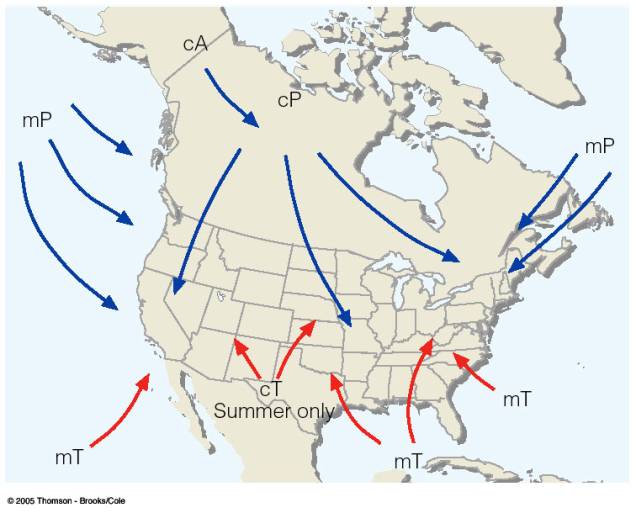
What's the humidity and temperature of a continental tropical air mass?
a)
Wet and cold
b)
Dry and warm
c)
Wet and warm
d)
Dry and cold
9.
What's the humidity and temperature of a maritime tropical air mass?
a)
Wet and cold
b)
Dry and warm
c)
Wet and warm
d)
Dry and cold
10.
A dry and cold air mass would be...
a)
Maritime polar
b)
Continental polar
c)
Maritime tropical
d)
Continental tropical
11.
Which abbreviation of an air mass can be identified as dry and hot?
a)
cP
b)
mP
c)
cT
d)
mT
12.
Which abbreviation of an air mass can be identified as cold and moist?
a)
cP
b)
mP
c)
cT
d)
mT
13.

What type of pressure system is represented in the picture?

a)

low pressure

b)

high pressure

14.

name this front

a)

warm front

b)

cold front

c)

stationary front

d)

occluded front

15.
What type of front is this?
a)
Occluded
b)
stationary
c)
cold
d)
Warm
16.

What factor will NOT cause a hurricane to weaken? *

a)

Warm water

b)

WInd Sheer

c)

Land

d)

Cool water

17.
How do we characterize an air mass that forms over the ocean?
a)
Dry
b)
Wet
c)
Cold
d)
Warm
18.
How do we characterize an air mass that forms near the poles?
a)
Dry
b)
Wet
c)
Warm
d)
Cold
19.
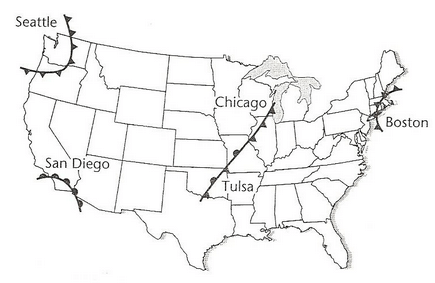
Which front is located near San Diego?
a)
cold front
b)
warm front
c)
occluded front
d)
stationary front
20.
Which type of front is located near Boston?
a)
warm front
b)
cold front
c)
stationary front
d)
occluded front
21.
Which type of pressure system produces clear/fair/sunny weather?
a)
low pressure system
b)
high pressure system
22.
When warm and cold air meet, which one sinks to the bottom?
a)
warm
b)
cold
c)
both
d)
neither
23.
Critical for the formation of a hurricane?
a)
lower latitudes
b)
80 degrees or warmer water
c)
None of the above
d)
All of the above
24.
Why does warm air rise?
a)
Warm air is more dense than cooler air.
b)
Warm air has more pressure than cooler air.
c)
Warm air is less dense than cooler air.
d)
Warm air has a higher dew point than cooler air.
25.
Which describes how wind speed if affected by weather?
a)
rainy weather causes greater wind speeds
b)
warmer weather causes greater wind speeds
c)
differences in air pressure cause greater wind speeds
d)
small temperature changes cause greater wind speeds
26.
Warm air mass that does not carry water:
a)
continental tropical
b)
continental polar
c)
maritime tropical
d)
maritime polar
27.
Which cloud is this?
a)
cumulus
b)
cumulonimbus
c)
cirrus
d)
stratus
28.
Which cloud is this?
a)
cumulus
b)
cumulonimbus
c)
cirrus
d)
stratus
29.
Which cloud is this?
a)
cumulus
b)
cumulonimbus
c)
cirrus
d)
stratus
30.
The tropical winds running from 0 to 30 degrees latitude are called:
a)
subtropical westerlies
b)
polar westerlies
c)
trade winds
d)
polar winds
31.
What is B?
a)
Evaporation
b)
Condensation
c)
Precipitation
d)
Runoff
32.
How much of the earth's water is freshwater?
a)
50 %
b)
3 %
c)
97 %
d)
93 %
33.

What do scientists call plastics when they break down into tiny pieces?

a)

Microtrash

b)

Microplastics

c)

Microparticles

d)

Macroplastics

34.
a)

Mrs Conway

b)

Mrs. Ehrat

c)

Mrs. Hogan

d)

Miley Cyrus

e)

Hillary Clinton

35.
a)
Ryan Reynolds
b)
Justin Timberlake
c)
Alex Rodriguez
d)
Zac Efron
36.
Whose yearbook picture is this?
a)
Michael Cera
b)
Eminem
c)
Tim McGraw
d)
Adrian Brody
37.

What kind of cloud is this?

a)

Nimbostratus

b)

Cumulonimbus

c)

Cumulus

d)

Cirrus

38.
Average weather conditions of a region year after year.
a)
weather
b)
climate
c)
precipitation
d)
humidity
39.
Rain, snow, sleet, or hail that falls from clouds in the sky.
a)
weather
b)
precipitation
c)
humidity
d)
climate
40.

Earth's Core is mostly made up of iron and ____________

a)

Magnesium

b)

Nickel

c)

Cobalt

d)

Basalt

41.

The ________ is Earth's outer skin of solid rock

a)

Crust

b)

Mantle

c)

Inner Core

d)

Outer Core

42.

Which lists the main layers of Earth in order from outermost to innermost

a)

lithosphere, asthenosphere, mesosphere

b)

core, mantle, crust

c)

crust, mantle, core

d)

mantle, core, crust

43.

Which best describes the mantle?

a)

Molten Metal

b)

Dense, solid metal ball

c)

Hot but solid rock

d)

Dry land and ocean floor

44.

What processes causes tectonic plates move?

a)

mountain building

b)

earthquakes

c)

convection currents

d)

water cycle

e)

subduction zones

45.

What kind of energy moves the molten rock in Earth's mantle?

a)

thermal energy

b)

chemical energy

c)

personal energy

d)

solar energy

e)

wind energy

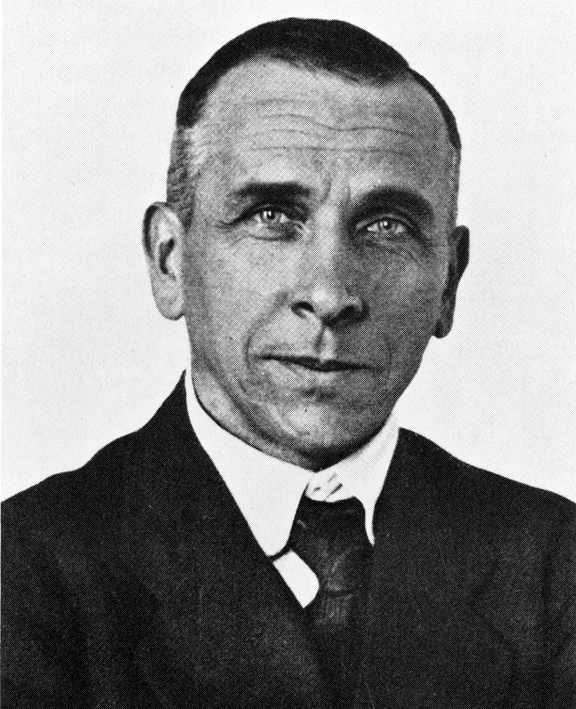
46.
Who is the person credited with developing the theory of continental drift?
a)
Harry Hess
b)
Galileo
c)
Alfred Wegener
d)
Newton
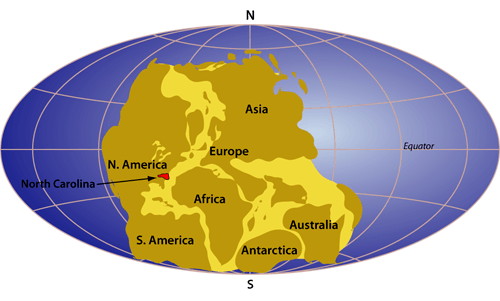
47.
What is this a picture of?
a)
plate tectonics
b)
continental drift
c)
pangea
d)
glacier scaring
48.
The following is a profession of Wegener except what?
a)
Polar Researcher
b)
Geophysicist
c)
Archeologist
d)
Meteorologist
49.
Where is the point at which the first movement occurs during an earthquake?
a)
Epicenter
b)
Focus
c)
Fault
d)
Plate
50.
Which scale rates earthquakes based on the amount of damage done?
a)
Mercalli Scale
b)
Richter Scale
c)
Seismogram Scale
d)
Bernoulli Scale
51.
Which scale measures the intensity of the ground movement?
a)
Mercalli Scale
b)
Richter Scale
c)
Seismogram Scale
d)
Bernoulli Scale
52.
The huge pieces of the earth's crust are called ____________________________. 
a)
crust
b)
plates
c)
directions
d)
seismos
53.
How much bigger is a magnitude 8 earthquake compared to magnitude 7 one on the Richter Scale?
a)
1 time bigger
b)
10 times bigger
c)
100 times bigger
d)
1000 times bigger
54.
What kind of plate boundary is shown here?
a)
divergent
b)
convergent
c)
transform
d)
strike slip
55.
Earthquakes typically occur _________________.
a)
In the middle of tectonic plates
b)
only in California
c)
only in the middle of the ocean
d)
along plate boundaries
56.
Which description of plate boundaries correctly matches up?
a)
Transform boundary-plates collide and subduction occurs at this location
b)
Convergent boundary- plates move away from each other
c)
Divergent boundary-plates move toward each other and collide
d)
Convergent boundary-plates move toward each other and collide
57.
Due to the Coriolis Effect, water in the northern hemisphere moves
a)
clockwise
b)
counter clockwise
c)
both
d)
neither
58.
Warm ocean currents generally come from
a)
The North Pole
b)
The South Pole
c)
The Equator
d)
Both A and B
59.
A horizontal movement of ocean water that is caused by wind and that occurs at or near the ocean's surface.
a)
Gulf Stream
b)
Global Conveyor Belt
c)
Surface Current
d)
Gyre
60.
Temperature and salinity differences in ocean water cause:
a)
Mid-ocean ridges
b)
Deep Currents
c)
Surface Currents
d)
High tide and low tide
61.

______ causes surface currents.

a)

The Coriolis Effect

b)

gravity

c)

density differences

d)

wind

62.
Currents that are far beneath the surface
a)
deep ocean currents
b)
surface currents
c)
current
d)
global winds
63.
Ocean currents have an affect on which two things
a)
climate and weather
b)
temperature and density
c)
land and sea
d)
equator and poles
64.
Two types of water currents are
a)
local and global
b)
sea and land
c)
surface and deep
d)
warm and cold
65.

The more scientific name of the Global Conveyor Belt is _____.

a)

halinethermal circulation

b)

thermohaline circulation

c)

thermodensity circulation

66.

The __________ is a surface current that flows along the eastern US and brings warm water to Europe.

a)

California Current

b)

Gulf Current

c)

North American Gyre

d)

Arctic Current

67.
What is the initial source for global winds and convection in the atmosphere? 
a)
continental deflection
b)
the rotation of the Earth
c)
Moon's gravity
d)
unequal heating of the Earth by the sun
68.
What kind of breeze is this and when would it form?
a)
Land breeze - daytime
b)
Land breeze - nighttime
c)
Sea breeze - daytime
d)
Sea breeze - nighttime
69.
Warm, rising air at the Equator forms a calm, weak wind called the:
a)
Doldrums
b)
Trade Winds
c)
Polar Easterlies
d)
Westerlies
70.
Cool, sinking air at 30 degrees North create a pressure belt known as the:
a)
Trade Winds
b)
Doldrums
c)
Horse Latitudes
d)
Westerlies
71.

What do geologists call the crust and uppermost mantle?

a)

Lithosphere

b)

Asthenosphere

c)

Mesosphere

d)

Outer Core

72.

Rank the following from low albedo to high albedo.

(1) Ocean

(2) Sand

(3) Ice

(4) Asphalt

a)

1, 2, 3, 4

b)

3, 2, 4, 1

c)

4, 3, 2, 1

d)

4, 1, 2, 3

73.

Currently, about 10% of Earth is covered with ice year-round. If this ice melts, what could happen to the sea levels on Earth?

a)

Sea levels will Increase

b)

Sea levels will decrease

c)

Sea levels will remain the same

d)

Not enough information

74.
What do we call water that flows over the ground surface rather than soaking in?
a)
runoff
b)
discharge
c)
recharge
d)
tributary
75.
Two thirds of the Earth's fresh water  is stored where?
a)
Oceans
b)
Seas
c)
Lakes
d)
Ice
76.

In our solar system, which planet has the shortest day?

a)

Earth

b)

Jupiter

c)

Mars

d)

Saturn

77.

What common kitchen item is made up of sodium and chlorine atoms?

a)

water

b)

bread

c)

milk

d)

salt

78.

What is the name for the specialized nerve cell that transmits information chemically and electrically throughout the body?

a)

Epithelial

b)

Neuron

c)

Cardiac

d)

Adipose

79.

In the United States and Canada, one ton is a unit of measure that contains how many pounds?

a)

500 pounds

b)

1000 pounds

c)

2000 pounds

d)

2500 pounds

80.

The molecule "hemoglobin" is used in which type of cells?

a)

White blood cells

b)

Platelets

c)

Red blood cells

d)

Plasma

81.

Penicillin was discovered in 1928 by which Scottish scientist?

a)

Sir Alexander Fleming

b)

Alexander Graham Bell

c)

Isaac Newton

d)

Albert Einstein

82.

The Great Red Spot is a gigantic storm located on which planet in our solar system?

a)

Earth

b)

Venus

c)

Neptune

d)

Jupiter

83.

Who developed and patented the electrical telegraph in the United States in 1837?

a)

Samuel Moore

b)

Samuel Morse

c)

Samuel Minsk

d)

Samuel Murphy

84.

The art and practice of garden cultivation and management is called what?

a)

Ornithology

b)

Paleontology

c)

Horticulture

d)

Zoology

85.

186,282 miles per second is the speed of what in a vacuum?

a)

sound

b)

light

c)

gravity

d)

voyager one

86.

Which planet in our solar system has an axis that is titled by 98 degrees?

a)

Mercury

b)

Uranus

c)

Jupiter

d)

Saturn

87.

Approximately 2% of all people have what eye color?

a)

brown eyes

b)

blue eyes

c)

green eyes

d)

hazel eyes

88.

What is the name of the phenomenon when the magnetosphere in the Northern Hemisphere is disturbed by the solar wind resulting in a natural light display?

a)

Aurora Bouyancy (Northern Lights)

b)

Aurora Borealis (Northern Lights)

c)

Aurora Australis (Southern Lights)

d)

Aurora Borealis (Southern Lights)

89.

What is the second most abundant element in the earth's atmosphere?

a)

nitrogen

b)

oxygen

c)

Argon

d)

Carbon dioxide

90.

Which is the most abundant metal in the earth's crust?

a)

silver

b)

aluminum

c)

Gold

d)

Copper

91.
Which state flag is this?
a)
Illinois
b)
Idaho
c)
Hawaii
d)
Georgia
92.
Which state flag is this?
a)
Illinois
b)
Georgia
c)
Idaho
d)
Colorado
93.
Which state flag is this?
a)
Florida
b)
South Carolina
c)
Louisiana
d)
Virginia
94.
Which state flag is this?
a)
Missouri
b)
North Carolina
c)
Ohio
d)
Michigan
95.
Which state flag is this?
a)
New Mexico
b)
New Jersey
c)
Wyoming
d)
Massachusetts
96.

Which state flag is this?

a)

Oklahoma

b)

Massachusetts

c)

Maryland

d)

Hawaii

97.
What is the capital of Kansas?
a)
Pittsburg
b)
Kansas City
c)
Topeka
d)
Overland Park 
98.
In what state is the capital Augusta?
a)
Georgia
b)
Virginia
c)
Kentucky
d)
Maine
99.
What is the capital of MI?
a)
Detroit
b)
Richmond
c)
Lansing
d)
Indianapolis