wayground logo

Free Printable Worksheets

NEW

Font size

S
M
L
XL
Worksheets

Populations & Ecosystems

Total questions: 75

Worksheet time: 59mins

Name
Class
Date
1.
The non living parts of an ecosystem
a)
abiotic factors
b)
biotic factors
c)
oxygen
d)
soil
2.
An abiotic part of an ecosystem; required by plants to perform photosynthesis.
a)
water
b)
soil
c)
sunlight
d)
oxygen
3.
The place where an organism lives that provides it with shelter, food and water.
a)
ecosystem
b)
population
c)
community
d)
habitat
4.
All the members of one type of species in a specific area.
a)
habitat
b)
community
c)
population
d)
ecosystme
5.
the living parts of an ecosystem
a)
biotic factors
b)
biology
c)
abiotic factors
d)
animals
6.
All of the different populations that live in a specific area.
a)
community
b)
habitat
c)
ecosystem
d)
village
7.
Which best describes a way photosynthesis provides resources to animals?
a)
Photosynthesis produces carbon dioxide, decreasing the animal’s need for oxygen.
b)
Photosynthesis increases plant growth, providing places for many animals to live
c)
Photosynthesis produces excess moisture from the plants, reducing the need for a water supply.
d)
Photosynthesis increases plant growth, providing food for carnivores and eliminating the need to hunt.
8.
Below is an example of a simple food chain.

Acorn → Squirrel → Fox → Mountain Lion 

What will most likely happen if squirrels are removed from the food chain?
a)
The fox will eat acorns
b)
The fox population will decrease
c)
The trees will produce fewer acorns.
d)
The mountain lion population will increase
9.
As populations grow, they tend to spread out into new territory. Which limiting factor is most likely to become an issue?
a)
food
b)
shelter
c)
space
d)
water
10.
In a forest ecosystem, a food chain might look like this:
green plants → rabbit → fox → panther

If the green plants are destroyed in a forest fire, which short-term effect will this have on the organisms in this food chain?
a)
There would be fewer rabbits for the foxes to eat. 
b)
The panthers would have to begin to eat green plants.
c)
There would be an increase in the fox population
d)
There would be more green plants for the rabbits to eat
11.
What is this called?
a)
Food Web
b)
Food Chain
c)
Abiotic Factors
12.
Which is a producer?
a)
deer
b)
tall grass
c)
lion
d)
worm
13.
What is this called?
a)
Food Web
b)
Food Chain
c)
Abiotic Factors
14.
What does a Primary Consumer eat?
a)
Tertiary Consumers
b)
Secondary Consumers
c)
Producers
15.
An organism that lives by breaking apart dead organic matter into simpler parts is...
a)
scavenger
b)
consumer
c)
decomposer
d)
carnivore
16.
An animal that eats other animals is a....
a)
carnivore
b)
omnivore
c)
herbivore
d)
decomposer
17.
In a food web, arrows point at:
a)
who gets energy.
b)
who gets eaten.
18.
What does a food web represent?
a)
All connections of energy flow throughout all organisms in a ecosystem.
b)
The specific ways that mutualism is carried out.
c)
A single pathway or energy flow between organisms. 
d)
How carnivores get their food. 
19.
__________ is an organism that eats BOTH plants and animals for energy.
a)
Omnivore
b)
Darnivore
c)
Carnivore
d)
Herbiovre
20.
__________ is an organism that only eats meat for energy.
a)
Omnivore
b)
Borivore
c)
Herbivore
d)
Carnivore
21.
Which organism recieves the least amount of energy from the producer?
a)
Owl
b)
Grasshopper
c)
Lilypad
d)
Mouse
22.

Why might an organism have more than one arrow coming from them in a food web?

a)

More than one organism may eat them.

b)

They may eat more than one other organism.

c)

This organism gets its energy from multiple sources.

23.
_______: the relation between two different kinds of organisms when one receives benefits from the other without damaging it
a)
parasitism
b)
commensalism
c)
mutualism
24.
_______: the relation between two different kinds of organisms in which one receives benefits from the other by causing damage to it (usually not fatal damage)
a)
commensalism
b)
mutualism
c)
parasitism
25.
_______: the relation between two different species of organisms that are interdependent; each gains benefits from the other
a)
mutualism
b)
parasitism
c)
commensalism
26.
The remora (a type of fish) rides attached to sharks and other types of fish. This is an example of what?
a)
parasitism
b)
mutualism
c)
commensalism
d)
all of the above
27.
A bee and a flower. This is an example of what?
a)
mutualism
b)
parasitism
c)
commensalism
d)
all of the above
28.
Fleas or ticks that live on dogs and cats is an example of what?
a)
parasitism
b)
commensalism
c)
mutualism
d)
all of the above
29.
A pearlfish spends the day inside the alimentary tract, or intestines, of a sea cucumber. The fish emerges from the sea cucumber at night to feed on small crustaceans. The pearlfish gets a safe place to live. The sea cucumber does not gain anything from the relationship, nor is it harmed. 
a)
Mutualism
b)
Commensalism
c)
Parasitism
30.
A cymothoid isopod lives inside the mouth of a snapper fish. The isopod severs blood vessels in the fish’s tongue, causing the tongue to atrophy and degenerate.The isopod then hooks its pereopods, or legs, to the base of the fish’s tongue,essentially replacing the tongue. The isopod stays there for the rest of its life, feeding on blood, mucus, and stray pieces of food from the fish.
a)
Commensalism
b)
Parasitism
c)
Mutualism
31.
A boxer crab carries a pair of small anemones in its chelipeds, or claws. When approached by a predator, the crab waves the stinging tentacles of the anemones to deter the predator. The anemones benefit from the small particles of food dropped by the crab during feeding. 
a)
Commensalism
b)
Mutualism
c)
Parasitism
32.
An alpheid shrimp digs and maintains a deep burrow. While underground, the shrimp is safe. Above ground, it is vulnerable to predators. A go by fish lives in the burrow with the shrimp. The go by fish sits at the entrance, keeping watch for predators, and signals the shrimp with a flick of its tail when it is safe to come out. Or, if a predator swims by, the go by darts into the burrow and the shrimp retreats further inside.These two animals are completely dependent on each other—the go by benefits by getting a burrow to live in and the shrimp knows when predators are near. 
a)
Parasitism
b)
Mutualism
c)
Commensalism
33.
Imperial shrimp attach themselves to sea cucumbers and get transported by their host to a large area of potential food with only a minimal expenditure of energy. They have been observed getting off their host cucumber to feed in productive areas and then getting back on for a ride to the next spot. 
a)
Mutualism
b)
Commensalism
c)
Parasitism
34.
A tapeworm needs to eat food that is already digested, so it lives in the intestines of a dogfish shark and derives nourishment from the shark. As a result of the tape worm infestation, the shark is weakened and more vulnerable to disease and predation. 
a)
Parasitism
b)
Commensalism
c)
Mutualism
35.
Which term best describes two predators living in the same habitat who feed on the same prey?
a)
coexistence
b)
competition
c)
mutualism
36.

How is cooperation different from mutualism?

a)

Cooperation occurs between members of different species

b)

Cooperation is when members of species play tag

c)

Cooperation is what you do when Ms. Byrnes assigns a group activity

d)

Cooperation usually occurs between members of the same species

37.
When a specific population grows past the ecosystem's carrying capacity, what happens to the population?
a)
Density Independent limiting factors start to occur resulting in the population going farther above carrying capacity.
b)
Density Dependent limiting factors start to occur resulting in the population going back below carrying capacity.
c)
The population will go extinct due to lack of resources
d)
The population grows then finds a new carrying capacity
38.
The total number of individuals a habitat can survive with the resources it has available.
a)
Carrying capacity
b)
Limiting factors
c)
Resources
d)
Population
39.
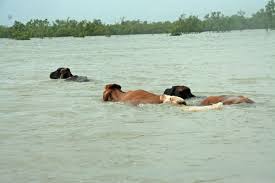
Excessive amounts of rain caused a flood in the southwest United States that resulted in substantial amounts of deaths in the rabbit population? This situation is an example of a density _____________ limiting factor.
a)
density-independent
b)
density-dependent
c)
density- too high
d)
density- too low
40.

Density-Independent are ____ factors; Density-Dependent are ____ factors.

a)

commensalism; parasitism

b)

abiotic; biotic

c)

parasitism; commensalism

d)

biotic;abiotic

41.

What is the role of denitrifying bacteria

a)

change nitrate back into nitrogen gas

b)

change nitrogen gas into nitrate

c)

absorb carbon dioxide in the soil

d)

release oxygen gas into the atmosphere

42.

How does carbon in a grass plant get into a lion?

a)

The lion eats an antelope that ate the grass

b)

Carbon from grass doesn't end up in a lion.

c)

The lion absorbs the carbon given off by transpiration

d)

The lion breathes in carbon given out by the plant
43.
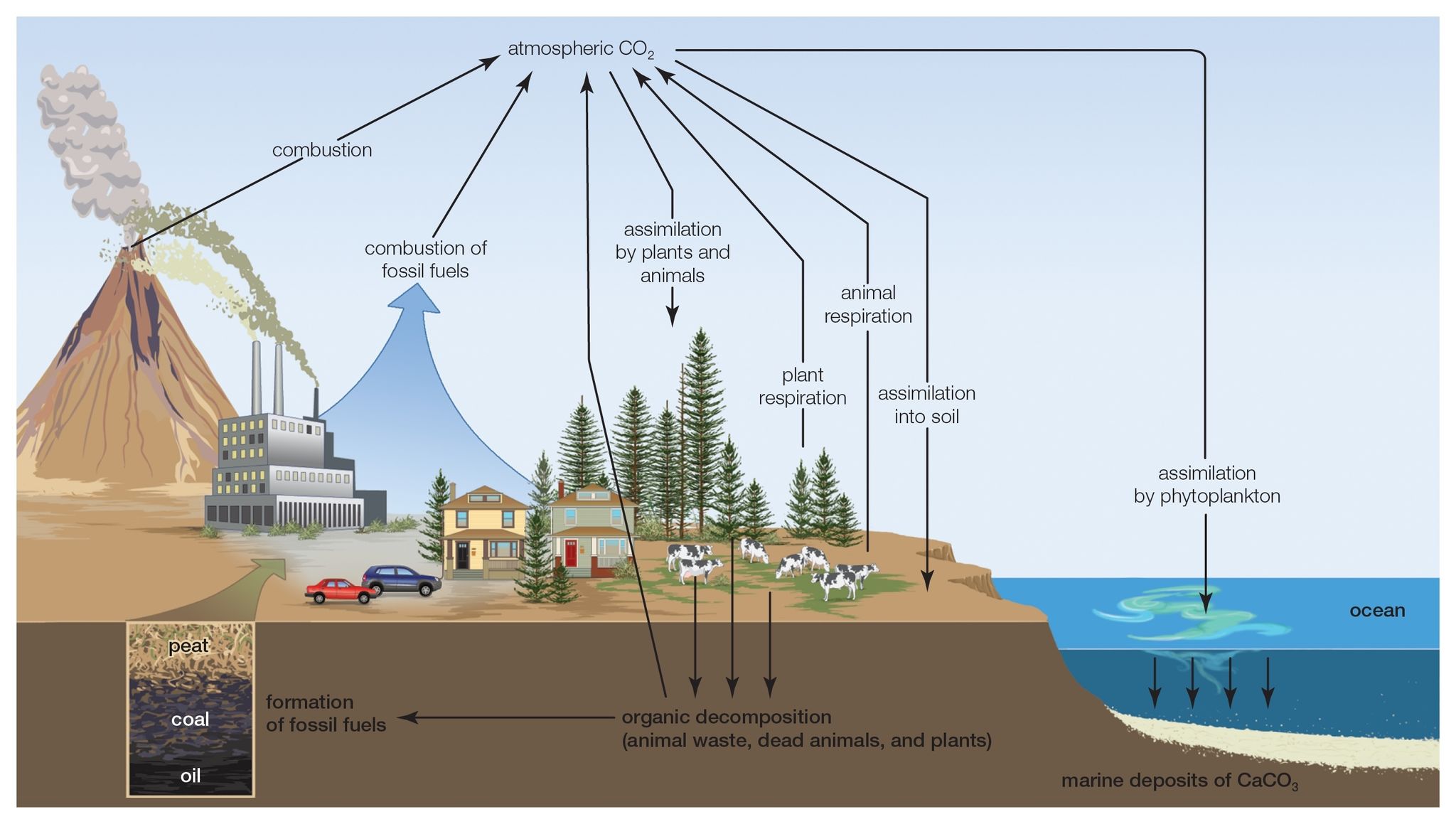
Which of the following add carbon dioxide to the atmosphere?
a)
volcanoes
b)
combustion of fossil fuels
c)
animal and plant respiration
d)
all of these
44.
Plants release water into the atmosphere by 
a)
photosynthesis
b)
transpiration
c)
perspiration
d)
respiration
45.
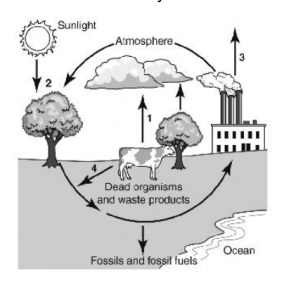
What is happening at 1?
a)
respiration: releasing CO2
b)
decomposing CO2 in the soil
c)
photosynthesis: absorbing CO2
d)
turning CO2 from the atmosphere into organic molecules
46.
Why do all organisms need nitrogen?
a)
To live and grow 
b)
To build phosphorus
c)
To make oxygen levels grow
d)
To help blood circulate better
47.
What converts nitrogen gas into a useable form for plants and animals?
a)
bacteria
b)
fungi
c)
rain
d)
car exhaust 
48.
How nitrogen is "fixed" into  a useable form for plants...
a)
through action of bacteria only
b)
through lightning only
c)
through action of bacteria & lightning
d)
through photosynthesis
49.
The process in which Nitrogen circulates and is recycled is called ____________
a)
The nitrogen cycle
b)
The water cycle
c)
The carbon cycle
d)
The phosphorus cycle
50.
Bacteria fix nitrogen on plant roots. Plant roots provide sugar to bacteria. This is an example of
a)
mutualism
b)
parasitism
c)
commensalism
d)
competition
51.
Carbon can be found in...
a)
The atmosphere
b)
Soil
c)
Fossil fuels
d)
All of the above
52.
Which of the following removes carbon from the atmosphere?
a)
Combustion
b)
Respiration
c)
Photosynthesis
d)
Death
53.
All of the carbon in existence is continually recycled in the carbon cycle
a)
True
b)
False
54.

Which describes the relationship between plants and animals in the carbon cycle?

a)

Plants produce and release oxygen that animals need

b)

Plants produce and release carbon dioxide that animals need

c)

Animals produce and release oxygen that plants need

d)

Animals produce oxygen that plants turn into carbon dioxide

55.
What is happening in step
1?
a)
Animals are decomposing and realizing carbon into the soil.
b)
Animals are releasing energy into the environment and storing carbon.
c)
Animals are turning carbon dioxide from the atmosphere into organic molecules.
d)
Animals are breaking down organic molecules and releasing carbon dioxide into the atmosphere.
56.
What number represents combustion in this diagram?
a)
1
b)
2
c)
3
d)
4
57.
What number would represent photosynthesis in this
diagram?
a)
1
b)
2
c)
3
d)
4
58.
Deforestation can hurt the carbon cycle
a)
True
b)
False
59.

How does the energy flow in an energy pyramids?

a)

up the pyramid

b)

down the pyramid

60.

Does the energy get lower or higher when it is transferred through each animal?

a)

It gets higher

b)

It gets lower

61.

What amount of percentage does the energy decrease as it goes up the pyramid?

a)

100%

b)

1000%

c)

10%

d)

1%

62.

What does the decomposer do?

a)

Eat dead animals

b)

Eat dead plants

c)

Return nutrients back to the

environment

d)

All of the above

63.

What are primary consumers?

a)

They are herbivores

b)

They are heterotrophs

c)

They are the first to consume the energy

d)

All of the above

64.

Can heterotrophs make their own food?

a)

Yes

b)

No

65.

What is a autotroph?

a)

Makes its own food

b)

Eat other animals

c)

Eats plants

66.

Where do producers get their energy from?

a)

The sky

b)

The sun

c)

The ground

67.
This type of consumer only feeds on the bodies of dead animals.
a)
Herbivore.
b)
Decomposer.
c)
Carnivore.
d)
Scavenger
68.
A third-level consumer has to be which type?
a)
Carnivore.
b)
Decomposer.
c)
Producer.
d)
Herbivore.
69.
True or False. In this Food Web Pyramid the consumers on each level only get about 10 percent of energy that the plants have stored.
a)
True
b)
False
70.
In this Food Web Pyramid what is the proper name for the organisms above the producer level at the bottom.
a)
herbivores
b)
consumers
c)
carnivores 
d)
omnivores
71.

The deer, grasshopper, and caterpillars are all examples of which type of consumers on this food pyramid?

a)

decomposers

b)

omnivores

c)

carnivore

d)

herbivore

72.

What is a niche?

a)

The friend group an organism has

b)

The predator-prey relationship in an ecosystem

c)

The role an organism plays in an ecosystem

d)

The role the sun plays in an ecosystem

73.
A snake is eaten by a hawk. The hawk is the _______.
a)
prey
b)
parasite
c)
predator
d)
all of these
74.
When there is a lack of resources such as food, water, sunlight, shelter, and space this is often called __________.
a)
limiting factors
b)
wet
c)
messy
d)
found in rocks
75.

In the graph to the right, what is the population of deer at the carrying capacity of the environment?

a)

3

b)

7

c)

70

d)

40