Wayground logo

Free Printable Worksheets

Font size

S
M
L
XL
Worksheets

Physical Science Review

Total questions: 100

Worksheet time: 2hrs 40mins

Name
Class
Date
1.
Which of the following energy transformations occur when a lamp that is plugged into a wall socket is functioning correctly?
a)
Chemical to light
b)
Electrical to chemical
c)
Electrical to light
d)
Chemical to electrical
2.
Which of the following shows an energy transformation from chemical energy to electrical to light energy?
a)
A bolt of lightning lights the night sky.
b)
A candle glows brightly in the dark.
c)
A fire in a fireplace lights up a room.
d)
A battery causes a flashlight to shine.
3.
Energy transformations occur when...
a)
energy is created through conduction
b)
energy changes from one form to another
c)
two forces slide together that are touching
d)
a chemical reaction takes place
4.
"Energy can be transformed from one form into another or transformed from one region or another, but energy cannot be created or destroyed."
Which law is this?
a)
Law of Conservation of Mass
b)
Newton's Second Law
c)
Law of Conservation of Energy
d)
Newton's Third Law
5.

What energy transformations occur when a human eats a Big Mac?

a)

Convection

b)

Thermal Energy

c)

Kinetic Energy

d)

Chemical Energy

6.
Energy due to motion is ____________ energy. 
a)
Potential 
b)
Energy
c)
Kinetic
d)
Friction
7.
__________ is stored energy. 
a)
Potential
b)
Kinetic
c)
None of the above 
d)
All of the above 
8.
What kind of energy is in a moving skateboard?
a)
Potential
b)
Kinetic
9.
What kind of energy is in a stretched rubber band?
a)
Potential
b)
Kinetic
10.
Energy can not be created or destroyed, only converted from one form to another.
a)
true
b)
false
11.
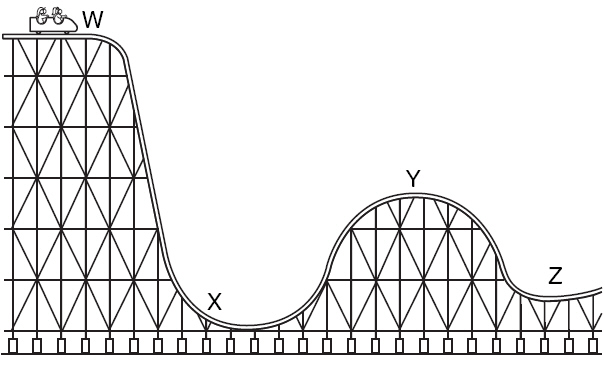
At which point is potential energy greatest?
a)
W
b)
X
c)
Y
d)
Z
12.
At which point is kinetic energy greatest? 
a)
W
b)
X
c)
Y
d)
Z
13.
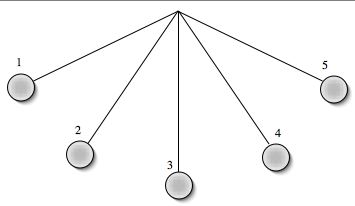
When a pendulum swings, at which point is kinetic energy highest?
a)
1
b)
2
c)
3
d)
4
14.
When a pendulum swings, at which point is potential energy at its greatest?
a)
1
b)
2
c)
3
d)
4
15.
What does the strength of gravity between two objects depend upon?
a)
Mass & distance
b)
Mass & weight
c)
Gravity & inertia
d)
Inertia & mass
16.
What force brings the pencil down?
a)
Applied
b)
Magnetic
c)
Normal
d)
Gravitational
17.
An _______ force must act on an object for it to CHANGE it's motion
a)
balanced
b)
unbalanced
c)
gravitational
d)
electrical
18.

What is defined as a push or pull?

a)

force

b)

motion

c)

vector

d)

speed

19.
This type of force resist motion between two surfaces that are pressed together
a)
contact
b)
gravity
c)
friction
20.

If the net force is equal to zero, the forces acting on the object are

a)

balanced

b)

unbalanced

21.
Balanced forces do not change the objects speed or 
a)
direction
b)
distance 
c)
time
d)
mass
22.
What is the net force?
a)
5000 N right
b)
4000 N right
c)
40 N left
d)
4000 N left
23.
What is the net force in this picture?
a)
50 Newtons to the right
b)
950 Newtons to the right
c)
950 Newtons to the left
d)
50 Newtons to the left
24.
The force of gravity acting on an object is the object's ______.
a)
mass
b)
matter
c)
weight 
d)
friction 
25.
The amount of matter in an object is 
a)
pressure
b)
weight
c)
mass
d)
force
26.
A person would weigh less on on the Moon than on the Earth because . . .
a)
Moon has more mass, and therefore more gravity
b)
Moon has less mass, and therefore more gravity
c)
Moon has more mass, and therefore less gravity
d)
Moon has less mass and therefore less gravity
27.

Letter "C" shows ...

a)

No movement

b)

Steady increase in speed

c)

A return home

d)

a person walking away

28.

The letter "A" shows...

a)

A person returning to a starting point

b)

A person walking away from a starting point

c)

A person not moving

d)

A person resting

29.

Which line shows no movement?

a)

A

b)

B

c)

C

d)

D

30.

Which graph shows a person returning to the start line?

a)

A

b)

B

c)

C

d)

D

31.
What is the transfer of heat by movement of liquids or gases?
a)
conduction
b)
convection
c)
radiation
32.
What is the transfer of heat by direct contact?
a)
conduction
b)
convection
c)
radiation
33.

What is a transfer of heat energy by electromagnetic waves through space?

a)

conduction

b)

convection

c)

radiation

34.
You are roasting marshmallows at a campfire. The metal skewer (stick) that you’re cooking your marshmallow on burns your hand because of _?_.
a)
conduction
b)
convection
c)
radiation
35.
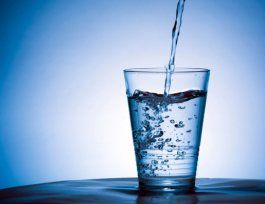
What happens when ice cubes melt in a glass?
a)
Heat travels from the ice to the warmer water.
b)
No energy is transferred.
c)
Heat is transferred from the warmer water to the ice cubes.
36.

In heat transfer, heat always flows from the _?_ substance to the _?_ substance.

a)

hotter to colder

b)

colder to hotter

c)

hotter to hotter

d)

colder to colder

37.
Warm air is __________ dense than cold air and rises creating convection currents.
a)
more
b)
less
38.
In what way does the Sun warm Earth? 
a)
radiation
b)
convection
c)
conduction
d)
condensation
39.
A large piece of ice is placed on the sidewalk on a warm day. What will happen to the ice? 
a)
It will melt to form liquid water
b)
It will melt to form water vapor
c)
It will not change at all.
d)
It will freeze to form liquid water. 
40.
Which change can occur when  you add heat energy to water?
a)
The water can change from a liquid to a solid
b)
The water can change from a gas to a liquid
c)
The water can change from a liquid to a gas
d)
The water can change from a solid to a liquid
41.

When water molecules slow down and move closer together ...

a)

the water separates into hydrogen and oxygen.

b)

the water turns into liquid nitrogen.

c)

the water turns into water vapor.

d)

the water turns into ice.

42.

The molecules of a substance slow down when . . .

a)

energy is added.

b)

energy is taken away.

43.
Molecules have energy and _________ stop moving
a)
rarely
b)
always
c)
never
d)
sometimes
44.
Matter changes state when...
a)
energy is added or removed
b)
energy is added
c)
energy is removed
d)
there is no energy
45.
Molecules are made up of ____________. 
a)
atoms
b)
mass
c)
matter
d)
molecules
46.
Matter will change state when enough energy (heat) is added to , or removed from, the molecules. 
a)
true
b)
false
47.
If a substance is heated, what happens to its molecules?
a)
 they slow down and move closer together
b)
the speed up and move closer together
c)
they slow down and move farther apart
d)
they speed up and move farther apart
48.
EM waves used to broadcast television signals
a)
radio waves
b)
infrared
c)
gamma rays
d)
x rays
49.
EM waves used to treat some forms of cancer
a)
microwaves
b)
gamma waves
c)
ultraviolet
d)
infrared
50.
White light is the entire range of
a)
colors of visible light combined.
b)
ultraviolet light.
c)
gamma rays and X rays.
d)
EM waves.
51.
Which electromagnetic waves are used in ovens and cell phone communications?
a)
Infrared rays
b)
ultraviolet rays
c)
microwaves
52.
For waves in any medium, as the wavelength decreases, what happens to the frequency?
a)
It also decrease
b)
It stays the same
c)
It increases
53.
Infrared waves are used in__________________.
a)
Bath tubs
b)
Microwaves
c)
Remote Controls
d)
Tanning
54.
The blue section of the wave is measuring _________________.
a)
wavelength
b)
crest
c)
trough
d)
amplitude 
55.

Which electromagnetic radiation has the greatest frequency?

a)

Radio waves

b)

Visibile light

c)

Infrared

d)

X-rays

56.

Which electromagnetic radiation has a shorter wavelength than visible light?

a)

Radio waves

b)

Microwaves

c)

Infrared rays

d)

Ultraviolet waves

57.
The higher the frequency the ______ the energy. 
a)
higher
b)
lower
c)
neither, stays the same
58.
Which wave has a longer wavelength?
a)
wave C
b)
wave D
59.
Which wave has a greater frequency?
a)
wave B
b)
wave C
60.

The bouncing back of light waves off of a surface is...

a)

Reflection

b)

Refraction

c)

Light

d)

Lens

61.

The bending of light waves as they travel from one surface to another...

a)

Reflection

b)

Refraction

c)

Light

d)

Lens

62.

A mirror _________ light.

a)

absorbs

b)

reflects

c)

refracts

63.

When an object soaks in the light it _____________

a)

absorbs

b)

reflects

c)

refracts

64.
Another name for light bending is ....
a)
Reflaction
b)
Absorbing
c)
Refraction
d)
mirror
65.

To stay cool from the sun's light and heat, one should wear...

a)

Dark colors

b)

Light colors

66.
The bending of waves as they pass from one substance into another.
a)
Reaction
b)
Reflection
c)
Refraction
d)
Repost
67.
Which color absorbs all light?
a)
White
b)
Black
c)
Orange
d)
Green
68.
Why do we see objects as white?
a)
They absorb all light
b)
They reflect all light
c)
They absorb some light and reflect some light
69.
The color you see is the color that is ___.
a)
reflected
b)
absorbed
70.
A leaf is green, what does this tell you about the light that is being absorbed?
a)
no light is being absorbed
b)
green is being refracted and all the colors are being absorbed.
c)
green is being absorbed and all the other colors are reflected
d)
green is being reflected and all the other colors are being absorbed
71.
Why does a purple shirt appear purple?
a)
the shirt material REFLECTS all wavelengths of color 
b)
the shirt material transmits all wavelengths of color except the purple
c)
the material absorbs all wavelengths of color except the purple wavelength
72.
Prisms separate light into the colors of the rainbow using what behavior of waves?
a)
Reflection
b)
Refraction
c)
Absorption
d)
Transmission
73.
A mixture that appears to be evenly mixed throughout:
a)
an atom
b)
a compound
c)
a homogeneous mixture
d)
a heterogeneous mixture
74.
A pure substance...
a)
is an element or a compound
b)
is an element or a mixture
c)
is a compound or a mixture
d)
is a mixture
75.
NaHCO3 is an example of —
a)
an abbreviation
b)
a compound
c)
a mixture
d)
an element
76.
What is an example of an element?
a)
Oxygen
b)
Pure water
c)
Air
d)
Table salt
77.
Two or more substances in the same place but NOT chemically combined or in a specific ratio is called —
a)
a compound 
b)
a pure substance
c)
an element
d)
a mixture
78.
Which of the following lists only elements?
a)
H2O + OH, MgCl2
b)
H2O, KF, Ne
c)
KCl, Ag, Au
d)
K, Cl, N
79.
Which of the following is an example of a heterogenous mixture?
a)
soap
b)
a salad with lettuce, olives, and tomatoes
c)
cup of coffee
d)
water
80.
The atom is the smallest part of...
a)
An element
b)
A compound
c)
A mixture
81.
A molecule is the smallest part of...
a)
An element
b)
A compound
c)
A mixture
82.
Which type of substance cannot be broken down into simpler substances?
a)
Element
b)
Compound
c)
Mixture
83.
Which of the following best describes a compound?
a)
A pure substance made up of one type of atom.
b)
A pure substance made up of two or more atoms chemically combined.
c)
A substance made up of two or more pure substances physically combined. 
d)
A substance made up of three atoms.
84.
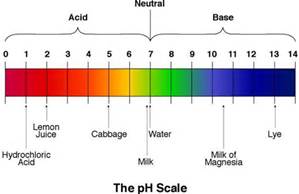
According to the pH range which substance is more acidic than lemon juice
a)
Hydrochloric acid
b)
cabbage
c)
milk
85.
A solution with a pH of 7 is________
a)
increasing
b)
neutral
c)
decreasing
d)
apple juice
86.
A copper penny turning greenish after a few years is an example of ...
a)
Chemical Change
b)
Physical Change
87.
A change in which NEW substances are formed.
a)
Chemical change
b)
Physical change
c)
Casual change
d)
Formal change
88.
Which of the following is NOT an example of chemical change?
a)
sour milk
b)
burning wood
c)
breaking a pencil
d)
rust
89.
Which of the following IS a physical change?
a)
Getting a haircut
b)
Rusty metal
c)
sour milk
d)
A compound
90.
Ripping up paper ...
a)
Chemical Change
b)
Physical Change
91.
At higher temperatures
a)
particles in an object have less energy
b)
particles in an object move faster
c)
a gas contracts
92.
Freezing
a)
Solid to gas
b)
Liquid to solid
c)
Gas to solid
d)
Liquid to gas
93.
Boiling
a)
liquid to gas
b)
gas to solid
c)
gas to liquid
d)
solid to liquid
94.
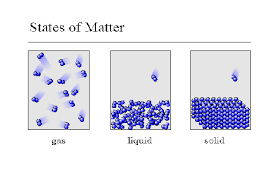
Which state of matter has tightly packed molecules?
a)
solid
b)
liquid
c)
gas
95.
Particles (molecules) in a ______________________ have more energy than the other states of matter.
a)
gas
b)
solid
c)
liquid
96.
Particles of a liquid
a)
are tightly packed together and stay in a fixed position.
b)
have no viscosity.
c)
decrease in volume with increasing temperature.
d)
are free to move around one another but still touch.
97.
What term describes a solid changing to a gas?
a)
Deposition
b)
Sublimation
c)
Evaporation
d)
Freezing
98.
What is condensation?
a)
gas to solid
b)
gas to liquid
c)
liquid to solid 
d)
solid to liquid 
99.
The slower the particles in a substance move,
a)
the colder it is.
b)
the warmer it is.
c)
the more energy it has.
d)
the less energy it has.
100.
Thermal energy is...
a)
heat energy.
b)
the energy of motion
c)
energy of nuclear processes.
d)
an indication of physical change.